

 English
 Dutch
Dutch Japanese
 Hindi
Hindi Italian
 Spanish
 French
 German
 Chinese
 Korean
 Arabic
 Hebrew
 Russian
 Portuguese
 Danish
 Czech
Czech Polish
 Swedish
Plan Your Next
Journey to the Himalayas!
We plan custom and flexible holiday trips according to your holiday duration, extra wishes, and demands.
Plan your Trips
Nepal is not just the home of the Mount Everest. It is also one of the richest and most meaningful places in the world to embark on a new life together.
In this blog, we will discuss how marriage is celebrated in Nepal as a traditional marriage, the customs of doing marriage as per the different communities, the meaning behind the rituals, the beautiful places where the couples choose to get married and finally the cost of planning wedding here. Apart from this, we will also explain how Life Himalaya helps in making the whole process simple, organized, and much less stressful so that the couples and their families can actually have a good time in celebrating the occasion.

Even though the modern life has changed many things, marriage in Nepal still holds tightly to the tradition. That is what makes it so special. Nepali weddings are full of old customs, family values, sacred rituals and emotional moments but they also accommodate beautifully to the modern lifestyle, stylish venue, destination wedding trends.
Nepal is not just the home of the Mount Everest. It is also one of the richest and most meaningful places in the world to embark on a new life…
One of the most beautiful things about a Nepali wedding is the role of family. A wedding is not something handled by just the bride and groom. Everyone gets involved. Some family members help with rituals, some manage guests, some prepare food, some handle decorations, and others simply offer support when emotions run high. The happiness is shared. The stress is shared. Even the tears are shared. And that is why marriage in Nepal is not seen as the union of only two people. It is seen as the joining of two families.
In cities, weddings may happen in hotels, resorts, or banquet halls with elegant decor and professional planning. But at the center of it all, the meaning remains the same. Blessings from elders, sacred ceremonies, and family connection still matter most.
Below are some of the common ways marriage is practiced in Nepal traditionally.
Arranged marriage has always been one of the most common types of marriage in Nepal. In this tradition, the parents or close relatives assist in finding a suitable match for the bride or the groom. They usually look at family background, reputation, education, personality, cultural compatibility, and sometimes caste traditions as well.
In many Hindu families, horoscope matching, also called Kundali Milan, is still considered important. An astrologer compares the birth charts of the bride and groom to see whether or not they are compatible. If the match is deemed good, then the family proceeds to select an auspicious date for the wedding, which is known as sait.
Although arranged marriage is more common in rural areas, it is still practiced in many urban families too. These days, arranged marriage might also be a little different than it used to be. In many cases, the couple is given some time to talk, to get to know each other before the marriage is formalized.
Love marriage is now very common in Nepal, particularly in the cities and among the younger generation. Many couples meet through school, college, work, travel, or mutual friends and pick each other based on understanding, trust and emotional connection.
Even so, family approval plays a major role. In Nepal, marriage is not typically considered as a private choice that is made by only two persons. Most couples still desire the blessing and support of both families before moving forward.
That is why many love marriages are still conducted in Nepal with traditional rituals. The couple may have chosen each other, but often the wedding ceremony itself is deeply cultural, with introductions of families, blessings, customs related to engagement, and, of course, with religious rituals. It is a little bit of a combination of personal choice and tradition in modern Nepali weddings.
The engagement ceremony is the time when the relationship will become official in front of both families. It is the start of the wedding journey and unites two households in a formal and happy manner. During the engagement, rings can be exchanged, gifts are often exchanged between the families and elders bless the couple for a happy future. In many cases, this is also the first time members of the extended family properly meet each other.
Some engagements are very simple and include only close family members. Others are larger, with relatives, good food, music, and celebration. No matter how big or small it is, the engagement carries a lot of meaning. It is not just about rings. It is about two families beginning a new relationship.
Nepali weddings are not limited to the wedding day alone. Much of the fun, emotion, and bonding actually begins before the main ceremony. The pre-wedding rituals bring everyone together and create memories that stay with the family for years. There is also a playful side to it. In many families, once the wedding is fixed, people begin teasing the couple and calling them Dulaha and Dulahi instead of their real names.
Two of the most popular pre-wedding rituals are the Mehendi ceremony and the Haldi ceremony.

Nepal is not just the home of the Mount Everest. It is also one of the richest and most meaningful places in the world to embark on a new life…
Finally, the big day arrives.
From early morning there is a different feeling in the house. There is a certain excitement in the air which is hard to put into word. Family members are busy preparing, the elders begin rituals and the whole population feels that something significant will happen.
Normally the wedding party begins with the entrance of the groom on the Janti the wedding procession. In the presence of friends and family, he dances to traditional live music known as baja, and it is usually very energetic and enthusiastic. As the side of the groom reaches the venue, the people in the family of the bride receive them well with flowers, tika and respect.
The bride is typically dressed in a red sari or lehenga with traditional jewellery. In the culture of Nepal, red is the color of love, prosperity and good fortune. It is not just a beautiful colour. It carries meaning. A priest then conducts the ceremony in front of a sacred fire. The fire is considered pure and is the divine witness to the marriage. The couple goes through rituals, saying prayers, and giving one another vows.
One of the most important moments is when the groom put Sindoor on the forehead of the bride. The bride also wears Pote, the red and yellow bead necklace which is a symbol of married life in many Nepali Hindu communities. As they perform the rituals together they are not just getting married in a legal or social sense. They are making promises before family, tradition and faith.
At the end comes Bidai, or the farewell. This is typically the most emotional part of the wedding. The bride no longer lives in her home with her family but starts a new journey with the husband. There are smiles, tears, blessings and silence all mixed together. It is a moment which demonstrates the depth of marriage in Nepal.
Now imagine taking all that beauty, all that emotion, and putting it in the middle of the Himalayas.
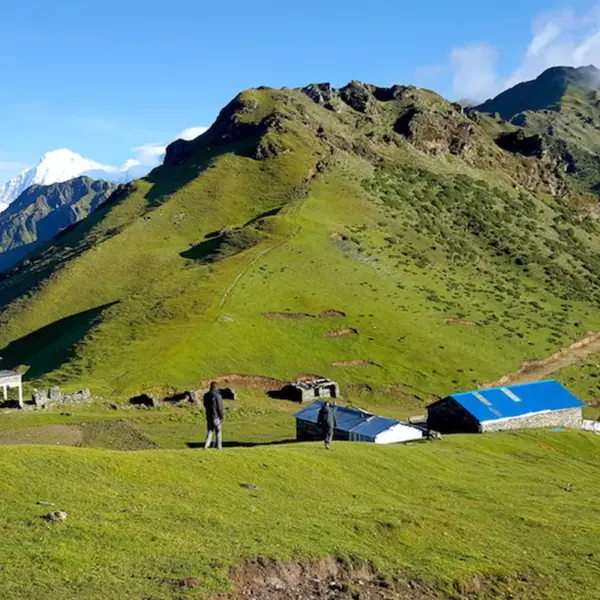
A mountain style wedding in Nepal is not only about the ceremony. It is about the setting, the atmosphere and the feeling that you are surrounded by the nature and culture at the same time. In mountain villages, weddings will often include not only the family but the entire community. The celebration has more of an intimate vibe, more of a connection to tradition, and is more down-to-earth.
Here, the landscape itself is decoration. Snow covered mountains, green hills, stone houses, fresh air with fluttering prayer flags and calm surroundings make up a wedding mood that is almost unreal.
In many hill areas, the rituals may be Hindu or Buddhist depending on the culture of the area. Food is prepared usually by relatives or local people. Folk songs, community dances, and true hospitality become an integral part of the celebration. For international couples, a mountain wedding in Nepal offers something very rare, a wedding that feels real, spiritual and beautiful all at the same time.
It is perfect for couples who want:
Nepal has many villages that offer a beautiful setting for a traditional or destination wedding.

Nepal is home to many communities, and each one has its own beautiful marriage traditions.
The price of one day wedding in Nepal is determined by the type of experience you desire. A couple will want a small traditional ceremony with immediate family members and will want a bigger party with adorned food, music, photography, and good service.
Nepal is not just the home of the Mount Everest. It is also one of the richest and most meaningful places in the world to embark on a new life…
It is fortunate that the wedding in Nepal may be very flexible. Depending on your budget and vision, you can organize a home wedding, a temple wedding, a wedding in the mountain or a wedding in a luxury hotel.
On average:
The largest issues usually influencing cost are food, venue, decor, photography, transportation, and number of guests.
Food, venue, decor, photography, transportation, and guest count are usually the biggest factors affecting cost.
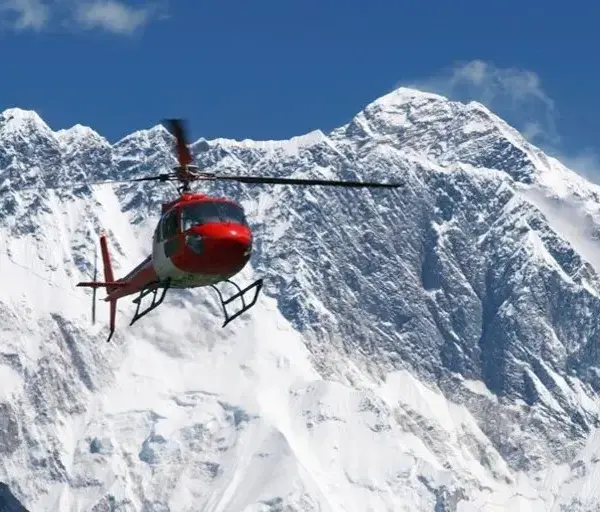
The trend of helicopter weddings has emerged as one of the most exclusive wedding trends in Nepal. They suit best to those couples who desire something dramatic, adventurous, and memorable.
Think of flying over mountains and valleys, landing at an amazing place of view of the Himalayas, and having a wedding there, which seems to be totally out of this world. The weddings are frequently picked to intimate ceremonies, symbolic weddings, vow renewals, or pre-wedding shoots.
There are also couples who combine the helicopter experience with some Nepali rituals that are carried out by a priest or Lama and this gives the luxury a cultural twist.
Among the most famous viewpoint in the everest region is Kalapathar. It also provides one of the best and nearest perspective of the Mount Everest, thus becoming a dream destination by couples aspiring to have a classic Himalayan scenery.
A helicopter can take you close to this area for a symbolic ceremony or a special wedding shoot. The landscape is amazing, yet due to the elevation, health and safety must come first. People with breathing problems, heart problems or altitude issues should seek a proper consultation prior to moving on such an event.
Getting married at Everest Base Camp is for couples who truly love adventure. At 5,364 meters, the location is dramatic, raw, and unforgettable.
Unlike a helicopter ceremony, this experience usually involves several days of trekking through the Khumbu region. Along the way, couples pass Sherpa villages, monasteries, and beautiful mountain landscapes. By the time they reach Everest Base Camp, the ceremony feels even more meaningful because of the journey behind it.
This kind of wedding is less about luxury and more about experience, endurance, and memory.
There are other life celebrations that Nepal is beautiful in as well as weddings. The engagements may be done in temples or monasteries, resorts, or view points. Families often choose spiritually meaningful places to begin an important new chapter.
In the same way, baby blessing ceremonies can be arranged at home or in temples with family rituals and prayers. Nepal offers a beautiful balance of cultural depth and scenic beauty for these kinds of personal celebrations.
Some of the best Himalayan locations for symbolic ceremonies, engagements, pre-wedding shoots, or vow renewals include:
Each of these places offers something special, depending on whether you want drama, privacy, spiritual meaning, or natural beauty.
For couples who want a more elegant and professionally managed event, Nepal also offers beautiful 5-star wedding packages, especially in Kathmandu and Pokhara.
These packages may include:
For 100 to 150 guests, luxury weddings may range from USD 25,000 to 60,000 or more, depending on customization and location.
These are especially popular among NRNs, international couples, and families who want everything handled smoothly.
A longer traditional wedding may include:
For 50 to 150 guests, the estimated cost may be:
The final budget depends on venue, guest count, catering, decoration, photography, cultural programs, accommodation, and transport.
The prices of the wedding dresses are widely different when considering renting, purchasing, or tailoring the clothes.
Typical estimates:
The expenses of transportation can involve:

The process of organizing a wedding in Nepal may become overwhelming especially when you are outside the country or when you are organizing an event elsewhere. That is where Life Himalaya comes in.
Nepal is not just the home of the Mount Everest. It is also one of the richest and most meaningful places in the world to embark on a new life…
Life Himalaya helps couples and families manage the wedding from beginning to end.
1. Planning and consultation
We comprehend initially your vision, budget, desired location, number of guests, and the style of the ceremony.
2. Venue and permits
Life Himalaya assist in venue coordination, hotel, village coordination, and permits to the mountain or protected areas.
3. Ritual and cultural setup
We can organize priests, Lamas, music and dance among other cultural aspects to make the ceremony original.
4. Decoration and design
We do the event styling, in floral arrangement, stage design and lighting.
5. Guest and logistics support
Airport pickup, accommodation, transportation, food coordination, and travel support can all be managed.
6. Safety and health planning
It is particularly significant that appropriate safety and acclimatization planning is required when it comes to the weddings at an elevated altitude.
7. Stress-free execution
Most importantly, Life Himalaya oversee the full event so the couple and family can focus on enjoying the experience.
Can foreigners legally get married in Nepal?
Yes, foreigners are able to marry legally in Nepal, though they must undergo the necessary legal procedure and submit the necessary documents.
What documents are normally required?
Normally, couples need a valid passport, valid visa, proof of marital status, passport photos, a no-objection letter from the embassy, and witnesses. Exact requirements can vary.
How long does the legal process take?
The process may take two to three weeks in most instances due to residency and court processes.
Is it possible to have a legal and traditional ceremony?
Yes, a lot of couples perform the legal registration then have a traditional wedding.
What is a perfect wedding season in Nepal?
The best season is normally spring and autumn since the weather is favorable and mountain views are more visible.
Is a mountain wedding safe?
Yes, but proper planning is necessary, especially for high-altitude locations.
How many days does a traditional ceremony take?
Depending on the rituals and family, it may take as short as one day and as long as five days.
Can rituals be customized?
Yes, most ceremonies can be adapted based on religion, culture, and personal preference.
How much does it cost 100 guests on average?
A typical wedding of 100 people can range between USD 8,000 -15,000 and a posh wedding can begin at USD 25,000 and upward.
Is it possible to organize photography and videography in Life Himalaya?
Yes, they are able to organize professional photographers, videographers and drone videos and mountain photo-shoots.
Are helicopter weddings safe?
Yes, under the supervision of licensed operators and when arranged well in advance regarding weather and health conditions.
Do we need permits for Everest region weddings?
Yes, permits are generally needed for protected regions like Everest.
Can we plan only an engagement or vow renewal?
Yes, those can also be arranged separately.
How early should we book?
It is a good idea to book at least three to six months before, particularly during the wedding seasons.


We plan custom and flexible holiday trips according to your holiday duration, extra wishes, and demands.
Plan your Trips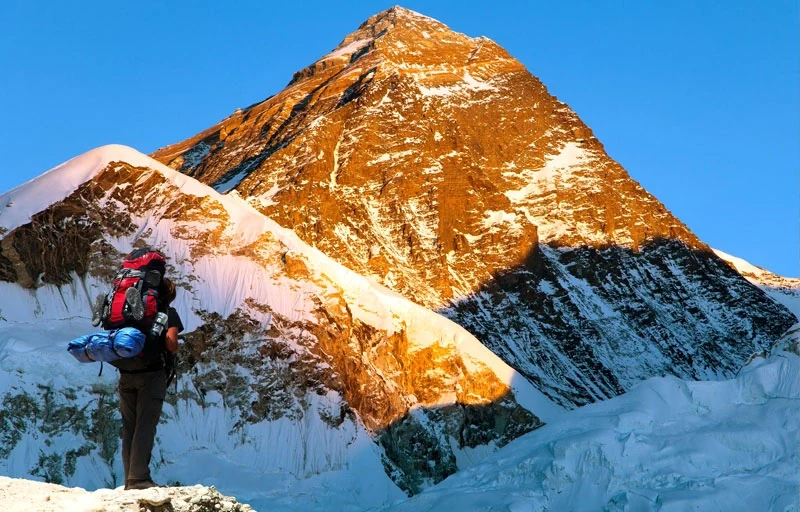
Chat with our Travel Designer Shiba
Need assistance? Our expert agent is here to help! Please fill out the form below to initiate a chat and get your queries resolved quickly.