

 English
 Dutch
Dutch Japanese
 Hindi
Hindi Italian
 Spanish
 French
 German
 Chinese
 Korean
 Arabic
 Hebrew
 Russian
 Portuguese
 Danish
 Czech
Czech Polish
 Swedish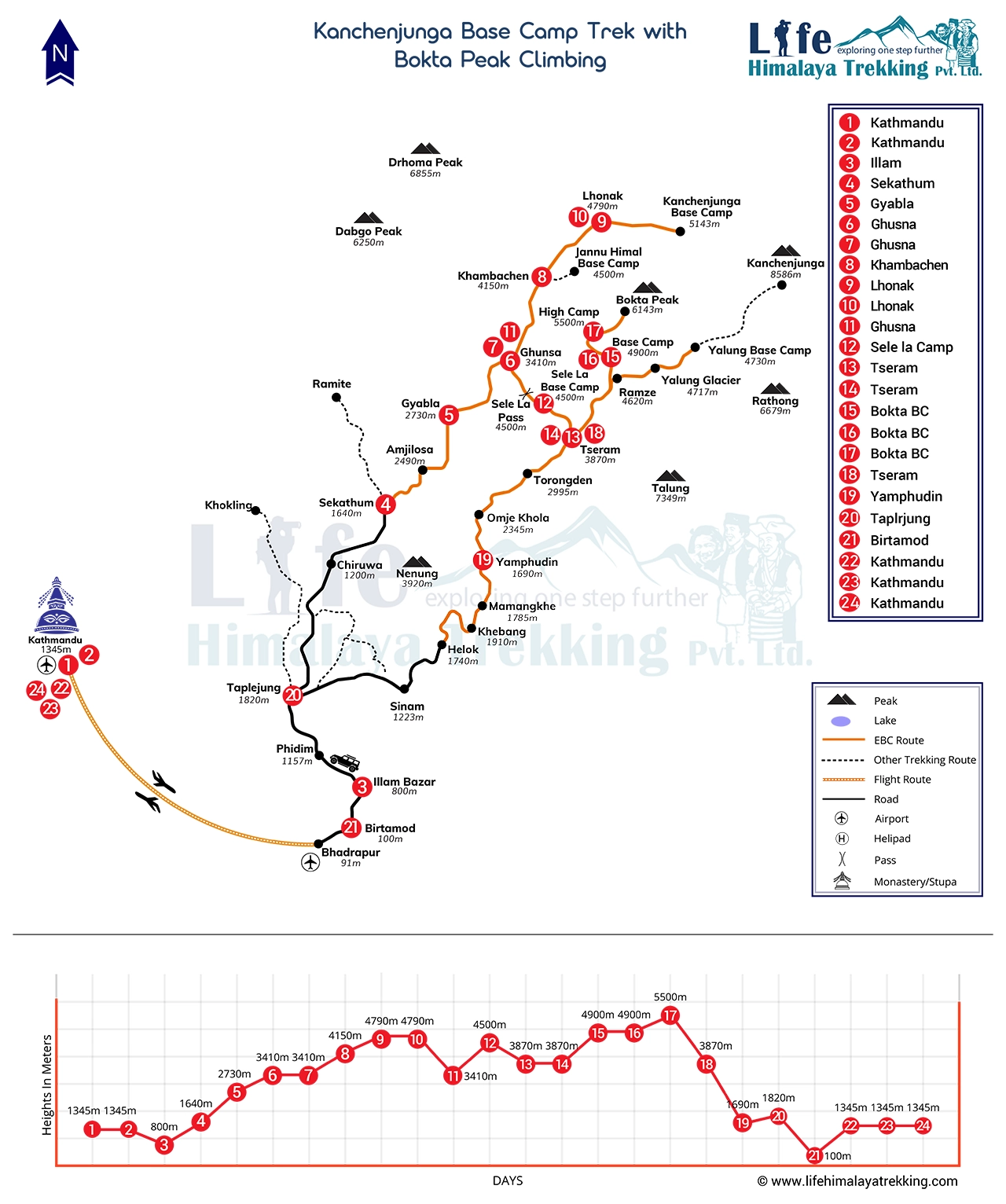






Plan Your Next
Journey to the Himalayas!
We plan custom and flexible holiday trips according to your holiday duration, extra wishes, and demands.
Plan your Trips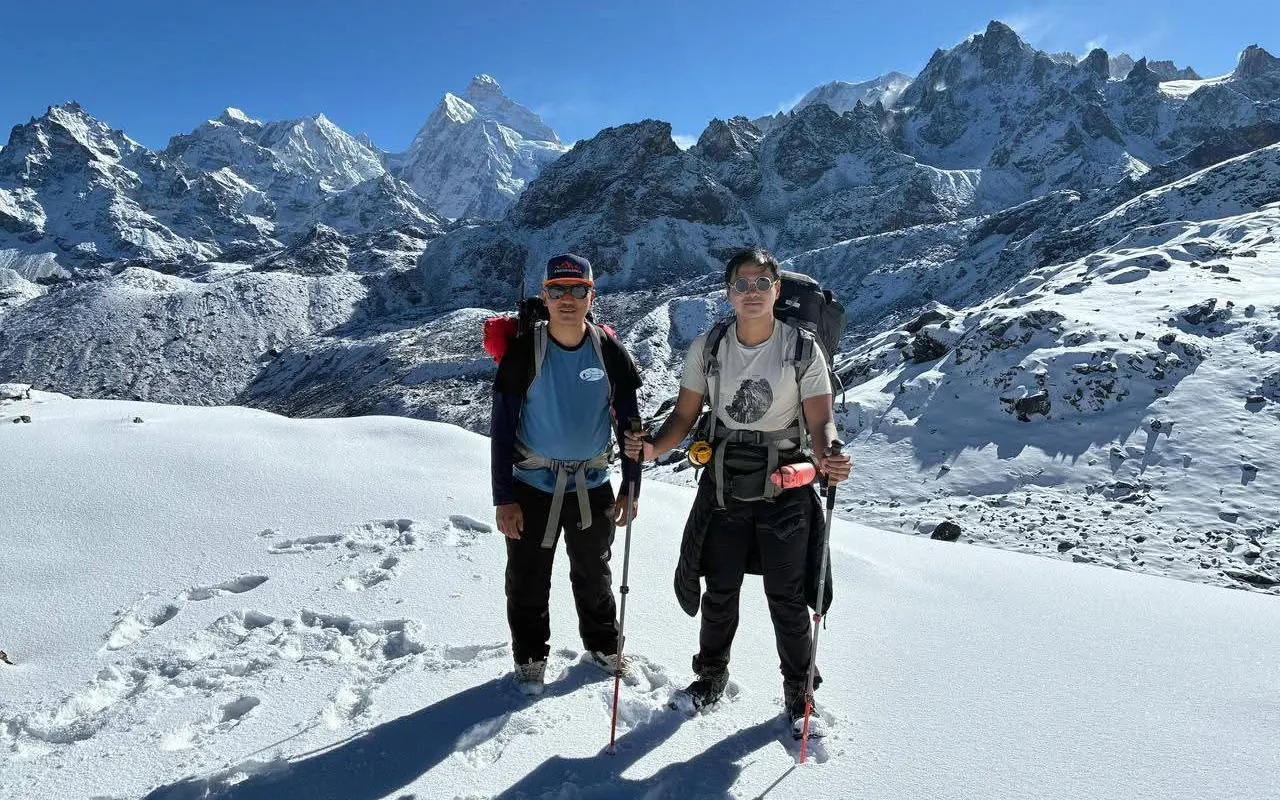

Max. Altitude
6,114 m
Best Season
Oct-Dec & Mar-May
Activity
Trekking, Climbing
Start / End Point
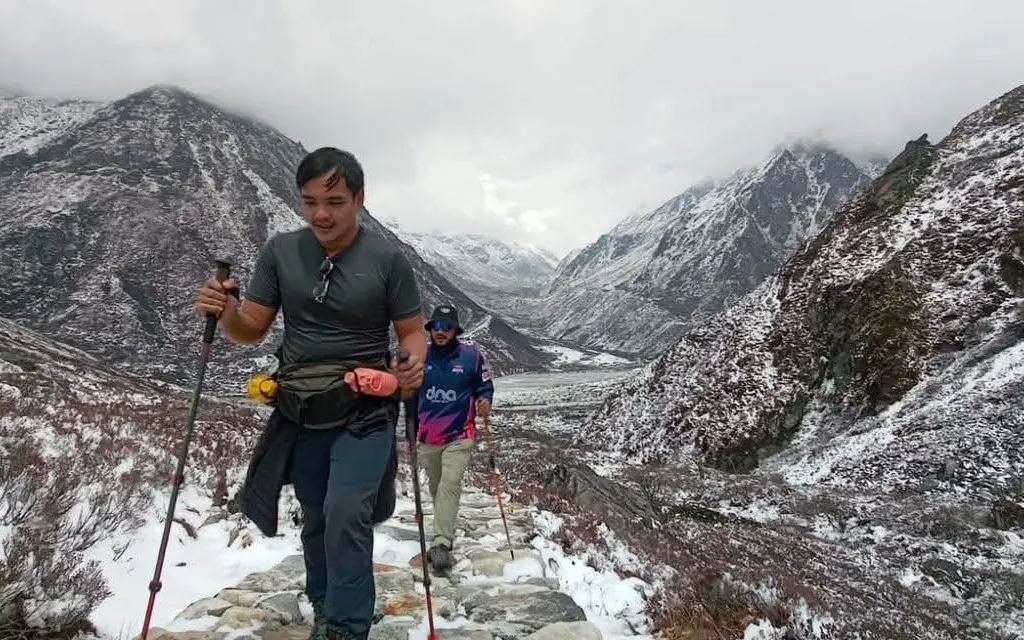
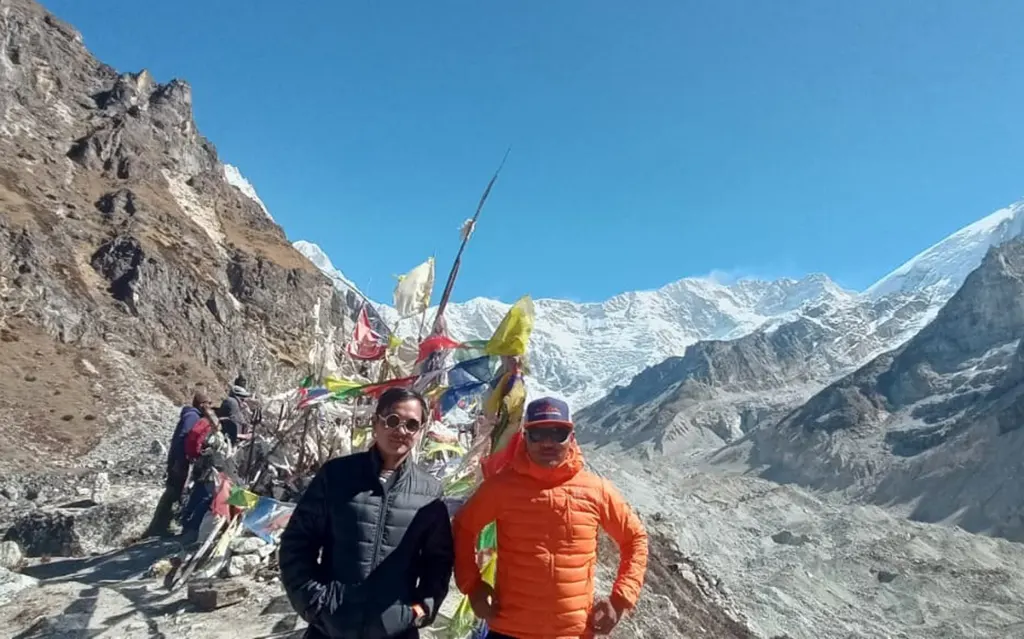
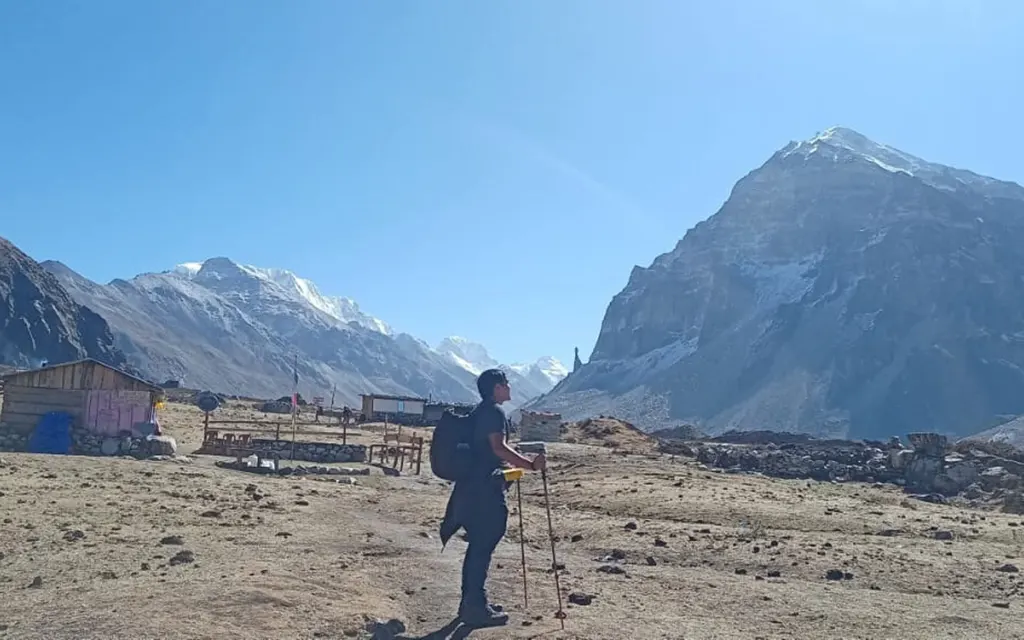
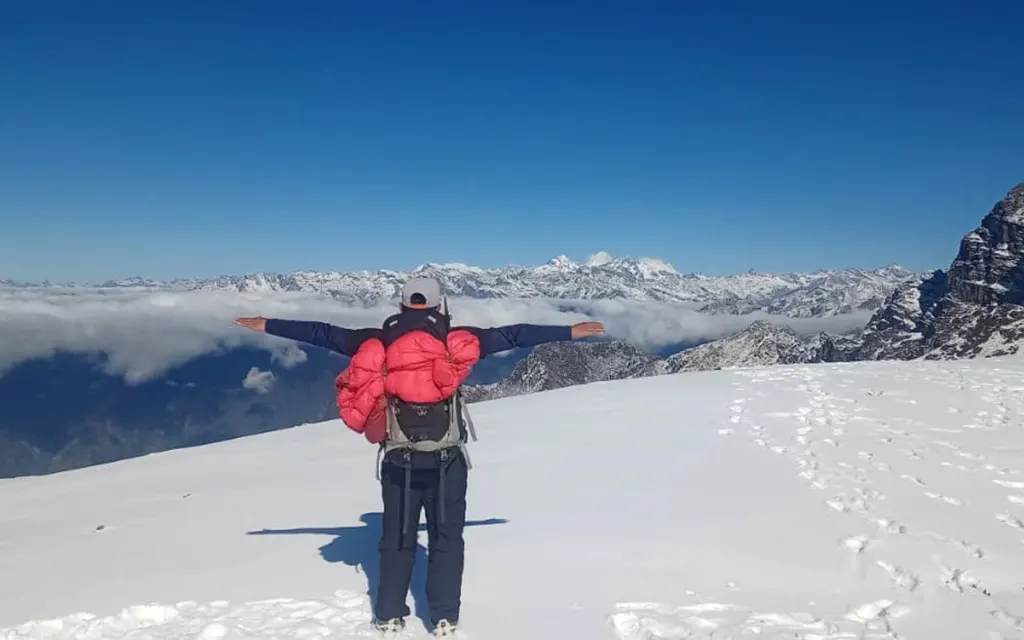
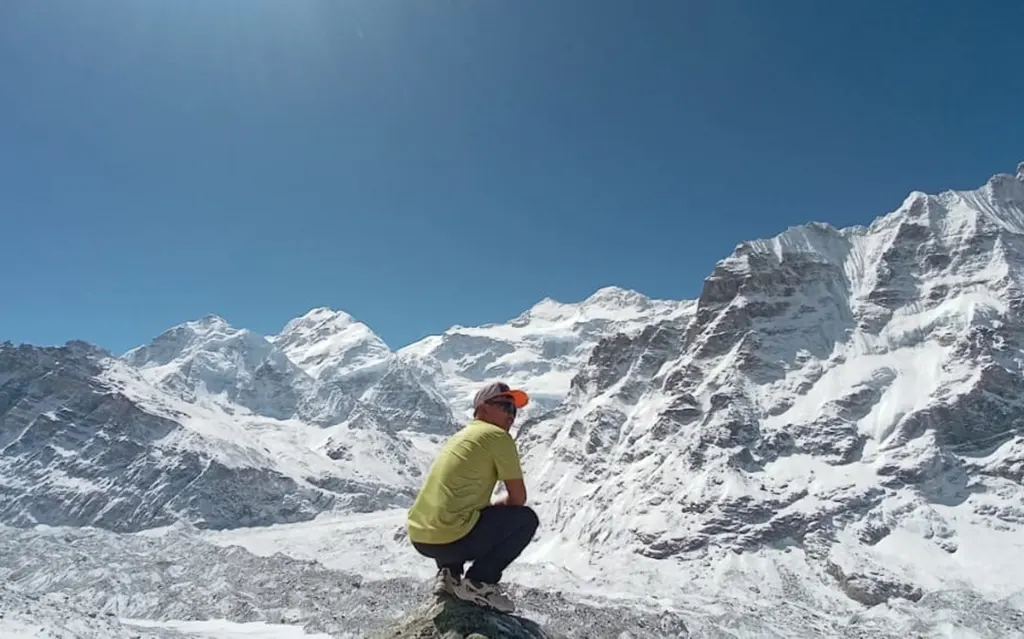
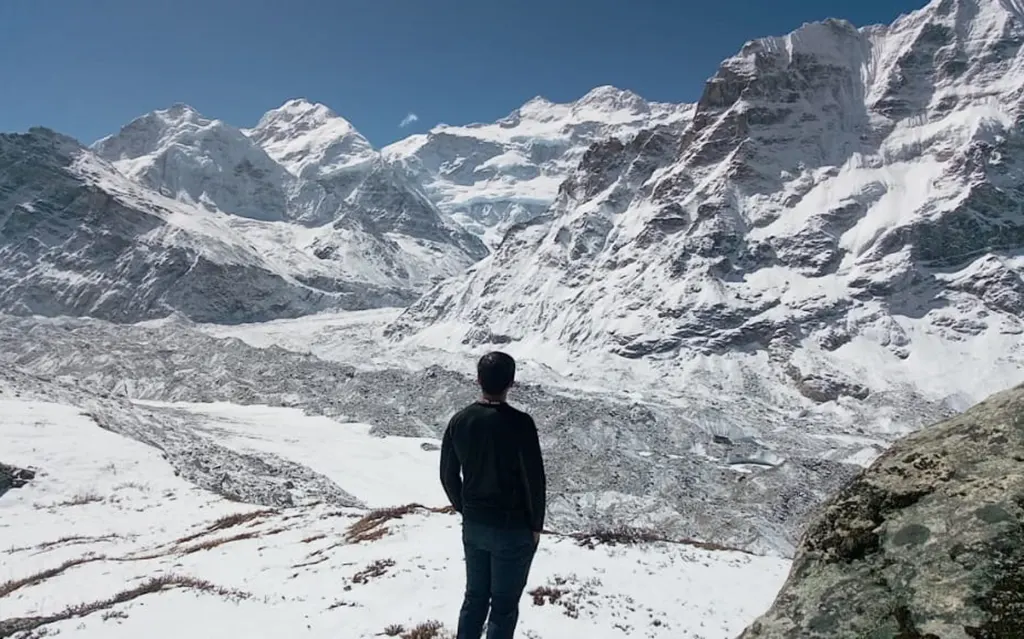
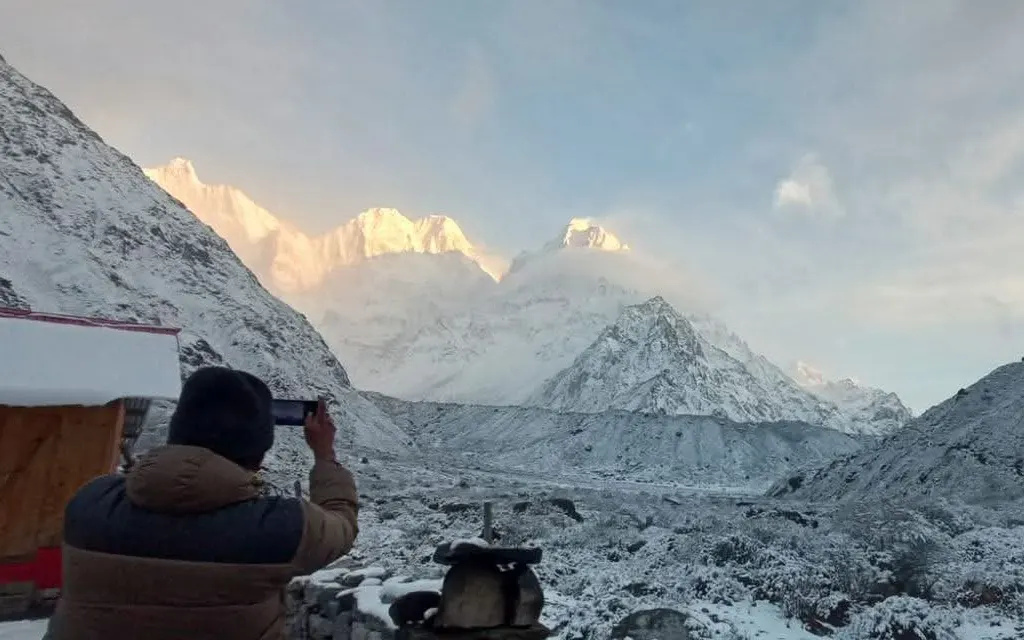
Kathmandu/KathmanduThe Kanchenjunga Base Camp Trek with Bokta Peak Climbing is an exciting journey that combines remote trekking with a rewarding Himalayan peak climbing experience. This adventure leads you through the eastern side of Nepal, through beautiful forests, traditional mountain villages, high valleys, glaciers and into some of the least altered lands of Nepal. This trek is quieter than the popular areas for trekking and it is a true mountain experience.
The trail traverses the Kanchenjunga Conservation Area, which boasts rich biodiversity and various ethnic groups, such as Limbu, Rai, Sherpa and Tibetan. You will be accommodated in local teahouses, learn about mountain culture and get warmly welcomed on the way. On the way, the green hills and rhododendron woods turn to rock and snow-covered peaks.
The Kanchenjunga Base Camp Trek takes you to higher and higher altitudes and gives you the time to acclimatize yourself before arriving at Pangpema or Kanchenjunga North Base Camp (5,143 m / 16,873 ft. You can get close to the view of the world’s third-highest peak, Mount Kanchenjunga, from this spectacular spot, along with glaciers and surrounding peaks. The trail winds through some of the most beautiful mountain passes on the way to the south side of the Kanchenjunga area.
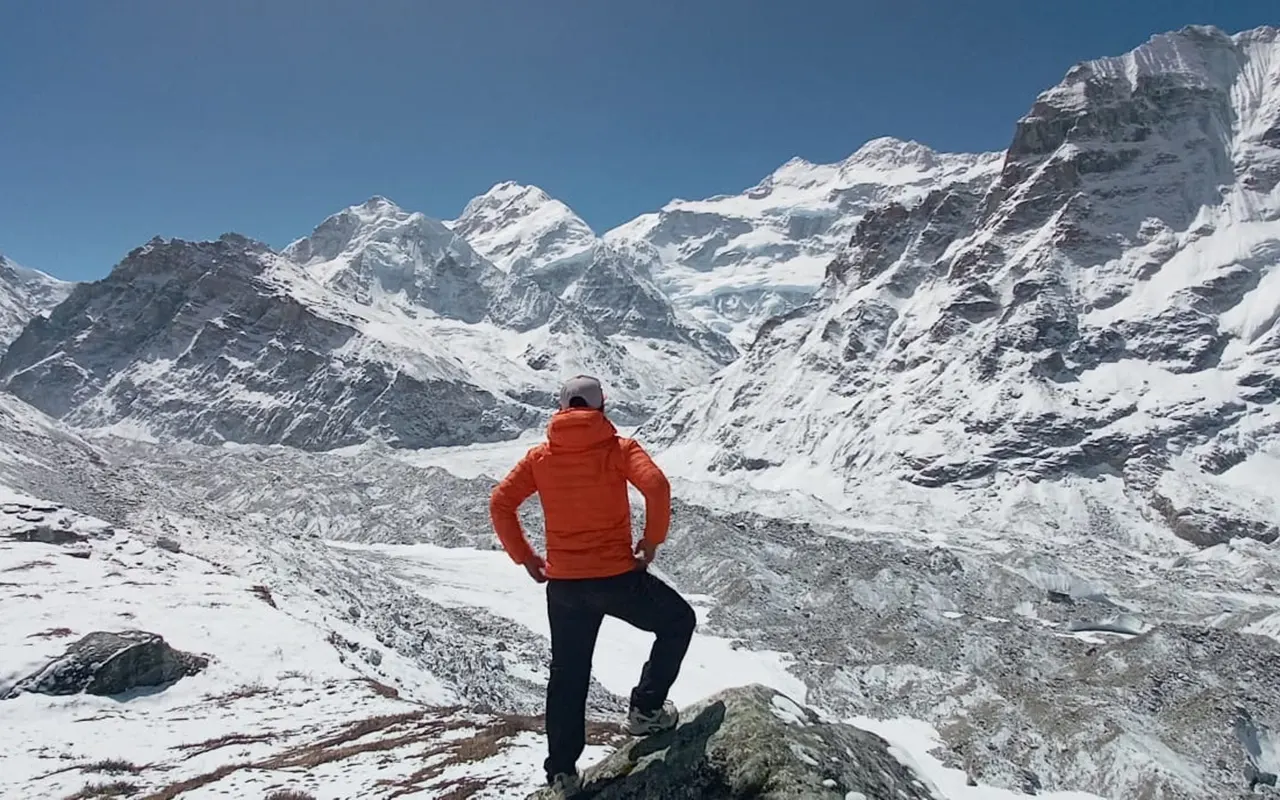
The trek concludes with Bokta Peak Climbing, after which the adventure proceeds. This non-commercial climbing peak is at 6114 m / 20059 ft), a great challenge for trekking enthusiasts to experience Himalayan mountaineering. It’s a process of using crampons, ropes and other climbing gear towards the summit with guidance from experienced climbing guides. The reward is a panoramic view of Kanchenjunga, Jannu, Kumbhakarna and many more of the Himalayan mountains.
This trek is recommended for physically fit trekkers who have already had experience in trekking at high altitudes. Walking, acclimatization and a well-researched itinerary are all part of making for a safe and fun trip. The spring and autumn seasons are ideal for hiking, offering clear mountain views, comfortable weather and conditions and stable weather.
Life Himalaya Trekking arranges all things related to the trip: permits, transport, lodging and accommodation facilities, experienced guides, climbing support and logistics. By planning this incredible Himalayan adventure with professional guidance and local knowledge, you can concentrate on the fun parts.
The trip starts from Kathmandu by air to Bhadrapur and then a beautiful drive to Sukethum, the starting point. The trail follows the Ghunsa Khola and passes through villages like Amjilosa, Gyabla and Ghunsa. The terrain transitions from thick forests and river valleys to alpine meadows, rock formations and glaciers as you ascend.
Next, it is Kangpem and Lhonak to Pangpema (5,143 m / 16,873 ft), from where Kanchenjunga North Base Camp is visible. From Ghunsa, the path passes through Sele Le Pass and Sinion La Pass and bends down to Tseram and then to Kanchenjunga South Base Camp at Oktang.
The trail turns off the main trekking route from Tseram, leading to Bokta Peak Base Camp. The return flight from Bokta Peak (6,114 m / 20,059 ft) goes through Yamphudin, Helok, Taplejung, Birtamod and Bhadrapur en route back to Kathmandu.
Welcome to Nepal. Once you have landed at Tribhuvan International Airport, you will be picked up by our representative, who will drive you to your hotel in Kathmandu. It will only take about 20-30 minutes, depending on traffic. As you travel, you’ll experience the hustle and bustle of the city, its markets and the everyday life in Nepal’s capital.
Once you have arrived at your hotel, you can rest and recuperate from your travel. This is a great time to get used to the local time before embarking on your adventure. Several outdoor shops are available nearby if you require any trekking equipment at the last moment; you can purchase or hire it.
Our trekking team will greet you with a briefing of the trip in the evening. We will discuss the Kanchenjunga Base Camp Trek with Bokta Peak climbing itinerary, safety guidelines and answer any queries you may have. Have a welcome meal and a good night’s sleep, because the preparations are about to start.
Maximum Altitude
1,350 m.
Meals
DinnerTrek Duration
20 to 30 minutes
Accomodations
HotelToday is the day of the last preparations for departure from Kathmandu. Following breakfast, the paperwork will be finalized, such as the Kanchenjunga Conservation Area Permit and Restricted Area Permit. Also, your Bokta Peak climbing permit will be confirmed too and all set for the expedition.
Our guides will carefully check your trekking and climbing equipment. We will work on facilitating reliable rentals for additional equipment like a sleeping bag, down jacket, crampons or other climbing gear if necessary. It’s also a great time to clean out your duffel bag and ensure that you have all the necessary gear to go on your trek.
You can optionally take a sightseeing tour around Kathmandu in the afternoon. Top tourist destinations include Swayambhunath Stupa (1,450 m / 4,757 ft) and Boudhanath Stupa (1,400 m / 4,593 ft) where you can immerse yourself in Nepal’s culture and enjoy city views. In the evening, head back to the hotel to unwind in preparation for the early morning flight the next day.
Maximum Altitude
1,450 m.Meals
Breakfast, Lunch and DinnerTrek Duration
4 to 5 hoursAccomodations
HotelEarly morning transfer to Kathmandu Airport and scenic domestic flight to Bhadrapur. The flight lasts about 1 hour and is fantastic for the views of the hills of Nepal and, on clear days, the Himalayas too. Once we arrive, we’re picked up by the driver and driven the rest of the way.
The journey to Ilam is approximately 100 km and takes 4-5 hrs. The road starts from the warm lowlands and slowly ascends to the lush green hills of eastern Nepal. We visit small towns, rivers, villages and beautiful tea gardens while we’re traveling, which make Ilam famous all over the country.
By late afternoon, we arrive in Ilam (1,820 m / 5,971 ft). Once you’ve registered at our lodge, you’ll be able to enjoy the tranquility of the mountain and the fresh air. This higher altitude will also allow your body to acclimatize itself a little before the trek starts.
Maximum Altitude
1,820 m.Meals
Breakfast, Lunch and DinnerTrek Duration
1 hour flight and 4 to 5 hours driveAccomodations
LodgeWe depart from Ilam after breakfast and drive along the road to Sukethum. The ride is along mountain roads, through remote villages, river valleys and forested hills. After approximately six or seven hours, we arrive at Sukethum (1,585 m / 5,200 ft) where our trek officially starts.
We begin our walk from Sukethum on the Ghunsa Khola. The trail winds through bamboo forests, over several suspension bridges and upstream the river. Rising gradually, one can enjoy the peaceful environment while getting accustomed to the trail conditions.
After a 4-to-5-hour hike, we arrive at Amjilosa (2400 m / 7874 ft), a small village with basic teahouses. Local communities live in the village, which still follows their traditional life in the mountains. Have a hot supper, get a good night’s sleep and look forward to another fine day on the trail.
Maximum Altitude
2,400 m.Meals
Breakfast, Lunch and DinnerTrek Duration
6 to 7 hours drive and 4 to 5 hours trekAccomodations
TeahouseThis is a gentle walk-through lovely woodland where you will be able to see oak, pine, bamboo and rhododendron trees. Overall, the day is pleasant, as the route heads down the Ghunsa Khola through the peaceful surrounds into the Kanchenjunga region.
The route passes through wooden bridges, waterfalls and some small villages where people still live their traditional lives. Be sure to watch the forest, as there are many birds of the Himalayas and wildlife present, including, though rarely, the rare red panda.
It is late afternoon and we arrive in the peaceful village of Gyabla (2730m / 8957ft). There are a few simple teahouses in the village where we stay the night. Take in the fresh mountain air, the view of the valley and a good night.
Maximum Altitude
2,730 m.Meals
Breakfast, Lunch and DinnerTrek Duration
4 to 5 hoursAccomodations
TeahouseAfter breakfast, onwards through the forests and by the Ghunsa Khola river. The path follows a number of suspension bridges and slowly climbs as the terrain opens up. Today’s walk is pleasant in the fresh air of the mountains and the quiet.
We eventually arrive at Phale, a traditional Tibetan village with prayer flags, mani walls and a small monastery. A pleasant tea stops along the way. The stroll then heads into alpine meadows and scattered forests, just a few times offering a glimpse of the mountains.
After a late afternoon, we reach the biggest village on the Kanchenjunga trek, Ghunsa (3,427 m / 11,243 ft). The village has comfy tea houses, a monastery and basic facilities for trekkers. Once you check in at the lodge, you can go and visit the village or the local monastery, then have dinner and spend the acclimatization day in your room.
Maximum Altitude
3,427 m.Meals
Breakfast, Lunch and DinnerTrek Duration
5 to 6 hoursAccomodations
TeahouseToday is one of the significant acclimatization days in Ghunsa. We do not gain a lot of altitude but remain in the village to help you acclimate to the lower oxygen levels at (3,427 m / 11,243 ft). A rest day at this elevation reduces the likelihood of altitude sickness and helps you acclimate to higher elevations on the trail.
Following breakfast, one can join a short hike to nearby viewpoints above the village. One of the tried and tested procedures for acclimatization is to walk to a higher altitude and then sleep at a lower one. On the trek, you will enjoy the scenery of the surrounding forests, mountain slopes and the quiet Ghunsa Valley.
The remainder of the day can be spent in Ghunsa, one of the biggest Sherpa settlements in the Kanchenjunga region. Spend time at the local monastery, see the typical stone houses and get to know the local people. Drink plenty of water, eat healthy meals and get plenty of rest before heading up to the higher alpine area tomorrow.
Maximum Altitude
3,700 m.Meals
Breakfast, Lunch and DinnerTrek Duration
2 to 3 hoursAccomodations
TeahouseLeaving Ghunsa in the morning, we continue further into the Kanchenjunga Conservation Area after breakfast. The path slowly ascends through woodland before opening up onto a meadow in open alpine land. The mountain views are stunning, as the trees start to dwindle and rocky slopes, glaciers and snow-covered peaks emerge along the way.
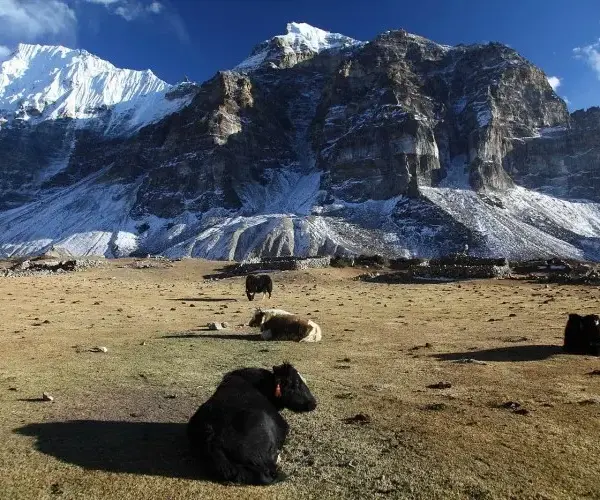
The route is through the Ghunsa Khola and passes many smaller streams. Yaks can be spotted on the high pastures and if lucky, there is a chance to see Himalayan blue sheep or Himalayan tahr on the hillsides around the area. In the last stretch, the walk becomes uphill before arriving at the destination of today.
By afternoon, we arrive at Kambachen (4,050 m / 13,287 ft). A handful of basic teahouses nestle in a small village with the dramatic mountain scenery. An excellent view of Jannu (also called Kumbhakarna) can be had on clear days. Tonight, relax after dinner and get ready for another steep ascent tomorrow.
Maximum Altitude
4,050 m.Meals
Breakfast, Lunch and DinnerTrek Duration
5 to 6 hoursAccomodations
TeahouseThe hike today is to one of the highest and most remote parts of the Kanchenjunga area. From Kambachen, it heads up a rocky road with yak pastures, glacial valleys and a steady incline. As one enters the alpine landscape, the vegetation becomes very sparse.
The old landslides and glacial deformation have influenced several portions of the trail, requiring careful footwork. As you ascend further, you get vistas that open up, with spectacular glaciers and imposing peaks of the Himalayas, littered around the valley. The day is made memorable despite the tough terrain with its peaceful ambiance.
In the afternoon we’ll arrive in Lhonak (4,780 m / 15,682 ft), a small temporary village of a few basic lodges. The chilly air of the mountains makes you feel you are now near Kanchenjunga North Base Camp. Once you get here, get a good night’s sleep, hydrate and get ready for tomorrow’s adventure to Pangpema.
Maximum Altitude
4,780 m.Meals
Breakfast, Lunch and DinnerTrek Duration
6 to 7 hoursAccomodations
TeahouseWe leave early in the morning for one of the highlights of the trip. The trail runs along the lateral moraine of the Kanchenjunga Glacier towards Pangpema or Kanchenjunga North Base Camp. The upward ascent is not steep but the walk is on high ground so we maintain a good pace.
As we ascend, the scenery grows more dramatic as glaciers, rock ridges and snow-covered mountains surround us. The trek to Pangpema (5,143 m/16,873 ft) brings us fantastic vistas of the north face of Mount Kanchenjunga, the world’s third-tallest mountain. This is the peak of the trekking part of the expedition.
We take some time to appreciate the views and take some snaps before heading back to Lhonak. The return trek is largely downhill with ample opportunity to rest after a successful day in the high Himalayas.
Maximum Altitude
5,143 m.Meals
Breakfast, Lunch and DinnerTrek Duration
7 to 8 hoursAccomodations
TeahouseIn the mornings, we are on our way down to Ghunsa and out of the high mountains. The trail then returns along the same path through the broad, wide open alpine valley, across rocky areas, past grazing yaks and through beautiful mountain landscapes, which are again different from the other side of the valley.
Slowly we head down to Kambachen where we eat lunch before passing through forests and along the Ghunsa Khola. Going downhill is easier to breathe but the long descent is still a grind and hard to get through on sections of the trail that are uneven.
By late afternoon, we return to Ghunsa (3,427 m / 11,243 ft). Several nights at high altitude and then the humidity at the lower elevation is much more comfortable. Have a hot meal, arrive at the lodge and take advantage of the improved sleeping conditions on the way to the south side of the Kanchenjunga region.
Maximum Altitude
4,780 m.Meals
Breakfast, Lunch and DinnerTrek Duration
6 to 7 hoursAccomodations
TeahouseThe trail today starts at Ghunsa and follows a gentle ascent to Sele Le Camp. The trail traverses rhododendron forests, alpine meadows and open hillsides. In the spring, the rhododendrons put on a show with their beautiful blooms, adding color to the surrounding landscape.
The forest gets gradually thinner and views more open as we keep climbing. Grazing yaks and prayer flags with colors may be seen on the way. This part of the circuit is quieter, with fewer hikers along the trail, than the northern side of the trail.
By afternoon, we arrive at Sele Le Camp (4,400 m / 14,436 ft). The camp has basic accommodation and provides beautiful views of the surrounding mountains. Overnight is spent resting, keeping warm and getting ready for the high mountain passes of tomorrow.
Maximum Altitude
4,400 m.Meals
Breakfast, Lunch and DinnerTrek Duration
4 to 5 hoursAccomodations
TeahouseToday is one of the most exciting and challenging days of the trek. Early in the morning, we depart from Sele Le Camp and start climbing up towards Sele Le Pass (4,320 m / 14,173 ft). The hike takes you through rocky ridges and is adorned with prayer flags in various colours; the mountains are a wonderful backdrop for the sunrise.
Crossing the first pass, we cross over Sinion La Pass (4,300 m / 14,108 ft). There are several steep uphill and downhill sections, so we walk carefully and slowly. From there, you can take a wonderful view of Jannu, Makalu and other snow-covered peaks before embarking on the long descent.
The trail then descends into the Yalung Glacier Valley where it transitions from rocky ridges to alpine meadows. Late afternoon, we arrive at Tseram (3,870 m / 12,697 ft), a small mountain town. Upon arrival at the lodge, take a warm meal and get a good night’s rest and then head off to Kanchenjunga South Base Camp tomorrow.
Maximum Altitude
4,320 m.Meals
Breakfast, Lunch and DinnerTrek Duration
7 to 8 hoursAccomodations
TeahouseEarly in the morning early we depart from Tseram and head towards Ramche. This trail slowly ascends next to the Yalung glacier, traversing through rocky moraines, alpine grasslands and stunning mountain scenery. The surrounding peaks as we climb higher are even more impressive.
After Ramche, we come to Kanchenjunga South Base camp, also known as Oktang (4900m / 16076ft). This perspective provides an incredible view of the south face of Mount Kanchenjunga along with Kabru, Rathong and other Himalayan peaks. It is one of the most beautiful places on the whole expedition and the surroundings are peaceful.
We take some time to take photos and enjoy the scenery, before heading back down along the same path to Tseram. On the walk back, it is easier and you will enjoy the wonderful valley from a different viewpoint, before retiring to the lodge at night.
Maximum Altitude
4,900 m.Meals
Breakfast, Lunch and DinnerTrek Duration
6 to 7 hoursAccomodations
TeahouseToday it’s time to break away from the main trek and go to Bokta Peak Base Camp. The trek winds along the lateral moraine of the Yalung glacier, then gradually ascends into a rugged alpine environment. With the increase in altitude, the scenery became more and more picturesque, surrounded by glaciers, icefalls and tall mountains of the Himalayas.
The path is less noisy than earlier parts of this hike and really makes you feel like you are in a remote mountain wilderness. We are kept abreast by our guides who keep us at a gentle pace, so we are able to adjust to the altitude whilst enjoying the great scenery that we pass through on the way.
By afternoon, we reach Bokta Peak Base Camp (5,100 m / 16,732 ft). Once we’ve got settled into camp, our climbing guides will go over equipment and discuss the climbing plan for the next few days. Rest, drink plenty of water and physically and mentally prepare for the summit attempt for the evening.
Maximum Altitude
5,100 m.Meals
Breakfast, Lunch and DinnerTrek Duration
5 to 6 hoursAccomodations
CampIt is a rest day, acclimatization day and practice climbing day. For 2 days, staying at Bokta Peak Base Camp (5100 m / 16732 ft) will give your body the time required to acclimate to the altitude before arriving at High Camp. Carefully acclimatizing helps to ensure safety and success on the summit.
You’ll get hands-on instruction with the gear needed for climbing from our expert climbing staff during the day. You will learn to walk with crampons, ice axe, clip into fixed ropes and learn safe climbing techniques. This session also makes you feel more confident going into the summit push.
The rest of the day is used to set up equipment, weather and preparations. Get much rest, have good food and drink lots of water. It’s important to get a good night’s sleep before tomorrow’s ascent to High Camp.
Maximum Altitude
5,100 m.Meals
Breakfast, Lunch and DinnerTrek Duration
3 to 4 hours of trainingAccomodations
CampEarly start to the day and head out of Base Camp to Bokta Peak High Camp. The route continues through steep snow and rocks where our guides make use of fixed ropes if required. The route today is more technical than the trek route and careful footing and teamwork are necessary.
On the ascent to the next level, you will see even more amazing views of the mountain landscape. The glaciers around, steep ridges and snow-covered peaks form an indelible Himalayan scenery. Short breaks are often used to ensure everyone runs at a constant level in thin mountain air.
After an hour or so of more climbing, we reach High Camp (5,573 m / 18,284 ft). Our crew sets up camp and makes preparations for the next summiting attempt. We take a break to sleep as much as we can after an early dinner, before heading out on the difficult but rewarding climb starting before dawn.
Maximum Altitude
5,573 m.Meals
Breakfast, Lunch and DinnerTrek Duration
5 to 6 hoursAccomodations
CampDay 18: Summit Bokta Peak and Descend to Base Camp or Tseram
Today will be the hardest and most satisfying day of the expedition. Early before dawn, we leave High Camp and start the last ascent to the summit of Bokta Peak. It’s a steep snow route we are carefully ascending and will need to use some fixed ropes.
After a few hours of climbing, we arrive at the top of Bokta Peak (6,114 m / 20,059 ft). The top provides us with superb views of Kanchenjunga, Kumbhakarna, Jannu and numerous other peaks of the Himalayas. We take some photographs and celebrate this achievement, then start the descent.
After a careful return to High Camp, we head down to Bokta Peak Base Camp or, if we have the time and the group feels like it, further on to Tseram for the evening. It’s a long day but once it’s done you’ve done something memorable in the expedition.
Maximum Altitude
6,114 m.Meals
Breakfast, Lunch and DinnerTrek Duration
10 to 12 hoursAccomodations
CampFollowing breakfast, we head down from Tseram, leaving the high alpine scene behind. As we descend through the valley, you will pass through rhododendron woodlands, pine trees and quiet valleys. Going downhill is easier on the lungs and the warmer temperature is felt as we go downhill.
We pass through numerous small villages with their traditional mountain way of life and several streams and suspension bridges en route. From the higher sections of the walk, there are also wonderful glimpses of terraced fields and wooded hills.
By late afternoon, we arrive at Yamphudin (2,080 m / 6,824 ft). A traditional village where there are different ethnic groups and a handful of basic teahouses where we stay overnight. A good, lengthy sleep and a hot meal after a productive day on the trail.
Maximum Altitude
3,870 m.Meals
Breakfast, Lunch and DinnerTrek Duration
6 to 7 hoursAccomodations
TeahousesWe’re still on the descent this morning, passing through woods, farmland and tiny villages on our way to Helok. The track is largely downhill and runs along quiet tracks in the lower hills of eastern Nepal. With decreasing altitude, the climate becomes warmer and vegetation becomes greener.
Our trekking is over and we have reached the top of Helok (1,740 m / 5,709 ft). We pick up our waiting vehicle and start our journey to Taplejung. The path runs through rural settlements, agricultural fields and stunning mountainous scenery before arriving at the district headquarters.
By late afternoon, we are at Taplejung (1820 m / 5971 ft) and stay at a local lodge or hotel. The evening is an opportunity to unwind, have a nice meal and mark the end of the trekking part of the adventure.
Maximum Altitude
1,820 m.Meals
Breakfast, Lunch and DinnerTrek Duration
2 to 3 hours trekking and 4 to 5 hours drivingAccomodations
LodgeFollowing breakfast, we head down the hills of Taplejung and set off on the long trip to the lowland town of Birtamod. The drive takes you through the mountains and then down into the fertile plains of eastern Nepal. En route, we cross rivers, tea plantations, villages and stunning landscapes.
There are several short stops which allow you to extend your legs, enjoy refreshments and take in the scenery. From the mountain area, the air is definitely warmer and moister.
Later in the day, we arrive at Birtamod (100 m / 328 ft) where we are to stay at our hotel. The cities are located in remote mountain villages and once there is time for you to enjoy the comfortable accommodations, modern facilities and a good night’s sleep before the flight back to Kathmandu on the following day.
Maximum Altitude
1,820 m.Meals
Breakfast, Lunch and DinnerTrek Duration
6 to 7 hoursAccomodations
HotelFollowing breakfast, we depart from Birtamod and head to Bhadrapur airport. The trip lasts for about one to two hours, passing through a flat terrain in the Terai. Then we head to the airport where we take a domestic flight to Kathmandu, having one last look at the variety of landscapes of Nepal from the air.
We arrive at Kathmandu airport (1,350 m / 4,429 ft) where we are picked up and taken to the hotel. The afternoon can be spent relaxing, exploring the nearby markets or purchasing souvenirs for family and friends. Several weeks spent in the mountains also mean several weeks being able to visit local cafés afterward.
This is followed by a dinner in the evening to say goodbye to our guides and trekking group. This is an amazing chance to commemorate the completion of the Kanchen jungle base camp trek with Bokta Peak climbing and share the experience of the trek with others.
Maximum Altitude
1,350 m.Meals
Breakfast, Lunch and DinnerTrek Duration
2 hours drive and 45 minutes flightAccomodations
HotelToday is a contingency day in case of weather or trail delays during the trek. Assuming that all is well, you can now enjoy a leisurely day exploring Kathmandu or just relaxing in your hotel after your expedition.
Popular cultural touristic sites can be visited like Swayambhunath Stupa (1450 m / 4757 ft), Patan Durbar Square or Boudhanath Stupa (1400 m / 4593 ft). The streets of the city are also very busy and it’s a good place to buy handicrafts, pashmina items, prayer flags and traditional souvenirs.
Dedicate some time to prepare your bags, double-check your international flight information and have a relaxing last night in Nepal. Dedicated to relaxing and taking in the scenery, this day is the perfect end to the several weeks of trekking and climbing in the Himalayan mountains.
Maximum Altitude
1,450 m.Meals
Breakfast, Lunch and Farewell DinnerTrek Duration
Flexible throughout the dayAccomodations
HotelToday is the end of your ever-unforgettable trip in Nepal. Our representative will pick you up from the hotel after breakfast and drive you to Tribhuvan International Airport for your flight to your destination. This trip lasts approximately 20-30 minutes.
If your flight is scheduled later in the day, you may have some free time to enjoy a final walk around the nearby streets or relax at the hotel before leaving for the airport. Our team will help you with your transfer and make sure it goes smoothly.
You bring home wonderful memories from the Kanchenjunga Base Camp Trek with Bokta Peak Climbing, from the remote mountain villages to the amazing Himalayan scenery and the glory of standing on the summit of Bokta Peak. We hope you’ll have an enjoyable trip and look forward to seeing you in Nepal again.
Maximum Altitude
1,350 m.Meals
BreakfastTrek Duration
20 to 30 minutes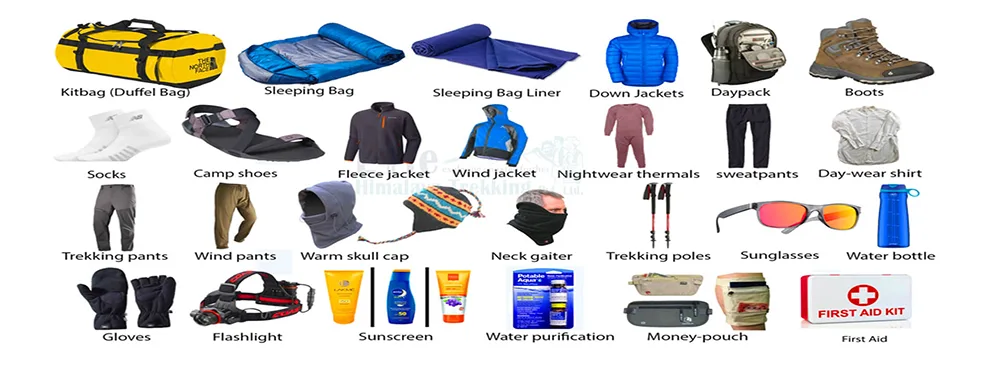
Kanchenjunga Base Camp Trek with Bokta Peak Climbing is an intense journey which also involves technical peak climbing. It is recommended for those who are physically fit and comfortable walking for several hours a day. Days spent trekking are 5-8 hours (excluding the summit day). This hike is steep, rocky and has high passes.
Kanchenjunga Base Camp Trek has the maximum elevation of (5,143 m / 16,873 ft) before you enter the climbing section of the trek. It is necessary to acclimate well because the air is thinner at high altitudes.
Bokta Peak Climbing is an ascent to the summit with the use of climbing gear including crampons, ropes and an ice axe to reach (6,114 m / 20,059 ft). Experienced guides and adequate assistance for the trek are offered by Life Himalaya Trekking.
Spring season (March-May) and autumn season (September-November) are ideal seasons for Kanchenjunga Base Camp Trek with Bokta Peak Climbing. The weather is generally settled during these months, the mountains are clearly visible and trekking is generally comfortable. During the spring, the trail is also lined with blooming forests of rhododendrons.
As you go up to the Kanchenjunga Base Camp Trek gets colder. Near (5,143 m / 16,873 ft), temperatures can drop below freezing during the night. Since it’s sunny, don’t forget warm clothes!
Bokta Peak Climbing section has to be in stable weather, as strong winds, snowfall or poor visibility may impact the climbing. Heavy snow prevails in winter and the summer monsoon can cause rain, slippery trails and restricted mountain views.
On this Kanchenjunga Base Camp Trek with Bokta Peak Climbing, the meals are provided in local teahouses and lodges along the way. The menu is very basic and is sufficient for trekking. Popular options include dal bhat, fried rice, noodles, soups, potatoes, eggs, pancakes and Tibetan bread.
The availability of fresh vegetables decreases with ascending from Kanchenjunga Base Camp Trek. In higher villages, most of the food is carried by the porters or pack animals and hence the food is reduced. Hot tea, coffee, lemon tea and hot chocolate are available in a wide range of options.
The support team cooks at their camp during Bokta Peak Climbing. It is extremely significant to drink water during the entire expedition. It is recommended to have a reusable water bottle and use water purification tablets or a filter to stay healthy.
The Kanchenjunga Base Camp trek with Bokta Peak climbing is done at very high altitudes and altitude sickness is a big concern. The symptoms may be headache, nausea, dizziness, tiredness, loss of appetite and difficulty sleeping. It is important to be able to see these indicators early for a safe journey.
Kanchenjunga Base Camp Trek is a well-planned trekking route that provides acclimatisation days before reaching (5,143 m / 16,873 ft). Slowly moving up in elevation, drinking lots of water and staying away from alcohol will help prevent altitude sickness.
For Bokta Peak Climbing, the climbers go even higher to the summit at (6,114 m / 20,059 ft). When symptoms get worse, it is best to descend right away and listen to your guide’s instructions.
Preparation is crucial to the Kanchenjunga Base Camp Trek with Bokta Peak Climbing. Training should start at least two to three months before the trip. Hiking, running, cycling and stair climbing regularly will help you build endurance. Leg and core strengthening will also help you to carry out long trekking days.
The Kanchenjunga Base Camp Trek involves several hikes along the steep and uneven slopes throughout the trail. When using a light daypack for training, it helps you acclimatize to trekking. Trekking boots should be comfortable before the trek to prevent blisters.
Bokta Peak Climbing involves basic climbing skills and good endurance. Use hiking poles and learn how to cope with cold weather. Making the trip safer and more enjoyable will depend on being well prepared.
A majority of the foreign trekkers who join us on the Kanchenjunga Base Camp Trek with Bokta Peak Climbing can be granted a trek visa of Nepal at Tribhuvan International Airport or the Nepalese Embassy. Passports must be valid for at least six months and must have blank pages for visa stamps.
There are various permits needed for the Kanchenjunga Base Camp Trek: Kanchenjunga Conservation Area Permit, Restricted Area Permit. The region is a restricted trek area and must be trekked with a licensed guide and abide by the current permit requirements laid down by the Nepal government.
In addition to this, the climbing permit obtained from Nepal Mountaineering Association is mandatory for Bokta Peak Climbing. Before the expedition, all necessary permits and paperwork will be completed and arranged by Life Himalaya Trekking.
Health is always the priority of the Kanchenjunga Base Camp Trek with Bokta Peak Climbing. Make sure you walk slowly, drink plenty of water and try to take breaks often to allow your body to acclimate to the altitude changes. If you experience any illness at any point during the trip, tell your guide right away.
The Kanchenjunga Base Camp Trek is a trek in remote mountain areas where medical facilities are very limited. Always carry a personal first aid kit with basic medicines, blister treatment and any prescribed medications.
On Bokta Peak Climbing, the technical parts of the climb are taken care of by experienced climbing guides and weather is closely tracked. It is important to follow the advice of the guide, wear the right safety gear and use good climbing techniques to ensure a safe and successful expedition.
The Kanchenjunga Base Camp Trek with Bokta Peak Climbing starts with a domestic flight from Kathmandu to Bhadrapur and then it is a beautiful drive to the eastern hills. The road runs up to Sukethum, the beginning of the trekking route. The return trip is along the same route but in the opposite direction at the end of the expedition.
The Kanchenjunga Base Camp Trek is a combination of domestic flight, private jeep and on-foot trek to the remote villages and mountain valleys. Travel times to and within Eastern Nepal may vary due to poor road conditions after rainfall.
The necessary climbing equipment, camping gear and expedition supplies for Bokta Peak Climbing are carried by the porters and pack animals to where they are required. All the transportation is controlled by Life Himalaya Trekking in order to concentrate on the adventure.
Please note that travel insurance is highly recommended for the Kanchenjunga Base Camp Trek with Bokta Peak Climbing. The adventure is set in a remote mountain area, with limited medical facilities available. In case you require emergency treatment, trip cancellation or help during unexpected circumstances, you are covered by a suitable policy for financial protection.
Kanchenjunga Base Camp Trek is a trek that takes you to a maximum altitude of (5,143 m / 16,873 ft). Check with your insurance that it includes high-altitude trekking, emergency helicopter evacuation, Medical costs and repatriation. In addition, a policy that covers lost bags or trip delays is good to have.
Additionally, mountaineering insurance of up to the maximum altitude (6,114m / 20,059 ft) of the climbing expedition is required for Bokta Peak Climbing. Please read the policy carefully before travelling to ensure all planned activities are covered.
Even though many services are offered in Kanchenjunga Base Camp Trek with Bokta Peak Climbing, there are personal expenses that you have to make while on the trek. Snacks, soft drinks, bottled water, hot showers, battery charging, laundry and Internet access are typically not included in package costs.
Kanchenjunga Base Camp Trek price escalates with the gain of altitude as the supplies are carried by porters or pack animals. It is essential to have a good supply of Nepalese currency with you as banking services and card payment methods are usually not available in the remote villages.
Additional expenses one might want to consider for Bokta Peak Climbing include guide and porter tips, personal climbing gear hire if needed, travel insurance and souvenirs bought prior to or after the expedition. If you can work these out beforehand, it will make your journey more comfortable.
During the Kanchenjunga Base Camp Trek with Bokta Peak Climbing, the trekker will pass through villages with various ethnic groups and cultures. The official language is Nepali and the local people may also speak Limbu, Rai, Sherpa, Tibetan and other local languages. Some basic Nepali greetings are a good way to get in touch with residents.
English is widely spoken by trekking guides and is understood in many teahouses in the Kanchenjunga Base Camp Trek. Mobile phone coverage extends to some of the lower villages and weak or no mobile phone signal is found in higher mountain regions. Access to the internet is restricted and may not always be reliable.
For Bokta Peak Climbing, there is limited use of communication with the guides and climbing team. Life Himalaya Trekking offers highly qualified English-speaking guides who assist in communication, logistical and local arrangements during the trek.
The Kanchenjunga Base Camp Trek with Bokta Peak Climbing goes through the protected forest and traditional villages, traveling through the remote mountain landscape. Respect the customs of local people, follow the directions of your tour guide and don’t disturb wildlife. It is important to follow the trail at all times to help prevent spoiling the environment and to keep safe.
On the Kanchenjunga Base Camp Trek, avoid leaving behind trash on the trail or harming the environment and plants. Don’t drink alcohol or smoke at high altitude, as this may worsen altitude illness. Another thing to remember when trekking is not to take the time to hurry, as it allows your body to acclimate.
Never climb without your guide and never disregard safety instructions for Bokta Peak Climbing. Always wear the recommended climbing gear and always immediately inform your guide of any health concerns.
The Kanchenjunga Base Camp Trek with Bokta Peak Climbing is a great opportunity to take photos of mountains, glaciers, forests and traditional villages. Take a fully charged camera and extra batteries as charging stations become less available in higher elevations.
When visiting the Kanchenjunga Base Camp Trek, always request permission to take close photographs of local people, monasteries or religious ceremonies. Respecting local culture contributes to positive experiences for visitors and local communities.
In Nepal, the use of a drone is limited in most places during Bokta Peak Climbing. In most cases, flying a drone requires obtaining permission from the Civil Aviation Authority of Nepal and other authorities. Be sure to consult the current rules before you bring it or fly your drone on your trip.
For the first time on the Kanchenjunga Base Camp Trek with Bokta Peak Climbing, please reach Nepal 1 or 2 days before the trek. This allows you ample time to recuperate after your flight, pack your gear and make your final trip arrangements.
Kanchenjunga Base Camp Trek is a trek to the remote regions of the mountain where there are limited facilities. Bring sufficient Nepali currency as there is no ATM or card payment services after the trek begins. Reusable water bottles, warm jackets, sun block and personal medications will also make traveling more comfortable.
When conducting Bokta Peak Climbing, take care to listen to your guides, drink plenty of water and walk at a reasonable pace during the trip. Life Himalaya Trekking will guide you with experienced guides and well-planned logistics so that you can enjoy the adventure with confidence.
Yes. Battery charging is available at most teahouses for a nominal charge but is not available at high altitudes.
Yes. Along the trekking course, there are teahouses and in the Bokta Peak climbing section, they use tented camps.
Yes. Domestic flights generally give 20 kg of checked baggage + 5 kg of hand luggage. Extra baggage charges may apply.
Yes. Outdoor gear rental stores can be used to rent quality climbing and trekking gear prior to the trip.
Yes. Snacks, chocolates, biscuits and drinks are available in small shops and teahouses in many villages but are not as available at higher elevations.
Bring sufficient Nepalese Rupees for personal needs – not all the way along the road will have a cash machine and card payment facilities.
Yes. A variety of vegetarian options is available. Other dietary needs should be discussed with your trekking company before your trip.
Yes. The trek is provided with safe drinking water, which is purified. Using water purification tablets or filters is recommended.
Yes. There are also days of acclimatisation scheduled for a smoother and safer ascent as well as a better trekking experience.
In eastern Nepal, there is the possibility of delays due to weather. Extra travel time is recommended for unexpected changes.
$3,990
per person (in USD)
top rated - Based on 200 TripAdvisor & 93 Google Reviews
Join us on similar trips in the same region
We plan custom and flexible holiday trips according to your holiday duration, extra wishes, and demands.
Plan your Trips
Chat with our Travel Designer Shiba
Need assistance? Our expert agent is here to help! Please fill out the form below to initiate a chat and get your queries resolved quickly.