

 English
 Dutch
Dutch Japanese
 Hindi
Hindi Italian
 Spanish
 French
 German
 Chinese
 Korean
 Arabic
 Hebrew
 Russian
 Portuguese
 Danish
 Czech
Czech Polish
 Swedish




Plan Your Next
Journey to the Himalayas!
We plan custom and flexible holiday trips according to your holiday duration, extra wishes, and demands.
Plan your Trips


Max. Altitude
5,200m
Best Season
Mar–May & Sep–Oct
Activity
Tours
Start / End Point
Kathmandu/LhasaA trip to Tibet is a dream destination for countless international adventurers. Sensing this, Life Himalaya Trekking has gone a little crazy and has added one more exciting trip to its Tibet tour from Nepal: a journey to the roof of the world, towards the 5200 m high Everest Base Camp located just beneath the northern shadow of mighty Everest.
We take pride in saying our Tibet tour from Nepal is the most complete tour of Tibet that will not only take you to the mythical Everest Base Camp but also towards the central Tibetan towns of Shigatse, Gyantse, and Lhasa, where we will follow the footsteps of the Tibetan people and deepen our understanding of their culture.
We also went a step further and combined the most beautiful Nepal route as well at the beginning of our journey. Thus, our 8 days Tibet overland tour from Nepal will continue to introduce you to new cultural destinations day to day. You will make several stops at various locations so as not to miss any experience of all the wonders that Nepal and Tibet have to offer!
Like the south Everest Base Camp of Nepal, the north Tibetan Everest Base Camp is also steeped in old history. George Mallory, a legendary mountaineer, undertook his three ambitious Everest expeditions (1921, 1922, and 1924) from this very base camp.
But before you are able to take a leap into the air and leave your footprints behind at the EBC, your Tibet tour from Nepal will first lead you across the winding hilly terrain of Nepal to Kerung.
Then, the lovely Friendship Route will take you over the stunning Tibetan Passes of Lalung La (5050 m), Lamna La (5150 m), and Gawula (5150 m).
You will then reach the tallest religious site in the world – the Rongbuk Monastery (5009 m). From here, you will proceed to take a detour to the Everest Base Camp, where you will be able to touch the massive north wall of the Qomolangma (Everest).
Now, the second phase of our Tibet Tour from Nepal with EBC will guide you along the Gyatos La Pass (5220 m) towards Shigatse. The Tashilunpo Monastery, the residence of the Panchen Lama, will astonish you with its beauty.
You will then traverse the most admired Karo La Pass (5010 m) and Yamdrok Lake, one of the most holy lakes in Tibet, leading you through Gyantse to Lhasa, the high capital of Tibet.
Here, the two former seats of the Dalai Lama, Potala Palace and Drepung Monastery, will greet you, while the courteous monks debating in Sera Monastery will amaze you. The prostration of pilgrims around Barkhor Street will evoke a spiritual feeling in you, while the life-sized statue of Shakyamuni Buddha at Jokhang Temple will leave you in surprise.
Along with the cultural and historical depth of Tibet, you will also be able to admire the Gaurishankar, Cho Oyu, Shishapangma, Lhotse, Langtang, Makalu, Qomolangma, and Annapurna from time to time.
To keep our Tibet tour from Nepal adventurous, affordable, and suitable for everybody, we have combined the driving experience on the first section, followed by the flight out of Tibet at the end.
We also offer the services of English-speaking Nepali and Tibetan guides throughout the trip and accommodation in standard hotels.
Giving a fascinating start to our Tibet tour from Nepal, we will make it all the way to Rasuwagadhi, a fine spot separating Nepal and Tibet.
You will be personally picked up by Life Himalaya Trekking’s private transport and guide from your hotel. Once we are through Thankot, the bending hilly road along the Pasang Lhamu Highway commences.
Soon, we will make a short, refreshing break at Trishuli, after which our adventurous travel will resume through Rani Pauwa, Dhunche, and Syabrubeshi.
We are now in the precious landmark of Langtang National Park with the astonishing panorama formed by the icy formations of Manaslu, Ganesh, and Annapurna.
Further, the motor road will advance us through Timure and Ghatte Khola. Here, we will go through the routine verification, after which the Sino-Nepal Friendship Highway will carry us on toward Rasuwagadhi.
Note
We kindly request all our guests to arrive in Kathmandu three to four days earlier, during the weekdays, and visit our office. This will allow us to proceed with the application for the Chinese Group Visa and the necessary permit acquisition process.
Maximum Altitude
1,983 m.Trek Duration
7-8 hrs
Accomodations
HotelWithin a short time, we will be inside enchanting Tibet, but first, we will go through a meticulous inspection by the Chinese military officials. Our assigned Tibetan guide will have our Tibet Visa ready to show to the officials.
After clearance, we will part with our Nepali crew and, together with our Tibetan guide and driver, we will proceed to reach the beautiful town of Kerung.
Once we are well settled, we can go on to see the Pakpa Gompa, 637 AD remarkable structure that testifies to the ties of Tibet with China. Statue of Princess Bhrikuti, wedded to the then Tibetan King, seems exquisite.
We may also venture further to see the long gorge of Kerung and its railway bridge. Sleeping long and early is very crucial for our acclimatization.
Maximum Altitude
2,800 m.
Meals
B L DTrek Duration
4-5 hrsAccomodations
HotelFinally, our Tibet tour from Nepal will take us to the Everest Base Camp beneath the north face of Everest itself. The Friendship Highway will continue to carry us forward, along with Lake Peiko, always by our side.
En route, our ride will face the 5050 m high walls of Lalung La Pass, from where the tarmac Tibetan road will drive us down towards the Matsang Tsangpo gorge.
Here, we will find the tranquil, tiny Nyalam Village, where the yak herders can be seen tending their yaks. The road ahead will move through Old Tingri town, from where we will turn southeast and ascend the 5150 m wall of Lamna La Pass.
A splendid and beautiful exhibition of Gaurishankar, Cho Oyu, Shishapangma, Lhotse, Langtang, Makalu, Qomolangma, and Annapurna will freeze us for a moment.
The main road will now commence down the pass, guiding us south over the 5150 stony walls of the Gawula Pass/Pang La Pass. We are only 30 km away from EBC.
After descending from this pass, we will soon arrive at the tallest monastery of Rongbuk (5009 m). Everest is only 20 km from here, so just imagine how close you will be to this Himalayan wonder.
We will take some delightful rest in this Nyingma Tantric Gompa, after which a bus will take us to EBC in just half an hour. Just like the Khumbu Glacier in Nepal, here the Rongbuk Glacier will dazzle us, but the north face of Everest seems more illuminating.
After this phenomenal impression, we will progress back down to Tingri for our lodging.
Attention
Since January 2019, the EBC has been moved around 1.5 km from its authentic location, very close to the Rongbuk Monastery. The former main EBC is limited in access only to climbers with climbing permits. Also, no private vehicle will be allowed within a radius of 4 km of the Rongbuk monastery, so the only option is to take the electric bus to reach EBC.
Maximum Altitude
5,200 m.Meals
B L DTrek Duration
9-10 hrsAccomodations
HotelFrom Tingri, a gentle, inclined road will direct us to the very gorgeous Lhatse County. A little further, our vehicle will meet the 5220 m high slope walls of the Gyatso La or Lhakpa La pass.
After up and down drive over this pass, the road will soon reach Shigatse, a very significant classic Tibetan town after Lhasa. Once we set ourselves in our hotel room, we will venture to see the most known Tashilunpo Monastery.
This home of the Panchen Lama was created in 1447 by Master Tsongkhapa and reflects the important heritage and lineage of Tibet. Nearby, we can also look at the splendid structure of the Maitreya Temple, surrounded by a stunning nine-story, 3000 m tall Thangka wall.
Inside, we can also see 58 chapels, and time will not be enough to see all 3600 rooms. But the 26 m high seated Buddha statue will be quite momentous.
We can also interact with the students of Gelug Buddhism, who will gladly share their insights.
Maximum Altitude
3,845 m.Meals
B L DTrek Duration
6-7 hrsAccomodations
HotelToday, we will reach the second most alluring spot on our Tibet tour from Nepal, the enchanting Lhasa. From Shigatse, the road will direct us up over the 5010 m tall stony wall of Karo La Pass, which is graced by the mighty presence of Nozin Khangsa (7206 m).
Next, our eyes will be graced by the bluish Yamdrok Tso Lake. It is around 100 km southwest of the town of Lhasa and is regarded as the holiest of all in Tibet.
Soon, Gyantse town will grace the distant horizon where we will pause to eat lunch. A short detour to its Kumbum Stupa and Palkhor Chode Monastery is worthwhile.
While the Palkhor Monastery signifies the architectural gifts and wonders of Nepal, Han, and Tibet, the Kumbum Stupa showcases the history of Gelugpa, Sakyapa, and Kadampa.
Inside this stupa, we can look around the Buddha sculptures and 100,000 paintings as well. After Gyantse, the holy lake will keep flowing with us, leading us over the 4794 m rocky wall of Khamba La Pass.
Soon, we will be resting in one of the hotels in Lhasa.
Maximum Altitude
3,950 m.Meals
B L DTrek Duration
6-7 hrsAccomodations
HotelToday, in Lhasa, we will get to look at the tallest Palace in the world– the magnificent, mighty Potala Palace. We are sure, after you see it, you will be overwhelmed by its immensity.
Climbing the Red Mountain, called the Marpo Ri, 130 m, will be quite hard, yet after we saw the brilliance of its architecture, all the fatiguing walk will disappear in a moment.
King Songten Gangpo ordered its creation in the 7th century and soon became home to the Dalai Lamas. In 1994, UNESCO recognized its cultural and architectural heritage and thus listed it as a World Heritage Site.
The palace complex, containing its red and white sections (Potrang Marpi and Potrang Karpo, respectively), is said to contain more than 1000 rooms, 10,000 chapels, interlocking halls, living quarters, and 20,000 statues.
It is said that the wood for this palace has been transported from eastern Tibet and connected without a single nail. The calm private quarters of the Dalai Lama are allowed to visitors to look around, which still reflect the tranquility of the bygone eras.
Next on the line of our Lhasa tour is the Jokhang Temple, showcasing 800 years old Tibetan history belonging to the Avaloketeshwar period. This temple is also said to have been created in the 7th century and has since then become a very important Buddhist Temple.
The main attraction here is the statue of Jowo Shakyamuni, which the Chinese princess Wengcheng is said to have brought from faraway China as a wedding gift for her marriage to the Tibetan king Songtsen Gampo. We join the stream of local pilgrims who have traveled here from all over Tibet to see and touch this statue, and to make offerings.
Around the temple is the Barkhor Market, where we can see many pilgrims procrastinating to offer their devotion. By the evening, several stalls will stand selling the beautiful Tibetan crafts, cuisine, and herbs.
Maximum Altitude
3,700 m.Meals
B L DAccomodations
HotelOur Lhasa city tour will continue today and take us toward Drepung and Sera Monasteries. The Drepung Monastery was created in 1416 under the guidance of Chojey Tashi Palden and at one time hosted more than ten thousand monks.
Regarded as one of the Three Pillars, it used to be the home of the Dalai Lama before the Potala Palace came into existence. The Chinese Revolution destroyed many sections of this monastery, but it has now been fully restored.
Here, we can still see around 500 monks going on their lives, education, and we can also visit the young monk disciples’ dormitory.
Next is the Sera Monastery, erected in 1419 by Sakya Yeshe beneath the Phurba Chok Ri ridge. One of the most vital educational centers, the monastery is known for the debate between monks every weekday afternoon.
We will not only see the exciting monk debate in the courtyard but also the sand mandalas, the golden roofs, statues, and paintings.
Maximum Altitude
3,800 m.Meals
B L DAccomodations
HotelOur beautifully unique Tibet tour from Nepal ends today. If you have some free time left, you can look around the Lhasa shop. Afterward, we will drive to the Gonggar International Airport and begin our journey home.
You can also come back to Nepal and engage in some more thrilling mountain treks and tours that Life Himalaya Trekking offers for you.

During our Tibet tour from Nepal- drive-in in fly-out journey, Life Himalaya Trekking will offer you standard three-star hotel accommodations in a double-sharing room while in Tibet.
Kerung and Tingri towns lack high-end luxury hotels, but you will find plenty of them in Shigatse and Lhasa. If you prefer, we also offer an upgrade option to these premium hotels in Tibet for a surcharge.
You can transform your four nights in Tibet into an example of luxury, elegance, culture, and comfort. These hotels will provide you with world-class amenities that are often envied by international standards, thus making both your day tours and nights truly unforgettable.
The climate of the western and southwestern parts of Tibet is very different from each other. While the southwestern towns of Lhasa, Shigatse, and Gyantse remain generally dry throughout the year, the Everest Base Camp in western Tibet receives the yearly rainfall (between June to August) up to 108 mm.
Likewise, winter (December to February) in southwestern Tibet is basically warm and sunny, while western Tibet experiences harsh cold with the thermometer showing between -12 and -17 degrees Celsius.
Regarding these climatic factors of the Tibetan region, the Tibet tour from Nepal will be best experienced in spring (March-May) and autumn (September and October).
Heat in spring revolves around 12 degrees Celsius, with the Martian Tibetan land turning into a green, rich carpet. Autumn can be a bit cold, with 8 degrees Celsius, with cloudless blue skies all the time.
Our 8 days Tibet overland tour from Nepal presents the moderate challenge where adventure and nature go hand in hand with an extreme level of comfort.
So anyone in good physical conditioning, accustomed to the altitude variation, can attempt our Tibet tour from Nepal. The combination of comfortable driving journeys throughout the trip omits the necessity of a climbing or hiking expedition. The level required is therefore not exceptional.
Plus, the outstanding cozy facilities for sleeping and eating (except in Tingri) make the experience even easier. Thus, if you have been dreading the Everest Base Camp tour due to the tough hikes and modest comforts, then this tour is specially created for you.
However, make no mistake, our Tibet tour from Nepal has big elevation changes without forgetting the altitude reaching 5200 m. Our travel itinerary has, however, been crafted with better and well-placed acclimatization opportunities.
Still, if you have some health issues, particularly concerning your lungs and heart, make sure to visit your doctor before deciding to join our Tibet tour from Nepal.
The quick changes in altitude, the ongoing ascent, and the dry, oxygen-deficient air of Tibet are often the reasons for the onset of altitude sickness, also known to travelers as Acute Mountain Sickness (AMS).
Thus, AMS is a real concern in our Tibet tour from Nepal, and it will be a mistake to think that it will only affect the newcomers or those who are less physically fit. In fact, even experienced travelers can be affected by AMS.
To lower the chances of experiencing it, we request all our guests to drink a minimum of 4 liters of water once they arrive in Kerung. We also urge them to get as much sleep as possible, as sleep helps in proper and quick acclimatization to the altitude.
We have also ensured that each hotel you stay in Tibet has a reliable oxygen supply. Our team will also carry supplemental oxygen if needed during the tour to EBC.
Please understand that some mild difficulty in breathing and headaches are common occurrences. Often, they go on their own; however, if the symptoms develop into more serious breathing difficulties, nausea, lethargy, dizziness, or loss of coordination, then our guide will evacuate you to a lower area.
If you desire to completely avoid the AMS during the Tibet tour from Nepal with EBC, then consuming Diamox from Kathmandu will be a good decision.
There is less physical strain on our Tibet tour from Nepal. The short 8 days tour will always occur in a private 4WD with a professional driver and guide who knows the best and comfortable way around.
Plus, at the last moment, you will also have the amazing Lhasa flight, and so the trip is a Tibet tour from Nepal- a drive-in in fly-out journey. However, you have to be prepared for some hardships of touring on foot around the monuments of Tibet.
General day-to-day activities of walking, cycling, and running will prep you for such a tour. Our Tibet tour from Nepal, however, is a journey of mental resilience where you need to exist as a team and have cordial relations with your driver and guide.
While Lhasa and Shigatse will be more than comfortable, the Tingri stay will be a bit modest, and the atmosphere will be a bit harsher. So, get to know about the EBC in Tibet as much as you can through video documentaries beforehand.
During our 8 days Tibet overland tour from Nepal, Life Himalaya Trekking will offer you accommodation in Rasuwagadhi in the standard mountain lodge. A double occupancy room with two single beds will comfort you at night.
In Tibet, a good medium three-star tourist hotel will be your comfort for the night’s stay. You will have twin rooms throughout the trip with the utilities of hot running water, en suite bathroom, and WiFi.
In Tingri, a humble local guesthouse will be available, and from Shigatse onwards, the hotels will have raised standards.
Our meal plan includes breakfasts throughout the Tibet tour from Nepal, while lunches, dinners, and drinks will have to be self-catered. Per day, you may need US Dollars 25 to 30 per person for your food and drink expenses.
This type of arrangement will enable each guest to select their own menu, which is wide and different in all locations except for Tingri and Rongbuk.
Life Himalaya Trekking will have a private 4WD with a professional guide and driver for your entire Tibet tour from Nepal, which includes the transportation up to Rasuwagadhi, and tours and transport inside Tibet.
However, your flight out of Lhasa has not been included in our service, but can be arranged on request.
Please do not mistake thinking that a Tibet tour from Nepal, since it doesn’t involve any hiking, needs no travel insurance. Although we are not trekking, we are still reaching 5300 m and reaching such far areas of Tibet that still lack access to advanced health care services.
While Shigatse and Lhasa do offer excellent health services, they can be quite costly for foreign tourists. Therefore, any medical or health issues that arise during the Tibet tour from Nepal with EBC can lead to high expenses.
And, if anything goes wrong at Rongbuk and EBC, needing urgent helicopter evacuation, it could cost you up to 50,000 US dollars out of pocket.
Travel insurance will protect you financially in such situations. So when you are out to procure the travel insurance for our Tibet tour from Nepal, specify helicopter rescue coverage up to 5300 m.
Also, remember that a Tibet tour from Nepal is an expensive vacation, so also get protection against tour postponement or cancellation.
Please know that self or individual travel in Tibet is currently not allowed. You can explore and walk around the streets and shops of Lhasa without a guide, but to visit monuments, the presence of a guide is necessary.
Any obligatory permits and visas will only be granted to the travelers who are members of an organized tour hosted by a certified travel agency like Life Himalaya Trekking.
Here, an organized tour means not only the presence of a licensed guide but also of a professional licensed driver and a registered 4WD vehicle. It also means the preapproval of all your travel itinerary and accommodation arrangements.
Thus, we kindly ask all our guests to carefully read the travel details of our Tibet tour from Nepal and reserve your place at least one month before you choose your tour date.
For our Tibet tour from Nepal, a Chinese Group Visa, along with the Tibet Bureau Visa, which is generally called the Tibet Travel Permit or Tibet Visa, has been obtained.
The usual time frame essential for processing a group visa for China from Nepal is 3 to 4 days, which mandates the personal presence of each traveler in the embassy of China. So we kindly ask you to visit our office 3 or 4 days before our Tibet tour from Nepal sets off, which we have stated in our itinerary as well.
As for the Tibet visa, its general required timeframe is 15 days with the prerequisite of an advance application in the Tibet Travel Bureau through a registered travel agency in Tibet, which we have been affiliated with for many years.
So, once your Tibet tour from Nepal is confirmed, please make sure to send us:
Any non-national citizen of China must have the TTP or the Tibet Travel Permit (TTP) to gain entry into its border. The Tibet Tourism Board, after reviewing and approving our Tibet tour from Nepal travel details, will issue this visa to a registered Tibetan tour and travel agency.
They will, in turn, collect this visa and present it at the time we are at the Tibet border. The Tourism Board will take around 10 to 15 office days to issue this visa; thus, we need to apply beforehand.
We will have an official invitation letter sent to us from the tourism board of Tibet via our affiliated Tibet travel agency, which we will then present at the Chinese Embassy to get the group visa for China.
When you select the Nepal route to gain entry into Tibet, instead of an individual Chinese Visa, you will need a group visa. The Group Visa means one visa issued for a group traveling to Tibet, requiring the simultaneous entry and exit of all the members from Tibet.
Since biometric verification is required for the processing of the group visa, the personal presence of each member together at the Chinese Embassy is a must.
The standard time the embassy will take to issue this visa is 3 to 4 office days. Thus, we kindly ask each of our guests to be in Kathmandu 3 or 4 days earlier of their Tibet tour from Nepal and visit our office.
Your original passports will be retained by the embassy of China and will be returned along with the group visa. Generally, there are two common ways to get this visa: one is the standard way, taking 4 office days and a bit cheaper, and the second is the express way, taking two to three office days and a bit pricier.
Here are the visa fees that differ based on the way you select and your nationality:
The Everest Base Camp in Tibet is located inside Shigatse, which is the military-regulated part of Tibet. Thus, a few more permits will be essential, which will all be managed by our affiliated Tibet Travel and tour agency.
The other permits for the 8-day Tibet overland tour from Nepal are:
The Military and Foreign Affairs permit will need an advance application of 15 days, while the PSB permit is an in situ permit.
NB
Kindly be informed that the TTP Permit cost has been integrated into the pricing of our Tibet tour from Nepal. Our service fee also includes your Grass Dame Charge and the entrance price for the Everest Base Camp. However, the fee for the group visa for China will be your sole responsibility.
The north Everest Base Camp at 5200 m sits just below the north face of Everest, while the south Everest Base Camp at 5364 m gives you a glance of the massive south wall of Everest.
Both camps are historical sites rich in legends. However, the south base camp in Nepal has welcomed many celebrities and legendary climbers, likely because of Tibet’s long closure to foreign nationals and Nepal’s more lenient regulations.
Travel-wise, the EBC trip in Nepal offers tourists variability from a two-week trek, a 4 to 5-hour helicopter tour, to a combination of trek and Helicopter return.
Plus, one of the biggest advantages of the EBC trip in Nepal is reaching the 5644 m height of Kala Patthar, which is the tallest natural mountain platform to see not only Everest but also other sky-piercing Himalayas of Khumbu.
The EBC tour in Tibet lacks such flexibility, requiring a compulsory drive to the base camp. However, the journey to EBC in Tibet is quick, taking only 2 to 3 days, placing you right under Everest.
Nature-wise, the EBC trek in Nepal is more picturesque, varying from forests to desert landscapes. Culturally, you will see a blend of Hinduism and Buddhism in Nepal, while Tibet offers the warmth of its Tibetan people.
The north EBC tour will only have Everest and the Rongbuk Glacier in focus, whereas the Nepal EBC trip also showcases the peaks and glaciers of the Khumbu Valley, especially Ama Dablam and Khumbu Glacier.
If we talk about the facilities and routes, then the EBC trip in Nepal has seen much improvement now.
Ultimately, it all comes down to the experience you want to have. After all, both are the base camps that sit right beneath the Mother of All Mountains.
Our guests must be between the age group of 10 to 75 for participation in our Tibet tour from Nepal.
It is not a restriction but a recommendation because children below ten and elderly people above 75 may face some challenging climate and altitude-related issues on the journey.
It is the route that we have outlined through Rasuwagadhi. You can also decide to fly first to Lhasa and travel towards EBC through Shigatse and return by the Kerung border into Nepal.
April to October will be the most reasonable months for our Tibet tour from Nepal due to consistent climatic conditions and the most gorgeous Tibetan nature.
Yes, Life Himalaya Trekking gives this flexibility to all our guests, but please do so before we confirm your seat.
It is moderate, physically speaking, as no hiking sections are involved, thus suiting anyone with average fitness and sound health.
It is compulsory to buy a tour package as independent travel in Tibet is currently not allowed.
Only air-conditioned private 4WD vehicles of a size depending on the group size.
Chinese Renminbi Yuan (RMB) is the currency accepted and used in Tibet, and no Nepali or Indian currencies will be accepted.
The large cities of Lhasa and Shigatse accept the Master or Visa Card, but at Rongbuk and Tingri, cash will be the only option.
AliPay, Apple Pay, and WeChat are some of the digital modes of payment in Tibet.
You can get the SIM Card of either China Unicom, China Mobile, or China Telecom, which will also facilitate you with 5G data that surprisingly operates well even in EBC.
Yes, Shigatse, Lhasa, and Gyantse offer excellent connection of WiFi but it may not be accessible in Tingri, Rongbuk, and EBC.
Most of the time, a trustworthy VPN will be able to access the Western site, but it cannot be guaranteed all the time.
No, the current location of EBC made accessible for general tourists is still 20 km around Rongbuk.
Everest will come into your sight at Tingri and Pangla Pass.
An accommodation can be arranged in Rongbuk Monastery, but Tingri town is not that far and offers better accommodation than Rongbuk.
Reaching EBC through Kerung and returning to Tingri town on day 3 will be particularly hard and long.
No, it is not possible to arrange a last-minute reservation for any trips to Tibet.
Absolutely, despite many beliefs, Tibet is a very peaceful land, and safety protocols have been maintained here for foreign nationals. With constant CCTV cameras at main tourist spots, the presence of monks everywhere, and our guide and driver by your side always, a Tibet tour from Nepal is 100% safe.

top rated - Based on 200 TripAdvisor & 93 Google Reviews
We plan custom and flexible holiday trips according to your holiday duration, extra wishes, and demands.
Plan your Trips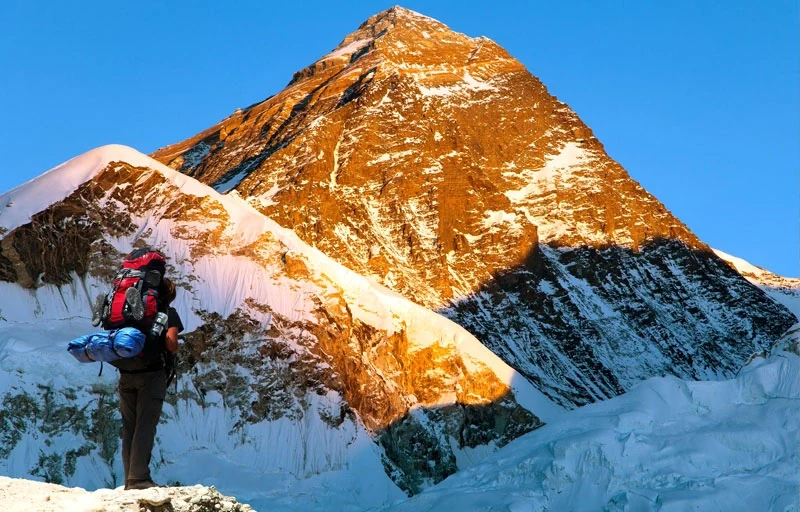
Chat with our Travel Designer Shiba
Need assistance? Our expert agent is here to help! Please fill out the form below to initiate a chat and get your queries resolved quickly.