

 English
 Dutch
 Japanese
 Hindi
 Italian
 Spanish
 French
 German
 Chinese
 Korean
 Arabic
 Hebrew
 Russian
 Portuguese
 Danish
 Czech
 Polish
 Swedish


Plan Your Next
Journey to the Himalayas!
We plan custom and flexible holiday trips according to your holiday duration, extra wishes, and demands.
Plan your Trips


Max. Altitude
3,880m
Best Season
Oct -Dec & Mar-May
Activity
Trekking
Start / End Point
Kathmandu/KathmanduThe Everest Luxury Trek is designed for travellers who want to explore the Himalayan landscapes of Nepal while enjoying comfortable accommodation and well-arranged trekking services. It is a 14-day trip that includes a cultural tour of Kathmandu, a scenic flight to Lukla, trekking through traditional Sherpa villages and an overnight stay at Everest View Hotel. It is an ideal choice for people who would like to explore the Everest region without the long trek to the Everest Base Camp.
In Kathmandu, visit ancient temples, cultural sights and markets and then head into the mountains. The flight to Lukla passes through Phakding and then Monjo and finally to Namche Bazaar, the primary trade centre of the Khumbu region. An acclimatisation day will be followed when departing for Everest View Hotel.
The Everest Luxury Trek is one of the most significant parts of the trek package – the overnight stay at the Everest View Hotel (3,880 m / 12,730 ft). From here you can enjoy views of Mount Everest, Lhotse and Ama Dablam if the weather is good. The itinerary also features visits to the Sherpa villages of Khumjung and Khunde and time in the monastery of Tengboche, an important centre of Buddhist culture in the area.
Comfort is still a key element of the ride. It features a five-star hotel stay in Kathmandu, as well as mountain lodges on the trek and a stay at Everest View Hotel. Facilities are easier the farther away, but planning makes the trip more pleasant. There are still uphill sections, rough riding surfaces and a number of back-to-back walking days, but some level of fitness and preparation is required.
The Everest Luxury Trek also has a spare day in Kathmandu, in case of flying in or out of Lukla being delayed due to mountain weather. The timing of this trip is typically spring or fall and, as in the Himalayas, can vary rapidly.
Life Himalaya Trekking can arrange accommodation, trekking support, transportation and other services based on your confirmed package. Before leaving, you should have a discussion with the team about your fitness, dietary needs, accommodation needs and the type of travel insurance that you wish to take.
Looking forward to exploring the Everest region on a comfortable basis? Contact Life Himalaya Trekking to discuss your travel dates, check accommodation and flight arrangements and plan your Everest Luxury Trek. Our team can explain the itinerary, prepare for the walking days and arrange for the necessary information to make your journey into the Khumbu region easy and smooth.
Welcome to Nepal. On arrival at Tribhuvan International Airport in Kathmandu, you will be met by the members of Life Himalaya Trekking and driven to your five-star hotel in Kathmandu. Expect to arrive at your hotel in about 15 minutes, depending on traffic and the location of your hotel.
On arrival at the hotel, you will be able to check in and freshen up / rest after your international flight. If you get there early, you might be able to take some time to wander the surrounding streets or unwind at the hotel.
In the evening, our team will organize a welcome dinner at a Nepali restaurant, where you will get to taste Nepali cuisine and see a performance of cultural events. Your guide will also introduce you to the Everest Luxury Trek, outline the itinerary and discuss key information about the upcoming trek.
Here is the first day, intended to get you acquainted with the team and get ready to experience the Himalayan adventure!
Maximum Altitude
1,318 m.
Meals
Welcome Dinner
Accomodations
5 Star Hotel
Transportation
15 min driveToday is dedicated to sightseeing and getting ready for your trek. After breakfast at your five-star hotel, you can visit some of Kathmandu’s cultural and historical attractions with a local guide. Visits can be to Kathmandu Durbar Square, Swayambhunath or Boudhanath Stupa depending upon the time at disposal and interest.
Before venturing into the Everest region, you get an introduction to the history, architecture and lifestyle of Nepal in these visits. Your guide will be able to tell you about the local customs and cultural significance of the places you visit.
The afternoon is set aside for final preparations for the trek. You can inspect your kit & clothing, get items you need and make sure you have confirmed arrangements with your trekking partners. This is a good moment to ask questions about the walking experience, food, lodging and elevation.
Head back to your hotel for the night and have a good night’s sleep before heading to Lukla the next morning.
Maximum Altitude
1,320 m.Meals
BreakfastAccomodations
5 Star HotelIn the morning, following breakfast in the lodge, you will board the aircraft and head for Lukla, which will take you on a scenic flight. This generally takes about 35 minutes, but can be adjusted based on weather. En route, you might see mountains and hills from the air.
On arrival at Lukla Airport (Tenzing Hillary Airport), you will be picked up by your local trekking team and driven to your lodge. Lukla is a significant starting point for treks in the Khumbu region where there are shops, small markets and settlements that cater for both locals and visitors.
After your housing is in place, an afternoon is available for exploring the town. It is possible to walk through the local market, see daily life and see the airport’s unique sloping runway from a safe viewing area.
It’s time to get some rest, pack up the trekking gear and plan for the first day of walking. The next day’s arrangements will be confirmed by your guide before dinner.
Maximum Altitude
2,804 m.Meals
Breakfast, Lunch and DinnerAccomodations
LodgeTransportation
35 min flightAfter breakfast on the first day of your trek, you will head towards Phakuphela village. The first day of your trek starts after breakfast in Lukla. The track slowly turns down through the valley of the Dudh Koshi, where one encounters small villages, fields and traditional houses. It’s a trek through villages including Choplung and Ghat to reach the destination of Phakding.
Phakding is a popular place to stay on the way to Namche Bazaar. You can relax here for lunch and admire the river and the surroundings before starting along the trail again.
The trail after lunch passes through the forests and small villages of Toktok and Benkar along the Dudh Koshi River. Some suspension bridges will be crossed and prayer wheels and mani stones will be encountered to illustrate the Buddhist culture of this region.
In the afternoon, you will get to the village of Monjo, close to the entrance of Sagarmatha National Park. Your guide will assist you in getting settled in at the lodge and will get you ready for the later hike up to Namche Bazaar the following day.
Maximum Altitude
2,859 m.Meals
Breakfast, Lunch and DinnerTrek Duration
4-5 hours TrekAccomodations
LodgeIn the morning, breakfast will be served, after which you will set out along the Dudh Koshi valley towards Namche Bazaar. The trail crosses the Sagarmatha National Park checkpoint near Jorsale, where trekking permits are issued. The trail on this section follows the river through forest areas and passes over multiple suspension bridges.
The path goes uphill as you near the Hillary Suspension Bridge. Once you cross the bridge, you’re on a steady uphill ascent towards Namche Bazaar. The climb is quite steep due to the high altitude and your guide will make sure to take breaks and wait for you to catch your breath.
Namche Bazaar is the main trading centre of the Khumbu region. There are shops, bakeries, restaurants and facilities for trekkers and the residents in the settlement. If it’s a sunny day, you can see the mountains until you reach the town.
Once you reach your lodge, you can sit back, have a hot meal and window-shop if you have any energy left! This is followed by an acclimatisation day to get prepared for the higher parts of the trek.
Maximum Altitude
3,439 m.Meals
Breakfast, Lunch and DinnerTrek Duration
5 hours TrekAccomodations
LodgeToday is for acclimatisation before ascending to the higher altitudes. An extra night in Namche Bazaar will allow your body to acclimate to the lower atmospheric pressure. This is not a full day’s hike, but if you are feeling up to it, a little hike is advisable.
Once breakfast is served, you can start a hike towards Syangboche and the Everest View Hotel viewpoint, or head out hiking around the hills with your guide. These routes allow for views of the peaks like Everest, Ama Dablam and Thamserku in clear weather. Actual sightings will vary with the amount of cloud and visibility.
Visit also the Sherpa Culture Museum or go to the local market. The stops offer a glimpse into the history of mountaineering, Sherpa culture and the way of life in the Khumbu area.
Head back to your lodge for lunch and/or dinner as per the day. Take plenty of fluids, eat regularly and do not do too much exercise. If you experience any symptoms of altitude sickness, let your guide know immediately; do not continue to climb.
Maximum Altitude
3,439 m.Meals
Breakfast, Lunch, and DinnerAccomodations
LodgeOn foot, leave Namche Bazaar and head towards Syangboche. The path rises above the town, through hilltop villages and open fields. The view of the surrounding mountains becomes more visible as you climb higher; the clearer the weather.
Before you head down a gentle ascent towards the Everest View Hotel, you will pass the Syangboche airstrip. The walk will be at a steady pace as you are above the level reached on the previous nights. Take rest breaks as necessary and follow your guide’s recommendations.
Everest View Hotel is located at about (3,880 m / 12,730 ft), from which one can see Everest, Lhotse, Ama Dablam and other peaks (depending on the weather). Once you’ve checked in, you can eat lunch and spend some time admiring the scenery of the mountains.
If time allows, during the afternoon you can visit the nearby Sherpa villages of Khunde and Khumjung. Stops may be: Khunde’s hospital or Khumjung Monastery. Go back to the hotel for dinner and a night’s accommodation.
Maximum Altitude
3,879 m.Meals
Breakfast, Lunch and DinnerTrek Duration
4 hours TrekAccomodations
4 Star Hotel (Everest View Hotel)Following breakfast, start the trek from Khumjung going towards Tengboche and Deboche. Opposite the village is the trail that heads through the villages and along paths through the Khumbu landscape down to Phunki Tenga, a small riverside village on the banks of the Imja Khola.
Relax around Phunki Tenga prior to embarking on the uphill stretch through pine, fir and rhododendron forests. It will take patience to climb, especially on the steeper sections. Rest and photos will be taken at intervals and your guide will ensure that you are not pushed too quickly.
Visit the famous Tengboche Monastery at Tengboche (if it is open). The monastery has become a significant monastery for Tibetan Buddhist practice in the area. When the weather is good, it offers a view of Everest, Lhotse, Nuptse and Ama Dablam. Please be sensitive to the local customs and any restrictions during prayer periods.
Once at the monastery, descend through woodland towards Deboche. The atmosphere is calm in this area, with trees and mountains visible around it. Arrive at your lodge, have dinner and sleep after walking the day away.
Maximum Altitude
3,869 m.Meals
Breakfast, Lunch, and DinnerTrek Duration
6 hours TrekAccomodations
LodgeBreakfast at Deboche and then hike back up towards Namche Bazaar. The initial part goes down through the woods towards the Imja Khola. Will cross the river and follow the track back through known forest areas and paths on the hillside to Phunki Tenga.
The trail passes through the river area and heads uphill to Sanasa. This uphill stretch may be challenging; take time to relax if needed and maintain a consistent pace. At the upper trail, the path is more diverse, with some short climbs and descents.
This will be familiar land and a familiar track leading you through to Namche Bazaar, with its settlements and viewpoints. This is a walk to experience the mountains again and see the local inhabitants of the Khumbu region.
On reaching Namche, check into your lodge and enjoy some time to relax. A bakery is available for a visit; there are local shops nearby, or you can just relax after several days of walking. Dinner will be provided at your lodge and an overnight stay will be at Namche Bazaar.
Maximum Altitude
3,439 m.Meals
Breakfast, Lunch and DinnerTrek Duration
5 hours TrekAccomodations
LodgeFollowing breakfast, start from Namche Bazaar heading towards Monjo. This trail, after leaving the town through a succession of stone steps and curves, leads to the sloping sections of the Dudh Koshi valley.
Through familiar settlements, you will tread along this way to the river. There are a few suspension bridges along the way and the guide will take you safely over them. The descent will be steep and irregular, with some uphill sections, so please watch your footing.
Follow the Jorsale and head towards the Sagarmatha National Park entry point near Monjo. This part runs along the river and through wooded areas and small towns. As you start to lower down, the walk will seem to be easier to accomplish, but the rocky trail will need your attention.
Once you arrive at Monjo, you will be accommodated in your lodge and should take the time to rest. Lunch can be arranged based on your walking plans, with dinner at the lodge. The short day allows you to de-stress before the last trek to Lukla.
Maximum Altitude
2,859 m.Meals
Breakfast, Lunch and DinnerTrek Duration
5 hours TrekAccomodations
LodgeIt’s your last day of trekking in the Everest region today. Follow the trail after breakfast back to Phakding, retracing parts of the walk along the banks of the Dudh Koshi River as you headed to Monjo. The passage will go through familiar villages, suspension bridges and areas of forest along the valley.
Although you will be walking at a lower elevation, there are a few gradual climbs and descents along the way. Stop at intervals to rest and to appreciate the last vistas of the valley, the river and surrounding hills.
Crossing through to Phakding, head towards Ghat and Choplung before the last walk up to Lukla. The final ascent will be a very tiring hiking effort after a few days of trail running, but once you arrive at Lukla, you have finished your trek.
After your arrival, drop in at your lodge and rest. In the evening, sit around with your fellow trekkers, guide and support staff and enjoy dinner. A time to pause and to give the team behind you a pat on the back.
Maximum Altitude
2,809 m.Meals
Breakfast, Lunch and DinnerTrek Duration
4 hours TrekAccomodations
LodgeFollowing breakfast, you’ll head back to Lukla Airport for your flight back to Kathmandu. Normally, the flight lasts about 35 minutes and will provide a second opportunity to see the hills and mountain ranges by air if weather and visibility allow.
Weather and airport activities play a key role in flight operations in the Everest region. If the conditions are not right, your departure may be postponed or even rescheduled. Your guide and trekking team will help organise and keep you updated on any changes.
From the domestic airport in Kathmandu, a representative of Life Himalaya Trekking will pick you up and drop you off at your five-star hotel. After check-in, the rest of the day can be spent relaxing.
Relax in the comfort of a shower, sleep in your room, or venture out to the shops or restaurants. For souvenirs or to replace any trekking supplies, there are a number of choices available in Kathmandu.
Take your time for the evening. You will spend the night in the city to recuperate before your final full day in Nepal.
Maximum Altitude
2,809 m.Meals
BreakfastAccomodations
5 Star HotelTransportation
35 min flightThis day is made flexible to give additional time if the Lukla flight is cancelled/ delayed due to weather conditions. When your return to Kathmandu is scheduled, you can spend the day discovering more of the Kathmandu Valley.
Following breakfast, you can embark on a tour of Patan and Bhaktapur, which are the two most famous cities of the Kathmandu Valley. Patan is famous for its traditional architecture, temples and historic Durbar Square. Bhaktapur has an old town with brick streets, courtyards, temples and traditional buildings, which are a representative sample of its cultural history.
Your guide can assist you in arranging the visits based on your interests and time constraints. If there are any entrance fees, transportation and other guiding services not included in the package, they should be prearranged.
Or you can relax all day at your hotel, go shopping for souvenirs, or eat at Kathmandu’s cafés and restaurants. Being flexible with the schedule is helpful since mountain flights can be impacted by changing weather.
In the evening, find your hotel and get ready for the international departure the next day.
Maximum Altitude
1,316 m.Meals
BreakfastAccomodations
5 Star HotelToday is the end of your Everest Luxury Trek. Once you have breakfast at the hotel, pack up your belongings and make sure to have your passport and other travel/necessary documents ready for check-in at the airport.
You will be transferred to Tribhuvan International Airport by a representative of Life Himalaya Trekking. Typically, the drive to this location takes around 15 minutes, but traffic delays or the location of your hotel can increase the travel time. The time of your flight abroad is to be taken into account for your transfer.
Depending on your flight schedule, you can take it easy at the hotel or have your last meal. Your trekking team can assist you in confirming your transfer arrangements and help with any assistance needed before you leave.
You will take with you the memory of the mountain trails, Sherpa villages, Buddhist monasteries and Everest region views as you leave Nepal. We hope that your journey has been comfortable and that you have gained a greater understanding of the Himalayas and the people living there.
Maximum Altitude
1,319 m.Meals
BreakfastTransportation
15 min drive
The Everest Luxury Trek is ideal for those who like to trek in the mountains and are able to walk for a few days in a row. While the itinerary provides for comfortable hotels and luxury accommodation is selected, the trekking routes still have uphill climbs, stone steps, rough tracks and suspension bridges.
These walking days typically last between 4 and 6 hours, depending on the pace and weather conditions, as well as the trail conditions and rest breaks. The hike to Namche Bazaar is quite a challenging hike as it ascends a lot of altitude from Monjo.
It is easy to make a journey more manageable with good preparation. Walking, stair climbing and hill training before leaving can help to build endurance. If you’re going downhill, trekking poles can offer additional support.
Generally, the ideal time to go on the Everest Luxury Trek is the spring or autumn season when walking conditions and mountain visibility are often good. Spring, from March to May, brings milder daytime temperatures, flowering rhododendrons and longer periods of daylight. Autumn, from September to November, often provides clear skies after the monsoon.
It will be colder in the winter, especially at night and at Everest View Hotel, where snow and icy paths may impact walking conditions. The monsoon season, usually from June to early September, brings rain, cloud cover, slippery trails and a greater possibility of flight disruption.
The weather in the Himalayas is very unpredictable, especially during the change of seasons. In spring and autumn, it is possible for the sun to appear in the morning only to turn cloudy, windy and rainy.
Pack layers, waterproof clothing, warm gloves and sun protection. Flexibility with travel arrangements is important as flights into and out of Lukla could be impacted by bad weather.
Accommodation is a crucial component of the Everest Luxury Trek deal, but this varies between Kathmandu and the mountain area. This includes five-star hotels in Kathmandu, mountain lodges for most of the trek nights and an overnight stay at Everest View Hotel.
In Kathmandu, guests can usually look forward to rooms with air conditioning, private baths and hot showers, as well as hotel restaurants. Mountain lodges provide a more practical level of comfort, with beds, bedding, shared or private bathrooms depending on the property and dining areas. Limited heating, hot water and electricity may be available and/or charged separately.
Even an expensive hotel at a high level does not imply that all the service facilities found in urban hotels are also offered in remote villages. Availability of rooms may also be affected by the season and booking policies.
Please verify with Life Himalaya Trekking before leaving the category of rooms, bathroom facilities, meals and services included. This will help you know exactly what you will be getting in your booking.
One of the cruxes of this journey is the Everest View Hotel, which will provide you with a night above Namche Bazaar with a view of the surrounding Himalayan peaks. At about 3,880 m / 12,730 ft), the hotel serves as a convenient base for the hikes within its itinerary, without putting them in a position to trek to the Everest Base Camp.
There are guest rooms and restaurant services available in the hotel, but this may change depending on the season. It is situated on a high plateau which affords views of Everest, Lhotse, Ama Dablam and other peaks on clear days. Visibility may be poor due to cloud cover, wind and variable weather.
There are some uphill sections on the walk to the hotel, so hike at a comfortable speed. Attendees also need to be aware of any signs and symptoms of altitude sickness, as the overnight stay will be at a higher elevation than the previous night.
Inquire about room availability, meals and any special needs before booking. Rugged mountain views and accommodations made more comfortable than standard mountain village lodges.
One of the key components of the Everest Luxury Trek is the altitude progression from Kathmandu to the Khumbu part of the trek. The more you get above ground level, the less oxygen per breath is available. Altitude sickness can happen to anyone, even physically fit travelers, depending on the extent of the ascent, so it is important to ascend gradually and pay attention to symptoms.
The planned rest day in Namche Bazaar should provide you with more time to acclimatise yourself before heading onwards to Everest View Hotel. Walking slowly and having regular meals and plenty of fluids will help alleviate the physical effects, but will not cure it.
The table below shows the approximate elevations of the main overnight stops and important points. The figures may be slightly different depending on the accommodation location and route.
| Location or stage | Approximate elevation | Purpose |
| Kathmandu | (1,318 m / 4,324 ft) | Arrival and preparation |
| Lukla | (2,804 m / 9,199 ft) | Start of the trekking section |
| Monjo | (2,859 m / 9,380 ft) | First mountain lodge stop |
| Namche Bazaar | (3,439 m / 11,283 ft) | Acclimatisation and rest |
| Everest View Hotel | (3,880 m / 12,730 ft) | Highest planned overnight stay |
| Deboche | (3,820 m / 12,533 ft) | Overnight stop after Tengboche |
| Return to Namche Bazaar | (3,439 m / 11,283 ft) | Descent towards Lukla |
| Return to Monjo | (2,859 m / 9,380 ft) | Lower altitude overnight stop |
| Return to Lukla | (2,809 m / 9,216 ft) | End of trekking section |
These are indicative planning values and not safety limits. The general elevation of a hotel or a lodge could be different from its actual elevation.
If you get a persistent headache, nausea, dizziness, or unusual fatigue, notify your guide immediately. If there is confusion, problems walking straight, or shortness of breath at rest, then it is an emergency to get a medical assessment. Do not keep going up a hill when symptoms are worsening.
Anyone can get altitude sickness no matter their age or fitness. Early signs and symptoms include headache, nausea, dizziness, a decrease in appetite and unusual tiredness. This risk is greater when the body is climbing at a rate that it cannot keep up with and it is crucial to monitor during this trip.
Your guide will check how you are feeling and help you to recognise how to make sure there is help for any symptoms that require it. If mild symptoms occur, then do not climb until proper advice is given. Exacerbation of symptoms may necessitate immediate descent and medical evaluation.
Severe altitude sickness can be life-threatening. If there is any confusion, loss of coordination, breathing difficulties at rest, or significant deterioration, then there is an urgent need for action.
There are not many hospitals in the rural areas of the mountains. The weather, visibility, landing conditions and operational availability dictate helicopter rescue.
There is an airport service between Kathmandu and Lukla, which is approximately 35 minutes. Short mountain flights are highly dependent upon visibility/other operating conditions. Departures may be delayed, rescheduled, or cancelled at any time, even during the popular trekking seasons.
Depending on the season and the current aviation arrangements, flights may take off from Ramechhap Airport instead of Kathmandu. This means another trip on the road, typically an early morning trip. Before departure, it’s important to ensure that your operator has confirmed the departure airport and transfer arrangements.
Have your passport, flight information and any critical medication in hand luggage. Don’t make important plans right after you’re supposed to arrive, as delays may make a difference to the rest of your plans.
In case of cancellation, the airline and trekking company will inform you about the alternative options. These may include waiting for another flight, changing the schedule, or considering a helicopter where appropriate. Extra costs and no guarantees for alternative services.
Please check with Life Himalaya Trekking before traveling about any luggage allowance, airport transfer and cancellation policy.
For trekking in the Everest region, the required permits are the Sagarmatha National Park entry permit and Khumbu Pasang Lhamu rural municipality entry permit. These are independent of the other requirements and fees/policies can change. You must check the current rules with your operator before travelling.
Always have your Passport with you and make photocopies of your travel documents elsewhere. There should also be easy access to your flight tickets, hotel confirmations, insurance information and emergency contact information. Identification might be required at airport procedures and when stopping to prove identity at checkpoints.
Life Himalaya Trekking arrange require permits as part of your package and are included in the package. Unless stated in the confirmed inclusions, do not assume that all entry fees are included.
Prepare the following documents before you arrive in the mountain regions, where administrative services are not as available as in Kathmandu.
During the trek, meals may consist of Nepali cuisine and familiar international foods. These can include dal bhat, noodles, rice, soups, potatoes, eggs, or bread and vegetable dishes. Menu items will be less available in smaller lodges than they are in Kathmandu and will depend on the lodge.
During the mountain trekking section, breakfast, lunch and dinner are included in the provided itinerary; on some Kathmandu days, only breakfast is included. Please check with your operator for final meal arrangements, as drinks and snacks, as well as special menu items, may be different.
Use safe water all day long. Use properly boiled water, treated water, or sealed bottled water if available. Avoid drinking untreated water directly from streams.
Please let the trekking company know if you suffer from any food allergies or have any special dietary requirements prior to departure. Pack appropriate food for special dietary requirements and snack to keep in energy during the walk.
As you head up from Kathmandu to the Everest region you will find the various facilities of the bathroom and comfort changing. City hotels generally provide private bathrooms, hot showers and more reliable heating or climate control. The standard at mountain lodges will be less complex and will rely on the specific type and classification of rooms.
Some lodges offer hot showers for a fee, but others might not have hot water if the weather is cold or if there are a lot of tourists. Private or public bathrooms may be provided. Heating is often provided in communal areas, not in guest bedrooms, so warm bedding is helpful.
There are few washing facilities on the path and it may be difficult to dry your washing in cold or wet weather. Take extra gear for the day’s trekking and wear quick-drying garments where possible.
Please verify the facilities available at each night’s accommodation before making your booking, especially at Everest View Hotel. Check if hot showers, private baths, room heating and/or laundry are provided with the room or at an extra cost. This prevents any misconceptions about the luxury label.
Mobile telephone and internet communications are not available everywhere in the Everest region. In general, smaller communities have less connection than Namche Bazaar, but the connections can be slow or unreliable. The strength of the coverage can be diminished in rural portions of the trail and communications can be impacted by mountain weather.
Wi-Fi is available in some lodges, for extra payment. Bedroom and shared charging points might be available; however, they may be in limited supply during high demand periods. Electricity supply may be affected by weather and demand on some properties as they have some solar energy coverage.
Pack your cell phone before you leave Kathmandu. Get maps, key documents and other information offline without needing to have an internet connection. A power bank is handy to have, since batteries don’t work as well in cold weather.
Avoid using the mobile internet exclusively for emergency communications.
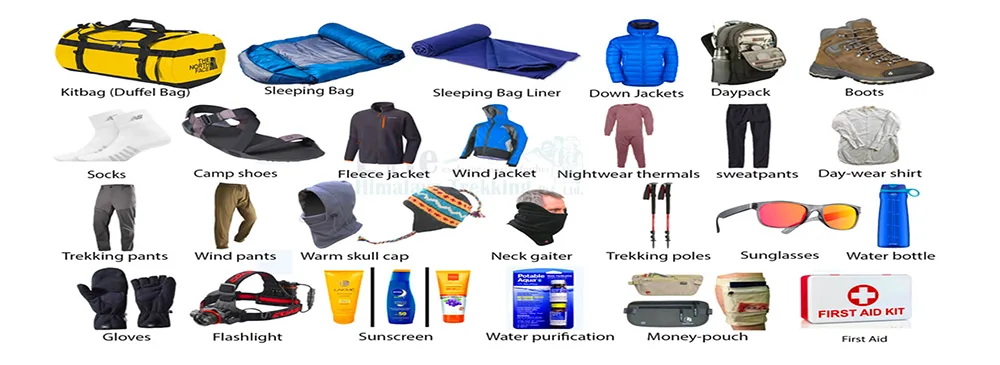
There is a need to pack for the Everest Luxury Trek to keep in mind the variable weather conditions during the trek, as well as to adjust to the completion of the trek, which is a long one and also the availability of goods in smaller markets. Don’t have to take all the comforts on your own, but your daypack must have some of the items you may need when walking.
Multiple layers of clothing work better than a single thick jacket. Take a base layer with moisture-absorbing properties, a couple of mid layers, a jacket with insulation, waterproof outer clothing, trekking trousers, gloves and a warm hat. Shoes are important; they need to be comfortable for trekking and have good grip.
Inquire with your operator about porter services, duffel bag setup and weight limits before packing. Personal Daypacks should contain valuables, medications, papers, water and an additional warm layer. Though portage and airline baggage restrictions are different, check both.
Medical care and emergency evacuation may be costly; this is why travel insurance plays an important role when trekking in the mountains. Before you buy a policy, make sure that it includes trekking at the highest point you will be going on your treks, including the night at Everest View Hotel.
The policy should also detail what it covers for emergency medical treatment, helicopter evacuation and interruption of travel and further accommodation after a covered disruption. Certain policies don’t permit activities at higher elevations, or you must get special permission for mountain trekking. Take the time to read the conditions carefully instead of the general description of the policy.
If any medical issues are of concern, or if the student needs to be taking medication or has any physical restrictions, consult a competent healthcare provider before leaving. Bring sufficient amounts of any prescription needed on the journey, along with a little extra in case of a late journey.
Don’t assume that insurance will provide an immediate evacuation. Please listen to your guide’s safety advice, as the weather, visibility and aircraft availability may impact rescue operations.
Many of the larger services are available in a trekking package, but still, you should be ready to incur some personal costs throughout your trek. You must expect extra charges for drinks, snacks, souvenirs, laundry, hot showers, WiFi and charging, etc., that are not included in the package itself.
Have sufficient Nepalese currency for incidental shopping in mountain villages. In larger settlements, there may be a place to make card payments and an ATM, but don’t rely on these as your sole means of getting cash. Take some money out in Kathmandu or an appropriate town before trekking up into the mountains.
It is the custom of the Nepalese trekking industry to tip, but it varies with service, group size, arrangements of the tour and satisfaction. When choosing the amount to donate, take into account your guide and porters and other staff members who work with them. No fixed minimum amount for all travellers.
Before departure, inquire with Life Himalaya Trekking about what expenses are covered and if there are any other costs likely to be incurred. It will be easier to keep on budget during the journey if you have a separate spending account for your personal needs.
Sherpa people have long traditions of Buddhism in the region of Khumbu. Along the way, there are villages that have prayer flags, mani walls, chortens and monasteries that reflect the religious practices. Being here also offers a glimpse of the region’s cultural activities, which are not limited to the mountain views.
Tengboche Monastery is an important religious centre and a significant stop on this itinerary. If time and access permit, Khumjung monastery can also be visited. Respect local customs and be sure to ask permission before taking photos of individuals or religious services and use a private voice.
Respect and follow local customs, which may be different from those to which you are accustomed and ask questions respectfully when you are not sure. Supporting the villages you visit is easy and simple, such as by shopping locally and abiding by village regulations.
The Everest Luxury Trek Package includes the most comfortable mountain travel, visiting Sherpa villages, visiting monasteries and enjoying views from Everest View Hotel. The Everest Base Camp Trek goes on and on through the Khumbu to the base of the world’s tallest mountain. Both routes offer altitude exposure and challenging walking, but have different distances, destinations and day schedules.
The table below shows a comparison of the two experiences. Specifics will vary depending on package and route variations, the accommodation and operating conditions at the time.
| Feature | Everest Luxury Trek | Everest Base Camp Trek |
| Main destination | Everest View Hotel, Khumjung and Tengboche | Everest Base Camp, usually with Kala Patthar as an additional viewpoint |
| Typical duration | 14 days in this itinerary | Often 12 to 16 days, depending on the itinerary |
| Highest point | Approximately (3,880 m / 12,730 ft) at Everest View Hotel | Everest Base Camp is approximately (5,364 m / 17,598 ft); Kala Patthar reaches approximately (5,545 m / 18,192 ft) |
| Walking demands | Several consecutive walking days, with a shorter route through the Khumbu | Longer trekking route with more sustained walking at high altitude |
| Acclimatisation | Includes a rest day in Namche Bazaar | Usually includes acclimatisation stops, often in Namche Bazaar and Dingboche. |
| Main highlights | Mountain views, Sherpa villages, Tengboche Monastery and Everest View Hotel | Everest Base Camp, Khumbu Glacier and high mountain viewpoints |
| Accommodation | Five-star Kathmandu hotels, mountain lodges and an Everest View Hotel overnight stay. | Usually Kathmandu hotels and mountain teahouses; luxury options depend on the package |
| Best suited to | Travellers seeking a shorter mountain route with selected premium accommodation | Travellers wanting to walk farther into the Everest region and reach base camp. |
| Main limitation | Does not reach Everest Base Camp | Greater physical demands and more time spent at high altitude |
Select depending on your fitness level, time and travel targets. Luxury rooms take no away altitude hazards and both routes have to be properly prepared.
Mountain weather, visibility and operating conditions impact flights to and from Lukla. Delays or cancelations may have an impact on the trekking program, hotel reservations and overseas travel connections. An additional day in Kathmandu will give some flexibility in case of the postponement of the return flight from Lukla.
If you have a spare day in your flight schedule, the spare day can be spent sightseeing in Kathmandu, Patan, or Bhaktapur. If the delay persists after the reserve day, further accommodation, meals and/or flight changes/transport may be required. The costs of these vary according to booking conditions and options available at the time of booking.
Don’t assume a helicopter will be present at all times as an alternative. Weather, safety needs, aircraft availability and cost are the factors that are involved in operations.
A buffer day will alleviate scheduling pressure but will not ensure that all disruptions will be addressed within one day.
The mountain environment is fragile in the Khumbu area and collection of waste is more difficult and water supplies and transport are more challenging than in cities. Responsible behaviour will help to protect the local communities, forests, rivers and wildlife and keep trekking routes cleaner for future visitors.
On the Everest Luxury Trek, you will travel through protected areas, river valleys, forests and villages. Small choices, such as carrying reusable water bottles and disposing of rubbish properly, can reduce the environmental impact of your visit.
High-end travel is no excuse for not taking care of the environment. For questions about how the locals dispose of their waste, inquire of your guide and do not drop food wrappers, tissues, or other trash on the trail. By engaging with local culture and utilizing local resources, visitors can help support the local economy and contribute to the cultural growth and development of the area.
There are numerous chances for photography in the Everest region, including the scenery around the base of Mt. Everest, which is around Namche Bazaar, as well as the landscape around Tengboche and Everest View Hotel. Clouds and changing weather can create problems at any time, but sometimes morning and late afternoon light can be helpful.
Ensure that you always ask permission before taking photos of local people or monks, or taking photos of private activities. There may be restrictions on photography within religious buildings; please adhere to signs and instructions by local staff. Don’t interrupt prayers or ceremonies to get pictures.
The use of drones needs to be handled in a special way in Nepal. The operation of a drone may need to be approved by aviation authorities, protected area authorities and other relevant authorities. A flight is not legally authorized by permission from a guide/lodge. Verify aeronautical requirements before using a drone.
Respectful photography is a way to capture your trip without being intrusive or endangering the communities you visit or their traditions.
Yes, it’s a trek for the beginner and reasonably fit individual, as long as they do the necessary work to prepare and listen to their guide’s suggestions about pacing and altitude.
No, the route visits Everest View Hotel, Khumjung, Khunde and Tengboche rather than continuing to Everest Base Camp.
Care needs to be taken with altitude awareness, as the highest planned overnight is Everest View Hotel at approximately 3,880 m (12,730 ft).
Not necessarily. Private bathrooms are not guaranteed at all lodges – check the availability of private bathrooms at each overnight stop.
Vegetarian meals are available, but please inform Life Himalaya Trekking of specialties and allergies in advance.
Package inclusions will be confirmed and Porter services will be based on those inclusions. Inquire about the operator’s policy regarding assistance with carry-on bags, weight restrictions and extra fees.
An extension is possible depending on availability, weather and changes in the itinerary and extra expenses with the trekking operator.
Let your guide know right away. Uphill should be halted and medical evaluation or descent may be required depending on the severity of the symptoms.
Typically, there will be charging at some of the lodges available, but access, reliability and charges will differ. Bring a power bank with you as a spare.
Yes, get insurance before your trip and double-check the coverage for the trekking altitude, emergency medical care, helicopter evacuation and trip interruption.
$3,440
per person (in USD)
top rated - Based on 214 TripAdvisor & 107 Google Reviews
We plan custom and flexible holiday trips according to your holiday duration, extra wishes, and demands.
Plan your Trips
Chat with our Travel Designer Shiba
Need assistance? Our expert agent is here to help! Please fill out the form below to initiate a chat and get your queries resolved quickly.