

 English
 Dutch
Dutch Japanese
 Hindi
Hindi Italian
 Spanish
 French
 German
 Chinese
 Korean
 Arabic
 Hebrew
 Russian
 Portuguese
 Danish
 Czech
Czech Polish
 Swedish
Plan Your Next
Journey to the Himalayas!
We plan custom and flexible holiday trips according to your holiday duration, extra wishes, and demands.
Plan your Trips
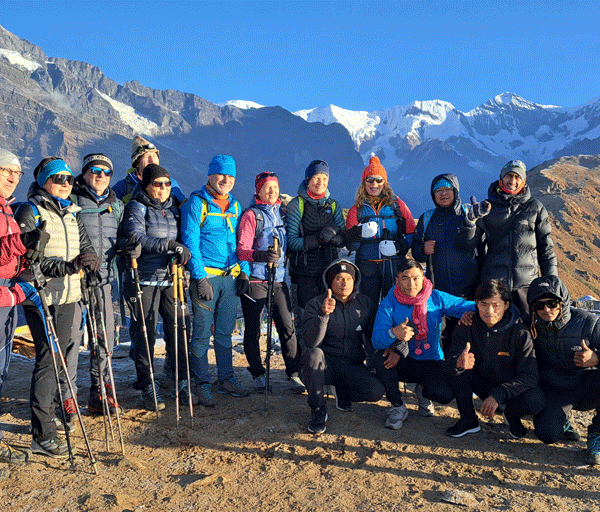
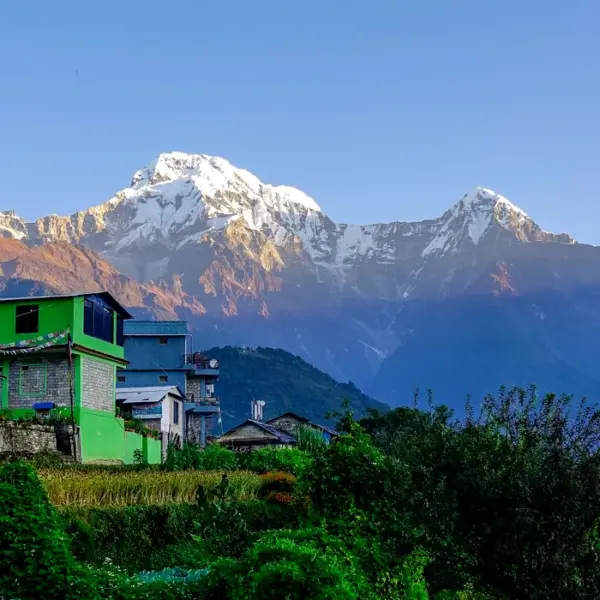
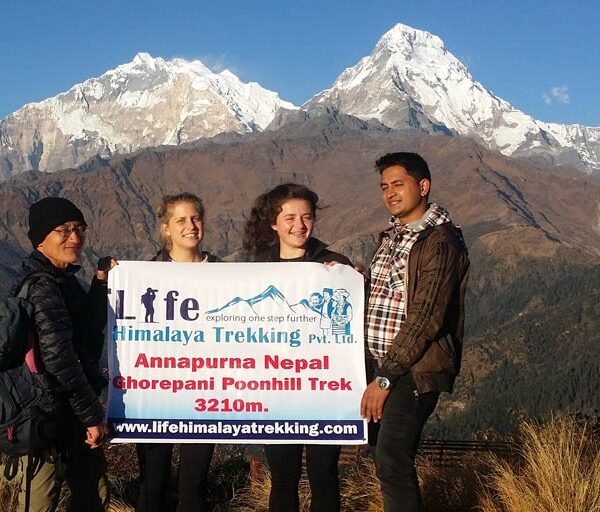
The Mardi Himal Trek is a short Himalayan trek in Nepal’s Annapurna region that suits travellers who want mountain scenery without committing to a two-week trekking route. The starting point of the trail is near Pokhara and passes through forest, villages along the hill slopes, open ridges and the alpine terrain before reaching the high viewpoint before Mardi Himal and Machhapuchhre.
If you’re looking to go for a trek in 2027, being part of a group is a sensible choice. You may take a seat on a scheduled departure and trek with other vacationers, sharing the services organised by the trekking firm. This is especially helpful for those who travel alone and wish to be accompanied on the trail, but not on a completely private one.
The standard route generally takes 4 to 7 trekking days depending on the starting point or length of the day walks – including or not going beyond the Upper Viewpoint. Most typical itineraries get to the Upper Viewpoint (4,200 m /13,780 ft). If the trip is longer, it goes on to the real Mardi Himal Base Camp (4500 m/14764 ft).
How group joining works, when to go, cost of the trek, what is included, the typical route, permits, accommodation, fitness requirements and what to check before booking a 2027 departure.

| Trek Feature | Details |
| Region | Annapurna, Nepal |
| Starting city | Pokhara |
| Typical duration | About 4 to 7 trekking days |
| Common trailhead | Kande |
| Standard highest point | Upper Viewpoint, about 4,200 m (13,780 ft) |
| True Mardi Himal Base Camp | About 4,500 m (14,764 ft) |
| Highest sleeping point | High Camp, about 3,580 m (11,745 ft) |
| Accommodation | Teahouses and lodges |
| Trek type | Teahouse trekking |
| Main permit | Annapurna Conservation Area Permit |
| Best trekking periods | March to May and September to November |
| Group option | Fixed or scheduled group departures |
| Starting point for most travellers | Pokhara |
Routes, trailheads and peaks may differ from company to company. Always check what a company means by “Mardi Himal Base Camp” before booking because some itineraries finish at the Upper Viewpoint while longer trips continue to the true Base Camp.
A group join trek means you book a place on a scheduled departure instead of travelling only with your own private group. Other travellers who have chosen the same date also partake in the same trek.
For instance, if a person travels alone, he could make a reservation for a trip date in October 2027. The trekker joins other people scheduled on that trek and the trek company arranges the guide, accommodation and any other services agreed.
Group size is dependent on the operator. There are small groups being advertised by some companies and in some cases even more travellers can be combined in one group. Find out the maximum group size before you reserve it, as it can impact the entire experience.
A group trek tends to be suitable for:
The key point to keep in mind is that a group has a common timetable. Walking speed and stops for food and distances per day may not be modified for each individual person.
The Mardi Himal Trek is a short Himalayan trek in Nepal's Annapurna region that suits travellers who want mountain scenery without committing to a two-week trekking route. The starting point…
Not all trekking companies use the same departure calendar. Each operator has their own fixed timing and dates may also vary according to demand, weather, local conditions and company policy.
There are various models of 2027 calendars available today. There are some companies that have a fixed timing of group departures from January to December and others that focus on group breaks from September to May and avoid the peak monsoon season. This indicates that when you book flights or otherwise make commitments for travel, you should confirm the exact departure date directly with the company.
The most common periods that join the main group are:
| Period | General Situation |
| January to February | Fewer departures and colder conditions |
| March to May | Regular spring departures |
| June to August | Limited group departures because of the monsoon |
| September | Departures increase as the monsoon weakens. |
| October to November | High demand and regular departures |
| December | Fewer departures and colder conditions |
If you already have a travel month, it would be better to inquire with the operator about availability of dates in 2027 than to assume a certain month will run.
This route is subject to change, but it usually starts from Kande and heads across the ridge to High Camp before a very early morning ascent to the Upper Viewpoint.
| Day | Route | Approximate Walking Time | Main Activity |
| Day 1 | Kande to Pritam Deurali or Forest Camp area | 5 to 6 hours | Walk through forest and hillside settlements |
| Day 2 | Forest Camp area to Low Camp | 5 to 6 hours | Continue through rhododendron forest |
| Day 3 | Low Camp to High Camp | 4 to 6 hours | Ridge walking and gradual altitude gain |
| Day 4 | High Camp to Upper Viewpoint and descend | 6 to 8 hours | Early morning viewpoint walk |
| Day 5 | High Camp or Badal Danda to Siding and Pokhara | 4 to 7 hours | Descend and return toward Pokhara |
Some companies use a 6 day itinerary or add another overnight stop. Others arrange road transport for the return trip.
The most challenging section is typically up to the Upper Viewpoint (4200m /13,780 ft), from High Camp (3580m/11,745 ft). The usual time to begin is early, as the weather is usually more agreeable during the morning and the hike may take several hours.
Be careful of packages that offer Mardi Himal Base Camp (4500m /14764ft) and see if this is part of the package. The standard Upper Viewpoint is lower and farther than the real one and will need more of a walking day.
The fees for a group to join a trek vary from trek to trek and services included. The cost for any 2027 departure is not set.
The main factors affecting the cost include:
It’s not always the case that a lower advertised price equates to the same service as another package. You should always compare prices by determining what each company offers.
A group package can contain:
Common exclusions include:
Please refer to the inclusion/exclusion list before paying a deposit.
The price of the Mardi Himal trek group joins 2027 typically relies on trek duration, party size, services included and the season. For a standard group joining package from Pokhara, a reasonable planning estimate is around USD 350 to USD 550 per person for a 5-to-7-day trek. The cost of a basic package can be on the lower end, while a package with improved accommodation, porter services, private transportation, or other extras can be higher.
This guide price only includes the trekking part and is not to be considered as the fixed price of 2027. Various trek companies offer various types of travel, so two treks of the same duration can really be quite different in cost.

| Cost Component | Estimated Cost Per Person |
| Group joining trekking package. | USD 350 to USD 550 |
| Pokhara accommodation before or after trek | USD 20 to USD 60 per night |
| Meals and drinks outside the package | USD 10 to USD 25 per day |
| Personal expenses | USD 30 to USD 80 |
| Hot showers and charging | USD 10 to USD 30 |
| Tips for guide and porter | USD 30 to USD 70 |
| Travel insurance | USD 50 to USD 150+ |
| Personal trekking gear | USD 50 to USD 300+ |
| Estimated overall budget | Around USD 500 to USD 1,000+ |
This may be less or more depending on the experience you have, what your trekking package contains and what additional costs you incur.
Group joining fees provided for in the advertisement do not always include all costs. These expenses will add to your budget:
| Additional Cost | Estimated Amount | What Affects the Cost |
| Porter service | USD 80 to USD 150 per porter | Number of trekking days and porter arrangement |
| Private transportation | USD 20 to USD 100+ per person | Vehicle type, route and number of passengers |
| Pokhara accommodation | USD 20 to USD 60 per night | Hotel category and season |
| Extra food and drinks | USD 10 to USD 25 per day | Snacks, bottled drinks, coffee and personal choices |
| Hot showers and charging | USD 10 to USD 30 total | Teahouse rates and how often you use these services |
| Travel insurance | USD 50 to USD 150+ | Coverage, trip length and trekking protection |
| Trekking equipment | USD 50 to USD 300+ | Whether you own, rent or purchase equipment |
| Guide and porter tips | USD 30 to USD 70 | Group size, service and personal preference |
These are not guaranteed rates for 2027, but are estimates for planning purposes. The actual cost will vary from trekking company to trekking company and season to season. The easiest way to avoid unexpected expenses is to ask the operator for a complete list of inclusions and exclusions before booking.
One service that an individual can save on by joining a trek is the transportation and guide services, as they will be shared among the participants. Some of the ways to keep the total budget manageable are:
The key is to make sure you’re looking at the total package, not just the advertised price. A lower-cost package might not offer transportation or meals that another does, or might not offer porter service.
For a comfortable budget, planning around USD 500 to USD 1,000 per person for the complete trekking experience, excluding international flights, is a reasonable starting point. Those traveling with their own gear and with an included hotel can spend less, while those opting to travel with private transportation, better hotels and more can spend significantly more.
The optimal time depends on what you wish to gain from the walk. The best combination of weather, trail conditions and mountain visibility is usually in the spring and fall. There is also the possibility of rewards for the old-timers with cold weather hikes in winter and more rain and cloud in the monsoon season.
The Mardi Himal Trek is a short Himalayan trek in Nepal's Annapurna region that suits travellers who want mountain scenery without committing to a two-week trekking route. The starting point…
| Month | Weather and Trail Conditions | Mountain Views | Group Join Considerations |
| January | Cold winter weather with possible snow at higher sections | Often clear during stable weather | Fewer departures and colder nights |
| February | Cold, but conditions gradually improve | Good on clear mornings | Limited departures compared with spring |
| March | Spring conditions begin and trails generally become more comfortable | Usually good | Group departures become more available |
| April | Mild conditions and rhododendron flowering | Generally good, especially in the morning | Popular month, so early booking helps |
| May | Warmer with increasing humidity and pre-monsoon cloud | Better early in the day | Regular departures, but rain becomes more likely later |
| June | Monsoon begins with increasing rainfall | Less reliable | Fewer scheduled group departures |
| July | Wet, humid and cloudy in many periods | Often limited | Group options may be restricted |
| August | Monsoon continues, but conditions can improve toward the end | Variable | Check the operator’s weather policy |
| September | Rain generally decreases as the month progresses | Improving visibility | Group departures become more common |
| October | Generally dry and stable autumn conditions | Usually clear | High demand for group departures |
| November | Dry and cooler | Usually good | Regular departures and good trekking conditions |
| December | Cold winter conditions with possible snow at higher sections | Clear on stable days | Fewer departures and cold nights |
Spring: March to May
The Mardi Himal trek is a popular trek in the spring season. It becomes warmer in March and very appealing for visitors wanting to see the forest covered in rhododendrons in April. May is warmer, but the cloud and rain increase in prevalence later in the month.
March and April can be good times to visit when there is a moderate amount of snow with good visibility in the mountains.
Monsoon: June to August
The monsoon causes regular rains in Nepal. Conditions may be damp and slippery on trails and there may be cloudy skies blocking mountain views. Wet forest conditions can also lead to an increase in leeches.
This trek is still active at this time, but may have reduced group availability. Fixed departures may be suspended by some operators and private trips only offered.
Autumn: September to November
The months of fall also present a great time for trekking. September may get a few showers, especially at the beginning of the month, but the weather improves later on in the month.
October and November are the typical months for group departures due to less rain and good mountain visibility. During this time, it may be a peak travel season, so please book early.
Winter: December to February
Colder weather comes with winter and snow might fall on higher elevations. The higher levels, around 4200m (13780ft), may be much colder than the lower areas.
The winter group joining is suitable for travelers who are ready for the cold weather and any changes that may be brought about by snow. Please check the latest trail conditions before departing.

Generally, Mardi Himal is a moderate trek. The standard route is suitable for most climbers and does not require advanced mountaineering techniques, but it does require some endurance to hike for several hours each day for several days.
The route includes:
The walk will be easier if you have some basic cardiovascular fitness. Regular walking, hiking, stair climbing and moderate aerobic exercise before the trip can help.
Yep, it is reasonable for newbies to enter. There is no prerequisite for anyone who has not done high-altitude trekking before; however, it is not something that should be taken lightly by novices.
The most crucial preparation is figuring out how to cope with the effects of altitude and being comfortable walking for several hours.
Altitude plays an important role in the Mardi Himal Trek, as it goes from lower hills to the Upper Viewpoint (4200m /13,780ft).
The main points are:
| Location | Approximate Elevation |
| Kande | 1,770 m (5,807 ft) |
| Pritam Deurali | 2,100 m (6,890 ft) |
| Forest Camp | Around 2,500 to 2,600 m (8,202 to 8,530 ft) |
| Low Camp | Around 2,950 to 3,000 m (9,678 to 9,843 ft) |
| Badal Danda | Around 3,210 m (10,531 ft) |
| High Camp | Around 3,580 m (11,745 ft) |
| Upper Viewpoint | Around 4,200 m (13,780 ft) |
| True Mardi Himal Base Camp | Around 4,500 m (14,764 ft) |
Headache, nausea, unusual tiredness, dizziness and difficulty sleeping can occur at altitude. If symptoms worsen or become severe, advise the guide immediately and proceed by means of suggested descent or medical plan.
Avoid making the group schedule a priority over good health.
Mardi Himal is part of the Annapurna Conservation Area; a conservation area entry permit is required.
It is important to review the existing regulations and the costs again prior to the 2027 journey, as regulations and costs set by the government may change.
It is also a good idea to check with your trekking company if the requirements of TIMS are met before heading off. In the Nepal Tourism Board’s current TIMS page, specific regions of the country where a Guide and agency-issued TIMS card are required are listed and may vary according to changes in the regulation.
Mardi Himal is not to be confused with Nepal’s restricted trekking areas. A restricted area permit is related to the restricted regions and differs from the Annapurna conservation area permit.
Most of the Mardi Himal trek is a teahouse trek. As you progress, getting accommodation becomes easier.
Rooms are typically simple and frequently are twin-share. Shared bathrooms are possible, especially at higher elevations. May be able to shower and charge a fee, but it may not be as good as city hotels.
The teahouses offer meals in general. Common foods include dal bhat, noodles, pasta, rice dishes, soups, momos, potatoes, eggs, bread and simple breakfast foods. A variety of hot beverages such as tea and coffee are also available.
The food prepared at the higher elevations may be less diverse as supplies must be brought up along the mountain road.
What you pack will depend on the time of year you go on your trek.
Clothing
Footwear
Trekking Equipment
Personal Items
Do not overpack. The lighter the bag, the easier it is to carry, especially when going uphill for longer distances.
The social aspects are one of the benefits of a group trek. Solo travelers can meet people from other countries and will walk and eat with them for several days.
There can also be differences in walking ability. Some people stagger a little on the walk while others take frequent breaks. A good group knows that they must go at a reasonable pace.
Shared living and a routine for the day must be acceptable as well.
Before booking, ask:
These questions will help avoid confusion in the future.
| Feature | Group Join | Private Trek |
| Departure | Fixed date | Flexible |
| Group | Shared with other travellers | Your own group |
| Cost | Often lower per person | Usually higher for a small party |
| Pace | Shared schedule | More flexible |
| Itinerary changes | More limited | Easier to arrange |
| Social experience | More interaction | Depends on your party |
| Solo traveller friendly | Yes | Yes |
| Customisation | Limited | Greater |
Both of these options don’t work for every traveller. A group join trek is good if everyone has a sense of time. A private tour offers more flexibility in terms of date, pace and itinerary.
Be careful not to select a departure solely on the price. Look for a comparison of what the actual content includes.
Check the following before booking:
Most importantly, confirm whether the itinerary reaches the Upper Viewpoint at about 4,200 m (13,780 ft) or continues to the true Base Camp at about 4,500 m (14,764 ft).
There are still individual preparations to make for a group trek.
Mountain weather is apt to turn suddenly. A responsible tour operator should be willing to make changes to the tour when necessary.
The Mardi Himal Trek is a short Himalayan trek in Nepal's Annapurna region that suits travellers who want mountain scenery without committing to a two-week trekking route. The starting point…
Can the Mardi Himal trek be done solo?
Yes. Solo travellers may book a place on a group departure and trek with other travellers.
How many days does the Mardi Himal Trek take?
The typical duration of the tour is 4-7 trekking days depending on the route and the schedule.
What is the peak of the standard Mardi Himal trek?
The typical route will arrive at its Upper Viewpoint (4,200 m /13,780 ft). Longer trips may continue up to the actual Mardi Himal Base Camp (4,500 m /14,764 ft).
Is there any previous trekking experience required?
No. Although experience with trekking is helpful, it is not essential. Reasonable fitness and preparation are more important for most beginners.
When is the best time to go on the Mardi Himal Trek Group Join 2027?
March, April, October and November are good months in general due to the favourable seasonal conditions. Other good months are September and May (weather may be more unpredictable during these months).
May I participate with a group in monsoon?
Groups may be offered by some businesses and private trips by others, but are only available in June to August. Please be aware of the operator’s current 2027 schedule.
What is the difference between Mardi Himal Base Camp and Upper Viewpoint?
No. The Upper Viewpoint is around 4,200 m (13,780 ft), while the true Mardi Himal Base Camp is around 4,500 m (14,764 ft). They are distinct locations along the way.
Do I need a restricted area permit?
The Mardi Himal route is not a restricted area trek. The conservation area entry permits are different to restricted area permits.
If I can’t keep up with the group, what do I do?
Notify the guide as soon as possible. The guide can evaluate the situation and determine if you need a longer break, a slower pace, or another adjustment.
Is there a chance that the route will be altered after booking?
Yes. Changes may be necessary due to weather, road and trail conditions and other local conditions. This will vary according to the trekking company.

The Mardi Himal Trek Group Join 2027 is a convenient choice for those who wish to delve into the Annapurna region within a comparatively brief period of trekking. The entire walk uses forest paths, mountain villages, open ridges and high-level viewpoints but does not involve technical mountaineering on the standard walk.
It is advisable to trek during the spring and autumn season, though the winter and monsoon seasons demand careful planning. When making a group booking, please verify details of the exact trip, group size, inclusions, permits, cancellation policy and highest elevation before booking.
Most importantly remember the difference between the High Camp (3580 m /11745 ft), the Upper Viewpoint (4200 m /13780 ft) and the real Mardi Himal Base Camp (4500 m /14764 ft). If you are well-prepared and you know what to expect, the trek can be a manageable introduction to higher altitude trekking in the Annapurna region with the right training and a suitable 2027 departure.
Looking to trek Mardi Himal in a group? Select the type of departure you are looking for in 2027, based on your travel dates, fitness and budget. We have the expertise to prepare the itinerary for your trek, obtain permits, book accommodation, organise transportation and more.
Please call us today to inquire what dates are available for the Mardi Himal Trek Group Join 2027.


We plan custom and flexible holiday trips according to your holiday duration, extra wishes, and demands.
Plan your Trips
Chat with our Travel Designer Shiba
Need assistance? Our expert agent is here to help! Please fill out the form below to initiate a chat and get your queries resolved quickly.