

 English
 Dutch
Dutch Japanese
 Hindi
Hindi Italian
 Spanish
 French
 German
 Chinese
 Korean
 Arabic
 Hebrew
 Russian
 Portuguese
 Danish
 Czech
Czech Polish
 Swedish




Plan Your Next
Journey to the Himalayas!
We plan custom and flexible holiday trips according to your holiday duration, extra wishes, and demands.
Plan your Trips


Max. Altitude
3210m
Best Season
Oct -Dec & March-May
Activity
Yoga and Trekking
Start / End Point
Kathmandu/KathmanduThe Easy Annapurna Yoga Trek is a gentle 7-day journey where we will combine soft Himalayan trekking with daily yoga and meditation. We will start in Kathmandu and travel together to the peaceful hills of the Annapurna region, where nature, culture, and wellness come together in a relaxed way.
Each day, we will enjoy a calm yoga session with clear mountain views, followed by easy walks through the forest, farmland, and along quiet river paths. During this Annapurna Yoga Trek, we will see wide views of Annapurna I, Machhapuchhre, Dhaulagiri, and Annapurna South glowing above village rooftops.
We will pass through traditional Gurung and Magar villages such as Landruk and Ghandruk, where we can watch daily life, chat with local people, and feel their warm welcome.
Our experienced team from Life Himalaya Trekking will guide and support you at every step, so you can focus on walking, breathing, and enjoying the moments without worry.
The pace will be gentle, with many short breaks for tea, photos, and rest, so even first-time trekkers and new yoga students can feel safe and comfortable. Each night, you will stay in simple but cozy lodges and teahouses, where we will share fresh Nepali and simple continental meals.
On one special day, we will relax our muscles in the natural hot springs at Jhinu Danda and let the warm water melt away any tiredness. Often, we will end the day watching the sunset turn the snow peaks golden while we stretch gently or sit in quiet reflection. You will have time to breathe deeply, journal, or simply sit in silence and listen to the sounds of the mountains.
By the end of this Easy Annapurna Yoga Trek, you will feel lighter in body and calmer in mind. We will help you connect your body, breath, and mind while you enjoy the peaceful beauty, slow rhythm, and friendly culture of the Annapurna region.
We will begin early with a scenic drive from Kathmandu to the lakeside city of Pokhara. This 6–7 hour journey (about 200 km) goes from 1,400 m in Kathmandu to the Pokhara valley at 822 m.
On the way, we will follow the Trishuli and Marsyangdi rivers and see typical Nepali countryside, villages, and terraced fields. When we arrive in Pokhara, we will have time to walk along Phewa Lake or explore the lively lakeside area. In the evening, we will enjoy dinner and rest at our hotel.
Maximum Altitude
1,400 m.
Meals
Lunch, Dinner
Accomodations
Hotel
Transportation
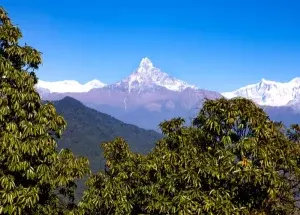
7 hours DriveWe will take approximately 30 minutes of driving up the hill to Sarangkot, before sunrise. We will begin our morning yoga session here with the beautiful scenery of the Pokhara valley and the Himalayas. We will start trekking uphill towards Australian Camp after yoga and breakfast at Sarangkot.
The trekking trail is through a pine forest and small waterfalls, which provide fresh air and a silent environment. It will take us 5 hours (approximately 8 km) to climb systematically, increasing in height until we get to the Australian Camp, which is approximately 2030 m. We will stay the night in a nearby teahouse and have a pleasant dinner.
Maximum Altitude
2,060 m.Meals
Breakfast, Lunch, DinnerTrek Duration
5-6 hours TrekAccomodations
LodgeTransportation
1 hour DriveOur day will begin early the next morning in a yoga program in the clean, fresh air of Australian Camp. We will then trek down to Landruk village through oak and rhododendron forests after breakfast. We will come across terraced fields, far-off mountains, and the serene village life.
The trail is roughly 5 hours (approx 10 km), and we will gradually move to 1,600 m at Landruk. We might see local people in their work tending their fields, or washing clothes in the streams, on the trail.
We will spend the night in one of the lodges at Landruk, where we will have dinner and have a peaceful village evening.
Maximum Altitude
1,600 m.Meals
Breakfast, Lunch, DinnerTrek Duration
5 hours TrekAccomodations
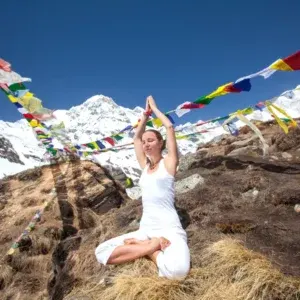
Local LodgeWe will start our walk to Jhinu Danda after a light morning yoga session in Landruk. It starts by the river, then goes up to Jhinu Danda, avoiding green hills, bamboo groves, and rice terraces.
We will walk about 9–10 km in 4–5 hours, reaching Jhinu Danda at around 1,780 m, where the air becomes warmer and the vegetation more lush and subtropical.
The natural hot springs below Jhinu Danda (locally called Tatopani, meaning “hot water”) are well known. On arrival, we will relax by soaking our tired legs and back in the warm mineral pools. In the evening, we will have dinner and rest at the guesthouse.
Maximum Altitude
1,780 m.Meals
Breakfast, Lunch, DinnerTrek Duration
4-5 hours TrekAccomodations
Local LodgeWe will offer an optional morning yoga session beside the hot springs at Jhinu Danda to gently stretch our muscles. After breakfast, we will start our uphill trek to Ghandruk village.
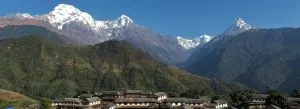
The trail climbs through forest and terraced farmland as we gain height. The walk is about 8–10 km and takes around 4–5 hours, bringing us to Ghandruk at about 2,000 m.
During the day, we may see Nepal’s national bird, the Danphe pheasant, along with colorful wildflowers. Ghandruk is a large Gurung settlement with a rich culture.
By afternoon, we will go to the local Gurung museum, where we will learn about the history of the village and the Gurkha soldier tradition. We will also be staying in a lodge and will have dinner in Ghandruk.
Maximum Altitude
2,000 m.Meals
Breakfast, Lunch, DinnerTrek Duration
4-5hrs trekAccomodations
Local LodgeWe will rise early and have a last yoga session on the Ghandruk ridge, where wide mountain views are on all sides, and our trek will conclude after breakfast.
We will leave Ghandruk by local jeep in 2-3 hours to Pokhara with the final glimpses of the foothills of the Annapurna range. Then we will go to Kathmandu, which can be done by a 6-7 hour drive or a 30-minute flight out of Pokhara.
Upon arrival in Kathmandu, we will get into our hotel in Thamel. The remaining day is to be made free in order to relax, sightseeing in Kathmandu city, visit such sites as Durbar Square, or buy souvenirs.
We will celebrate the completion of our Easy Annapurna Yoga Trek with a farewell dinner at a Nepali restaurant in the evening.
Maximum Altitude
1,400 m.Meals
Breakfast, Lunch, DinnerAccomodations
Garden Resort, ThamelTransportation
6-7 hours DriveAfter breakfast, the Easy Annapurna Yoga Trek will officially finish. Depending on your plan, we will arrange your transfer for your international flight or onward travel.
You will get some time to look back on the Annapurna Yoga Trek experience, pack your bags, and give a farewell to Nepal. We will drop you off at the airport to ensure a hassle-free and on-time departure.
Meals
BreakfastTransportation
Airport transfer
This trek is rated easy to moderate. We will usually walk 5–6 hours a day at a comfortable pace. There are no technical parts such as ropes or ladders, and the route follows clear, well-used trails.
The Easy Annapurna Yoga Trek is suitable for beginners and for travelers of all ages who are in good health. You should be able to walk 4–6 hours a day with short rest stops.
Our gentle daily yoga in the morning and evening will keep your body flexible and relaxed for trekking. Life Himalaya Trekking will support you at every step, and we will slow down whenever needed.
Overall, this is one of the easiest treks in the region, ideal for people who want a relaxed Annapurna Yoga Trek with time for yoga and photos.
The best time for this Annapurna Yoga Trek is spring (March to May) and autumn (September to November). In these months, the skies are usually clear, and we will enjoy mild temperatures and lovely mountain views.
Autumn often brings very stable weather and bright landscapes. Spring offers warmer days, fresh green hills, and blossoms.
Winter (December–February) is colder, especially at night, but the trek is still possible with the right warm clothing and fewer crowds.
The monsoon (June–August) brings heavy rain, clouds, and leeches, making the path muddy and less pleasant, so we usually avoid it. For the most comfortable Easy Annapurna Yoga Trek, we recommend planning your trip for spring or autumn.
On this trek, we will enjoy filling Nepali and simple international meals. In lodges and teahouses, breakfast, lunch, and dinner will be served.
Common dishes include rice and lentils (dal bhat), vegetable or meat curries, noodle soups, fried rice, and local breads like chapati. Vegetarian meals are easy to arrange, and special dietary needs can often be managed if you inform us in advance.
We will always use boiled or purified water for drinking; you can refill your bottles at the lodges. We advise avoiding tap water, raw salads, and unpeeled fruits. Tea, coffee, and bottled soft drinks are available in many places for an extra cost.
Because evenings in the mountains end early, we will usually have dinner before 8 pm and rest well for the next day’s walk.
This trek has a maximum altitude of approximately 2,060 m in Australian Camp; thus, the likelihood of altitude sickness is minimal. Nevertheless, it can provide some mild effects even at 2,000 m (e.g., a headache or fatigue).
We will proceed slowly, and this will assist the body to adapt. Our Easy Annapurna Yoga Trek has small daily altitude changes and many opportunities to rest.
We will remind you to drink sufficient water, eat well, and sleep well. In case some symptoms such as headache, nausea, or dizziness emerge, we would slow down and relax. A first-aid kit and simple medications such as ibuprofen are carried by our guides.
In the rare case of stronger symptoms, we will descend to a lower point. Overall, most healthy people complete this Annapurna Yoga Trek with no altitude issues.
You do not need past trekking experience, but a basic level of fitness will make the trip more pleasant. In the weeks before your journey, we suggest that you walk, jog, cycle, or do light cardio exercise a few times per week to build stamina.
It also helps to do simple stretching or yoga to loosen your muscles. For the trek, you will need sturdy walking shoes, comfortable clothing, and a small daypack.
Each day, we will walk 4–6 hours on dirt trails with some up and down. The yoga sessions will help prepare and relax your body, improve your posture, and support your breathing.
If you come with an open mind and some basic preparation, we will make sure you enjoy the Easy Annapurna Yoga Trek at your own pace.
A Nepal visa is issued on arrival at the Kathmandu airport to most nationalities. Before traveling, you may also complete an online form to save time. The present cost is approximately USD 30 for a 15-day visa.
In the case of this Annapurna Yoga Trek, we shall also prepare the required trekking permits; the Annapurna Conservation Area Permit (ACAP) and the TIMS card (Trekkers Information Management System) are two of them.
A combination of these costs, approximately USD 50, is covered in our service. Our staff will facilitate all permits, and your guide will do it on the trek.
All you have to do is carry your passport in case of an occasional inspection. This is an easy route that does not require any additional permits.
Your health and safety are highly valued by us during the Easy Annapurna Yoga Trek. We recommend that you see your doctor prior to visiting before you travel to have a basic check-up and have your routine vaccinations, including: tetanus, typhoid, and hepatitis A/B, assessed.
In the course of the trek, we will advise you to drink safe water, wash your hands, and consume cooked food so as to prevent stomach-related issues.
Our guides are certified to deal with basic complications such as slight altitude sickness or minor wounds. Helicopter evacuation insurance should be strongly considered in case of a severe crisis.
There are no significant risks of wildlife on this trek; you may encounter birds, monkeys, or farm animals, but we will maintain a respectful distance.
We will always walk together on signed tracks, and we request you to make a speedy note of not feeling well, so we may take early action.
For this Easy Annapurna Yoga Trek, we will use comfortable and safe transport. We will take a personal tourist bus or van between Kathmandu and Pokhara, which will also take approximately 6-7 hours.
In the trek itself, we will primarily walk with occasional short-range transfers in local jeeps. Once we complete our trek, you can go back to Kathmandu via road or a quick domestic flight of approximately 25 minutes back to Pokhara.
You will be provided with airport pick-up and drop-off at Kathmandu and Pokhara airports. In case you want us to assist in international flight bookings, we will also match your transfers with the flight times.
We want to ensure that your Annapurna Yoga Trek is comfortable and stress-free in every aspect of transport.
We strongly recommend that you buy travel insurance before coming to Nepal. Your policy should cover medical treatment, helicopter rescue, trip cancellation, and loss or delay of baggage.
Even though the Easy Annapurna Yoga Trek stays at low to moderate altitudes, unexpected illness or accidents can still happen, and mountain rescue can be costly.
Many international insurance companies offer plans that include trekking in Nepal up to at least 3,000 m. Please bring a copy of your insurance policy and emergency contact numbers with you and share them with us.
Having the right insurance will give you peace of mind throughout your Annapurna Yoga Trek.
In case you appreciate this journey and want to discover more, we will be glad to recommend other yoga trekking programs. To undertake a more difficult and longer trip, it is possible to join an Annapurna Base Camp (ABC) yoga trek of approximately 10-12 days up to 4,130 m to the Annapurna Sanctuary.
Alternatively, one can choose a 14-day Annapurna Circuit Yoga Trek, which encircles the larger Annapurna area.
In case you may want something shorter, a 5-day Poon Hill Yoga Trek will be brilliant to witness the sunrise. Yoga with other activities like paragliding or boating can also be a combination at Pokhara.
We can also develop tailor-made excursions, such as Langtang yoga walks or an Everest View Heli Tour based in Lukla. Discuss your interests, and we will make the dream Himalayan yoga trip.
In addition to the package price, you should plan some money for personal expenses. These may include extra drinks, snacks, tips, and souvenirs. Tea, coffee, soft drinks, and snacks at teahouses are not part of the main package and usually cost one or two dollars each.
You may also wish to buy bottled water or purification tablets. Souvenirs like handicrafts and clothing are available in villages and cities if you want to bring gifts home.
The tendency to tip guides and porters in Nepal is quite popular; we recommend dividing USD 5-10 per person per day and dividing it among staff members.
The primary currency is Nepalese Rupee (NPR), and small bills (100 and 500) are handy to have. Trek meals and accommodation only are provided, although carry a few additional dollars to do laundry, hot showers, or otherwise.
In this area, most people speak Nepali, which is the national language of Nepal, but multiple languages, including Gurung and Magar, are also spoken.
The lodge owners, guides, and most of our local people speak English, and therefore, there is no difficulty in communication. Trek briefings, yoga, and safety briefings will all be delivered in understandable English.
Learning a few simple phrases such as “Namaste” (hello) and “Dhanyabad” (thank you) will make your interactions even friendlier.
We will help you communicate with villagers whenever needed. Internet and phone networks are available in several places along the trail, though we encourage you to enjoy the quiet and be present during your Easy Annapurna Yoga Trek.
Most villages on this route, including Pokhara, Sarangkot, Landruk, and Ghandruk, have mobile network coverage through Ncell or NTC, although the signal can be weak in some areas.
Wi-Fi is available in a number of lodges and cafés, especially in larger villages and in Pokhara, usually for a small fee or sometimes free. However, we suggest treating this trek as a chance to disconnect and enjoy nature.
You should bring a universal travel adapter and at least one power bank. Teahouses usually offer charging points for phones and cameras, sometimes with a small extra charge.
Power cuts can happen, so a headlamp or small torch is also helpful. In Kathmandu and Pokhara, you will have full mobile and internet access. For safety, our guides carry phones and will always stay close to the group.
Remember that when you are on the trek, you should not litter and should take your waste until you see a good bin. Never take tap water; always take boiled and filtered water that the lodges offer.
It is recommended that smoking should not happen in lodges or even yoga sessions since this may be distracting to the other people, and it is illegal in a great number of places.
Please respect local traditions by wearing dresses decently, taking off your shoes before entering households or temples. Do not feed wildlife; it is safer to see them from a distance.
To be on the safe side, you should not walk alone, and you should remain with the group and your guide. Above all, never hurry: take your time, listen to your body, and inform the guide as soon as you think that you do not feel good.
After we complete the Easy Annapurna Yoga Trek, you may decide to extend your stay in Nepal. To get more sunrise views, we can organize additional treks to such viewpoints as Poon Hill or Mardi Himal.
You also have the opportunity to spend more time in Pokhara, boating in Phewa Lake, sightseeing in the World Peace Pagoda, or investigating homes in the towns and caves.
It is also possible to include another wildlife safari in Chitwan National Park, or a cultural tour of the UNESCO World Heritage Sites of Kathmandu.
In case you want to extend your yoga sessions, we will make more extended yoga retreats in Pokhara or Kathmandu. Contact us and give us your ideas, and we will come up with the best extension to your Nepal holiday.
You will find many beautiful scenes on this Annapurna Yoga Trek, and we fully encourage you to take photos. Cameras and mobile phones are welcome along the trail. However, drones are more complicated.
In Nepal, flying drones requires the Civil Aviation Authority and local authorities to allow you to fly. The permits to the Annapurna Conservation Area may require time, and therefore, it would not be advisable to carry a drone on this trek.
Always seek permission before taking close-up shots, particularly in villages and temples. Do not use drones near groups, cultural events, or animals. Tripods and selfie sticks are fine during the day. Drone regulations in Nepal can change, so please check the latest rules before travelling.
Nepal has many colorful festivals, and if your travel dates match, we will try to help you experience them. In October, you may see Dashain celebrations with family gatherings and decorated homes.
In November, Tihar brings lights, flowers, and special days dedicated to animals and brothers and sisters. In March, Holi, the festival of colors, is celebrated in cities like Pokhara with music and colored powder.
In Gurung communities, Losar (their New Year) is often marked in December or January with dances and gatherings. On some days, we may also come across local weekly markets (haat bazaars) where villagers trade goods. These festivals and events will add a rich cultural flavor to your Easy Annapurna Yoga Trek.
When you visit Nepal, it is better to take clothes in layers as the weather may change very fast. In towns and villages, villagers like it when their guests wear modest outfits, keeping shoulders and knees covered. Ensure that you take safe water and that you have a reusable bottle that contains purifying tablets.
The most appropriate greetings to people are a warm smile and a simple Namaste, and be sure to take off your shoes when entering temples or local houses. You should also have a little budget to tip your guide and porter.
Polite bargaining when purchasing souvenirs is absolutely typical. Bring enough Nepali rupees, particularly smaller notes, since many small shops are unable to make change.
During peak times in Kathmandu, road traffic is heavy, and you must be careful with your valuables. The knowledge of simple Nepali words will get you closer. Most importantly, relax, embrace new experiences, and appreciate the soft and quiet pace of life in Nepal.
This is a 7-day trip that combines a more relaxed trekking adventure in the Annapurna area with daily yoga and meditation. We also explore tranquil spots such as Sarangkot, Landruk, and Ghandruk along our route, mountain scenery, and village life.
It is an easy-to-moderate trek. We trek through approximately 5-6 hours per day on marked paths with easy ups and downs. It does not have any high passes or technical areas, and therefore does not require excessive fitness, along with normal fitness for most beginners, to accomplish the task.
We provide relaxed Hatha or Vinyasa style sessions in the mornings and evenings. It puts emphasis on stretching, breathing, and relaxation. Every lesson is appropriate for beginners and regular attendants.
Spring (March- May ) and fall ( September- November ) have the best weather, clear weather, and favorable temperatures. During the monsoon season, there is a lot of rain, and the winter nights are very cold; hence, the seasons are not so ideal.
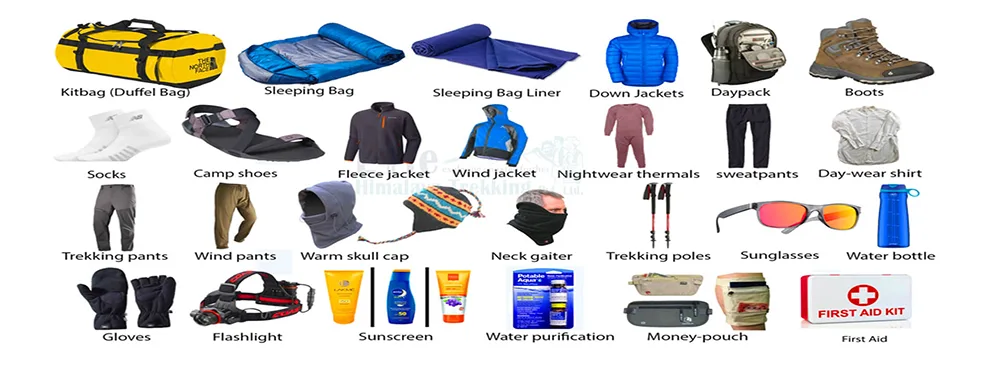
Layered clothes, an oversized jacket, a raincoat, trekking shoes, a pack, and a yoga mat in case you would use your personal. A hat, sunblock, and sunglasses are important as well. When necessary, sleeping bags may be supplied.
Not really. The maximum height of this trek is approximately 2,060 m in Australian Camp, which means that the risk of altitude sickness is minimal. We move at a slow pace, ensure that we drink a lot of water, and take breaks as necessary.
An Annapurna Conservation Area Permit (ACAP) and a TIMS card will be required. We will take care of every permit, and it will be part of the package.
Yes. We also request that every visitor carry insurance covering medical services, helicopter evacuation, and cancellation of the trip. This is necessary, even on an easy walk.
On our trek, we will be staying at local lodges or teahouses that have simple twin rooms and shared bathrooms. We spend the night in 3-star hotels, which have their own facilities in Kathmandu and Pokhara.
You will have breakfast, lunch, and dinner every day. It also serves Nepali cuisine such as dal bhat and basic global cuisine, such as noodles, soups, rice, and vegetables. Let us know in case you have dietary requirements.
Our teams are small, about 4-10 individuals. This makes the trip friendly and yoga sessions more personal. Unaccompanied travelers are also allowed.
The regular package consists of bus rides between Kathmandu and Pokhara. You would like to fly either one way or both; you can book flights at an additional fee.
Put on lightly weight trekking clothes during the day and warm morning and evening. It is helpful to have a waterproof jacket. Yoga pants or loose pants are advised to be comfortable.
Yes. Most villages have mobile networks, but in some areas, a weak signal might occur. Local SIM is simple to purchase. Most lodges provide internet connection by way of Wi-Fi at a low charge. Carry a power bank to charge.
Do not drink tap water. We are going to assist you in getting boiled or purified water. Purification pills and a filter bottle can be applied as well. Refillable bottles are more environmentally friendly compared to purchasing plastic bottles.
No. We offer yoga classes of all levels. The instructor will also provide simpler and more challenging alternatives to enable all people to participate with ease.
Tell your guide right away. They also come with a first-aid kit and understand how to deal with everyday problems. We will either slow down, take a break, or go down as required. In case of any emergency evacuation, the insurance covers it.
This trek can be joined by active children aged 12 or older. The speed is slow, and there are frequent pauses. When you wish to walk with younger kids, please contact us, and we can help.
We will arrange your transfer to Kathmandu airport. Pokhara is about 200 km from Kathmandu, which usually takes 6–7 hours by road or a short 25–30 minute flight. We will drop you off at the airport on time on your day of departure.
Yes. You may extend the number of trekking days in Poon Hill or the Annapurna Base Camp or take cultural tours, yoga holidays, or a Chitwan jungle safari. We can assist in extension planning.
Yes. Our trekking and yoga guides are able to speak good English. They will discuss the day plan, guide your classes, and assist you in socializing with locals.
Nepalese money (NPR) to use on a daily basis. Money exchange can be done in Kathmandu or Pokhara. Bring a few small notes to hand out in villages and have a little USD just in case.

top rated - Based on 200 TripAdvisor & 93 Google Reviews
We plan custom and flexible holiday trips according to your holiday duration, extra wishes, and demands.
Plan your Trips
Chat with our Travel Designer Shiba
Need assistance? Our expert agent is here to help! Please fill out the form below to initiate a chat and get your queries resolved quickly.