

 English
 Dutch
Dutch Japanese
 Hindi
Hindi Italian
 Spanish
 French
 German
 Chinese
 Korean
 Arabic
 Hebrew
 Russian
 Portuguese
 Danish
 Czech
Czech Polish
 Swedish




Plan Your Next
Journey to the Himalayas!
We plan custom and flexible holiday trips according to your holiday duration, extra wishes, and demands.
Plan your Trips


Max. Altitude
2000m
Best Season
Oct -Dec & March-May
Activity
Yoga and Trekking
Start / End Point
Kathmandu / KathmanduDhampas Sarangkot yoga trek is a light five-day trek, a combination of leisurely strolls and restorative yoga in the serene hills around Pokhara. It is also among the simplest treks in the Annapurna region, and it is appropriate for individuals who are new to trekking or those who desire a relaxing vacation.
The route offers wide views of the Annapurna and Dhaulagiri ranges, including the beautiful Machhapuchhre, also called Fishtail. You walk through green terraced fields, forests, and traditional Gurung and Magar villages that sit on the hills above Pokhara.
During the trek, you can enjoy daily yoga and meditation in nature. Morning sessions help you wake up gently with the rising sun, and optional evening sessions help you relax after trekking.
The highest point of this trek is around two thousand meters, so the risk of altitude sickness is very low. This makes the trip comfortable for most people with normal fitness. The route includes three well-known viewpoints: Australian Camp, Dhampus, and Sarangkot.
You can enjoy beautiful sunrises and sunsets from these places, along with wide views of the Himalaya and the Pokhara Valley. On clear days, the sky becomes warm in color as the sun rises or sets behind the mountains.
You will also get to experience local life. Along the path, you go through the villages people give you a smiling welcome. You can see farmers at work in the fields, and children going to school, and everyday village life.
During the trek, you will be staying at a comfortable hotel in Pokhara and in basic yet simple lodges. You can also view colorful paragliders flying in the valley in Sarangkot since it is also a renowned paragliding hill.
On the whole, the Dhampus Sarangkot yoga trek is a mild introduction to Himalayan trekking. It provides an ideal combination of nature, mountains, village life, and yoga. If you are looking for a short and refreshing holiday that supports both body and mind, this trek is a very good choice.
Your Dhampus Sarangkot yoga trek begins with a pleasant drive from Kathmandu to Pokhara. In the morning, you leave Kathmandu in a private car or tourist bus and travel toward the west. The road follows the Trisuli and Marsyangdi rivers, which are known for white water rafting. On the way, you pass through small towns, terraced fields, and green hills.
This drive gives you a first taste of rural life in Nepal. There are stops for lunch and short breaks along the route. After about six hours, you reach Pokhara, which is famous as the lake city of Nepal. You check into a comfortable three-star hotel. In the evening, you can walk along Lakeside beside Phewa Lake.
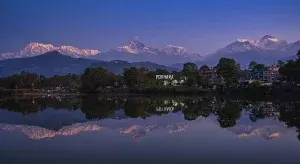
If the weather is clear, you may see the reflection of Machhapuchhre on the calm water at sunset. You can have dinner at the hotel or at one of the many restaurants near the lake. Tonight, you rest well and prepare for the start of your trek the next morning.
Maximum Altitude
1,351 m.
Accomodations
3 Star Hotel
Transportation
6 hours driveAfter breakfast at the hotel, you will drive from Pokhara to Dhampus village, which is the starting point of the trek. The road climbs gently above the valley and offers nice views along the way. At Dhampus, which lies at around one thousand six hundred and fifty meters, you will begin your trek.
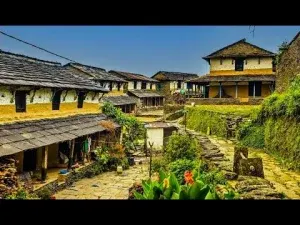
The trail passes through traditional villages and terraced fields. You may see villagers working with their crops or looking after their animals. The path is mostly gentle with some gradual uphill sections. As you climb, the peaks of the Annapurna range slowly appear above the nearby hills.
During the day, your yoga instructor may lead short stretching or breathing sessions at quiet spots. Practicing yoga in the fresh mountain air makes the day feel even more peaceful.
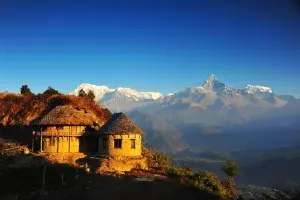
By late afternoon, you will reach Australian Camp at 2,050 m / 6,725 ft. The viewpoint here offers an exciting panorama of Annapurna South, Hiunchuli, Machhapuchhre, and distant parts of the Dhaulagiri and Manaslu ranges on a clear day.
In the evening, you can watch the sunset as the last light turns the mountains golden. After dinner at the lodge, you can sit outside and look at the stars if the sky is clear. The quiet of the night and the cool air make this a very special place to rest.
Maximum Altitude
2,100 m.
Meals
Breakfast, Lunch, DinnerTrek Duration
3-4hrs trekAccomodations
Australian CampYou will wake up early for a sunrise yoga session at Australian Camp. The first light of the morning slowly touches the peaks of Machhapuchhre and Annapurna, creating a beautiful setting for gentle stretches and breathing exercises. After yoga, you will have breakfast with a view of the mountains.
You will then start the trek from Australian Camp toward Sarangkot. The trail follows a ridge for much of the way and passes through forested areas and hillside settlements.
You will continue to enjoy views of the Annapurna range to the north while walking. The route passes through places such as Naudanda and Kaskikot, where you can observe local life and see traditional houses. Friendly villagers often greet trekkers with a warm Namaste.
The path has some small ups and downs. In a few places, you will descend to a small stream and then climb again. Most of the walk is gentle and comfortable.
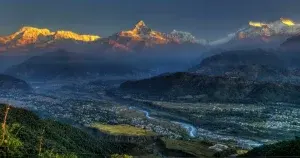
By afternoon, you will arrive at Sarangkot, which is around one thousand six hundred meters and is known as one of the best viewpoints above Pokhara. From Sarangkot, you can see the Pokhara Valley, Phewa Lake, and the surrounding hills.
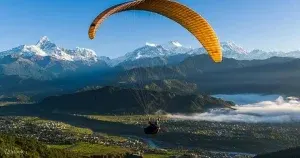
Sarangkot is also a popular place for paragliding. You may see colorful wings flying above the valley, almost like birds. You will check into a lodge or small hotel and can relax for a while. In the evening, you may join another yoga session or simply enjoy the sunset over the valley.
At night, you will see the city lights of Pokhara shining below while the dark outline of the mountains appears in the distance.
Maximum Altitude
1,600 m.Meals
Breakfast, Lunch, DinnerTrek Duration
5-6hrs trekAccomodations
3 Star HotelToday, you will have the chance to wake up very early and walk a short distance to the main viewpoint tower at Sarangkot. From here, you can enjoy one of the best sunrise views in the region.
The first light of the sun touches the Annapurna and Dhaulagiri ranges, and the sky slowly changes color. Many visitors say this moment is the highlight of the Dhampus Sarangkot yoga trek. If you wish, you can also do a short morning yoga stretch after the sunrise.
After breakfast at the lodge, you will begin your final trekking day. The trail from Sarangkot goes mostly downhill to the base of the hill near Pokhara.
You will pass through villages, terraced fields, and forest paths. The way can be steep in some sections, so you will walk carefully at a slow pace. On the way, you can look back to see the mountains one last time before you descend fully toward the valley.
You will reach Khahare, a place at the foot of the Sarangkot hill, close to the lakeside area of Pokhara. A vehicle will be waiting for you here and take you back to your hotel in Pokhara, which is only a short drive of about fifteen minutes. With this, the trekking part of your Dhampus Sarangkot yoga trek will be complete.
In the afternoon, you can rest or enjoy optional activities. Many people like to take a gentle boat ride on Phewa Lake, visit a spa for a massage, or simply relax in a lakeside cafe.
In the evening, you can share a farewell dinner with your guide and yoga instructor and talk about the experiences you had during the trek.
Maximum Altitude
1,400 m.Meals
Breakfast, LunchTrek Duration
3-4hrs trekAccomodations
3 Star HotelAfter breakfast, you will say goodbye to Pokhara and begin your journey back to Kathmandu. If you travel by road, a private car or tourist bus will follow the same highway that you used on the first day.
You can once again enjoy views of hills, rivers, and villages. You will stop for lunch and rest on the way.
To get directly to Kathmandu, you can use a domestic flight from Pokhara to Kathmandu in case you want to get there within a shorter period of time.
The journey lasts approximately 30 minutes and provides beautiful aerial scenery of hills and mountains on a clear day. This choice should be made beforehand, and it relies on the weather and the availability of seats.
By late afternoon, you will arrive in Kathmandu. Your five-day Dhampus Sarangkot yoga trek comes to an end with many good memories of morning yoga, peaceful trails, mountain views, and friendly villagers.
You can have an additional night in Kathmandu, perhaps you can go sightseeing in the city, just in case you have time.
Maximum Altitude
1,401 m.Meals
BreakfastTransportation
6-7hrs drive or 30 minutes flight
The weather on the Dhampus Sarangkot yoga trek is usually mild, as the route stays between about one thousand five hundred and two thousand meters.
The spring season, between March and May, and the autumn season, between September and November, are the most favorable seasons. The sky is usually clear during these periods, temperatures are comfortable, and mountain view of the mountain view is great.
During spring, the mountains turn greener, and there might be rhododendron flowers on the road. In autumn, the air feels fresh and clean after the monsoon rains, and visibility is very good. It is also possible to do this trek in winter, from December to February, because the altitude is not very high.
Winter days are cool and sunny, with daytime temperatures often between five and fifteen degrees Celsius, but mornings and nights can be cold, especially in January.
If you trek in winter, you will need warm clothing. The advantage of a winter trip is that the trails are quieter and the skies are often very clear. The most uncomfortable period of this trek is the monsoon season, which occurs between June and the beginning of September. Leeches are common in the forest, and all trails can be muddy and slippery due to heavy rainfall.
The mountains are usually covered by clouds that obscure the view. The scenery is, however, quite green, and there are still some individuals who walk during this period.
You must be prepared for rain and keep it loose in case you visit during the monsoon. In all seasons, it is wise to check the latest weather forecast and pack accordingly.
Yes, the Dhampus Sarangkot yoga trek is very beginner-friendly. The hike is categorized as an easy one, and most days have an average of three to six hours of walking at a slow pace. The routes are not technical and do not require any technical climbing. The path has some stone steps and a few uphill and downhill steps, but no exposed or dangerous places.
The pinnacle of the trek is 2,050 m / 6,725 ft, which is very low in the Himalaya. It means that the probability of altitude sickness is extremely low, and you do not require special acclimatization days. Individuals who can comfortably stroll several hours with a light daypack tend to accomplish this hike without any challenge.
The yoga every day is also beneficial to your body. Post-walk stretches help to ease stiffness and aid in the healing process, particularly in beginners who are not accustomed to trekking.
The guide and yoga teacher are attentive to the needs of the group and can change the pace of walking and the yoga practice to make everyone relaxed. This makes the Dhampus Sarangkot yoga trek a good first trek in Nepal.
During the Dhampus Sarangkot yoga trek, you will eat most of your meals at local teahouses. The food is simple, fresh, and filling.
The primary meal in the mountains is the dal bhat, which consists of a meal set that includes rice, lentil soup, and cooked vegetables. It is nutritious and provides you with energy for the trek.
Some of the other typical options are noodles, fried rice, soups, momos, and omelets. Breakfast can consist of bread, eggs, porridge, or pancakes. It is important to drink enough water while trekking.
You can refill your water bottle at lodges, where they can give you boiled water or filtered water. You may also use your own purification tablets or filter. Tea and coffee are widely available at teahouses.
Alcohol should be avoided when on the trek because it can leave you dehydrated, tired, and not benefit your yoga classes. Hot beverages like herbal tea, ginger tea, or lemon honey tea are nice and make you feel relaxed.
Altitude sickness is generally not a concern on the Dhampus Sarangkot yoga trek. The highest sleeping places are between about one thousand six hundred and two thousand meters, which is well below the height where most people begin to feel altitude problems. Almost all trekkers complete this route without any difficulty related to altitude.
You may feel a little out of breath on steeper ascents, but this is usually due to exercise and not to altitude sickness. Basic signs of altitude sickness include a strong headache, dizziness, nausea, and difficulty sleeping. It is still good to know these signs, even though they are very rare at this height. A slow walk, drinking lots of water, and frequent breaks will help you get rid of any minor inconvenience.
The itinerary is not that steep in height and allows your body time to adjust. Your guide is trained to notice if anyone feels unwell and will respond quickly if needed. For almost everyone, the altitude on this trek is low enough that there is no need for special medicine or detailed acclimatization plans. You can focus on enjoying the walk and the yoga sessions.
For the Dhampus Sarangkot yoga trek, you usually need an Annapurna Conservation Area Permit, known as ACAP, and a Trekkers Information Management System card, called TIMS.
These are routine permits for most of the treks in the Annapurna region. The ACAP fee contributes towards conservation and local initiatives, and the TIMS card is employed in safety records.
You can obtain these permits in Kathmandu or Pokhara at official offices. If you are trekking with an agency, they will normally arrange them for you. Once you receive the permits, keep them safe in your daypack.
There may be checkpoints along the route where officials ask to see them. The Dhampus Sarangkot route lies at the edge of the Annapurna Conservation Area. In some cases, trekkers who only stay on the short local trail may not be checked.
Nevertheless, regulations can be modified, and it is always better to possess the appropriate documents. Adhering to the local regulation, staying on the designated trails, observing village traditions, and littering are also significant aspects of responsible trekking. Laws fluctuate frequently; thus, the most recent laws are adhered to, and the necessary permits are arranged by us.
Your guide and yoga instructor are there to make your trek safe, comfortable, and enjoyable. The trekking guide knows the paths, local villages, and weather patterns very well. They lead the group at a gentle speed, choose good places to rest, and help you with local customs and language.
The yoga instructor plans simple sessions that suit both beginners and people with some experience. Morning practice usually focuses on gentle stretching and breathing to prepare your body for walking. The evening practice is more relaxing and allows your muscles to rest.
The guide as well as the instructor will be glad to respond to questions and make changes to the plan in case someone feels exhausted or requires additional rest. With them around, you find yourself relaxing, and you get to enjoy the trip in peace.
Your health and safety are very important on the Dhampus Sarangkot yoga trek. Although this is a simple path, we are still walking in the hills, so we should be careful.
Always listen to your guide because they are familiar with the route and the weather conditions. Use stone steps and uneven surfaces carefully, particularly on the downward side of stairs, so that there is no slipping.
Trekking poles may assist in your balance and lessen the rate of strain on your knees. We also take frequent rest breaks to have a drink of water, grab a snack, and take a breather. To walk slowly and steadily is better than to rush.
Keep in mind that trekking is not a competition. Wash or apply hand sanitizer before meals to maintain hygiene. Drinking only boiled or purified water will help prevent stomach problems. Dangerous wild animals can be found on this route.
Farm animals like cows, goats, or buffalo might be found on the trail. Dear me, take a stroll around them and leave them alone. The forest could have mosquitoes and leeches during the months of the monsoon. Then, insect repellent and long sleeves may be helpful.
In yoga classes, the teacher proposes poses that are appropriate for the group. You must never strain yourself into any pose where you feel uncomfortable. You may always rest or adopt some easy form.
The guide will be equipped with a simple first aid kit and will be trained to manage some minor illnesses or injuries. There is access to medical care in a very short time, in case of a severe issue in Pokhara. With the right mindset, paying attention to your body, and your guide, you can have a safe and relaxed trek.
The yoga part of this trek is designed to support your body and mind, not to push you. A usual day starts with a gentle morning session before breakfast. The instructor guides simple breathing, stretching, and balance exercises that anyone can try.
In the late afternoon or evening, there is often a second shorter session that focuses on relaxation and rest. All poses have easier options, and you can always choose to rest if a movement feels too strong.
Joining every session is not compulsory. If some days you prefer to sleep longer or simply enjoy the view, that is also fine. This flexible approach makes the Dhampus Sarangkot yoga trek comfortable for beginners and creates a calm and friendly group mood.
The Dhampus Sarangkot yoga trek includes many attractions, even though it is short. The main attraction is the view of the Himalayan peaks.
From different points on the trail, you can see Annapurna I and its neighboring peaks, Dhaulagiri, Manaslu, and the beautiful Machhapuchhre with its sharp fishtail shape. Sunrise and sunset from Australian Camp, Dhampus, and Sarangkot are especially impressive.
Another attraction is village life. Dhampus village is known for the Gurung community, with their stone houses and traditional customs. You may see women in local dress, old men sitting together and talking, and children playing in the lanes.
In Sarangkot and nearby villages such as Kaskikot, you will meet Magar families and other groups, who all add to the rich culture of the region.
Visitors often remember the warmth and hospitality of these villagers and the simple pleasure of sharing a cup of tea with them. Sarangkot itself is a famous viewpoint above Pokhara. From there, you can see the whole valley, Phewa Lake, and even other lakes such as Begnas on a clear day. Paragliding from Sarangkot is very popular.
If you wish, you can book a tandem flight and glide through the air with a trained pilot, with the mountains in front of you and the lake below. Pokhara is also an important attraction before or after the trek.
You may see the World Peace Pagoda, Devi Falls, cave temples, and the International Mountain Museum. You may also just sit near Phewa Lake and have the serene view. This journey is a wonderful blend of nature, culture, light adventure, and day-to-day yoga.
Travel insurance is strongly recommended for the Dhampus Sarangkot yoga trek. Even though this is a short and low-risk trip, insurance is a wise choice.
Your policy should cover trekking up to at least two thousand meters, medical treatment, and emergency evacuation if needed. It is also helpful if your insurance covers trip cancellation or delay and adventure activities, especially if you plan to try paragliding.
You should carry a copy of your insurance details with you, including the policy number and emergency contact telephone. Nobody predicts accidents or sickness, but when you have insurance, you have the peace of mind and will get the care without having to consider what it will cost.
Nepali is the major language of this area, though several individuals working in the tourism sector speak English. Your guide will also be fluent in English and will assist you in communicating with local people. In most lodges and teahouses, it is easy to order food and arrange rooms.
Learning a few simple Nepali words can make your trip more enjoyable. For example, Namaste is a polite greeting, and Dhanyabad means thank you. Locals appreciate it when visitors try to use their language, even in a small way.
Mobile network coverage from local providers is available in most of the places on this trek, including Dhampus, Australian Camp, and Sarangkot, although the signal may be weak in some spots. Pokhara has strong coverage and internet access.
Some lodges provide wireless internet for a small fee, but the speed may be slow. You can charge phones and cameras at the lodges, as they use two hundred and twenty volt power with common plug types.
A power bank is useful as a backup. While it is nice to stay connected, you may also enjoy the chance to spend a few days with less screen time and more time in nature.
This trek is easy and is a good choice for beginners. The walking is on gentle paths, and the daily distances are short. Most people with basic fitness can complete it without problems.
The Australian Camp has the highest point of 2,050 m / 6,725 ft. This is low altitude in the Himalaya, and there is very little chance of altitude sickness. Nearly every trekker makes it through this route without problems with the altitude.
The most appropriate period is the spring between March and May, and the fall between September and November. The weather during these seasons is predictable, temperatures are pleasant, and the mountain views are at their finest.
No, you do not need any yoga experience at all. The sessions are gentle, and the instructor will guide you step by step. You can take breaks or do easier poses if you prefer.
You will stay in a comfortable three-star hotel in Pokhara. During the trek, you sleep in small local lodges with clean and simple rooms. Most rooms are twin share, bathrooms are usually shared, and some places offer hot showers and basic charging facilities.
Yes, meals are included on the trekking days. You will eat simple and fresh food like dal bhat, noodles, soups, momos, fried rice, and light breakfasts. Vegetarian food is easy to arrange. Meals in Kathmandu and Pokhara are usually on your own.
Yes, you require an Annapurna Conservation Area Permit and a TIMS card. They can be arranged by your trekking company, and you are to have them with you when you are on the trek.
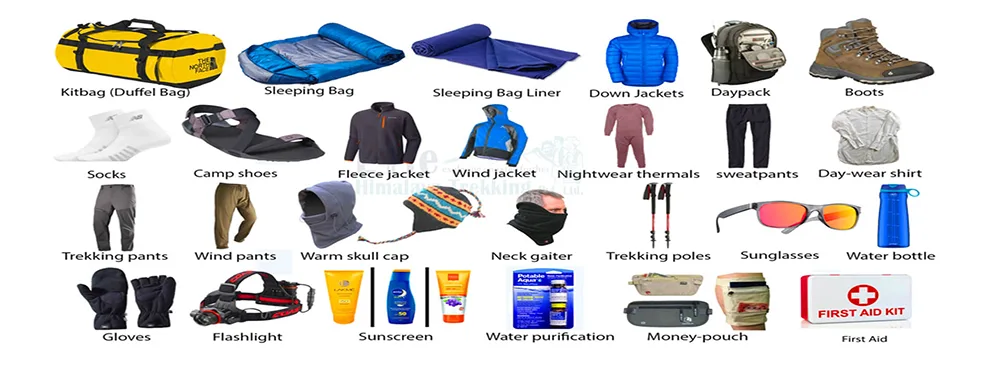
Carry along a comfortable trekking shoe, comfortable shirts, warm clothes, a rain jacket, and free-flowing clothes in which one can do yoga. Sun hat, sunglasses, sunscreen, a bottle of water, personal care stuff, and any personal medicine are also useful. You should use a small day pack to carry your daily things.
Yes, one of the finest destinations in Nepal to do paragliding is Sarangkot. It is possible to reserve a tandem flight that is operated by a professional pilot. This is an additional expense, and your guide can coordinate it.
Yes, it is a good idea to have travel insurance. It should cover trekking up to at least two thousand five hundred to three thousand meters, medical care, evacuation, and any extra activities like paragliding. Keep a copy of your policy with you.
Yes, your phone will be functional in most locations. You will not have a good signal everywhere, but you will not feel that you are totally out of touch. The internet is also available in some lodges at a fee.
The days are usually mild and pleasant. Mornings and evenings can be a bit cool, so a light jacket is enough. Winter is colder, but still manageable.
No trekking poles are needed, but they may assist, particularly in the downhill direction. They are easy to use for many people.
Yes, you can refill your bottle at the lodges. They serve boiled or filtered water. Purification tablets can also be taken.
There is no rush on this trek. You are able to pace yourself, take breaks, and view the scenes. In case you are exhausted, the guide will slow you down.
Yes, you can leave your surplus bags without any trouble in your hotel in Pokhara. You just have what you need to make the short journey.
Yes, individual travelers are also welcome. You can walk it with your guide, or accompany a small group where possible. It is an easy and amiable path.
Yes, this trek is known for beautiful sunrise and sunset views. Places like Australian Camp and Sarangkot offer amazing colours over the mountains.
The yoga classes are peaceful and calming. They involve stretching, breathing, and easy poses to make your body feel rejuvenated. It is not hard or severe.
You may see birds, butterflies, and farm animals along the way. This area does not have dangerous wildlife on the trekking trail.

top rated - Based on 200 TripAdvisor & 93 Google Reviews
We plan custom and flexible holiday trips according to your holiday duration, extra wishes, and demands.
Plan your Trips
Chat with our Travel Designer Shiba
Need assistance? Our expert agent is here to help! Please fill out the form below to initiate a chat and get your queries resolved quickly.