

 English
 Dutch
Dutch Japanese
 Hindi
Hindi Italian
 Spanish
 French
 German
 Chinese
 Korean
 Arabic
 Hebrew
 Russian
 Portuguese
 Danish
 Czech
Czech Polish
 Swedish
Plan Your Next
Journey to the Himalayas!
We plan custom and flexible holiday trips according to your holiday duration, extra wishes, and demands.
Plan your Trips
For anyone planning to reach the summit of Mount Everest, the journey begins with its most unpredictable obstacle. Climbers need to navigate through a constantly shifting web of deep crevasse fields, enormous blocks of ice and unstable snow bridges before ascending to the higher camps. The area of the mountain has become known as the most hazardous on the South Col route.
The Khumbu Icefall is not just a phase in the trek. It’s a glacier that constantly moves and changes daily, so each crossing is unique. Even advanced mountaineers take it lightly with careful planning.
For all those interested in high-altitude climbing, it is essential to understand how this part of Everest works. If you are planning to scale the highest peak in the world or just curious about what it is like to visit Everest, knowing what you’re going to find inside this frosty maze will give you some insight into why it’s so difficult to make it to the top.
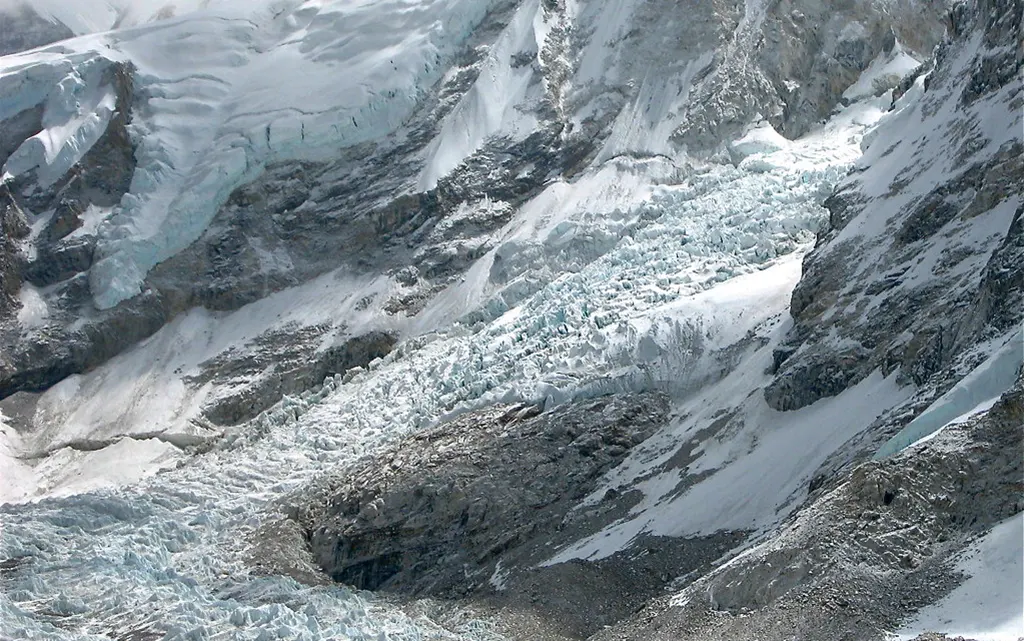
The Khumbu Icefall is a steep section of the Khumbu Glacier that is situated just above Everest Base Camp in Nepal. It is created where the glacier descends from the mountain, allowing large slabs of ice, known as seracs, to form and deep crevasses to open out on the surface of the glacier.
The icefall extends from about 5,400 m (17,717 ft) near Everest Base Camp to about 5,900 m (19,357 ft), where the climbers head to Camp I. The landscape is always changing because the glacier is continually moving. Ice Towers can suddenly fail, crevasses open up and old paths vanish.
There is no permanent trail that passes through this area like there is with a hiking trail. A new path is required each season and needs to be maintained as a result of changes in conditions.
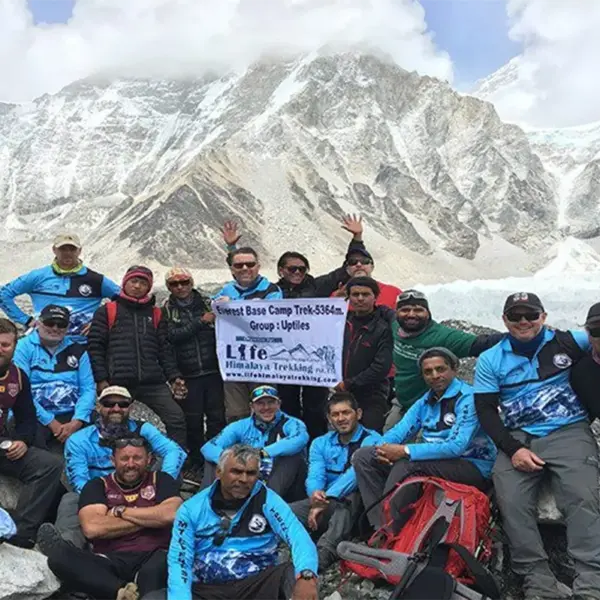
For anyone planning to reach the summit of Mount Everest, the journey begins with its most unpredictable obstacle. Climbers need to navigate through a constantly shifting web of deep crevasse…
Everest Icefall is located on the south side of Everest in the Sagarmatha National Park of Nepal. It is located directly above Base Camp of Everest and below the Western Cwm, which is the first big technical step on the classic route that is used by most climbers to the South Col of Everest.
This is the area that is traversed by all the Everest expeditions from Nepal. It is typically traversed as part of a climb from Base Camp to Camp I and then to Camp II before higher rotas of acclimatization.
Due to the location below hanging glaciers and steep ice cliffs, the area is exposed to icefall all season long during the climbing season.
The Khumbu Icefall is believed to be the most hazardous part of the normal route to the summit of Everest because the glacier always moves. Researchers estimate that portions of the Khumbu Glacier can move several feet each day, continually moving the landscape.
Big ice towers can suddenly give way to form an avalanche or to close down lanes. The snow bridges over deep crevasse fields may become unstable with warm daytime temperatures. Caution must be exercised and even well-placed ladders might have to be moved after the glacier has shifted.
The other difficulty is the altitude. Climbers are already at more than 5,400m (17,717ft), where oxygen levels are significantly reduced from sea level. Less oxygen means weaker muscles, a lack of balance and a heightened sense of caution, thus making it more difficult to move.
Weather also is significant. Warm weather causes more ice movement and strong winds and fresh snow can conceal crevasses or make travel more difficult.
There is no permanent ice route in the Everest Icefall. The main expedition season starts in September and October, followed by a specialist team preparing a safe route through the glacier, the Icefall Doctors.
These veteran Nepalese mountaineers spend weeks fine-tuning their understanding of the ice movement and determining the most secure route. They place aluminium ladders over large crevasses, attach ropes to steep ice walls and set anchor points for climbers to use when moving through difficult areas.
The route will be subject to regular checking and mending because the glacier will fluctuate seasonally. If a crevasse widens or a serac becomes unstable, the team might reroute the trail or use new equipment.
If it weren’t for their efforts, climbing commercially to the top of Everest would be unfeasible.
There are multiple passages through an icefall before reaching the summit of Everest. In the acclimatization phase, the climbers ascend and descend between Base Camp, Camp I and Camp II several times to help the body adjust to the altitude.
The teams prepare to leave Base Camp just after midnight or about 2:00 am. The colder weather will help to maintain the stability of the ice and minimise the risk of falling seracs or collapse of snow bridges. Climbers wear headlamps as they slowly make their way through the glacier in darkness.
Normally takes 5 to 8 hours depending on weather, traffic and personal physical condition. This can cause delays during the peak climbing seasons when multiple teams are using the same ladders or restricted areas.
While each crossing has a clearly marked route and fixed ropes, it is necessary to have complete attention to the crossing at all times.
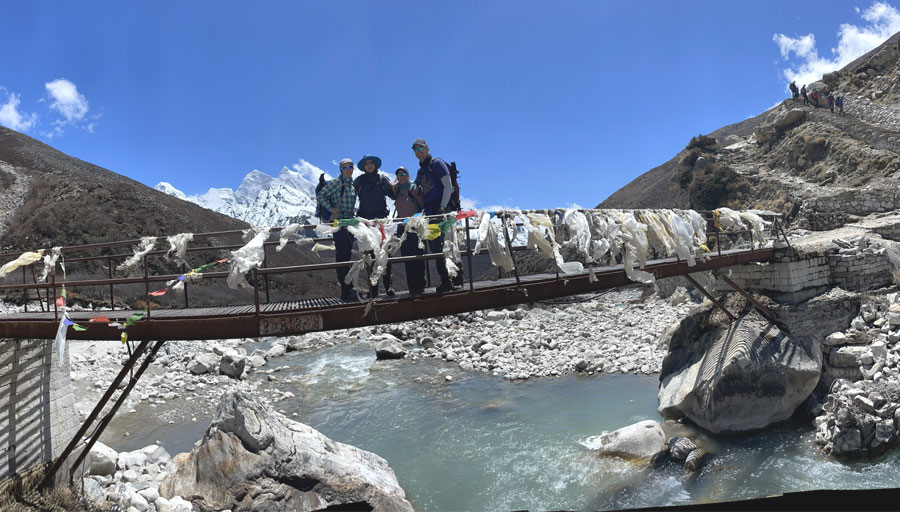
Special mountaineering equipment is necessary for the Khumbu Icefall, which is a glacier trek and high-altitude climb.
Crampons are worn by climbers for hard ice and steep slopes; they give climbing traction. Climbing up, they tie on safety carabiners and ascenders to fixed ropes. Helmets shield from falling ice and harnesses enable climbers to be linked into the safety system.
Walking on aluminium ladders across crevasse fields is often required. Sometimes aluminium ladders are used to cross crevasse fields, which can be linked together to span larger gaps. To stay balanced on these ladders takes agility and slower movement.
Heavy insulated boots and warm clothing, gloves, goggles and quality climbing gear are also required since temperatures are often quite cold and can be below freezing temperatures even before sunrise.
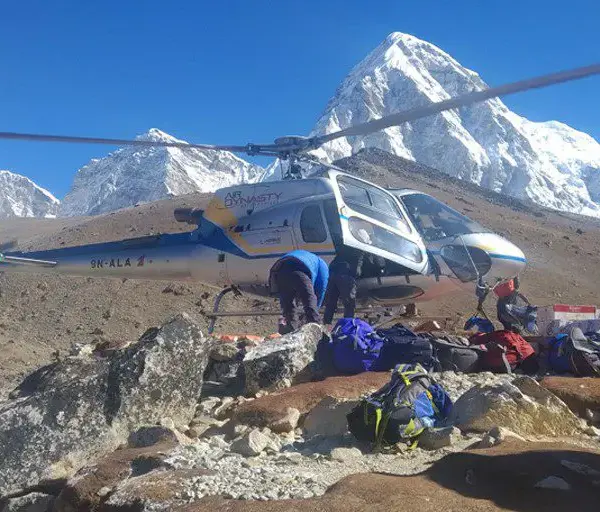
Luxury Tea House Everest Base Camp Heli Return trek
For anyone planning to reach the summit of Mount Everest, the journey begins with its most unpredictable obstacle. Climbers need to navigate through a constantly shifting web of deep crevasse…
Without the experience of the Sherpas, the Everest Icefall would be a lot harder. These highly trained climbers are vital to the Everest climbing season from the start to the end of the season until the last party returns from the summit of Everest.
A climbing team carries many tents, food, oxygen cylinders, fuel and climbing equipment through the glacier on several occasions during an expedition. Often they cross much more than foreign climbers, so that their work is particularly demanding.
Sherpas also navigate hard parts of the route, watch for changing conditions and assist in emergencies if they do occur on the route.
They have a wealth of experience which they passed on to climbers and their knowledge of the mountain conditions and their ability to work safely at this height is one of the reasons that modern Everest expeditions are now possible.
A successful climb to Everest involves months of preparation before arriving in Nepal or years of preparation. Physical fitness is not sufficient. Technical ability and experience on snow and ice are also required of climbers.
Glacier travel, rope skills, laddering and moving on crampons are often part of the training. A large number of climbers have first gained experience in the smaller Himalayan peaks or mountains, in Europe, North America or South America, before taking on Everest.
Cardiovascular fitness is important to maintain steady movements at altitude and strength training is important to maintain balance when carrying a backpack over rough ice.
It is also crucial to get mentally prepared. Climbers need to be calm, attentive and patient as they navigate through the environment of change.
Opening in the spring of the year, from April to May, the Khumbu Icefall is typically crossed. Weather at this time of the year is generally more settled than elsewhere, making summit attempts more practical.
Climbers usually start their climb before dawn. Cold nights slow glacier flow and make snow bridges more stable. The sun hits the ice and the weather changes, making falling ice more likely.
Expedition leaders may postpone crossings if expected conditions are heavy snow, strong winds or unusually warm temperatures.
Several natural hazards in the Everest Icefall cannot be completely avoided. Seracs, hidden crevasses, avalanches and changing glacier conditions are constant hazards during the climbing season.
Thus, expedition teams take great care to watch the weather and the conditions of the glaciers, to cut down on these risks. Climbers always have fixed ropes, always follow the routes and are always accompanied by experienced Sherpas and expedition leaders.
Communication systems and rescue equipment are also put in place before each expedition leaves and an emergency medical plan is created. These measures increase safety; however, they don’t eliminate all risks of crossing the glacier.
That is why all Everest climbers know that they are bound to encounter unpredictable weather on the mountain, even if they have prepared for it.
Climbing Everest today takes place in an environment that is changing over time. The glaciers in the Himalayas, including the Khumbu glacier, have been impacted by rising temperatures.
Glacier thickness, glacier motion and seasonal glacier melting have been observed. Weather conditions each year have a significant effect upon certain areas of the route, but so too do the changes.
These constant changes make it necessary for the organization of the expedition to modify climbing strategies, route planning and safety precautions, depending on the conditions of the season, as well as on the experience from the previous one.
As climate change monitoring of the Himalayas’ glaciers improves, they help us gain a better understanding of how future Everest trips may be impacted.
This Khumbu Icefall is not recommended for beginners or low-skill-level mountaineers. Commercial travel does offer professional support, but climbers must be physically fit and have prior experience in snow and ice climbing.
Most reputed expedition companies suggest that climbers climb some of the peaks of high altitude prior to mountaineering Everest. A cumulative experience in crampons, fixed ropes, glacier travel and elevation adjustment makes it easier and safer for climbers to negotiate the icefall.
But it is a combination of preparation, good judgment, teamwork and appreciation of the conditions on the mountain rather than determination that makes a successful Everest expedition.
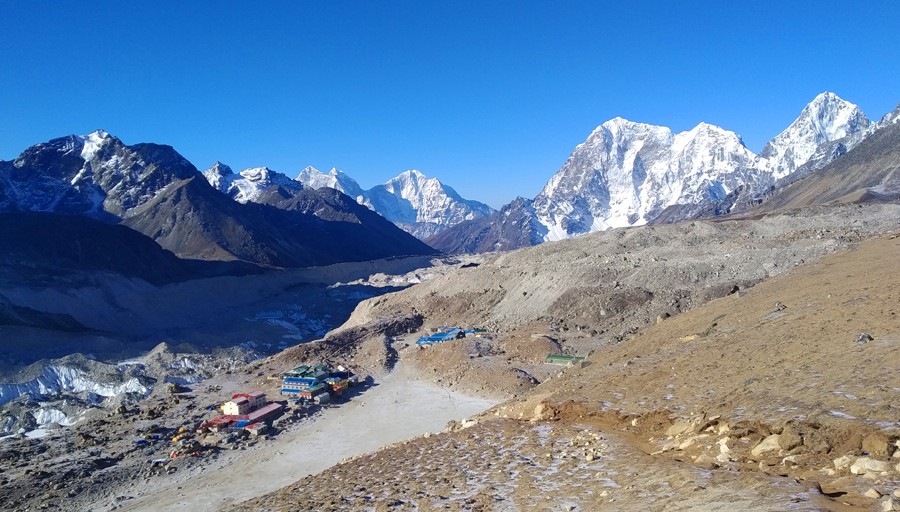
The Khumbu Icefall is still one of the biggest challenges on the way to the top of Mount Everest. It is a place where care and experience are necessary due to its moving glacier, deep crevasses, unstable ice towers and extreme altitude.
It is essential to know the dangers of walking towards Everest, the safety procedures to be followed and the ever-changing nature of the mountain in every successful Everest climb. This challenging crossing is made possible by the efforts of the Icefall Doctors, Sherpa assistance and climbers’ discipline.
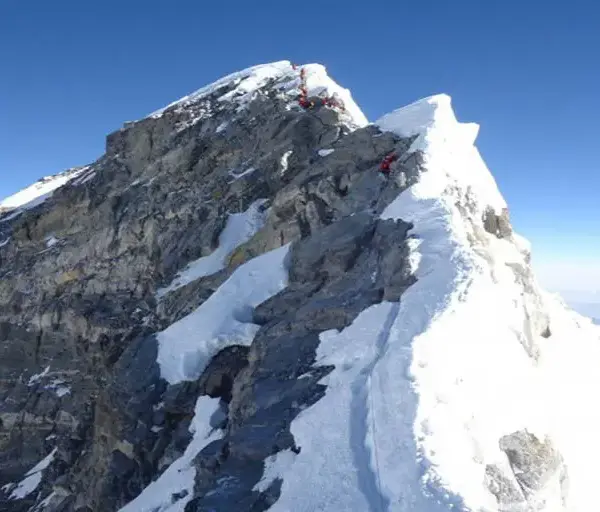
Mount Everest Expedition – 55 Days
For anyone planning to reach the summit of Mount Everest, the journey begins with its most unpredictable obstacle. Climbers need to navigate through a constantly shifting web of deep crevasse…
The study of Khumbu Icefall is a first step towards anyone wishing to ascend to the summit of the world’s highest peak. It serves as a reminder that ascending to the summit of Everest isn’t just a matter of getting to the top, but also a process of successfully facing all hurdles in the way.


We plan custom and flexible holiday trips according to your holiday duration, extra wishes, and demands.
Plan your Trips
Chat with our Travel Designer Shiba
Need assistance? Our expert agent is here to help! Please fill out the form below to initiate a chat and get your queries resolved quickly.