

 English
 Dutch
Dutch Japanese
 Hindi
Hindi Italian
 Spanish
 French
 German
 Chinese
 Korean
 Arabic
 Hebrew
 Russian
 Portuguese
 Danish
 Czech
Czech Polish
 Swedish
Plan Your Next
Journey to the Himalayas!
We plan custom and flexible holiday trips according to your holiday duration, extra wishes, and demands.
Plan your Trips
The Everest Base Camp Trek Fixed Group Join 2027 is a convenient way to explore the Khumbu region with other trekkers while following a planned departure schedule. Instead of a completely private trip, you select a published date for the trip and take part in a group that is handled by a trekking business.
The classic route takes trekkers from Lukla through Phakding, Namche Bazaar, Tengboche, Dingboche, Lobuche and Gorak Shep before reaching Everest Base Camp (5,364 m /17,598 ft). Many tourists also visit Kala Patthar (approx. 5545 m / 18192 ft).
A fixed group tour may be helpful for the single traveller who needs company, for couples who like to get together with others and for those who prefer an arranged tour. The expense is usually also lower than if the services are arranged privately since certain expenses are spread out between the group members.
When booking plans for 2027, visitors must not only pay attention to the package pricing shown by the travel service, but also the advantages and disadvantages it offers. The total cost may vary due to departure dates, weather conditions, domestic flights, permits, accommodation, meals, insurance, equipment, tips and potential weather delays.
This guide explains the fixed departure system, expected 2027 costs, departure dates, itinerary, seasonal conditions, preparation requirements and the differences between a private and group joining trek.

A fixed group trek is a scheduled trek that involves various travellers and small groups travelling together. The trek organizer decides the date, route, core logistics and services for the group.
The guide will accompany the group on the trek and will usually be the one to lead the group. The company can also arrange for porters, accommodation, meals, flights, permits and airport transfers depending on the package.
Operators can vary in the number of groups. Some companies’ groups may be capped at about ten trekkers, or there may be more. Therefore, the size of the group needs to be verified prior to booking.
The typical route starts from Kathmandu to Lukla. The trek then travels along the Dudh Koshi Valley and slowly ascends to the more elevated Khumbu villages. Nepal Tourism Board defines the classic Everest Base Camp trek as a 10- to 12-day trek, beginning and ending around Lukla.
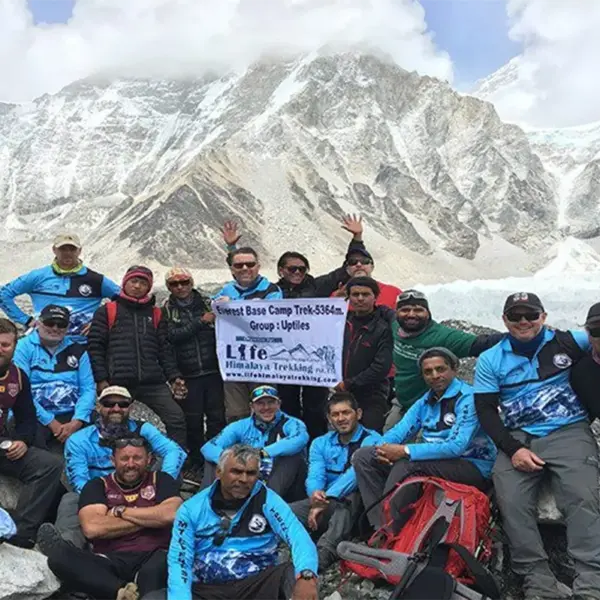
The Everest Base Camp Trek Fixed Group Join 2027 is a convenient way to explore the Khumbu region with other trekkers while following a planned departure schedule. Instead of a…
The departure schedule for fixed services is not daily but only on certain dates. Please see the following table for a helpful overview of the 2027 schedule, as soon as departure calendars are available. Availability and dates may be subject to change; please call to confirm. Current published prices show US$1,195 departures in March, April, May, September and November, while other operators publish different dates and prices.
| Month | Example 2027 Departure Dates | Typical Duration | Published Example Price | Seasonal Situation | Planning Notes |
| January | Limited or company-specific | 12 to 16 days | Varies | Cold winter conditions | Suitable mainly for trekkers prepared for cold |
| February | Limited departures | 12 to 16 days | Varies | Cold, with improving conditions later | Check flight and weather arrangements carefully |
| March | Add Dates | 12 days | From about US$1,195 | Spring begins | Good option for early season trekking |
| April | Add Dates | 12 days | From about US$1,195 | Spring | High demand and generally favourable conditions |
| May | Add Dates | 12 days | From about US$1,195 | Late spring | Warmer lower elevations and possible cloud later |
| June | Limited departures | 12 to 16 days | Varies | Monsoon approaching | Rain and flight disruption become greater concerns |
| July | Some operators publish departures | 12 to 16 days | From about US$1,360 on some schedules | Monsoon | Wet conditions and cloud can affect travel |
| August | Limited or company-specific | 12 to 16 days | Varies | Monsoon | Less predictable weather |
| September | Add Dates | 12 days | From about US$1,195 | Autumn begins | Conditions generally improve during the month |
| October | Add Dates | 12 to 16 days | Around US$1,350 and above | Autumn | High demand and good trekking conditions |
| November | Add Dates | 12 days | From about US$1,195 | Late autumn | Cooler temperatures with generally good visibility |
| December | Limited departures | 12 to 16 days | Varies | Winter | Cold conditions and possible snow at higher elevations |
The dates above are indicative of the 2027 calendar that is currently published and not a standard calendar of dates for the industry. Various companies have different outbound dates.
For 2027 planning, a realistic price for a standard fixed group Everest Base Camp package is approximately US$1,200 to US$1,600 per person.
Current published 2027 examples include departures at US$1,195, US$1,350 and US$1,360, depending on the company and package structure.
A more comprehensive personal budget is going to be higher than the package price, as these may not be included in the package, such as international flights, travel insurance, visa fees, personal costs, tips, equipment and additional accommodations.
| Expense | Estimated Cost Per Person |
| Fixed group trekking package | US$1,200 to US$1,600 |
| Nepal tourist visa | Around US$50 for 30 days |
| Travel insurance | About US$100 to US$200 |
| Personal expenses | About US$80 to US$160 |
| Equipment rental | About US$80 to US$150 |
| Guide and porter tips | About US$150 to US$250 |
| Extra Kathmandu accommodation | About US$40 to US$150 |
| Suggested additional budget | About US$500 to US$900 |
| Practical total excluding international airfare | About US$1,700 to US$2,500 |
These are plan prices and not guaranteed prices for 2027. The final amount may vary due to exchange rates, services provided by the company, flight arrangements, accommodation standards and personal spending.
The advertised price may differ due to group size, type of accommodation, flights, food, porter service, guide service, permits, length of time and seasonal demand.
If two packages are being compared, determine if both packages contain the same services. A cheaper advertised package could leave out the flights or meals, which are included in a more expensive package.
The exact contents of the trekking packages depend on the specific companies, but a typical fixed group trek includes the essential elements needed for the trek.
Inclusions may vary from one 2027 package to another and may be different to what is described above; please check with each package.
A number of optional and personal costs are not included in the fixed group rate. These are expenses you will have to budget for when you travel.
The terrain and mountains can be the same, but the mode of travel may differ.
| Feature | Fixed Group Join Trek | Private Trek |
| Departure | Selected published dates | Your preferred date |
| Group | Shared with other travellers | Private group |
| Cost | Generally lower | Generally higher |
| Itinerary | Mostly fixed | More flexible |
| Walking pace | Based on group | Can be adjusted |
| Rest days | Usually predetermined | Can be added more easily |
| Guide | Shared by group | Dedicated to your group |
| Accommodation | Based on group booking | More choice possible |
| Social experience | Meet other trekkers | Mainly your own group |
| Solo traveller suitability | Very suitable | Suitable but usually costs more |
| Route changes | Limited | Easier to arrange |
| Group logistics | Managed collectively | Managed specifically for your group |
A fixed group is ideal for people who prefer a set time to leave and go together. If flexibility is a key element, a private trek is more appropriate.
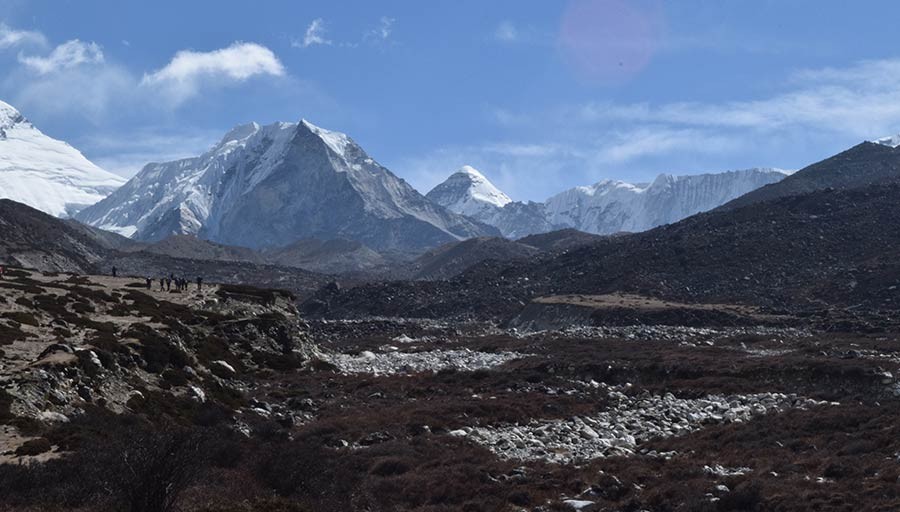
A typical 14-day structure is provided below. The exact schedule will depend on the individual companies, so it is best to verify prior to booking whether a 12-, 14-, 15-, or 16-day program will be implemented.
| Day | Route | Approx. Elevation | Walking Time | Main Purpose |
| 1 | Arrive in Kathmandu | 1,400 m (4,593 ft) | None | Arrival, hotel check-in and trek preparation |
| 2 | Kathmandu to Lukla, trek to Phakding | Lukla 2,860 m (9,383 ft); Phakding 2,610 m (8,563 ft) | 3 to 4 hours | Begin trekking |
| 3 | Phakding to Namche Bazaar | 3,440 m (11,286 ft) | 5 to 7 hours | Enter the higher Khumbu region |
| 4 | Acclimatization in Namche | 3,440 m (11,286 ft) | 3 to 5 hours | Acclimatization hike |
| 5 | Namche to Tengboche | About 3,860 m (12,664 ft) | 5 to 6 hours | Continue toward the upper Khumbu |
| 6 | Tengboche to Dingboche | 4,410 m (14,469 ft) | 5 to 6 hours | Gradual altitude gain |
| 7 | Acclimatization in Dingboche | 4,410 m (14,469 ft) | 3 to 5 hours | Acclimatization hike |
| 8 | Dingboche to Lobuche | 4,910 m (16,109 ft) | 5 to 6 hours | Enter higher mountain terrain |
| 9 | Lobuche to Gorak Shep and to Everest Base Camp and back to Gorak Shep | Gorak Shep about 5,164 m (16,942 ft); EBC 5,364 m (17,598 ft) | 7 to 8 hours | Reach Everest Base Camp |
| 10 | Hike to Kala Patthar and descend to Pheriche | Kala Patthar about 5,545 m (18,192 ft) | 7 to 8 hours | Mountain viewpoint and descent |
| 11 | Pheriche to Namche | Namche 3,440 m (11,286 ft) | 6 to 7 hours | Return toward lower elevation |
| 12 | Namche to Lukla | Lukla 2,860 m (9,383 ft) | 6 to 7 hours | Complete main trekking route |
| 13 | Lukla to Kathmandu | Kathmandu 1,400 m (4,593 ft) | Flight | Return to Kathmandu |
| 14 | Final departure | Kathmandu 1,400 m (4,593 ft) | None | International departure or extra day |
The route, according to the Nepal Tourism Board, starts at Lukla and passes through the Dudh Koshi Valley to Namche, then passes through the Khumbu to reach Everest Base Camp.
The Everest Base Camp Trek smoothly ascends from Kathmandu to the high altitude villages of the Khumbu region. Namche Bazaar and Dingboche are acclimatization days included in the program for trekkers to get used to the altitude prior to reaching higher elevations.
| Location | Elevation | Approx. Elevation in Feet |
| Kathmandu | 1,400 m | 4,593 ft |
| Lukla | 2,860 m | 9,383 ft |
| Phakding | 2,610 m | 8,563 ft |
| Namche Bazaar | 3,440 m | 11,286 ft |
| Tengboche | 3,860 m | 12,664 ft |
| Dingboche | 4,410 m | 14,469 ft |
| Lobuche | 4,910 m | 16,109 ft |
| Gorak Shep | 5,164 m | 16,942 ft |
| Everest Base Camp | 5,364 m | 17,598 ft |
| Kala Patthar | 5,545 m | 18,192 ft |
The highest point is Kala Patthar (5545 m 18192 ft) on this trek. The gradual ascent is integral to the journey and that’s why there are two acclimatisation days at Namche Bazaar and Dingboche.
The choice of a fixed departure should take into account the weather. While conditions will change from year to year, the following month-by-month guide will give you an overview of planning practically.
| Month | Daytime Conditions | Visibility | Rain or Snow | Crowds | Flight Considerations | Overall Trekking Character |
| January | Very cold | Often clear | Snow possible at high elevations | Low | Cold weather can cause disruption | Quiet winter trekking |
| February | Cold | Improving | Snow possible | Low | Weather remains important | Cold but gradually improving |
| March | Cool to mild | Generally good | Less precipitation | Moderate | Improving conditions | Early spring |
| April | Mild at lower elevations | Generally good | Usually limited | High | Generally favourable | Popular spring period |
| May | Warmer at lower elevations | Good early, variable later | Rain increases toward month end | High | Increasing cloud risk later | Late spring |
| June | Warm lower elevations | Variable | Monsoon begins | Lower | Rain and cloud can affect flights | Transition to monsoon |
| July | Mild to warm lower areas | Often limited | Frequent rain | Low | Greater weather disruption risk | Monsoon conditions |
| August | Mild to warm lower areas | Variable | Frequent rain | Low | Cloud can affect flights | Wet season |
| September | Improving | Better later in month | Rain decreases | Moderate | Conditions improve through the month | Early autumn |
| October | Mild and cool | Generally very good | Usually low | High | Generally favourable | Peak autumn season |
| November | Cool | Generally good | Usually low | Moderate to high | Generally favourable | Clearer, colder autumn |
| December | Cold | Often clear | Snow possible higher up | Low | Winter conditions possible | Cold winter trekking |
The most frequent time periods for fixed group departures are spring and autumn. But a particular month doesn’t mean perfect weather and flying conditions.
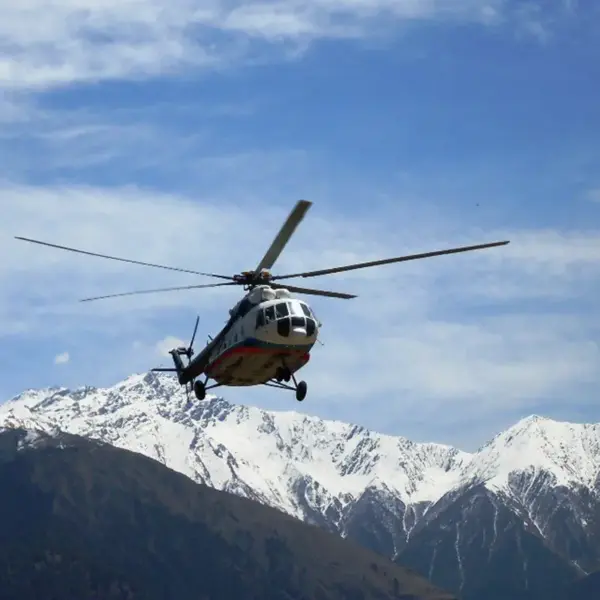
Everest View Easy Hike With Helicopter Tour (Deluxe)
The Everest Base Camp Trek Fixed Group Join 2027 is a convenient way to explore the Khumbu region with other trekkers while following a planned departure schedule. Instead of a…
The Everest Base Camp Trek is also difficult due to the altitude, the many walking days, the rugged trail, the cold weather and the ascents and descents.
The normal trekking route does not require technical climbing skills. Physical preparation is still important because the body must work at progressively higher elevations.
It is beneficial to walk regularly prior to the hike. Aim for endurance training as you build it from walking up and down hills, stair climbing, cardio, strengthening leg exercises and hiking on weekends.
Start preparation several weeks before departure rather than waiting until the final days.
It is an integral part of the program. The typical acclimatisation stops are Namche Bazaar (3440m /11286ft) and Dingboche (4410m /14469ft).
On these days, the trekker generally goes up to a higher area and then comes back to the same settlement for the night.
The aim is to give the body time to adjust to the reduced oxygen available at higher elevations.
At altitude, headache, nausea, dizziness, unusual fatigue and difficulty sleeping may occur. If their symptoms get worse, the guide should be informed right away. If serious altitude-related illness does occur, a descent may be required.
One of the essential components of many Everest Base Camp trips is flights. Flight schedules may be subject to weather, visibility, wind and operational conditions.
In the peak of the trekking season, flights may fly in from Ramechhap Airport instead of Kathmandu. The itinerary that includes Ramechhap-specific flight arrangements related to 2027 is available in some of the current itineraries.
Therefore, it is advisable to have a buffer day before an international flight.
In case of cancelation of a flight, the trekking company can help with arranging a different flight or another alternative option. Helicopter arrangements may be considered in certain instances, but weather, aircraft requirements and other expenses must be considered, as well as availability.
A protected area and local entry permit are required for the standard route to Everest Base Camp.
The current price of the entry fee for foreign tourists to the Sagarmatha National Park is quoted by the Nepal Tourism Board as being NPR 3,000 per person. It also highlights the Khumbu Pasang Lhamu Rural Municipality fee rate of US$20 per person for each week for the first four weeks.
According to the new rules of the Nepal Tourism Board, Everest Base Camp is one of the routes that require a licensed trekking guide.
Please review the rules for permission prior to 2027 as they may be subject to change.
Generally, teahouses can be found along the route that provide accommodation. Rooms are usually simple and commonly have two beds, while bathrooms may be shared.
Trails get simpler the higher they go. There may be an additional charge for hot showers, charging and Wi fi.
Meals commonly include dal bhat, noodles, rice, pasta, potatoes, soups, eggs, bread and other simple dishes.
Food availability can be more limited at higher altitudes because you need to bring food up to isolated mountain communities.
The following is a good list of items to pack:
Clothing
Trekking Equipment
Personal Items
You may want to rent some equipment in Kathmandu to cut down on equipment costs.
There is no consistent mobile reception in the Everest region. Connectivity is generally adequate in some villages and weaker or nonexistent in others.
Wi Fi is available at many teahouses, usually for an additional fee. Internet connections may be intermittent and users should not depend on continuous connectivity.
Many settlements have access to electricity, but charging stations may not be as convenient at elevated locations.
A power bank can be helpful to maintain the power of the mobile phones and other crucial gadgets during the hike.
When planning an itinerary, trekking up to the highest elevation should be covered by the travel insurance.
Clearly articulate emergency evacuation coverage in the policy. Not all travel insurance policies include helicopter evacuation from high altitude.
Have insurance information, emergency contact number, passport copy and important medical information handy for the entire hike.
If you are travelling solo and are looking to meet other trekkers, the fixed group departure may be appropriate. It is also appropriate for couples, friends and small groups that are comfortable following a scripted schedule.
Private treks may be more appealing for travellers requiring more rest days or major changes to their routes.
What’s important here is flexibility. A group trek offers structure and a shared cost, whereas a private trek offers a greater degree of control over the trek.
Can I get into an Everest Base Camp fixed group if I am a solo traveller?
Yes, solo travellers are able to book individual positions on a scheduled departure and trek with other travellers on the same group itinerary.
How many people are typically on an Everest Base Camp fixed departure?
The number of people participating in the group may vary depending on the operator; some may have a maximum of about 10 people so they can better coordinate and provide guide services.
Do Everest Base Camp fixed departures run all year 2027?
The availability of departures depends on the company, but most departures are usually found during the trekking season in the spring/autumn.
Does it always travel the same route if you are part of a group trip?
Routes are scheduled in advance, but may change daily due to weather conditions, health issues, flight delays and trail conditions.
Is it possible to change from a group tour to a private tour after registration?
Some companies have a policy to make the change before the trip, but the number of changes, price differences, as well as cancellation conditions depend on the booking policy of each of these companies.
Will the advertised cost for a group trek be all my money?
No, not necessarily; international airfares, insurance, visa expenses, personal expenses, tips, equipment and some services may also be additional costs.
How do some fixed 2027 departures fit into the budget of the private Everest base camp treks?
The costs of the guide, porters, transportation and operations are shared amongst multiple group members, thereby lowering the per-person trekking costs.
Is Lukla flight included in all fixed group packages?
No, it changes from operator to operator; please check outbound and return flights before paying the booking amount.
Is TIMS card required for Everest Base Camp trekking?
According to current Nepal Tourism Board guidance, the Everest Base Camp trail requires a licensed agency and guide and the Nepalese Trekking Information Management System (TIMS) card is not required.
If I come to Nepal earlier than the fixed date of my departure?
It is a good idea to arrive at least 1 day prior to the trek to give you some flexibility in case you misjudged your travel time to the destination country or need to prepare for the trek or for an international flight.
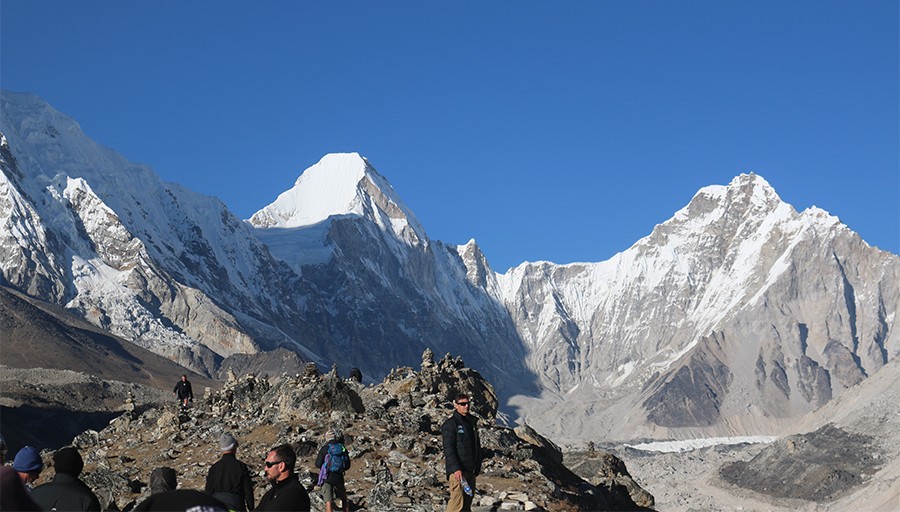
The first step is to choose a travel date convenient with your travel plans and the international flight schedules.
Review the full travel plans and number of people. Before payment, check each and every inclusion and exclusion, particularly domestic fares, accommodation, meals, permits, guide services, porter services and airport transfers.
Inquire about the policy regarding flight delays, illness, cancellations, changes to itineraries and emergency situations.
Be sure to check if equipment like sleeping bags or down jackets are available or supplied.
After you confirm your booking, start physical preparations and plan for appropriate travel insurance.
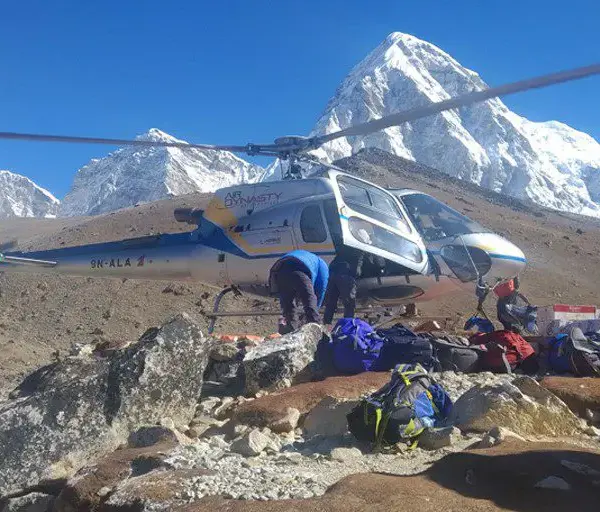
Luxury Tea House Everest Base Camp Heli Return trek
The Everest Base Camp Trek Fixed Group Join 2027 is a convenient way to explore the Khumbu region with other trekkers while following a planned departure schedule. Instead of a…
The Everest Base Camp Trek Fixed Group Join 2027 is an organized trek to Base Camp Everest that allows you to explore the Khumbu region and travel together with other trekkers. For those who wish to explore a route with some structure but not the price tag of an organized hike, it can be a good alternative.
A standard fixed-group package is estimated at US$1200 to US$1600 per person (excluding international airfare) for 2027 planning and an overall personal budget of about US$1700 to US$2500, excluding international airfare, gives latitude for insurance, tips, personal spending, equipment and additional accommodation.
Always compare the final price and not the price quoted alone. Before booking the trek, it is crucial to review the departure date, party size, flight information, permits, accommodation, food, insurance and cancellation policies to ensure that you have reasonable expectations.
The 2027 fixed group format can offer a well-organized experience of the trail to Everest Base Camp with the right preparation and plans.


We plan custom and flexible holiday trips according to your holiday duration, extra wishes, and demands.
Plan your Trips
Chat with our Travel Designer Shiba
Need assistance? Our expert agent is here to help! Please fill out the form below to initiate a chat and get your queries resolved quickly.