

 English
 Dutch
Dutch Japanese
 Hindi
Hindi Italian
 Spanish
 French
 German
 Chinese
 Korean
 Arabic
 Hebrew
 Russian
 Portuguese
 Danish
 Czech
Czech Polish
 Swedish
Plan Your Next
Journey to the Himalayas!
We plan custom and flexible holiday trips according to your holiday duration, extra wishes, and demands.
Plan your Trips
The Annapurna Base Camp Trek is a good option for travelers who want to experience the Himalayas without taking on a technical climbing expedition. A group departure in 2027 may be helpful for planning and provide solo travelers, couples and small groups the opportunity to travel with others.
This 14 day tour starts from Kathmandu and goes on trekking from Birethanti via Pokhara and then on to the rest of the tour. The trail leads through Ulleri, Ghorepani, Poon Hill, Tadapani and Chhomrong, before it reaches the Annapurna Sanctuary. Annapurna Base Camp (4130 m /13550 ft) is the highest point. The return trip is along the route through Bamboo, Chhomrong and Jhinu Danda, returning to Pokhara and then to Kathmandu.
A group join trek is a trek that is shared with other travellers who have booked their treks on the same day. The guide, transport and some other services are shared, but the tour is predetermined.
In this guide, you will learn everything about the Annapurna Base Camp Trek Group Join 2027 in detail, from the route, cost, permits, month-by-month weather, accommodation, food, difficulty, packing, safety and how this trek compares with other popular treks in Nepal.
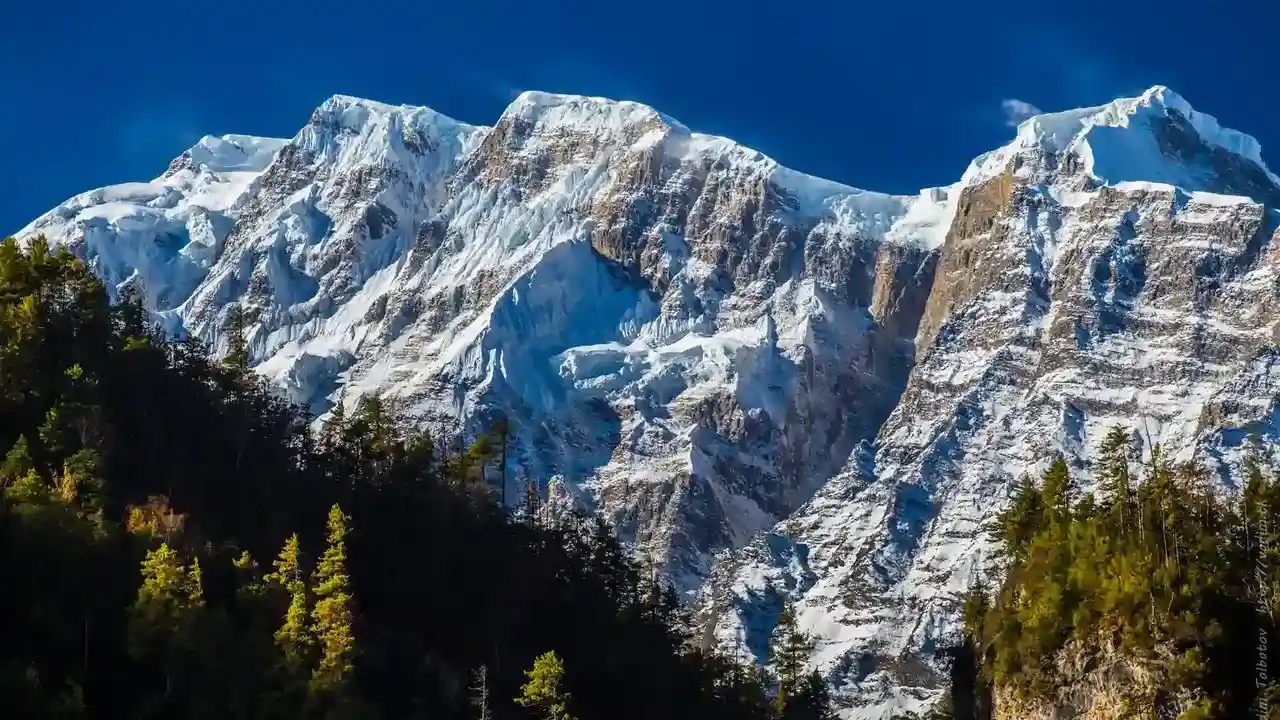
A group join trek is a trek that is run as a fixed departure, meaning that individual travelers and small groups participate in the same trek. Rather than having an entire group trip, you travel with others who have registered for the same trip date and path.
This could be helpful for solo travelers. There are others during the walking days and meals and experiences can be shared in the lodges. It can also lower the cost of services for individuals, such as guide support and transportation.
The primary difference is flexibility. Normally, a private trek can be arranged more easily in the event the desired walking tempo or schedule for the day is modified. A group departure follows the confirmed itinerary; all participants will work according to a planned route and overnight stops.
No one has to take the same walk from morning till evening. Humans have different walking speeds. The guide leads the group and gives information on the route for the day, the meeting and accommodation.
The trek portion of this trek starts from Birethanti, which is reached after the passage of Pokhara from Kathmandu. This route then follows the Ghorepani and Poon Hill and extends towards Annapurna Base Camp.
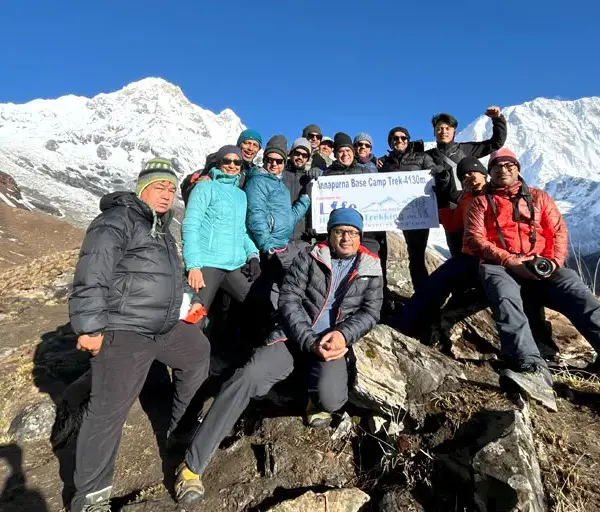
The Annapurna Base Camp Trek is a good option for travelers who want to experience the Himalayas without taking on a technical climbing expedition. A group departure in 2027 may…
| Feature | Group Join Trek | Private Trek |
| Departure | Fixed date | Flexible |
| Guide | Shared | Dedicated |
| Transportation | Shared or arranged for group | Can be private |
| Cost | Usually lower per person | Usually higher |
| Walking schedule | Mostly fixed | More flexible |
| Social experience | Meet other trekkers | Travel with your own group |
| Customization | Limited | Greater flexibility |
A tour where the group travels in formation may be a viable option for those who do not need a full private tour but would like to travel in an organized manner.
One reason is the cost. If multiple people are working together on the guide services and transportation, they can be more affordable per person than the services they would need to arrange independently. The actual saving will depend on the size of the group that you are in and the content of your package.
A group departure can be advantageous to the solo traveler as well. Though you may be traveling solo, you’ll have a group on foot, in the kitchen and for conversation along the way in Nepal.
It can be easier to plan as well. Items included in a confirmed group package include transportation, accommodation, meals, permits and guide services. Travelers can concentrate on getting ready for the trek by having the services in the confirmed package coordinated by Life Himalaya Trekking.
There is also the fact that they will have someone who knows the route and can arrange with the local lodges. This is very beneficial on days of extended walking or when the road and/or weather conditions necessitate adjustments to the planned program.
Another aspect of the experience is the social part. Group members can be from everywhere and have different trekking experience. Some might be seasoned trekkers; others might be making their first trek in the Himalayas.
| Trip Information | Details |
| Trek | Annapurna Base Camp Trek |
| Duration | 14 days |
| Trek style | Group join and fixed departure. |
| Starting point | Kathmandu |
| Trek starting point | Birethanti |
| Main destination | Annapurna Base Camp |
| Highest point | 4,130 m (13,550 ft) |
| Poon Hill | 3,210 m (10,531 ft) |
| Machhapuchhre Base Camp | Around 3,700 m (12,139 ft) |
| Accommodation | Three-star hotels and trekking lodges |
| Main transportation | Tourist bus and road transport |
| Difficulty | Moderate to difficult |
| Main trekking seasons | March to May and September to November |
| Route | Birethanti, Ulleri, Ghorepani, Poon Hill, Tadapani, Chhomrong, Himalaya and ABC |
| Return | ABC, Bamboo, Chhomrong, Jhinu Danda and Pokhara |
The one shown below is the 14-day road trip provided.
| Day | Route | Walking or Travel | Highest Elevation |
| 1 | Arrival in Kathmandu | Airport transfer | 1,320 m (4,330 ft) |
| 2 | Kathmandu to Pokhara | 7 to 9 hours by road | 900 m (2,953 ft) |
| 3 | Pokhara to Birethanti and trek to Ulleri | 4 to 5 hours walking | 2,020 m (6,627 ft) |
| 4 | Ulleri to Ghorepani | 5 to 6 hours | 2,840 m (9,318 ft) |
| 5 | Poon Hill and Tadapani | 6 to 7 hours | 3,210 m (10,531 ft) |
| 6 | Tadapani to Chhomrong | About 6 hours | 2,170 m (7,119 ft) |
| 7 | Chhomrong to Himalaya | 6 to 7 hours | 2,920 m (9,580 ft) |
| 8 | Himalaya to ABC via Machhapuchhre Base Camp | 5 to 6 hours | 4,130 m (13,550 ft) |
| 9 | ABC to Bamboo | About 6 hours | 4,130 m (13,550 ft) |
| 10 | Bamboo to Jhinu Danda via Chhomrong | About 6 hours | 2,170 m (7,119 ft) |
| 11 | Jhinu Danda to Pokhara | Short walk and road travel | 1,700 m (5,577 ft) |
| 12 | Pokhara sightseeing and free time | Sightseeing | 900 m (2,953 ft) |
| 13 | Pokhara to Kathmandu | 7 to 9 hours by road | 1,400 m (4,593 ft) |
| 14 | International departure | Airport transfer | 1,320 m (4,330 ft) |
A group trek is a group of people with varying levels of experience and walking speeds and with varying modes of travel.
Some trekkers might choose to walk earlier and arrive at the lodge earlier; others may take longer breaks. The guide will assist in organising the group and give information on the route for the day.
The main itinerary and accommodation will be shared in most cases. Dinners at the lodges can likewise be social experiences.
Simultaneously, don’t anticipate spending all the time with the group. As the day goes on, there may be some natural interactions between the trekkers and you will have a little of your own time at the lodge!
This balance is the reason why group trekking can be great for solo travelers.
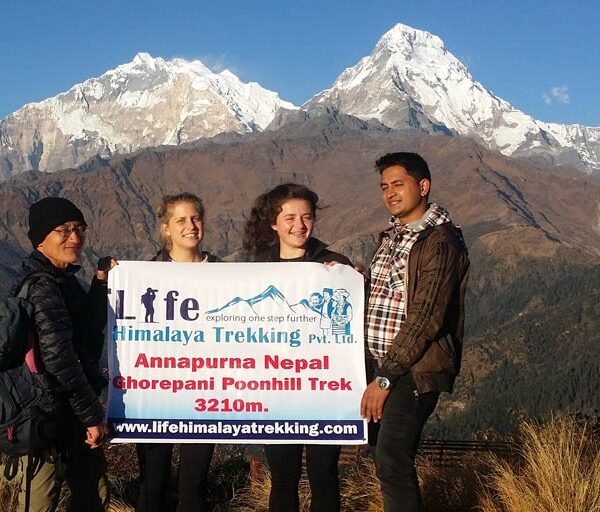
The Annapurna Base Camp Trek is a good option for travelers who want to experience the Himalayas without taking on a technical climbing expedition. A group departure in 2027 may…
The price for a Life Himalaya Trekking group departure is subject to change upon finalization of the departure schedule and supplier rates and will be sent to you for confirmation at that time.
The price is moderately spread out, according to current information from the market for 2026. The guided packages are in the range of USD 700 to USD 1300, depending on the group size, duration, accommodation, transportation, guide and porter allocation. Standard group packages are currently available on some operators for USD 900 to USD 1000 per person.
For a 14-day group package similar to the itinerary covered here, a reasonable planning estimate for 2027 is approximately USD 850 to USD 1,200 per person for a standard group service.
This should be treated as an estimated market price rather than a confirmed Life Himalaya Trekking rate.
| Package Type | Estimated 2027 Cost Per Person | General Arrangement | Package Type |
| Budget group | USD 750 to 900 | Basic hotels, lodges and shared services | Budget group |
| Standard group | USD 850 to 1,200 | Hotels, meals, guide, permits and transportation | Standard group |
| Comfort group | USD 1,200 to 1,600+ | Better city hotels, upgraded transport or additional services | Comfort group |
| Private trek | Usually higher | Dedicated guide and greater flexibility | Private trek |
The exact price will vary greatly based on content. The published group rates are available, with some larger groups able to obtain lower rates per head and private rates will usually be more expensive.
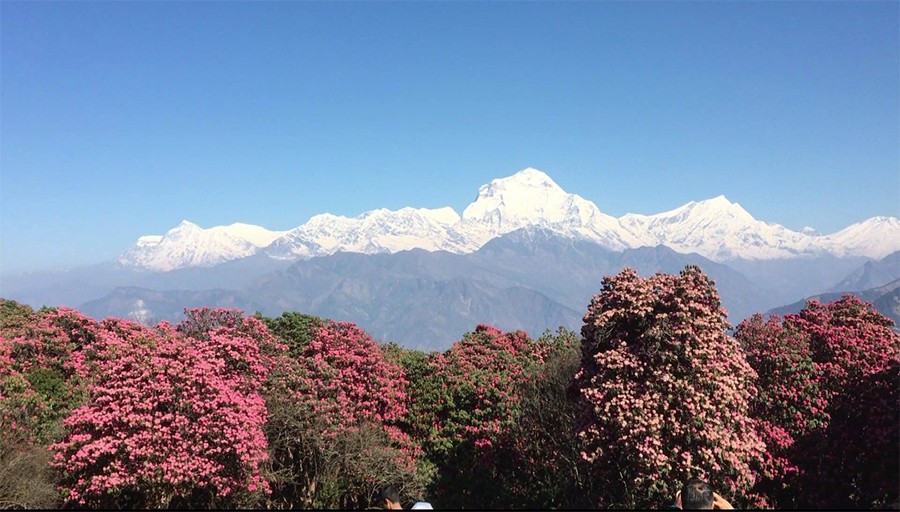
The final price may be influenced by such factors as:
Compare the whole set of inclusions before booking, not just the headline price.
There are permits and guides required for the Annapurna Base Camp route. The Poon Hill to ABC Trek is currently listed in the Nepal Tourism Board as a route in the Annapurna region, where trekkers are required to hire a licensed trekking guide and carry a TIMS card issued by an agency.
The current official information lists the foreign visitor entry fee for the Annapurna Conservation Area at NPR 3,000 per person. Applicants from outside SAARC countries will be charged NPR 2,000 for the current TIMS.
Therefore, a non-SAARC foreign traveler should currently allow around NPR 5,000 for these two charges, before considering any changes to government fees in 2027.
| Requirement | Current Information | Who It Applies To | 2027 Note |
| Annapurna Conservation Area entry fee | NPR 3,000 for foreigners | Foreign trekkers | Confirm before departure |
| TIMS card | NPR 2,000 for non-SAARC applicants | Trekkers on applicable routes | Confirm current rate |
| Licensed trekking guide | Required on Poon Hill to ABC route under current NTB provision | Applicable foreign trekkers | Confirm current rule |
| Trekking agency | Government-registered agency for applicable guided routes | Foreign trekkers | Check agency registration |
| Restricted Area Permit | Not applicable to standard ABC route | Not required for this itinerary | Different rules apply to restricted areas |
Currently, the Nepal Tourism Board recommends that users of the revised TIMS provision be in touch with any government-registered trekking agency for the guide and TIMS.
This article is written for the year 2027, but it’s important to remind readers that before leaving, they should check the most recent government guidelines.
This hike is in the medium to hard range for difficulty. There are no technical climbs involved, but there are long walking days, repeated ascents and descents, stone steps and uneven mountain trails.
The maximum elevation is Annapurna Base Camp (4,130 m or 13,550 ft). There is a considerable height gain on the last stretch to Machhapuchhre Base Camp at 3,700 m (12,139 ft).
| Factor | What to Expect |
| Daily walking | Around 5 to 7 hours on several days |
| Terrain | Forest trails, stone steps and uneven paths |
| Uphill sections | Regular climbs |
| Downhill sections | Several long descents |
| Highest point | 4,130 m (13,550 ft) |
| Highest trekking day | Himalaya to ABC |
| Preparation | Walking, stairs and longer hikes |
To build endurance, walk or climb stairs regularly before the hike. It’s also helpful to practise in the shoes and daypack you will be using.
The tour program does not have a dedicated acclimatization day. Rather, the path slowly ascends from the lower elevation to Ghorepani and Poon Hill and then it enters the higher elevation Annapurna valley. This means that pacing is crucial.
Take plenty of water and drink right and watch for any signs and symptoms of change. Headache, dizziness, nausea, unusual tiredness and difficulty sleeping can occur with altitude problems.
If you are having symptoms that you are concerned about, let your guide know. Avoid concealing symptoms due to the desire to keep the programme going.
The main trekking season is spring and autumn, but other months can be done with proper preparation on the ABC route.
The Nepal Tourism Board currently identifies March to May and September to November as the main favorable seasons for the Annapurna region.
| Month | General Conditions | Trail and Trekking Considerations | Group Join Suitability |
| January | Cold, especially at higher elevations | Snow and freezing conditions possible around higher sections | Possible for prepared trekkers |
| February | Cold but conditions begin improving | Higher areas can still have snow | Possible with winter gear |
| March | Spring begins | Increasingly favorable conditions and improving temperatures | Good period |
| April | Mild to warm in lower areas | Generally favorable trekking conditions | Popular period |
| May | Warmer lower down | Rain can begin toward the end of the month | Generally suitable |
| June | Monsoon begins | Wet trails and clouds are more likely | Less suitable for most group trekkers |
| July | Rainy | Wet trails, clouds and possible road disruption | Less suitable |
| August | Rainy | Similar monsoon conditions | Less suitable |
| September | Monsoon begins to weaken | Conditions generally improve | Good later in the month |
| October | Generally stable | Often good visibility and comfortable trekking conditions | Very popular |
| November | Cool and generally dry | Good conditions, colder nights at higher elevations | Good period |
| December | Cold | Higher sections can experience snow and freezing temperatures | Possible with preparation |
Mountain weather is not guaranteed! Weather may fluctuate throughout the day and the higher areas are much colder than Pokhara.
For travelers planning a fixed group departure, March, April, May, September, October and November are generally the months to consider first.
The provided itinerary also involves three-star hotels in Kathmandu and Pokhara while trekking nights in local lodges.
Trekking lodges are not as sophisticated as the city hotels. Rooms are typically utilitarian and bathroom facilities may change from place to place.
Depending on the lodge, hot showers, free Wi-Fi and charging might be available for an additional fee. The facilities are also simpler as you advance towards Annapurna Base Camp.
Please arrange accommodation prior to travel as individual lodges may be different.
Annapurna Circuit, Nar Phu Valley Trek & TIlicho Lake – 17 Days
The Annapurna Base Camp Trek is a good option for travelers who want to experience the Himalayas without taking on a technical climbing expedition. A group departure in 2027 may…
The food is a big part of long day walking preparations. Breakfast, lunch and dinner are provided on the main days of the trek. Generally, breakfast is served in the Lodge, lunch is organized during the day’s walk and dinner is served at the overnight stop.
The menus vary from one lodge to the other, but you can expect to find dal bhat, rice, noodles, pasta, soup, potatoes, eggs and bread. At the higher elevation, food may be less available, as supplies must be carried farther up into the mountains. People with food allergies and dietary restrictions should inform the trekking agency prior to the trek.
It is important to drink plenty of water, particularly at higher elevations. Bring a water bottle and drink from safe drinking water. On longer walking days, many trekkers take some small snacks like dry fruit, energy bars, or chocolate with them.
The route to Annapurna is not always covered by cell phone service. Generally, the more remote areas have poor or no signal and the larger villages have better connectivity.
Some lodges offer Wi Fi, although this may not work in all lodges and in all weather conditions. There may be facilities for charging an extra charge.
You can make use of a power bank and it makes sense to download important documents, maps and travel information before you leave Kathmandu.
Clothing should be appropriate and cover a variety of elevations.
Clothing
Trekking Equipment
Personal Items
Don’t carry items that you won’t need. Long days of walking are easier when the pack isn’t too heavy.
The Annapurna Base Camp trek is not the only popular trek in the Himalayas in Nepal. The right selection is determined by the amount of time available, the highest altitude you are able to climb and the type of terrain you are looking for.
| Trek | Approx. Highest Point | Typical Trek Character | Compared With ABC |
| Annapurna Base Camp | 4,130 m (13,550 ft) | Forest, villages and high mountain valley | Main trek in this article |
| Everest Base Camp | Around 5,364 m (17,598 ft) | Higher altitude, Sherpa villages and Everest region | Higher and usually more demanding |
| Langtang Valley | Around 4,984 m (16,352 ft) on common routes | Valley, forests and high mountain landscapes | Generally shorter and quieter |
| Poon Hill | 3,210 m (10,531 ft) | Shorter hill trek and mountain viewpoints | Lower and shorter than ABC |
| Mardi Himal | Around 4,500 m (14,764 ft) | Forest and ridge trekking | Higher in some itineraries and generally shorter |
| Manaslu Circuit | Around 5,106 m (16,752 ft) at Larkya La | Long remote circuit and high pass | Longer and higher |
| Annapurna Circuit | Around 5,416 m (17,769 ft) at Thorong La | Long circuit through different landscapes | Higher and longer |
The Everest Base Camp trek is at a much higher elevation than ABC, while the Poon Hill trek is much shorter and has a lower peak elevation.
The Manaslu Circuit and Annapurna Circuit also involve high mountain passes, making them different experiences from the sanctuary style route used by ABC.
Everest, Annapurna and Langtang are some of the popular trekking destinations in Nepal as recognized by the Nepal Tourism Board.
The route through the villages is also different from the circuit treks, as it goes through forest trails and villages and ends at Poon Hill and another higher mountain destination, which does not traverse a very high pass route.
This trek strongly recommends having travel insurance. You will need to have a policy on the highest point of your trek, in this case 4130 m (13,550 ft).
Look up whether emergency medical treatment, hospitalisation, evacuation, trip cancellation and interruption are covered under the policy.
Conditions of insurance policies vary, so be sure to read conditions prior to travel. There are some specific requirements from some insurers with regard to altitude, trekking guides and emergency evacuation.
Should you be seriously ill on the trek, report it to your guide at once. Rest, medical assessment, descent, or evacuation may be required, depending on the circumstances.
It is essential to be prepared and to communicate along the trail.
Weather at this elevation can change drastically, especially in mountains. If it is a clear morning, it is not necessarily a clear day!
To book an Annapurna Base Camp group join departure, please make sure to follow these steps. To book an Annapurna Base Camp Group Join Departure, please follow the steps below:
Look at the confirmed date of departure, group size, actual route, accommodation, meals, transport, guide arrangements, porter and permit costs.
Please make sure that you are looking for packages that include airport transfers, Kathmandu accommodation, Pokhara accommodation and sightseeing.
Sometimes a reduction in the price is accompanied by less service. For instance, one package may offer porter service and another may not. Private road transport may be used, but shared transportation can be used.
The services that are pre-arranged in the confirmed package can be organized by Life Himalaya Trekking. Changes to the standard tour should be discussed prior to the tour taking place, to ensure any changes are accommodated in the transportation and lodging arrangements.
The following services are included in the supplied Itinerary:
Services are always confirmed before they are booked; if they are not listed as an inclusion, it does not mean that they are.
Porter service will be confirmed separately as it is not included in the package supplied automatically.
The Annapurna Base Camp Trek is a good option for travelers who want to experience the Himalayas without taking on a technical climbing expedition. A group departure in 2027 may…
Is it possible for a solo traveller to be part of the Annapurna Base Camp trek?
Yes. Solo travelers can enquire about available fixed departures and join a group when space is available. The exact number of people in the group is determined by the confirmed departure.
What is the price of the Annapurna Base Camp Trek Group Join 2027?
Planning for a standard 14-day group tour ranges from USD 850 – USD 1,200 per person. The market range for 2027 is an estimated price for the Life Himalaya Trekking and not a definite price.
Is there any first-time trekker’s pitch in Annapurna Base Camp?
Not everybody needs to have experience of trekking in the Himalayas. It is a good idea to be ready to walk for several hours each day for several days, though and to have to contend with some stone steps and altitude.
At what elevation is the highest elevation on the trek?
The highest elevation is Annapurna Base Camp at 4,130 m (13,550 ft).
What are the necessary permits?
The current route requirements are the Annapurna Conservation Area entry permit and TIMS card and for the Poon Hill to ABC route, currently a licensed guide is required by the Nepal Tourism Board.
Does porter service come with that?
Not necessarily. Check with the package before booking.
Is there an option to stay longer in Kathmandu?
Yes. Extra nights may be available if requested and agreed upon prior to the trip.
Does an additional night(s) stay in Pokhara cost more than the quoted price?
Extra nights are also available in Pokhara based on availability and confirmed booking.
Is Wi Fi available on the trail?
Some lodges offer Wi-Fi, but it is not guaranteed along the route.
Can I pay with a credit card?
Not all along the trail will accept card payment. Some Nepalese money is recommended to be carried.
What if I don’t follow the rest of the group?
Notify your guide as soon as possible. The guide can evaluate the situation and discuss if any extra rest, slower pace, descent, or other appropriate arrangement is required.
The Annapurna Base Camp Trek Group Join 2027 is a sensible selection for travelers who favor an organized trek into the Himalayas and traveling with others. This is a 14-day trek that includes Kathmandu, Pokhara, Ghorepani and Poon Hill and a longer trek into the Annapurna Sanctuary.
The summit elevation is 4130m (13550ft), so preparation and sensible pacing are important. The path has long days of walking, stone steps, hilly terrain and long descents.
When planning a trip for 2027, people should remember not to take only the advertised price into account but rather consider the whole package. Have confirmed departure, group size, itinerary, accommodation, transportation, meals, guide, permits and exclusions checked before booking.
Also, fees charged by the government or the requirements of trekking organizations are subject to change; so it is better to confirm the latest information from the Nepal Tourism Board prior to departure.
The trip is more than just to the base camp. A trek through villages, forests, Poon Hill, Chhomrong and the higher Annapurna valley is a significant portion of the trek.
Considering joining the Annapurna Base Camp trek in 2027? Life Himalaya Trekking will be able to organize the trek with a fixed group, guide support and accommodation and transport to suit the package you select. Please reach out to our team to see which 2027 departures are available, the number of people in the group, the itinerary and the current price. We can also provide you with insight into what is provided and what you should do to prepare for the journey.


We plan custom and flexible holiday trips according to your holiday duration, extra wishes, and demands.
Plan your Trips
Chat with our Travel Designer Shiba
Need assistance? Our expert agent is here to help! Please fill out the form below to initiate a chat and get your queries resolved quickly.