

 English
 Dutch
Dutch Japanese
 Hindi
Hindi Italian
 Spanish
 French
 German
 Chinese
 Korean
 Arabic
 Hebrew
 Russian
 Portuguese
 Danish
 Czech
Czech Polish
 Swedish
Plan Your Next
Journey to the Himalayas!
We plan custom and flexible holiday trips according to your holiday duration, extra wishes, and demands.
Plan your Trips
Nepal is one of the world’s premier destinations for high-altitude mountaineering, offering an incredible range of peaks above 6,000 meters. For trekkers and aspiring climbers dreaming of reaching their first Himalayan summit, Best Easy 6000m Peaks in Nepal provide an exciting opportunity to step beyond traditional trekking and experience the world of mountaineering. Although these peaks are often considered more accessible than major Himalayan expeditions, climbing above 6,000 meters is a serious undertaking that requires good physical fitness, proper acclimatization, suitable equipment, and experienced mountain guides.
Among the most popular peaks above 6,000 m for aspiring climbers are Mera Peak (6,476 m), Island Peak (6,189 m), and Lobuche East Peak (6,119 m). These mountains are frequently selected as first 6,000-meter objectives because they combine spectacular Himalayan scenery with manageable climbing routes compared with more technical peaks.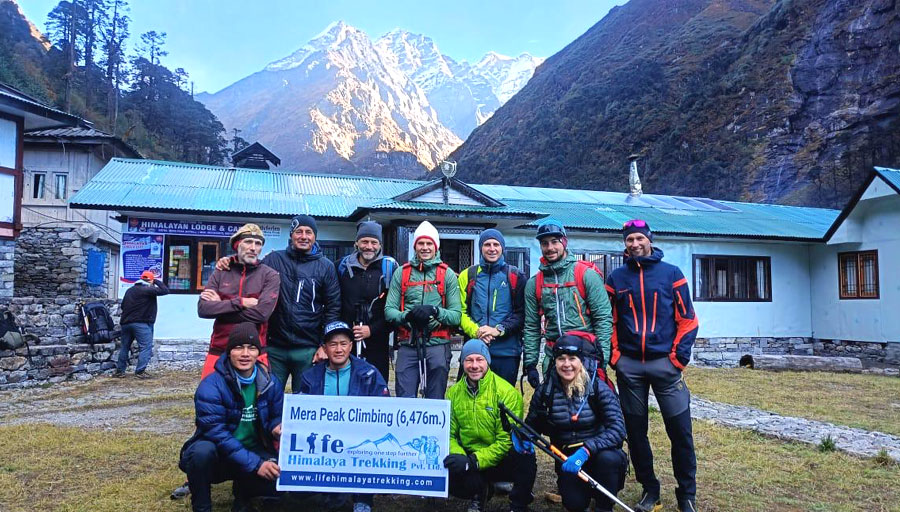
A climb above 6,000 meters is very different from an ordinary Himalayan trek. At this elevation, the air contains significantly less oxygen, temperatures can drop dramatically, and weather conditions can change quickly. Climbers must therefore prepare for demanding summit days and challenging high-altitude environments.
The reward, however, is extraordinary. Standing on a summit above 6,000 meters gives you spectacular views of some of the world’s highest mountains, including Mount Everest, Lhotse, Makalu, Cho Oyu, and other Himalayan giants. Depending on the peak and route, climbers also experience glaciers, snow slopes, rocky ridges, remote valleys, traditional mountain villages, and dramatic Himalayan landscapes.
For many adventure travelers, climbing one of the Best Easy 6000m Peaks in Nepal is the perfect bridge between trekking and serious mountaineering.
Mera Peak (6,476 m / 21,247 ft)Climbing is one of Nepal’s most famous trekking peaks and is widely regarded as one of the more accessible technical objectives above 6,000 meters. It is also the highest of the three classic first-6000m peaks: Mera, Island, and Lobuche East.
The appeal of Mera Peak Climbing comes from its combination of tremendous altitude, relatively straightforward upper mountain terrain, and incredible Himalayan views. The route generally involves extensive snow and glacier travel rather than the more sustained steep climbing found on some other 6,000-meter peaks.
However, “easy” does not mean effortless. Mera Peak’s altitude makes it physically demanding, and the summit day can be long. Climbers need strong endurance, excellent acclimatization, and the ability to move safely on snow and glacier terrain.
From the summit, climbers can enjoy spectacular panoramas of Everest, Lhotse, Makalu, Cho Oyu, and other major Himalayan peaks. This combination of altitude, scenery, and relatively lower technical difficulty makes Mera Peak an excellent choice for fit trekkers looking for their first major Himalayan climbing experience.
Island Peak Climbing, also known as Imja Tse, rises to around 6,189 meters and is another extremely popular choice for climbers seeking their first peaks above 6,000 m. Located in the Everest region, it can be incorporated into an Everest Base Camp or other Khumbu trekking itinerary.
Island Peak offers a more technical climbing experience than Mera Peak. Climbers may encounter glacier terrain, crevasses, fixed ropes, and steeper sections requiring the use of crampons, harnesses, ropes, and ascenders. Because of these features, Island Peak is particularly attractive to trekkers who want to develop practical mountaineering skills while attempting a 6,000-meter summit.
One of the major advantages of Island Peak Climbing is its location. The approach takes climbers through the famous Khumbu region, allowing them to experience Sherpa villages, Buddhist monasteries, suspension bridges, and spectacular views of Everest and surrounding peaks.
For someone who wants their first 6,000-meter climb to include more technical mountaineering, Island Peak climbing in Nepal can be an excellent option.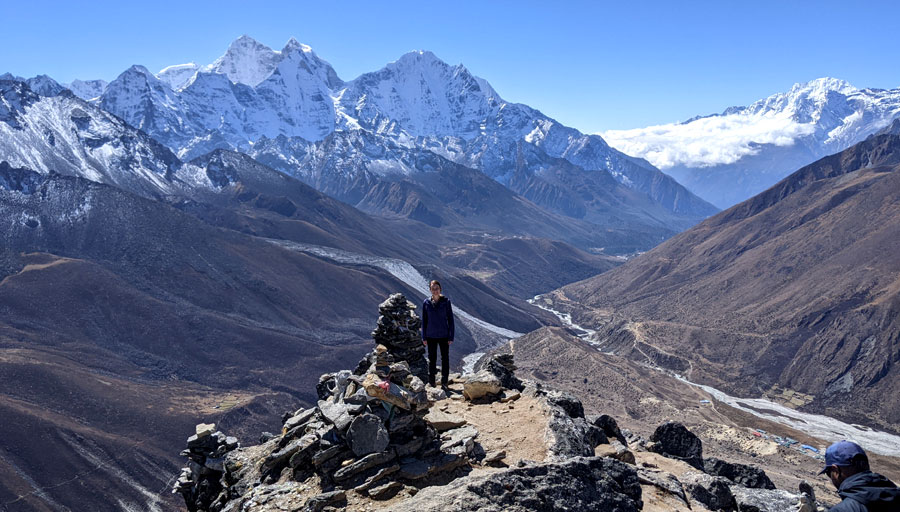
Lobuche East Peak stands at approximately 6,119 meters and is another popular Himalayan climbing objective in the Everest region. Compared with Mera Peak, Lobuche East generally provides more technical terrain, including rocky sections, snow and ice, and an exposed summit ridge.
Lobuche East is particularly attractive to climbers who already have some trekking or basic mountaineering experience and want to develop stronger climbing skills. The peak can also be combined naturally with the Everest Base Camp Trek, making it an appealing choice for travelers who want both a classic Everest-region trek and a summit attempt.
Although its elevation is lower than Mera Peak, Lobuche East should not be underestimated. Technical terrain and exposure can make the climb demanding. Good preparation, appropriate equipment, experienced guides, and careful acclimatization are essential.
For climbers looking for a more technical experience among the popular Best Easy 6000m Peaks in Nepal, Lobuche East is an excellent progression.
Choosing between these three famous Peaks Above 6,000m depends largely on your experience, physical condition, and climbing goals.
Mera Peak is the highest of the three and generally emphasizes endurance and altitude rather than sustained technical climbing. It is a strong choice for fit trekkers wanting their first 6,000-meter summit.
Island Peak provides a balanced combination of trekking and technical climbing. It is ideal for people who want experience with glacier travel, fixed ropes, and steeper climbing sections.
Lobuche East offers a more technical challenge, particularly for climbers interested in gaining additional snow, ice, and exposed-ridge experience.
Current climbing guides commonly describe Mera as the least technical of these three, Island Peak as more technical, and Lobuche East as the more technically demanding option.
The term “easy 6000m peak” can sometimes be misleading. A peak may be considered technically easier while still being extremely demanding because of altitude.
Above 6,000 meters, the human body has to work with much less available oxygen. Climbers may experience fatigue, headaches, reduced appetite, difficulty sleeping, and other symptoms associated with high altitude. Weather can also create serious challenges.
Therefore, a beginner should never choose a 6,000-meter peak simply because it is advertised as “easy.” Instead, the objective should be selected according to fitness, previous trekking experience, technical skills, acclimatization schedule, and professional guidance.
A strong trekking background is helpful, but proper climbing preparation remains essential.
Preparation should begin several weeks or months before arriving in Nepal. You do not necessarily need years of climbing experience for a suitable first 6,000-meter peak, but you should develop excellent cardiovascular endurance and leg strength.
Long-distance hiking, stair climbing, uphill walking, running, cycling, and strength training can help prepare your body for long days in the mountains.
You should also become familiar with basic mountaineering techniques if your chosen peak requires them. Depending on the route, training may include walking with crampons, using an ice axe, ascending fixed ropes, using a harness and ascender, and moving safely on snow and glacier terrain.
A professional climbing team can provide practical training before the summit attempt.
One of the most important factors in 6000m Peak Climbing in Nepal is acclimatization. A well-designed itinerary should allow your body enough time to adjust gradually to increasing elevation.
Rushing from lower elevations to a 6,000-meter summit increases the risk of altitude-related problems. Experienced guides monitor climbers throughout the journey and may adjust the itinerary according to weather, health, fitness, and mountain conditions.
Rest days and acclimatization hikes are therefore not wasted time. They are an essential part of a successful expedition.
Climbers need appropriate equipment for high-altitude climbing. Depending on the peak and current route conditions, equipment may include mountaineering boots, crampons, ice axe, climbing harness, helmet, ascender, carabiners, ropes, warm layers, waterproof clothing, gloves, goggles, sleeping bags, and other essential gear.
Your trekking agency or climbing operator should provide a detailed equipment checklist before departure. Some technical equipment may also be available for rent in Kathmandu.
Having the right equipment is only part of the preparation. Climbers must also know how to use it safely.
The main climbing seasons in Nepal are generally spring and autumn. Spring, particularly March to May, offers favorable conditions for many Himalayan climbing objectives, while autumn, especially September to November, is another popular period because of generally stable weather and clear mountain views.
Conditions vary between mountains and seasons, so the ideal climbing period should be confirmed for your chosen peak before booking.
Choosing an experienced local trekking and climbing company can make a major difference to your Himalayan experience. A reliable company can arrange permits, transportation, accommodation, climbing logistics, experienced guides, porters, equipment support, acclimatization schedules, and emergency planning.
For climbers attempting their first peaks above 6,000 m, experienced local guides are especially valuable. They understand the mountain environment, changing weather, local trails, altitude issues, and logistical challenges.
A professional team can also help you select the right peak based on your experience and goals instead of simply recommending the highest mountain.
Nepal offers many climbing opportunities beyond Mera, Island, and Lobuche East. Depending on climbing experience and technical ability, climbers can consider peaks such as Chulu East, Chulu West, Chulu Far East, Pisang Peak, Singu Chuli, Kusum Kanguru, Kyazo Ri, Pharchamo, and other peaks.
Nepal’s official trekking-peak system includes numerous mountains with different levels of technical difficulty. Some are suitable for experienced climbers, while others require advanced mountaineering skills.
This variety makes Nepal an exceptional destination for progression in mountaineering. You can begin with a comparatively accessible summit and gradually develop the skills necessary for more technical and higher-altitude objectives.
If your priority is reaching a high summit with comparatively lower technical difficulty, Mera Peak is an excellent candidate.
If you want a classic climbing experience with technical sections, Island Peak may be more suitable.
If your goal is to develop stronger technical climbing skills, Lobuche East can provide a more challenging experience.
Your choice should ultimately depend on your physical fitness, previous trekking experience, climbing skills, available time, and personal goals.
Climbing one of the Best Easy 6000m Peaks in Nepal is an unforgettable achievement. Whether you choose the high and scenic Mera Peak, the classic Island Peak, or the more technical Lobuche East, each mountain offers a unique combination of adventure, culture, nature, and Himalayan scenery.
The journey is about much more than reaching the summit. It is about walking through remote mountain landscapes, meeting local communities, learning mountaineering skills, adapting to high altitude, and experiencing the powerful beauty of the Nepal Himalayas.
For your first peak above 6,000 m, choose an objective that matches your ability rather than simply chasing altitude. With proper preparation, gradual acclimatization, quality equipment, experienced guides, and responsible planning, a 6,000-meter summit can become one of the most rewarding adventures of your life.
Ready to climb above 6,000 meters in Nepal? Explore Mera Peak, Island Peak, Lobuche East, and other Himalayan climbing adventures with Life Himalaya Trekking, and prepare for your next great Himalayan achievement.
Peak elevations and classification can vary between published sources; climbing permits and regulations should always be confirmed with the relevant Nepal authorities before departure.


We plan custom and flexible holiday trips according to your holiday duration, extra wishes, and demands.
Plan your Trips
Chat with our Travel Designer Shiba
Need assistance? Our expert agent is here to help! Please fill out the form below to initiate a chat and get your queries resolved quickly.