
 English
 Dutch
Dutch Japanese
 Hindi
Hindi Italian
 Spanish
 French
 German
 Chinese
 Korean
 Arabic
 Hebrew
 Russian
 Portuguese
 Danish
 Czech
Czech Polish
 Swedish
Imja Tse (Island Peak) – The Hidden Himalayan Dream for Adventure Seekers

Have you ever heard of the name Imja Tse? I’m guessing most of you haven’t. When people think of trekking or climbing in Nepal, the first names that come to mind are usually Mount Everest, Annapurna Base Camp (ABC), Mardi Himal, Manaslu, and Langtang. Those are the famous ones — the mountains that everybody talks about, the ones you see on travel posters, YouTube videos, and social media reels.
But behind these giants lies a hidden gem-a mountain just as magical, perhaps even more beautiful. It is Imja Tse, also known as Island Peak. Standing tall at 6,189 meters (20,305 ft), Island Peak is a true symbol of adventure, courage, and Himalayan beauty.
It may not be the highest mountain in Nepal, but it captures something even more special — a quiet, raw, and peaceful charm that feels both humbling and inspiring.
In this blog, you’ll discover why Imja Tse is one of the Himalayas’ most breathtaking hidden treasures — a dream for every adventure seeker who dares to look beyond the ordinary.
Why the Name “Island Peak”?
Island Peak might not be as tall as Everest, but it carries the same spirit of adventure. Standing proudly, this mountain sits gracefully in the heart of the Khumbu region, surrounded by giants like Lhotse, Makalu, and Ama Dablam.
From afar, it looks like an island floating in a sea of ice — that’s how it got its name, Island Peak, by a British Climber. Locals call it Imja Tse, meaning “the mountain of the Imja Valley.” It’s a place where silence speaks louder than words — and where every step feels like walking inside a postcard.
The Journey to Island Peak
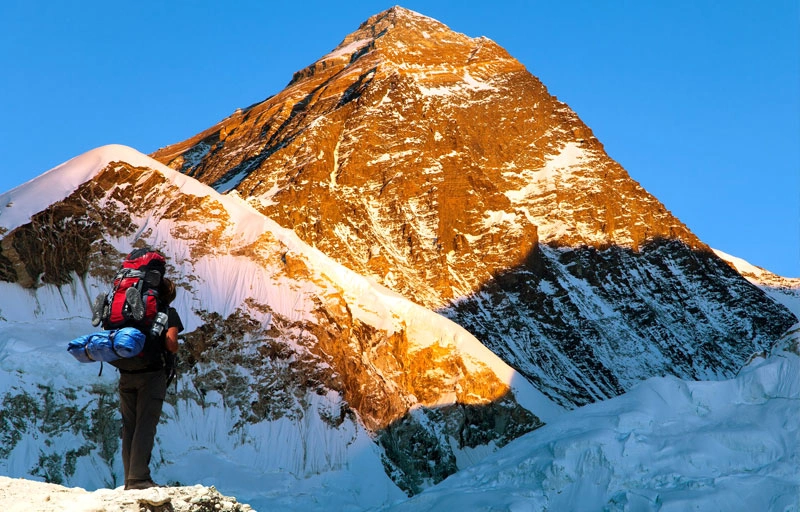
Your adventure starts with the classic Everest Base Camp trail. After flying into Lukla, you’ll trek through vibrant Sherpa villages — Namche Bazaar, Tengboche, and Dingboche — all while watching Everest, Lhotse, and Ama Dablam rise above you like guardians of the sky.
From Chhukung village (4,730 m), the real climb begins. This is where trekkers leave the comfort of lodges and enter the world of tents, ropes, and glaciers. The climb to Island Peak Base Camp is short but thrilling, surrounded by dramatic ice walls and endless white peaks glistening in the sun.
Climbing Island Peak
The climb to Island Peak Base Camp is short but thrilling. You’ll cross crevasses, walk on icy slopes, and ascend a steep headwall near the summit using ropes and crampons. Then, suddenly — as the sun rises — the world opens up.
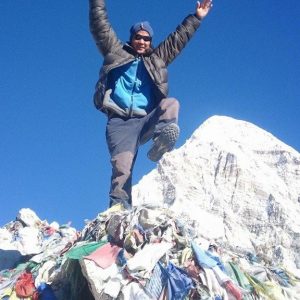
From the summit of Imja Tse, you see a panorama like nowhere else on Earth: Mount Everest, Lhotse, Nuptse, Makalu, and Baruntse — the giants of the Khumbu region — all surrounding you. At that moment, every step, every breath, every ounce of effort feels worth it.
Why You Should Climb Imja Tse

Island Peak is often called a “trekking peak”, but don’t let that fool you. It requires good fitness, basic mountaineering skills, and determination. Many climbers use it as their first Himalayan peak, before attempting higher summits like Lobuche or Ama Dablam. You don’t need to be a professional mountaineer, but you must be ready for a challenge — both physical and mental.
As locals say,
“जो पर्खिन्छ, ऊ पाउँछ।”
(“Those who wait and work with patience succeed.”)
Difficulty Level
The Island Peak (Imja Tse) climb is rated as moderate to challenging, making it one of the most popular introductory mountaineering peaks in Nepal. Though it’s often called a “trekking peak,” it should not be underestimated — the final ascent involves real alpine conditions that demand stamina, skill, and mental focus.
Physical Challenge
The trek to Island Peak Base Camp (5,100 m) follows the same route as the Everest Base Camp trek until Dingboche, so the early days are relatively straightforward for fit trekkers.
However, as the elevation increases, thin air and reduced oxygen levels can make every step more demanding. The summit day is particularly strenuous — climbers often start around 2:00–3:00 AM and spend 8–10 hours climbing up and coming back down.
Steep glacier crossings, snow slopes, and a narrow summit ridge add both excitement and exhaustion.
To handle this, climbers should be in excellent physical condition with strong endurance, balance, and leg strength. Regular cardio training (like running, hiking, or cycling) before the climb is highly recommended.
Technical Challenge
While Island Peak doesn’t require advanced mountaineering experience, it does demand basic technical knowledge.
Here’s what climbers should be prepared for:
- Rope work: Using fixed ropes and jumars (ascenders) on steep ice slopes.
- Ice axe and crampon use: Essential for stability and traction on the icy headwall.
- Crevasse navigation: Crossing ladders or using safety ropes across glacier cracks.
- Summit ridge: The final stretch is a narrow, exposed ridge with stunning — but dizzying — views on both sides.
Most guiding companies provide a pre-climb training session at base camp, where climbers practice rope techniques, safety procedures, and ice climbing basics before the summit push.
Altitude and Acclimatization
Another major challenge is altitude. The peak’s summit at 6,189 meters (20,305 ft) means the oxygen level is roughly half that of sea level. Without proper acclimatization, climbers risk altitude sickness, headaches, nausea, or dizziness.
That’s why most itineraries include:
- Rest/acclimatization days at Namche Bazaar and Dingboche.
- A gradual ascent with time to adjust to higher altitudes.
- An optional Everest Base Camp visit before Island Peak to build acclimatization further.
Mental Toughness
The psychological challenge is equally important. Cold temperatures, early starts, and long summit days can test motivation and patience. Climbers must be prepared to push through fatigue and uncertainty while trusting their guides and staying calm in unpredictable weather.
As one Sherpa guide often says:
“Climbing Island Peak is not about strength alone — it’s about heart and humility.”
Why Island Peak is a True Himalayan Dream

What makes Imja Tse special is not just its height — it’s the journey it offers. It’s about walking through ancient trails, staying in warm Sherpa lodges, and feeling the spiritual energy of the Himalayas.
Unlike other commercial climbs, Island Peak feels personal. Every climber has a story here — of courage, humility, and connection with nature. As one Sherpa guide once said with a smile, “Mountains don’t call everyone — only those who are meant to hear them.”
Best Time to Visit
The best time to climb Island Peak is during spring (March–May) and autumn (September–November). These seasons offer clear skies, pleasant temperatures, and breathtaking views. Winter climbs are possible too, but they demand more experience and preparation.
A Tip for Future Climbers
Prepare your body — build endurance and stamina.
- Take your time to acclimatize.
- Always climb with an experienced guide.
- And most importantly — enjoy every moment.
- Because once you’ve seen the world from the summit of Island Peak, you’ll never see life the same way again.
Final Thoughts
Imja Tse isn’t just a mountain — it’s a story of courage, curiosity, and connection with the Himalayas. It’s a dream for those who want to go beyond famous trails and discover something real. So, next time someone talks about Everest or Annapurna, smile and say —
“Have you heard of Island Peak? Because that’s where the real adventure lives.”