
 English
 Dutch
Dutch Japanese
 Hindi
Hindi Italian
 Spanish
 French
 German
 Chinese
 Korean
 Arabic
 Hebrew
 Russian
 Portuguese
 Danish
 Czech
Czech Polish
 Swedish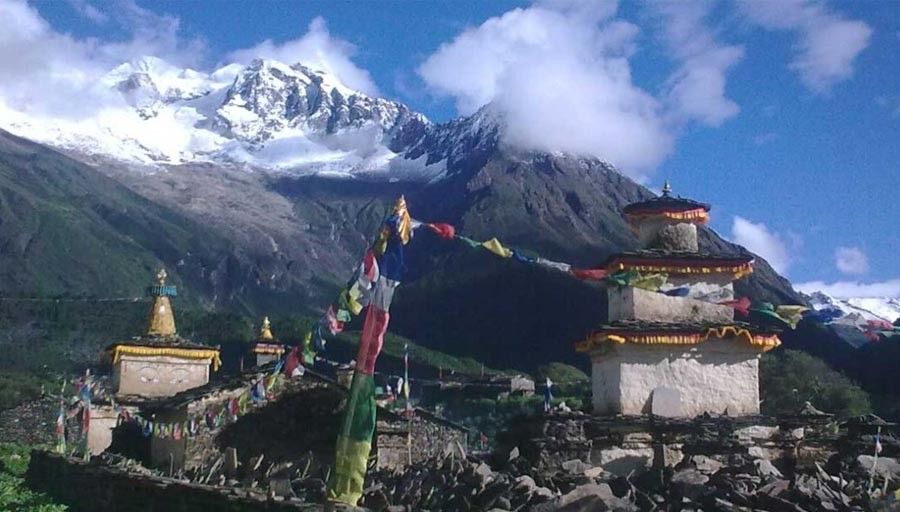

Trip Map
Max. Altitude
3700 m
Best Season
Oct -Dec & March-May
Activity
Trekking
Start / End Point
Kathmandu/Kathmandu
Overview of Tsum Valley Trekking
Did you say you are looking for something new and exciting journey to a truly forgotten corner of the world? You said, and we hear you. We present you our Tsum Valley trekking adventure, an intriguing journey to the hidden valley of Manaslu, the Beyul Kyimolung, or the Valley of Happiness.
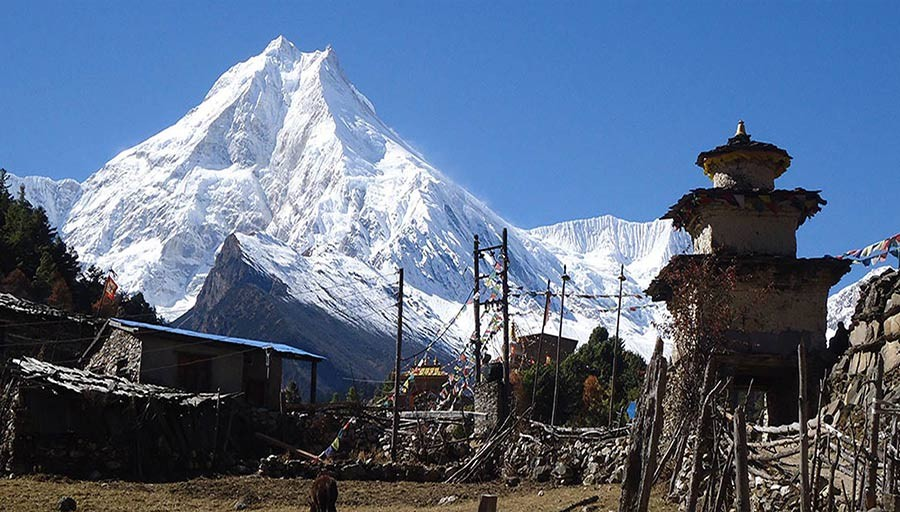
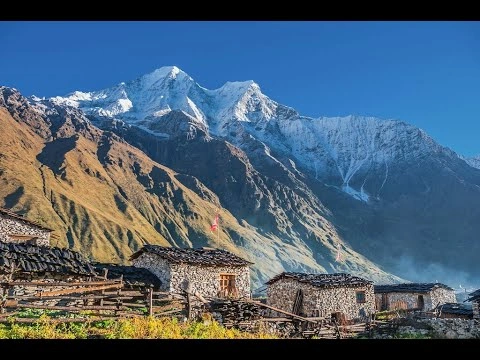
Our Tsum Valley trekking will guide you to the northern part of Nepal, within the Gorkha District. The valley lies within the enchanting setting of the Manaslu Conservation Area, which has still remained untouched and free from development for centuries.
And, the result is the exceptionally preserved culture and tradition. The Tsum Valley is said to have been blessed by Padmasambhava, the mythical Buddhist saint known for his miraculous deeds.
The term TSUM arrives from the Tibetan word Tsombo, which means the profound happiness that comes from the strong faith and true practices of Buddhism. Thus, sometimes, the Tsum Valley trekking is also called a journey to Shangri-La.
The Manaslu Tsum Valley trekking was only opened to outside visitors in 2008 and is still subject to some restrictions. The restriction continues to protect wildlife and the environment from excessive human interference, keeping intact the relationship between humans and nature.
The people living here are the Tsumbas and Nubris, who have their own dialect and unique cultural practices, such as polyandry and their administrative systems.
However, the Tsum Valley is currently undergoing rapid changes at an alarming rate. Therefore, we urge you to experience the Tsum Valley trekking adventure as soon as possible before everything changes permanently.
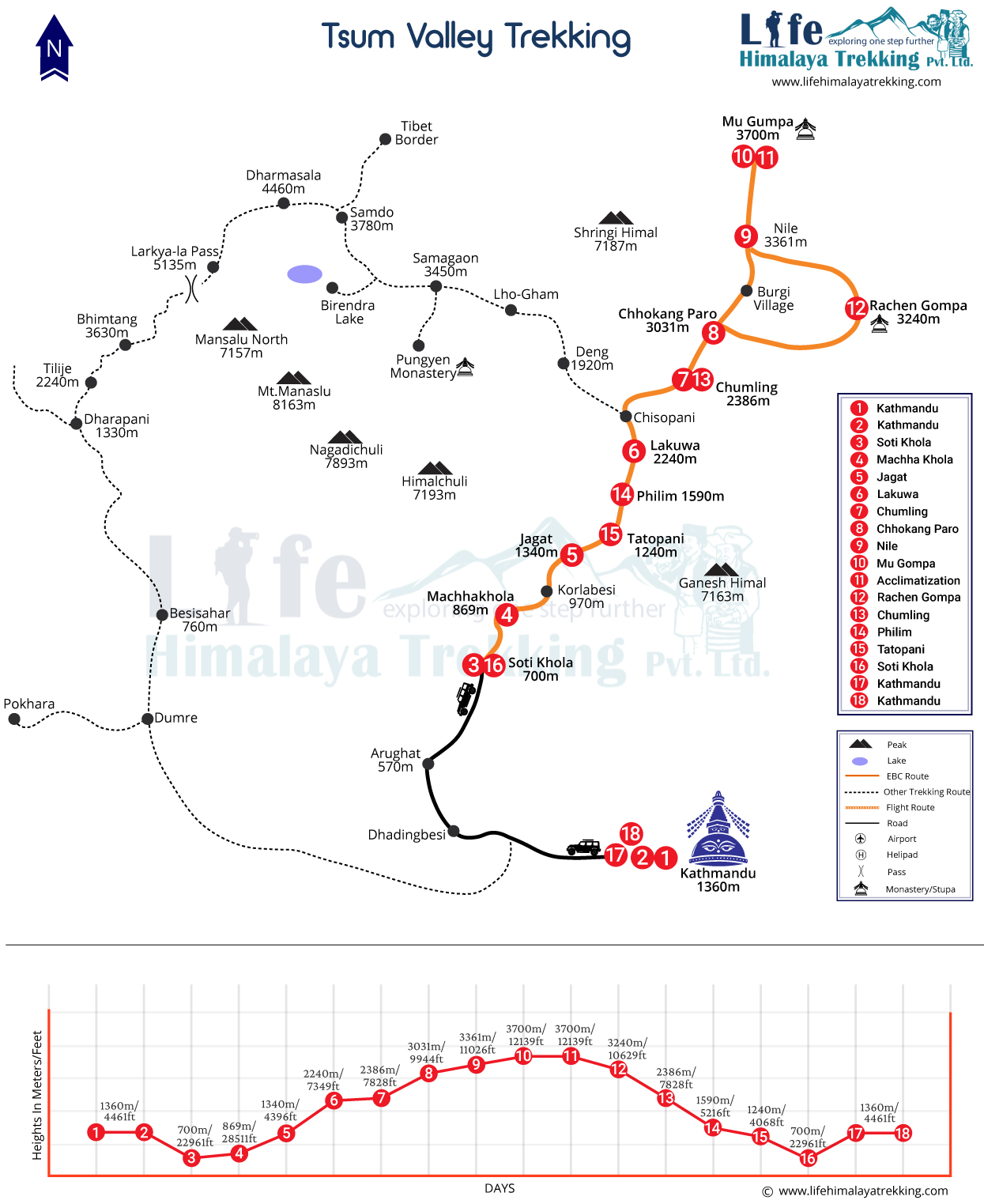
Our 18-day Tsum Valley trekking will begin with an exciting overland mountain journey into the rural villages of the mid-hills nestled beside the massive Budhi Gandaki River.
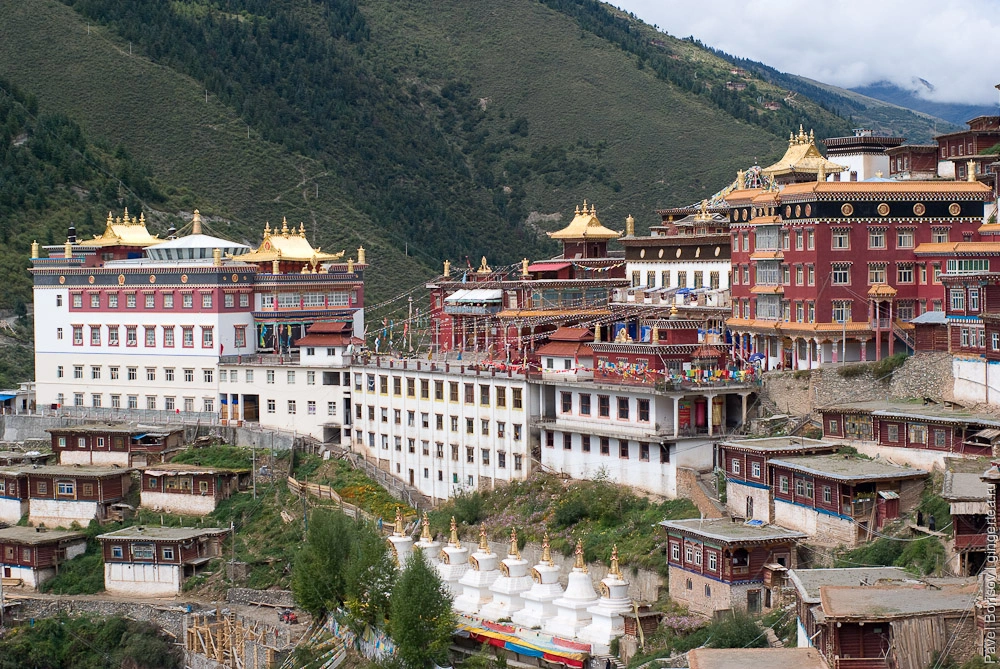
The progressive days will take you deeper into the hidden valley of Tsum, away from the typical trekking paths. You will be in the valley for a week, experiencing the untouched wilderness of mountains and discovering the unique ancient monasteries such as Mu and Rachen, which house historical and religious treasures of significant interest.
After successfully reaching the high valley of Tsum, set against the stunning backdrop of the Shringi (7187 m), Ganesh (7422 m), Himalchuli (7893 m), and Baudha (6672 m) mountains, you will begin your return journey.
Once again, following the Budhi Gandaki path downstream, you will arrive in the warmer areas to drive back to Kathmandu.
Our Tsum Valley trekking is suitable for anyone with the mighty desire to be in the real nature, and it will be particularly lively during the autumn and spring in Nepal.
Grab your passports and bags now and get ready to be enchanted by the charm, seclusion, wilderness, spirituality, and natural beauty of the Tsum Valley trekking.
Highlights of Tsum Valley Trekking
- A cultural private tour of Kathmandu
- A scenic, cultural, and spiritual journey into the secretive Tsum Valley
- Overnights in the traditional Buddhist Villages of Tsumbas and Nubris, located between the majestic Manaslu and Ganesh Himal
- A varied daily panorama of the magical mid-west mountains
- A trek through the paradise-like setting of the Manaslu Conservation Area
- Discover the eternal monasteries of Rachen Gompa, Mu Gompa, and Dhephyu Doma Gompa
- A fully guided moderate trek ideal for anyone
Tsum Valley Trekking Itinerary
01
Arrive in Kathmandu, 1,350 m, and then transfer to the respective Hotel
You will reach the very atmospheric capital of Nepal today, ready to start your adventure in the Tsum Valley trekking. At TIA, a representative from Life Himalaya Trekking will welcome you and drive you to your tastefully furnished hotel.
Please refresh and settle in for a moment. In the evening, our lead trek guide will meet you and brief you about the details of our 18 days Tsum Valley trekking adventure.
Enjoy your first Nepali welcome dinner at a delightful Nepali restaurant with cultural programs later in the evening.
Maximum Altitude
1350 m
Meals
Welcome dinner
Accomodations
Hotel
Transportation
Airport to Hotel Transfer
02
Kathmandu sightseeing of places of interest and preparations for the trek.
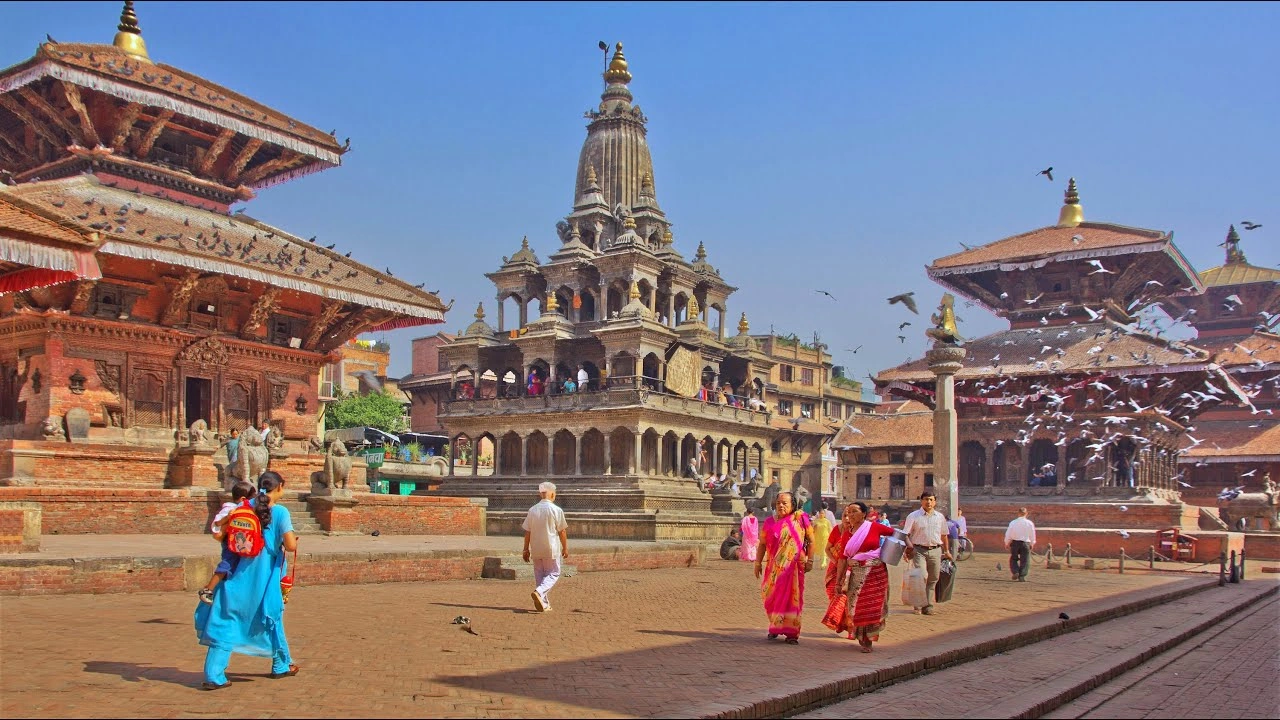
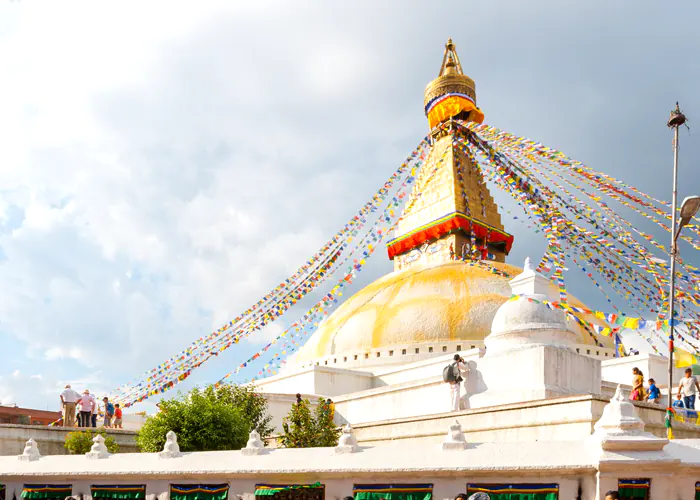
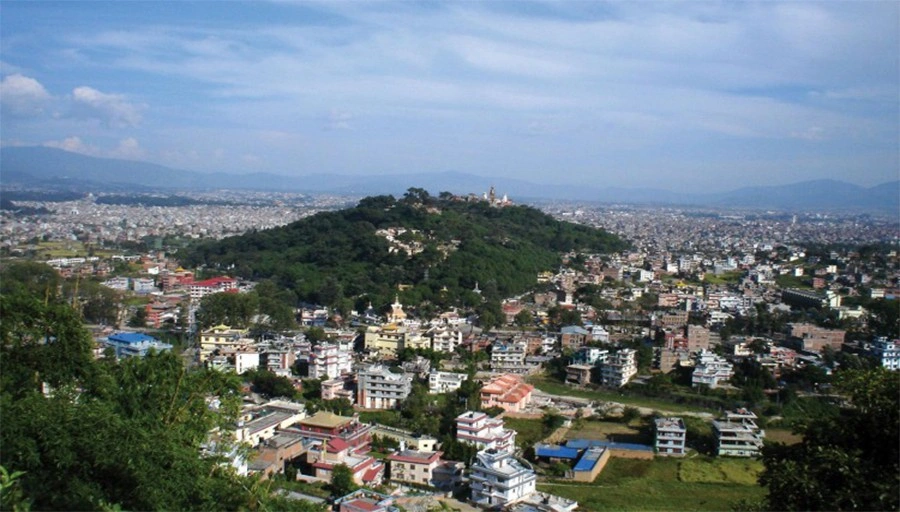
You will have a free day to explore Kathmandu today, when you will discover the city’s most famous and important temples and heritage sites such as Swayambhunath, Boudhanath, and Pashupatinath.
You will also discover the fascinating chaos of Kathmandu Durbar Square. Then, in the afternoon, with our guide, we will get on with the preparation for the trek.
Maximum Altitude
1350 m
Meals
Breakfast
Accomodations
Hotel
03
Drive to Soti Khola, 730 m, via Dhadingbesi and Arughat, 7 hours
Our early morning hours will be quite busy as we prepare to set forth on our Tsum Valley trekking. From Kathmandu, we will get on with our overland journey towards Soti Khola, the starting point of the trek.
After we descend from Thankot Pass, the Prithvi Highway will carry us on to the green valleys of Malekhu and Trishuli. The road will turn north to Dhading, a large hilly settlement.
From here, we will have to forget the comfort of the highway and embrace the discomfort of the bumpy, hilly road. We will pass via Dhading Besi and enter the fertile terrain of the Gorkha district.
The road may be a dirt track, but the views will be exceptional with Annapurna, Ganesh, Langtang, and Manaslu smiling in the backdrop. Soon enough, we will see the powerful currents of the Budhi Gandaki River and beside it the lively market of Arughat.
Continuing on, we will travel through Maltar, Shante, Arkhet, Kyoropani, and reach Soti Khola for our overnight rest.
Maximum Altitude
730 m
Meals
Breakfast, Lunch, Dinner
Trek Duration
7 hours Drive
Accomodations
Lodge to Lodge
04
Trek to Machha Khola, 930 m, 6 hours
The fourth day of our Manaslu Tsum Valley trek will begin with an exciting trek through the dense vegetation of Budhi Gandaki Valley.
The upstream route will ascend us to Khursane, after which we will be greeted by the Nuali Khola and many beautiful waterfalls.
We will then climb softly through Labubesi village to reach Machha Khola, where we will end today’s trek.
Maximum Altitude
930 m
Meals
Breakfast, Lunch, Dinner
Trek Duration
6 hours Trek
Accomodations
Lodge to Lodge
05
Trek to Jagat, 1410 m, 6 hours
After a nice hot breakfast, we will now follow the Budhi Gandaki upstream trail and reach Thado Khola. Here, we will need to walk across a large suspension bridge, after which we will reach Khorla Besi.
The winding mountain trail will carry us upward to Tatopani (Hot Water Village at 1040 m). If time allows, a short rest and soak in the hot spring will be followed.
We will then walk through the valley of Dobhan Khola, where we will encounter a 92 km-long suspension bridge. The route across will then take us into the Yaru Khola Valley, where we will have to softly climb for a while to reach Thulo Dhunga.
We will soon be in Jagat, which lies at the edge of the Manaslu Conservation Area. It is inhabited by the very jolly Gurung community and decorated with cultural prayer flags of Buddhists.
Maximum Altitude
1,410 m
Meals
Breakfast, Lunch, Dinner
Trek Duration
6 hours Trek
Accomodations
Lodge to Lodge

06
Trek to Lokpa, 2240 m, 5 hours
From Jagat, our morning starts with the review of our permits and documents at the military checkpost of the Manaslu region. Then, we will head to higher areas, passing through Salleri and Nagjet Villages.
We will pass by many marvelous waterfalls yet again as we softly climb to Sridibas Village. We will then cross the bridge and ascend to a large, lovely, sunny village of Philim (1590 m).
We will now climb through the bamboo forested area of Ekle Bhatti (lonely tea house) and reach our overnight stop at Lokpa, which indicates we are now inside the terrain of the lower Tsum Valley.
Maximum Altitude
2,240 m
Meals
Breakfast, Lunch, Dinner
Trek Duration
5 hours Trek
Accomodations
Lodge to Lodge
07
Trek to Chumling 2,386 m, 06 hours.
From Lokpa, our trek will climb higher along the ridge that stands overlooking the Sardi Khola. We will now traverse a narrow gorge, which includes a short descent and an uphill trek through Gadhkhola and Lungwa Khola.
The gorge will continue steadily elevating us to the village of Gumlung (2130 m). The dramatic shift will now take a turn as we climb higher and harder to Ripchet Village (2470 m) to reach Chumling.
The skyline here is dominated by the massive presence of the Baudha and Ganesh mountains. Later, we may go out to explore the ancient and time-stood Gompas (Monasteries) of the village that include Panagao, Gurwa, and Mani Dhungyur Monasteries.
Maximum Altitude
2,386 m
Meals
Breakfast, Lunch, Dinner
Trek Duration
6 hours Trek
Accomodations
Lodge to Lodge
08
Trek to Chhokhang Paro, 3,010 m, 05 hours.
The days from now on will keep gaining altitude, gradually progressing us through the Tibetan-like landscape. After a quick hot breakfast, we will trek downhill and cross a bridge over the Smatiking Khola, which will lead us to Dumje.
We will find two routes here: one going up toward the Base Camp of the very beautiful Ganesh or Yangra peak, and the other going towards the Lar Village.
Opting for the second route, we will be walking the Serpu Khola upstream trail for around 2 and a half hours. We will finally be at Chhokang Paro, which is also called Chekampar Village, lying calmly within the beautiful dry terrain of the Upper Tsum Valley.
Maximum Altitude
3,010 m
Meals
Breakfast, Lunch, Dinner
Trek Duration
5 hours Trek
Accomodations
Lodge to Lodge
09
Trek to Nile, 3,361 m with a visit to Milarepa cave, 06 hours.
Overwhelmed by the serenity and calmness of the Tsum Valley, we will leave Chhokang Paro and walk through the small villages of Leru and Ngakyu.
We will then ascend the dry slope to reach Lamagaon (3202 m), after which we will reach Burji. Here, we will find the Piren Phu or the Pigeon Cave, the cave where the famous Tibetan Saint Milarepa once meditated.
A little further, we will come across the Chi Pu Gompa, which has beautiful rock paintings engraved on its walls. Further on the trail, we will also stumble upon the Rachen Gompa, which we will explore later.
Now, the Tsum Valley will show us the villages of Shiar, Phurbe (3251 m), Pangdun, and the ancient stupa of Chule (3347 m). We will now slowly ascend to Nile Village, very close to Tibet, dominated by the inhabitants called the Tsumbas.
Maximum Altitude
3,361m
Meals
Breakfast, Lunch, Dinner
Trek Duration
6 hours Trek
Accomodations
Lodge to Lodge

10
Trek to Mu Gompa, 3700 m, 4 hours
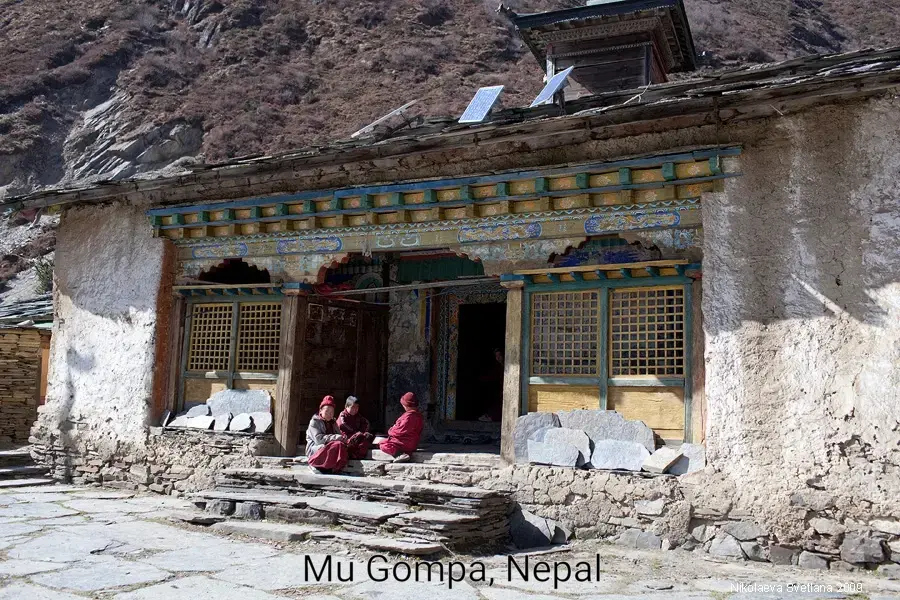
Today, we will take a short acclimatization walk to Mu Gompa, founded in 1985. This is the largest monastery in the Tsum Valley, located in a very stunning location shared by the gigantic frames of Baudha, Himalchuli, Shringi, and Ganesh peaks.
Once in the monastery, we will look at the towering statue of Padmasambhava, Avalokiteśvara, and Goddess Tara. We can also see around 100 monks getting on with their daily monastic duties.
Then, outside, we can gaze far to Tibet and the imposing walls of Ngula Dhojyang/Mailatasachin Pass (5093 m) and Thapla Bhanjyang (5104 m). This evening, we will stay at Mu Gompa and take part in the monks’ evening ritual.
Maximum Altitude
3,700 m
Meals
Breakfast, Lunch, Dinner
Trek Duration
4 hours Trek
Accomodations
Lodge to Lodge
11
Rest day at Mu Gompa to explore the local village and monastery
We are staying at the major attractive site of our Tsum Valley trekking. Today, we will explore the scenic areas surrounding Mu Gompa.
We can trek for approximately 10 to 20 minutes to reach the Deron Gompa, or we can climb even higher to the Dhephyu Doma Gompa (4,060 m), which lies further west of Mu Gompa.
We can also climb higher for around 3 hours to reach Lake Chhosyang. We will then head back to Mu Gompa for a relaxing night.
Meals
Breakfast, Lunch, Dinner
Accomodations
Lodge to Lodge
12
Trek to Rachen Monastery, 3240 m, 5 to 6 hours
From Mu Gompa, we will begin to climb down along the Shiar Khola on its opposite bank. We will pass by Nile, Chule, Pangdun, and Phurbe, and soon after, we will come across three watermills before arriving at Rachen Gompa.
This monastery was founded in 1905, where around 100 nuns live and study. It is related to the Ngak-pa sect and therefore strictly bans meat and animal slaughter.
Inside the monastery, we can look at clay sculptures of Avalokiteshwara, a large prayer wheel, and a stunning throne. Tonight, we will sleep in the spiritual ambiance of this Gompa.
Maximum Altitude
3,240 m
Meals
Breakfast, Lunch, Dinner
Trek Duration
5-6 hours Trek
Accomodations
Lodge to Lodge
13
Trek back to Chumling, 2,386 m, 06 hours.
Today will be our last day in Tsum Valley, and from here on, our trek will primarily be downhill. We will leave Rachen Gompa and climb down through Chule, Pangdun, Phurbe, and Burji to reach Chhokang Paro.
We will keep climbing down through Gho and Dumje to reach Chumling for our overnight stop.
Maximum Altitude
2,386 m
Meals
Breakfast, Lunch, Dinner
Trek Duration
6 hours Trek
Accomodations
Lodge to Lodge

14
Trek to Philim 1,590 m, 07 hours.
From Chumling village, we will begin hiking downstream guided by the riverbed through Ripchet, where we can appreciate the stunning waterfalls of Samba Tingding Chhupyang.
Our journey will lead us further down through Gumlung and then to Lokpa. Here, we will exit the Tsum Valley and enter the Manaslu region through Ekle Bhatti to reach Philim.
Maximum Altitude
1,590 m
Meals
Breakfast, Lunch, Dinner
Trek Duration
7 hours Trek
Accomodations
Lodge to Lodge
15
Trek to Tatopani, 1240 m, 6 hours
After a morning breakfast, we will welcome back the Budhi Gandaki waters and trace its path through Nagjet, Salleri, Sidibas Bazaar, and Jagat.
We are now out of the Manaslu region as well, and we continue to climb down to Labubesi, Yaruphant, and Dobhan to reach Tatopani. Once we are relaxed, we will go out a bit further to enjoy the calming and natural healing waters of the village.
Maximum Altitude
1,240 m
Meals
Breakfast, Lunch, Dinner
Trek Duration
6 hours Trek
Accomodations
Lodge to Lodge
16
Trek to Soti Khola, 7300 m, 6 hours
Today, our descent will begin from Tatopani, leading us through Khorla Besi, Machha Khola, Khanibesi, Nauli Khola, and the Armala villages before we are back in Soti Khola.
Maximum Altitude
730 m
Meals
Breakfast, Lunch, Dinner
Trek Duration
6 hours Trek
Accomodations
Lodge
17
Drive back to Kathmandu via Arughat, 7 hours
The road begins from Soti Khola, where our private transfer will pick us up to drive us down through Arughat and Dhading to Kathmandu.
Meals
Breakfast, Lunch, Dinner
Accomodations
Hotel
Transportation
7 hours Drive
18
Departure
It’s your final day in incredible Nepal, and we hope you have a wonderful experience with us during your Tsum Valley trekking. A Life Himalaya Trekking representative will take you to Kathmandu International Airport for your flight back home or to your next destination.
Meals
Breakfast
Transportation
Hotel to Airport transfer
Equipment Checklist 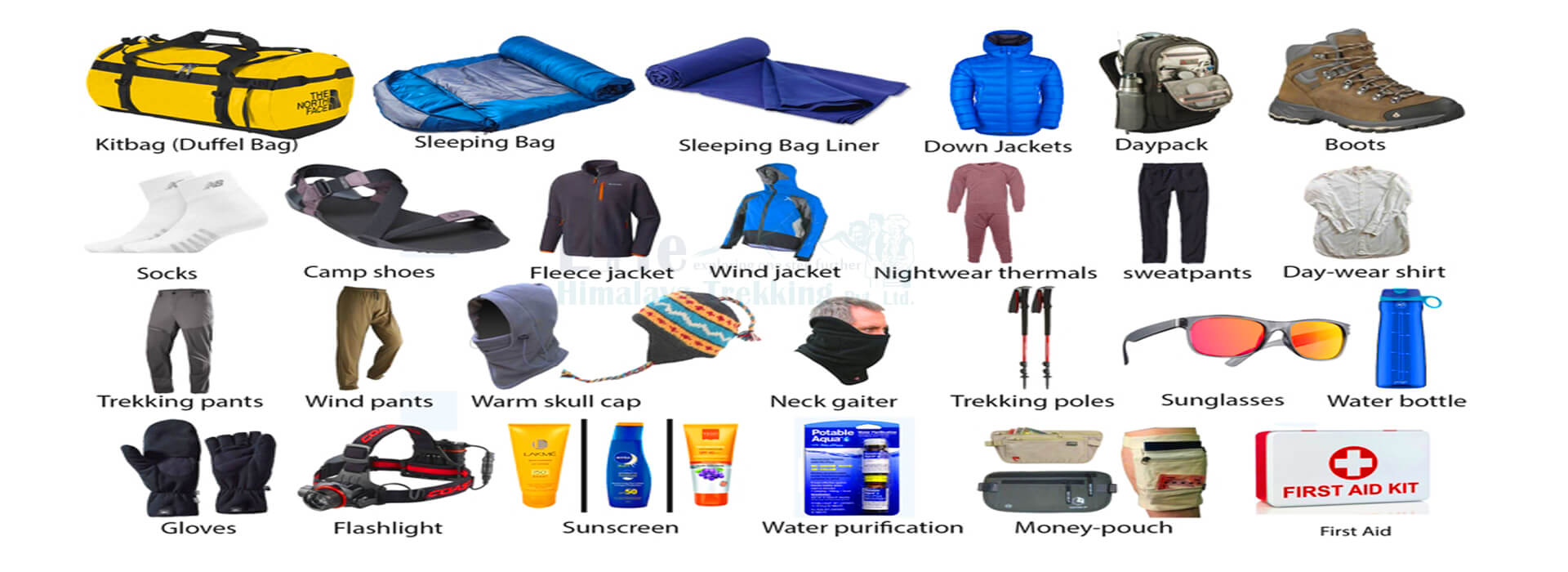
Required Equipments for Trekking in Nepal
- Breathable Underwear
- Sports Bra
- Base Layers
- Trekking Shirts
- Trekking Trousers and Shorts
- Fleece Jacket
- Down jacket (insulated jacket)
- Windcheater (water proof)
- Sun protection Hat
- Headband or Beanie
- Scarf or neckband
- Gloves (inner and outer )
- Hiking Boots
- Trekking Shoes
- Hiking Socks
- Thermal Socks
- Gaiters
- Duffel Bag
- Day pack
- Sleeping Bag
- Trekking poles
- Sunglasses
- Hydration bladder or Water bottle
- Head Lamps
- Batteries
- Personal towel
- Swiss army knife
- Sun lotion
- Medical & first-aid kit
- Woolen socks
- Waterproof jacket
- Lip Guard
- Insulated pants
- Baby wipers
Required Equipments for Climbing in Nepal
- Water bottle
- Batteries and bulbs
- Flashlight
- Personal towel
- Swiss army knife
- Rucksack
- Sun lotion
- Medical & first-aid kit
- Sewing kit
- Polypropylene/wool socks
- Other required equipment
- Sleeping bag
- Down Jacket
- Waterproof jacket
- Trekking shoes/boots
- Camp shoes
- Jumperorpile jacket
- Hiking pants
- Hiking shirts
- Full–sleeves shirt
- T-shirts
- Sun hat
- Gloves
- Woolen hat
- Long underwear
- Goggles or sun glasses
- Gaiters
- Sun block for lips
- Light cotton socks
- Mountain trekking boots
- Woolen socks to wear with boots
- Nylon wind breaker
- Insulated pants
- Nylon wind pants
- Long sleeved cotton/woolen shirts
- Sun hat
- Long cotton hiking shorts
- Fleece/wool for climbing
- Lightweight fleece
- Sleeping pad (karri mat) or thermarest
- Down high altitude sleeping bag
- Down jacket/trousers/vest
- Light cotton athletic socks and wool socks
- Water proof climbing jacket
- Head torch/batteries/bulbs
- Climbing sunglasses
- Lightweight thermal/insulated ski gloves
- Sun screen
- Warm climbing trousers
- Wool long underwear
- Other required equipment
- Climbing boots
- Gaiters
- Ice axe
- Harness
- Crampons
- Karabiners
- Tapes/slings
- Snow bars
- Ice screws
- Rock pegs
- Deadmen
- Crash hat
- Day bag
- Rucksack
- Lip salve
- T-shirts
- Ascenders
- Ascenders
- Kit bag
Tsum Valley Trekking Trip Information
Why Life Himalaya Trekking for 18 Days Tsum Valley Trekking Adventure?
Life Himalaya Trekking is among the leading and well-established travel companies in Nepal, with expertise developed over many years of personal travel and experience.
We believe that each trip is a unique moment in a person’s life, and that everyone should have the opportunity to experience it.
Thus, we always come up with a low-price policy which allows us to offer you low-cost trips of all kinds, so everyone can take the journey they have imagined.
When you travel with us, you will not only be a customer but a full member who can help plan the trip, share the challenges, and enjoy the process.
For our Tsum Valley trekking, we have embraced the same concept, allowing you the freedom to personalize your own itinerary. For this trek, we will be offering you:
- Private pick up and transfer from the airport to the hotel to the airport.
- Hotel accommodation with breakfast in Kathmandu.
- Local lodges provide accommodation with breakfast, lunch, and dinner during the trek.
- Government-licensed English-speaking guide and experienced porter
- All local transportation by private vehicle as per the itinerary
- All mandatory permits and entry fees, including the Trekking permit to Tsum Valley.
- Medical first-aid kit box.
- Rescue assistance.
- All government taxes.
Why is Tsum Valley still restricted?
Tsum Valley was opened to hiking in 2008, but it is still reached by a limited number of enthusiasts because the area is restricted to date.
A special permit given to only organized group trips through a government-approved travel agency, like Life Himalaya Trekking, is necessary for the Tsum Valley trekking.
This restriction has kept the culture, fragile Himalayan environment, and ecosystem of the region intact. After all, the valley is blessed by Milarepa, and it needs rightful preservation from outside interference.
When walking, you can even spot Himalayan blue sheep, Himalayan deer, snow leopard, and many rarely seen birds. There are now not many places on Earth like Tsum.
Thus, for the protection of this ecosystem, culture, and political interference from Tibet, the Nepalese Government has restricted the Tsum Valley trekking.
Best Time to engage in the Manaslu Tsum Valley Trekking
The high season for Tsum Valley trekking is autumn, between September and November. This season begins after the monsoon with clear and cool weather.
There will be no dust in the air in the Tsum Valley, and mountains will also be clearly visible even from the low altitudes of Soti Khola and Machha Khola.
March, April, and May of spring are another high season for Tsum Valley trekking when it is warm and dry. The terrain of the Tsum Valley will be abundant with rhododendrons that add a splash of vibrant colors to the landscape of Manaslu and Tsum Valley.
There is a monsoon season from June to August, when the rainy season becomes more intense and longer in the Manaslu villages. Tsum Valley will remain dry, however, because it is a rain shadow area.
Winter, from December to February, is cold with deserted snow-covered trails. However, the days will be filled with warm sunlight, making them excellent months for trekking if you are well prepared.
Tsum Valley Trekking Difficulty Level
The 18 days Tsum Valley trekking adventure is a medium hiking journey categorized as class II or B in the alpine grade system. Its maximum elevation doesn’t go higher than 3700 m at Mu Gompa, which makes the trek incredibly accessible to everyone.
However, you will encounter numerous descents and ascents along the trail. You will also have to face the average altitude gain or loss of around 500 to 700 m each day.
Your trekking duration of each day will usually last between 5 and 6 hours, which is somewhat offset by the presence of tea houses en route. The majority of the route of the Tsum Valley trekking follows wide mountain paths that do not need any technical expertise.
However, the main issue on the trek will arise from the extremely dry Himalayan air in the Tsum Valley, which may lead to altitude sickness. Also, the primitive living conditions in Tsum Valley will add another challenge, which adds to the difficulty of the Tsum Valley trekking.
Who can join in our 18 Days Tsum Valley Trekking Adventure?
There is no age limit for joining our Tsum Valley trekking as long as you are physically fit and have a strong will. Past experience in hiking will be helpful, but not entirely needed.
Over the decades, we have successfully guided families with small children and many guests over 60 years to the Tsum Valley. We have also welcomed many first-time trekkers into our groups.
Our professional team will also take excellent care of you throughout the 18 days of our Manaslu Tsum Valley trekking. We also place a strong emphasis on walking slowly to enjoy the natural surroundings, the villages, the routes, and the local people.
Our guide will lead the group and will stay behind with the slowest hikers. However, it is important for you to be prepared for the primitive facilities and limited food options during the trek.
We encourage guests with cardiovascular, musculoskeletal, and respiratory issues to get medical advice before joining our Tsum Valley trekking.
Is any special training needed for the Tsum Valley Trekking?
The route of the Tsum Valley trekking is absolutely nontechnical with a medium altitude led by our professional team, so you don’t need any technical training.
However, getting some physical training will be good through hiking or going for long walks at least once a week for 10-12 weeks before your Tsum Valley trekking.
Carry your day bag and aim to trek 5 to 6 hours up and down to get used to the daily hiking routine in Nepal. If you can’t go to the hills or mountains, you can run or do cardio workouts in the gym.
If you are busy with training, then you can also play sports you enjoy whenever you have the chance or on weekends. Additionally, you can also train by climbing the stairs in your office building instead of taking the elevator.
Try to take deep breaths while walking to the office, as this will improve your lung capacity, which is essential for trekking in the High Himalayas.
Altitude Sickness/AMS (Acute Mountain Sickness) and Acclimatization
We have designed the travel program of our Tsum Valley trekking, keeping your safety in mind, thus minimizing the risk of AMS. In the initial days, we will not ascend more than 500 m each day, and once we reach over 3500 m, we will place an acclimatization rest day at Mu Gompa.
Our guide will also be careful and monitor your health regularly. He is well-trained and capable of identifying any signs of Acute Mountain Sickness (AMS).
You should also not rush, but maintain a slow and steady pace on the trek. You should also be kind enough to follow the instructions of our guide.
However, even with all these precautions, it is common that you may experience mild symptoms of AMS once you are over 2500 m. These signs can be headache, nausea, and vomiting, but you can continue your trek.
If your symptoms become severe with shortness of breath and disorientation, then we will stop your trek immediately. Our guide may assist you in your descent, give you Diamox (anti-altitude medicine), and allow you to rest and drink plenty of fluid.
In a group trip, our assistant guide will stay with you, and in a private trip, our main guide will be with you at all times.
Another route and possible expansion of the Tsum Valley Trekking
There is another possible route to the Tsum Valley trekking, which is through Barpak in the Gorkha District. The town was the epicenter of the catastrophic 2015 earthquake, but it has been fully restored and is now safe for travelers.
A 7-hour drive from Kathmandu will lead you to Barpak, from where you will begin your hike through Laprak to Philim. On your return journey, you can follow a path through Soti Khola.
If you like to expand the experience of your Tsum Valley trekking, you can merge it with the Manaslu Circuit trek, which involves Larkya La Pass crossing at 5106 m altitude.
You may also take a side trip to the Ganesh Himal Base Camp from Chhokang Paro or visit more remote monasteries like Gumba Lungdang. You can also combine the Nar Phu trek with the Manaslu Tsum Valley trek and connect to the Annapurna trail.
Or, for a more expansive and challenging journey, you can also consider crossing the Kang La Pass (5322 m) along with the Larkya La Pass.
Accommodation, Meals, and Transportation
You will be staying at a standard three-star hotel in Kathmandu with bed and breakfast in double rooms that will come with an in-room bath with shower, WiFi, and charging outlets.
During the Manaslu Tsum Valley trekking, you will stay in a local teahouse run by the local community. In a group travel, you will have to share a twin room, while in private travel, a single room will be arranged.
However, please understand that in Tsum Valley, there are a limited number of teahouses, so you may need to share a room even in private travel. You will also have to share toilets and bathroom facilities.
Regarding meals, we offer you breakfast, lunch, and dinner on the trek, and the menu will be typical Nepali and Tibetan dishes. Vegetarian and vegan dishes will be readily available as well.
As for transportation, a private vehicle will be at your service for all overland transfers, including airport-hotel-airport transfers and the Kathmandu-Soti Khola-Kathmandu journey.
Permits essential for Tsum Valley Trekking
The following permits are essential for the Manaslu Tsum Valley trekking:
- Restricted Area Permit: This permit is issued by the Immigration Department of Nepal and is provided only to organized group treks (with a minimum of two members and a local certified guide) arranged by registered trekking and travel agencies in Nepal. Its cost is US$40 per hiker per week during autumn (with an additional daily fee of US$7 per hiker after the first week) and US$30 per hiker per week during spring, summer, and winter (with a daily additional charge of US$5 per hiker after a week). For SAARC nationals, the fee is US$35 per hiker, while Nepali citizens pay NPR 100.
- Manaslu Conservation Area Permit: This permit is provided by the Nepal Tourism Board in Kathmandu, and costs NPR 3000 per hiker for foreigners, NPR 1000 for SAARC nationals, and NPR 100 for Nepali citizens.
- Tsum Nubri Rural Municipality Entry Permit: This new permit was introduced in September 2024 and must be obtained through local tour operators like us in Kathmandu or at Jagat. The fee is NPR 1000 per hiker for all trekkers, and you will need to provide your passport, visa, photos, and insurance details.
We will process these permits for you and also pay the related fees.
Travel Insurance
You already know that travel insurance is essential for our 18 days Tsum Valley trekking. Without proper insurance, permits like the RAP and Tsum Nubri Rural Municipality Entry Permit will not be issued to you.
Therefore, for our Tsum Valley trekking, please obtain the international recovery and helicopter rescue insurance for altitudes up to 3700 m. We also recommend that you get the personal, accident, trip cancellation, and lost baggage insurance.
Please keep in mind that obtaining personal insurance for the Tsum Valley trekking will be your responsibility. We will only be providing insurance for our staff. You will need to send us a digital copy of your insurance papers along with your documents after you book the trip.
FAQs For Tsum Valley Trekking
What is the Tsum Valley trekking?
The Tsum Valley trekking is an expedition into the secluded and secretive valley of Tsum inside the Manaslu region of Nepal, where you will experience the wildest form of nature in harmony with humans.
What kind of people will I meet on the Tsum Valley trekking?
You will meet a very hospitable, warm, and innocent Tsumba and Nubri communities on the Tsum Valley trekking.
What is the general duration for completing the Manaslu Tsum Valley trekking?
Generally, it will take around 17 to 20 days to complete the entire trail of the Manaslu Tsum Valley trekking.
How many days will I be in the Tsum Valley?
You will be in the deeper villages of the Upper Tsum Valley for a week.
Which mountain peaks will I see each day on your 18 days Tsum Valley trekking?
You will see Baudha, Ganesh, Shringi, Himalchuli, and a few other Tibetan mountains on your 18 days Tsum Valley trekking adventure.
Is it possible to join your Tsum Valley trekking without any experience?
Certainly, we only need your enthusiasm and love for walking along with your good health.
How experienced is your guide in traveling with me on the Tsum Valley trekking?
He is a highly experienced local guide who has engaged in many trips and treks in Nepal, and so he knows all bout the routes and people.
Does your guide communicate in English?
Yes, he is proficient in English and so is able to connect with all our guests from all over the world.
How difficult is the Tsum Valley trekking?
The Tsum Valley trekking is a moderate journey that doesn’t need technical knowledge but good shape and fitness.
How long will I trek each day on your 18 days Tsum Valley trekking?
You will trek daily for around 5 to 6 hours with breaks for lunch and tea in between.
Do I have to hike fast in your Manaslu Tsum Valley trekking adventure?
No, in fact, we encourage our guests to always maintain a slow and steady pace and enjoy nature around them.
How can I have safe drinking water during the Tsum Valley trekking?
Our Tsum Valley trekking package doesn’t include drinking water, but you can buy a mineral water bottle at the tea house. But, we encourage you to refill with boiled water from the tea house or treat your water with iodine or a water purifier instead of buying the bottles.
Does the tea house have electricity so I can recharge my batteries?
Yes, there will be power in the tea house, and you can charge your batteries in the common dining area, paying an extra sum.
Is there internet facility in the tea houses on the Tsum Valley trekking?
Some tea houses can provide you with their WiFi at extra cost, but the speed can be a bit slow. You can also access internet data of local mobile networks such as NTC and NCELL.
Will there be hot shower facilities on the Tsum Valley trekking?
You can get hot water upon request, paying an additional sum on-site.
What kind of toilets will there be at the tea house?
You will find mainly Asian-style toilets, which are the squatting type, and you will have to share them with other guests of the tea house.
How likely am I to get altitude sickness on the Tsum Valley trekking?
You may suffer from the milder effects of altitude sickness on the trek, but it will not be serious.
Do you charge extra charge for the single traveler?
No, we do not charge any extra fee for the single traveler, and you will have the option to join a group or private travel.
Video Reviews





Tripadvisor Reviews
Similar Trips
Join us on similar trips in the same region
View Details
Manaslu and Annapurna Circuit Trek – 19 Days
View Details
Manaslu Expedition with Helicopter
View Details