
 English
 Dutch
Dutch Japanese
 Hindi
Hindi Italian
 Spanish
 French
 German
 Chinese
 Korean
 Arabic
 Hebrew
 Russian
 Portuguese
 Danish
 Czech
Czech Polish
 Swedish
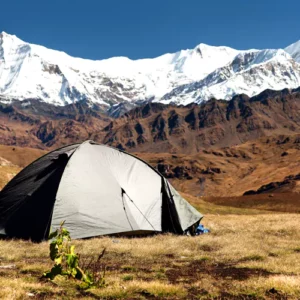
Max. Altitude
5663m
Best Season
Oct-Dec & Mar-May
Activity
Peak Climbing Packages
Start / End Point
Kathmandu/Kathmandu
Overview of Tent Peak Climbing – 18 days
The Tent Peak Climbing adventure offers an exciting mix of trekking and mountaineering in Nepal’s Annapurna region. Also called Tharpu Chuli, Tent Peak rises to about 5,663 meters (18,579 ft) above sea level. We will begin in Pokhara (a scenic lakeside city) and follow a classic Annapurna Sanctuary trail through lush forests and high alpine meadows. The trek goes through terraced farms and bamboo groves along the Modi Khola river.
You will trek up and down through classic Gurung and Magar villages such as Ghandruk and Chhomrong, where you will stay at local teahouses and have dinner filled with Nepali delights (Dal Bhat, soups, noodles). The culture is one of the attractions: you will know the life of mountain villages and even be able to observe the colorful festivals in case of appropriate dates.
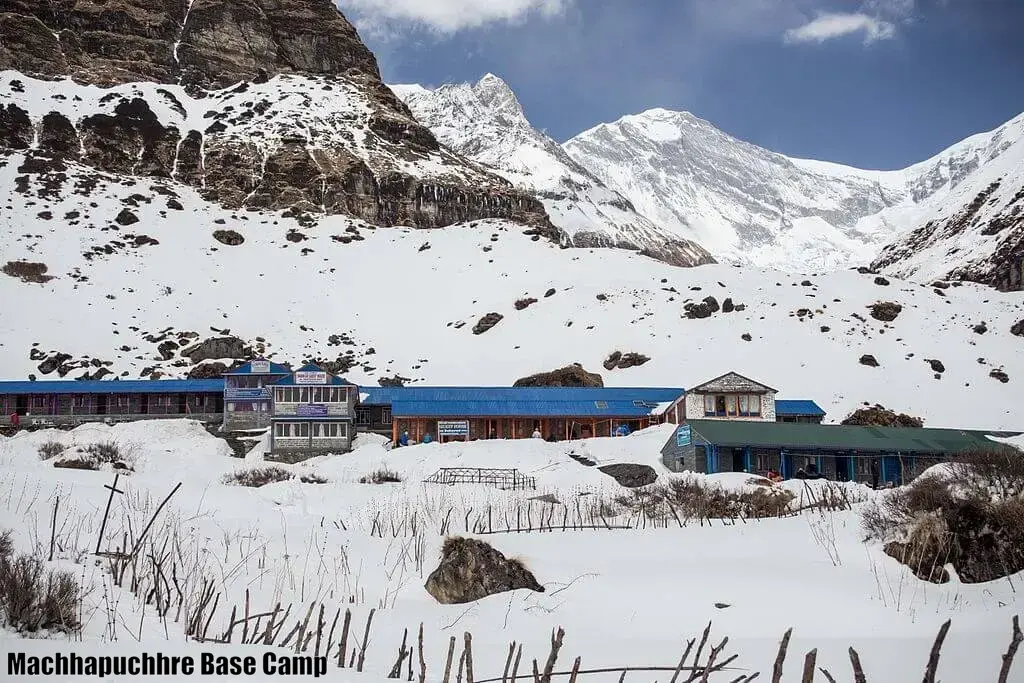
As the altitude rises, the scenery transforms. Dense rhododendron and oak forests give way to open Himalayan valleys. Mid-route, you reach Machhapuchhre Base Camp, with breathtaking panoramas of the Annapurna Massif, including Annapurna I, Hiunchuli, and Machhapuchhre (Fishtail); distant ranges on clear days.
These mountain amphitheaters are memorable. From Machhapuchhre Base Camp, we will continue higher toward the Tent Peak summit. The Tent Peak itinerary includes an acclimatization day at Mach Base Camp to help adjust. The final push is challenging but rewarding. In the early dawn, we will climb from High Camp (5,200m) up steep snow slopes with ice axes and crampons on a fixed-rope route.
Reaching the top at sunrise grants a 360-degree panorama of the Himalayas – truly once-in-a-lifetime. After celebrating, we will descend through the high camps back to Annapurna Sanctuary and return to Pokhara. This trek combines adventure, culture, and scenery in one journey. With proper fitness and our guided support, even first-time climbers can succeed.
Experienced climbers will also enjoy the relative ease of this peak. The Tent Peak Climbing trip handles all logistics (accommodations, meals, transport), so you can focus on the experience and enjoy one of Nepal’s most scenic high-altitude adventures.
Highlights of Tent Peak Climbing – 18 days
- Tent Peak Summit (5,663 m / 18,579 ft) for a 360° view of the Annapurna and Dhaulagiri ranges.
- Trek through traditional Gurung and Magar villages (Ghandruk, Chhomrong) and stay in local lodges.
- Panoramic Himalayan vistas from Machhapuchhre Base Camp and the Annapurna Sanctuary.
- Warm hot springs at Jhinu Danda to relax tired muscles after the climb.
- Rich cultural immersion: enjoy Dal Bhat dinners, folk music, and Nepali hospitality.
- Currently royalty-free (no NMA climbing fee); ACAP + TIMS still required, keeping costs reasonable.
Tent Peak Climbing Itinerary
01
Day 01: Arrival in Kathmandu
The actual Tent Peak Climbing starts upon your arrival in Kathmandu. We shall pick you up and take you to a nice hotel in the city. You will meet our team in the evening in order to have an orientation and a final check of gear.
You can relax in the moderate climate of Kathmandu, or you can do any last-minute shopping on the supply of trek, or we will have a welcome dinner together. One night in Kathmandu will allow you to get accustomed gradually (Kathmandu is 1,350 m) and make sure that you feel a lot better before the adventure.
Meals
Dinner
Accomodations
Hotel
02
Kathmandu: Sightseeing and Preparation
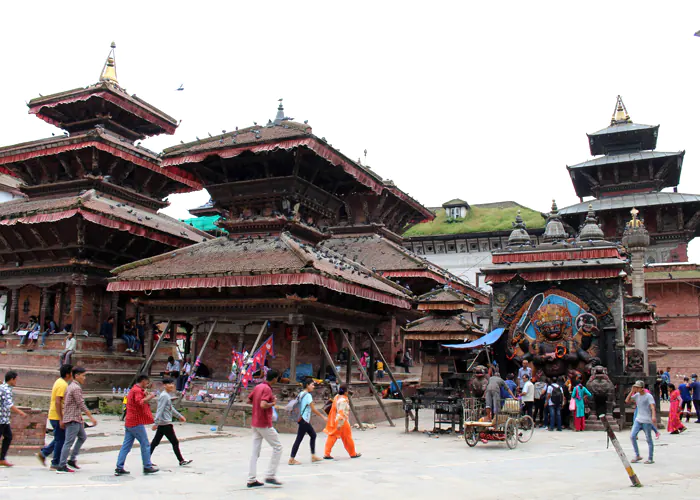
We will visit the cultural highlights of Kathmandu after eating breakfast. We will go to Durbar Square (UNESCO heritage site), the Swayambhunath Stupa (Monkey Temple), and Pashupatinath Temple. These attractions are popular and they reflect the Nepali colorful culture.
In the meantime, our crew finishes climbing permits (Annapurna Conservation Area Permit) and inspects your gear.
During the evening, we can have dinner together in a Nepali restaurant. We will brief you on the climb we are going to take. We are going to bed early tonight, and make sure you rest up before the long drive tomorrow.
Meals
Breakfast, Dinner
Accomodations
Hotel
03
Day 03: Kathmandu to Pokhara
Today, we will leave Kathmandu for Pokhara. You may ride the scenic tourist bus (6-7 hours) or take a short flight. The journey by road goes over hills, rivers, and terraced fields.
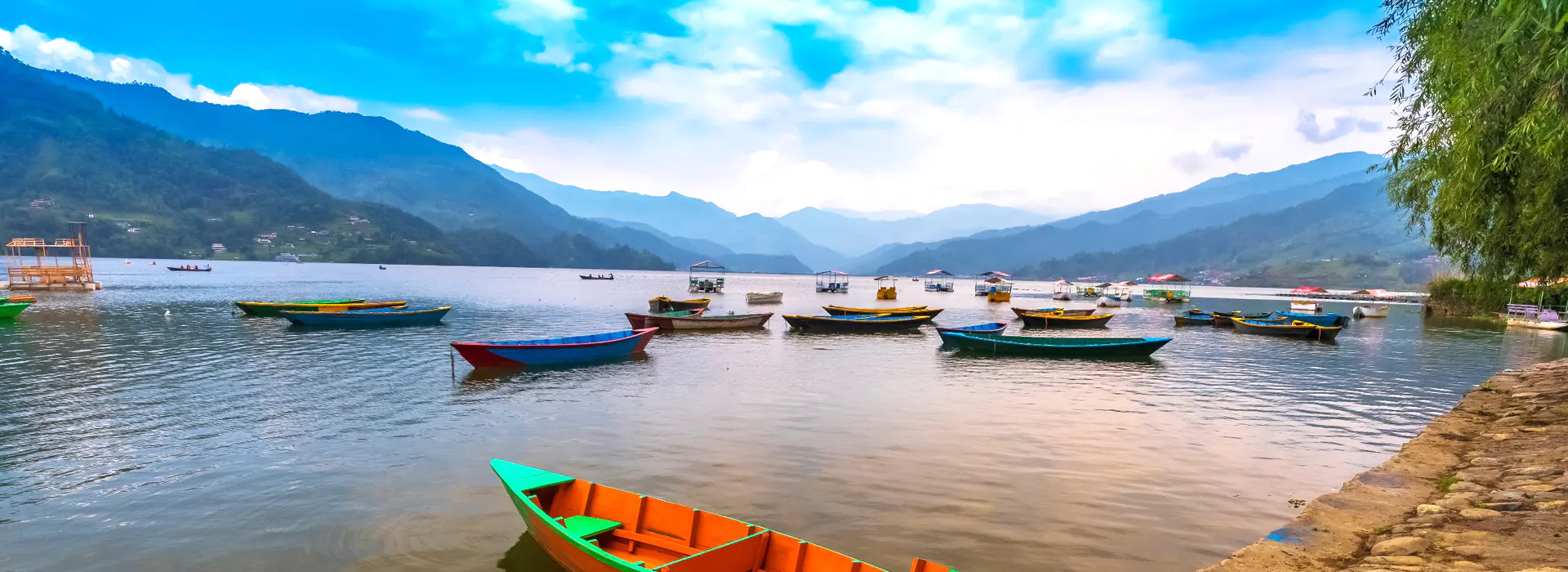
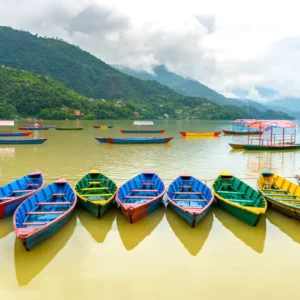
When we finally reach Pokhara (820 m), we will be able to experience the calm atmosphere of the lakeside and observe the Annapurna range in the distance. We shall enter the hotel along the Phewa Lake and rest.
We can also have a team dinner in the evening to discuss last-minute details and have the mountain sunset. Take a break by the lake – The temperate altitude of Pokhara (823 m) is a good rest before the trek and climb.
Maximum Altitude
2,700 ft
Meals
Breakfast, Lunch
Accomodations
Hotel
Transportation
6-7hrs drive
04
Day 04: Drive to Nayapul and Trek to Ghandruk
After an early breakfast, we will drive from Pokhara to Nayapul (1,070 m) – the trek’s trailhead. The 45-minute drive passes through Phedi and Birethanti.
From Nayapul, we will begin trekking along the Modi Khola River. The trail climbs through lush forests of rhododendron and oak. By afternoon, we will reach Ghandruk (1,940 m), a beautiful Gurung village.
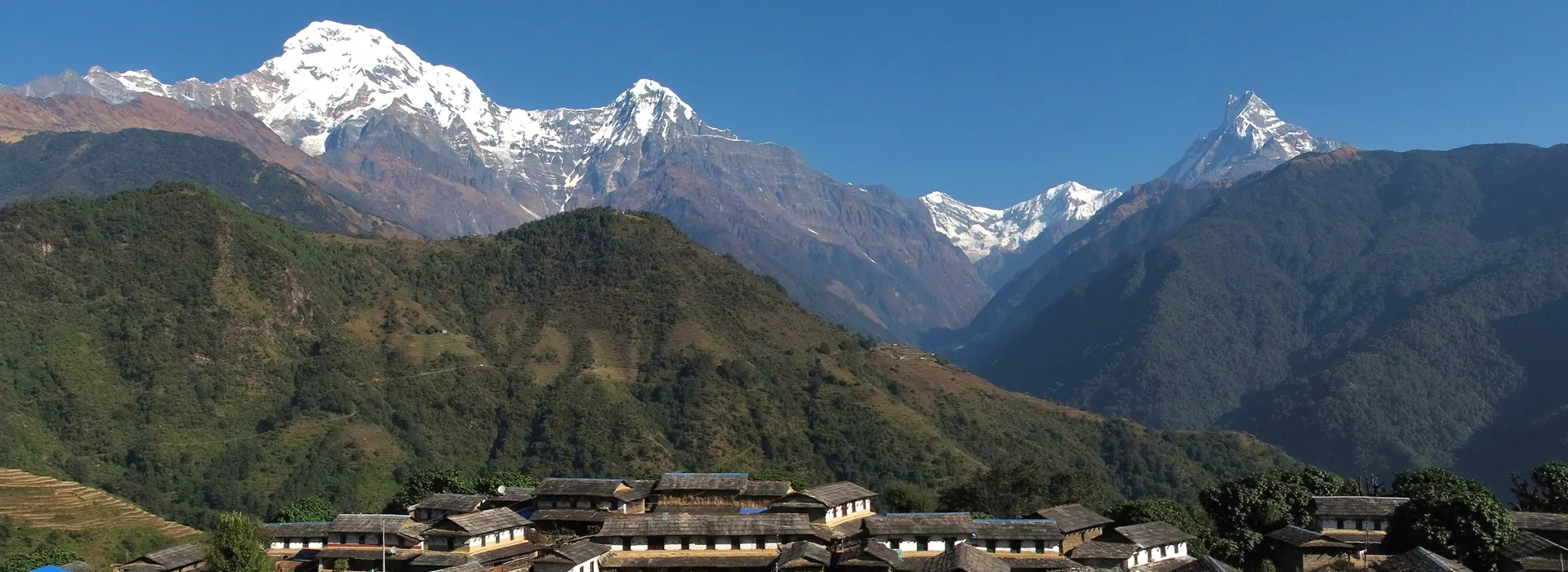
Ghandruk has stone houses and panoramic peaks visible. We will check into the mountain lodge and enjoy dinner with mountain views. We will spend our overnight in Ghandruk, which helps you acclimatize to the moderate altitude.
Maximum Altitude
6,360 ft
Meals
Breakfast, Lunch, Dinner
Trek Duration
6 hrs Trek
Accomodations
Lodge
05
Day 05: Ghandruk to Chhomrong
After breakfast, we will leave Ghandruk to restart the Tent Peak Climbing. The trail descends through forests, crosses the Modi Khola via a suspension bridge, then climbs uphill to Chhomrong (2,170 m).
The ascent passes traditional farming terraces and rhododendron groves. Chhomrong is a large Gurung village with great mountain views.
On arrival, we will settle into the teahouse lodge. Evening light often illuminates Hiunchuli and Annapurna South above. We will have our dinner and overnight at Chhomrong (7,120 ft) to prepare you for the deeper sanctuary ahead.
Maximum Altitude
7,120 ft
Meals
Breakfast, Lunch, Dinner
Trek Duration
6 hrs trek
Accomodations
Lodge
06
Day 06: Chhomrong to Dobhan (Himalaya Hotel)
From Chhomrong, we will descend the river valley and then climb into dense forest. After several hours, we will arrive at a lodge area called Himalaya Hotel or Dobhan (8,530 ft), where two rivers meet. This trek is steep at times but offers charming valley scenery.
We will enjoy lunch at the lodge and relax by the bubbling streams. We will have dinner and sleep in Dobhan lodge because staying overnight here gives you a head start for tomorrow’s climb into the sanctuary.
Maximum Altitude
8,530 ft
Meals
Breakfast, Lunch, Dinner
Trek Duration
6 hrs Trek
Accomodations
Lodge
07
Day 07: Dobhan to Deurali (3,230 m / 10,600 ft)
Today’s trek will be relatively short. We will climb steeply from Dobhan through bamboo and rhododendron forest up to Deurali. The trail winds beside rocky slopes.
Deurali means “Prayerful Hill” and offers fine views of the Modi Khola valley and Machhapuchhre (Fishtail Peak).
You will likely feel the higher altitude, so we will walk slowly. We will spend the afternoon at the simple teahouse in Deurali, resting and enjoying the scenery. An early night here prepares us for reaching the base camp tomorrow.
Maximum Altitude
10,600 ft
Meals
Breakfast, Lunch, Dinner
Trek Duration
3-4 hrs trek
Accomodations
Lodge
08
Day 08: Deurali to Machhapuchhre Base Camp (12,140 ft / 3,700 m)
We will continue climbing from Deurali to Machhapuchhre Base Camp (MBC) at 3,700 m. The trail ascends past small caves and through a rhododendron forest. By midday, we will reach MBC, which provides spectacular views of Machhapuchhre (Fishtail) and Annapurna South.
Take time to savor the panorama. We will have lunch at the MBC lodge and use the afternoon to acclimatize. You will practice walking with your crampons and stay hydrated.
We will have a dinner at the lodge and a warm night’s rest among the peaks help prepare you for the big push.
Maximum Altitude
12,140 ft
Meals
Breakfast, Lunch, Dinner
Trek Duration
4 hrs Trek
Accomodations
Lodge
09
Day 09: Acclimatization and Preparation at MBC
This will be a complete day of acclimatization at Machhapuchhre Base Camp. You may make a little walk to local outlooks or to various moraine ridges and climb slowly uphill, then back.
There will be a safety and gear briefing today, with cramponing and ice-ax fitting done by guides. It is also significant to rest, sleep, and hydrate.
This day of rest is essential to the adaptation of your body to the 3,700 m altitude. We can enjoy the mountain air and scenery. The slow and careful pace today greatly improves your chances of summit success.
Maximum Altitude
12,140 ft
Meals
Breakfast, Lunch, Dinner
Accomodations
Lodge
10
Day 10: Machhapuchhre Base Camp to Cave Camp
We will leave MBC and climb through the high alpine terrain. The trail leads over rocky slopes and past small waterfalls. In about 6 hours, we will reach Cave Camp (4,248 m) near the French Camp along the glacier. Cave Camp is a simple tented camp area (no lodges).
This site is essentially the beginning of the Tent Peak climb. We will arrive by early afternoon and enjoy our lunch, and take a rest. We will check all climbing gear tonight, and tomorrow we will head up to High Camp.
Maximum Altitude
13,943 ft
Meals
Breakfast, Lunch, Dinner
Trek Duration
6 hrs Trek
Accomodations
Tented camp
11
Day 11: Cave Camp to High Camp
Today, we will gain significant altitude. The trail heads steadily uphill across snow and moraine toward High Camp (about 5,200 m), which takes about 5 hours. High Camp is on a snowfield below Tent Peak.
On the way, we will see the grandeur of Annapurna I and the surrounding giants. We will arrive at High Camp, settle into the tented lodge, and take a rest. This afternoon is for rest, so eat well and get into your sleeping bag early. Tomorrow’s summit attempt starts before dawn.
Maximum Altitude
17,056 ft
Meals
Breakfast, Lunch, Dinner
Trek Duration
5 hours Trek
Accomodations
Tented camp
12
Day 12: Summit Tent Peak (Tharpu Chuli) and Return
Today will be our summit day. We will begin very early (often around 2-3 AM) from High Camp on steep snowy slopes.
Using ropes and an ice axe, we will climb the final 450 meters to reach Tent Peak’s summit at 5,663 m (18,579 ft) around sunrise. The climb is challenging, but we will go slowly together.
From the top, we will enjoy a 360° panorama: the Himalayas stretch in every direction, so you can take plenty of photos.
After celebrating, we will descend back down the same route, returning to High Camp for lunch. The climb plus descent takes about 8-10 hours total. We will stay overnight again at High Camp, celebrating a successful climb over dinner.
Maximum Altitude
18,579 ft
Meals
Breakfast, Lunch, Dinner
Trek Duration
10 hrs Trek
Accomodations
Tented camp (High Camp)
13
Day 13: High Camp to Machhapuchhre Base Camp
Today is mostly downhill. We will retrace our steps from High Camp to Machhapuchhre Base Camp (3,700 m). In about 5 hours, we will reach the lodge at MBC by midday. We will enjoy looking back on the path you climbed. At MBC, we will relax and enjoy a hot meal.
This will feel like a well-earned moment of joy after reaching the summit. We will spend a cozy evening at MBC, reflecting on our achievement as the sun sets on the Annapurna range. We will spend our overnight at the MBC lodge with a well-earned rest.
Maximum Altitude
12,140 ft
Meals
Breakfast, Lunch, Dinner
Trek Duration
5 hrs Trek
Accomodations
Lodge
14
Day 14: Machhapuchhre Base Camp to Bamboo
We will continue the descent today. From Machhapuchhre Base Camp, we will hike down through Deurali and Himalaya (or Dobhan). The path leads into the forest and terraced farmland. After about 7 hours, we will reach Bamboo village (2,310 m).
Bamboo is surrounded by rhododendron and has a mountain lodge, where we will check in and enjoy dinner. Tonight, you can relax and think back on the trek while resting in a comfortable lodge. Bamboo’s lower elevation means warmer air – a relaxing change after the high altitudes.
Maximum Altitude
7,575ft
Meals
Breakfast, Lunch, Dinner
Trek Duration
7 hrs Trek
Accomodations
Lodge
15
Day 15: Bamboo to Jhinu Danda (Hot Springs)
Our journey goes down the valley of the Modi Khola. The road passes slowly down through villages, rice fields, and forests. After about 6 hours, we will arrive at Jhinu Danda (1,760 m), famous for its hot springs.
This evening, many trekkers relieve sore muscles by soaking in the natural hot spring pools (bring modest swimwear).
A basic lodge here provides dinner and a warm bed. We will enjoy the view of the river below. Soaking in the springs is a memorable and relaxing reward for the effort of the trek.
Maximum Altitude
5,770 ft
Meals
Breakfast, Lunch, Dinner
Trek Duration
6 hours Trek
Accomodations
Lodge
16
Day 16: Jhinu Danda to Nayapul, then Drive to Pokhara
This morning, we walked up the river valley between Jhinu Danda and Nayapul (1,070 m) (approximately 6 hours). It is a quiet trail that is mostly downhill. The final day of trekking will be celebrated in Nayapul with the group. Then, we will take a personal vehicle to drive back to Pokhara (approximately an hour).
At Pokhara, we will rest in the hotel by the lake. Tonight we are going to have dinner in Pokhara, and we are supposed to share our stories. This nice hotel experience and a good meal compensate for two weeks of mountain life. We will spend the night in Pokhara.
Maximum Altitude
3,510 ft
Meals
Breakfast, Lunch, Dinner
Trek Duration
6 hours Trek
Accomodations
Hotel
Transportation
1 hour Drive
17
Day 17: Drive from Pokhara to Kathmandu
We will then get a tourist bus or a private car back to Kathmandu after breakfast (6-7 hours). The trip revisits the picturesque highway winding across the river ravines and terraced valleys. We will arrive in Kathmandu by late afternoon.
You will spend the evening at leisure – shop in Thamel or visit any last sites. In the evening, we have a celebratory farewell dinner at a Nepali restaurant. Share stories and photos from the trek. You will spend your overnight in a Kathmandu hotel.
Meals
Breakfast, Dinner
Accomodations
Hotel
Transportation
6-7hrs drive
18
Day 18: Final Departure
After breakfast, we will transfer you to Kathmandu’s airport for your flight home or onward travel. If you extend your stay in Nepal, we can help arrange extra tours or treks.
Thank you for joining Life Himalaya Trekking on this Tent Peak Climbing adventure. We wish you safe travels and many fond memories of the Himalayas.
Meals
Breakfast
Accomodations
Hotel
Equipment Checklist 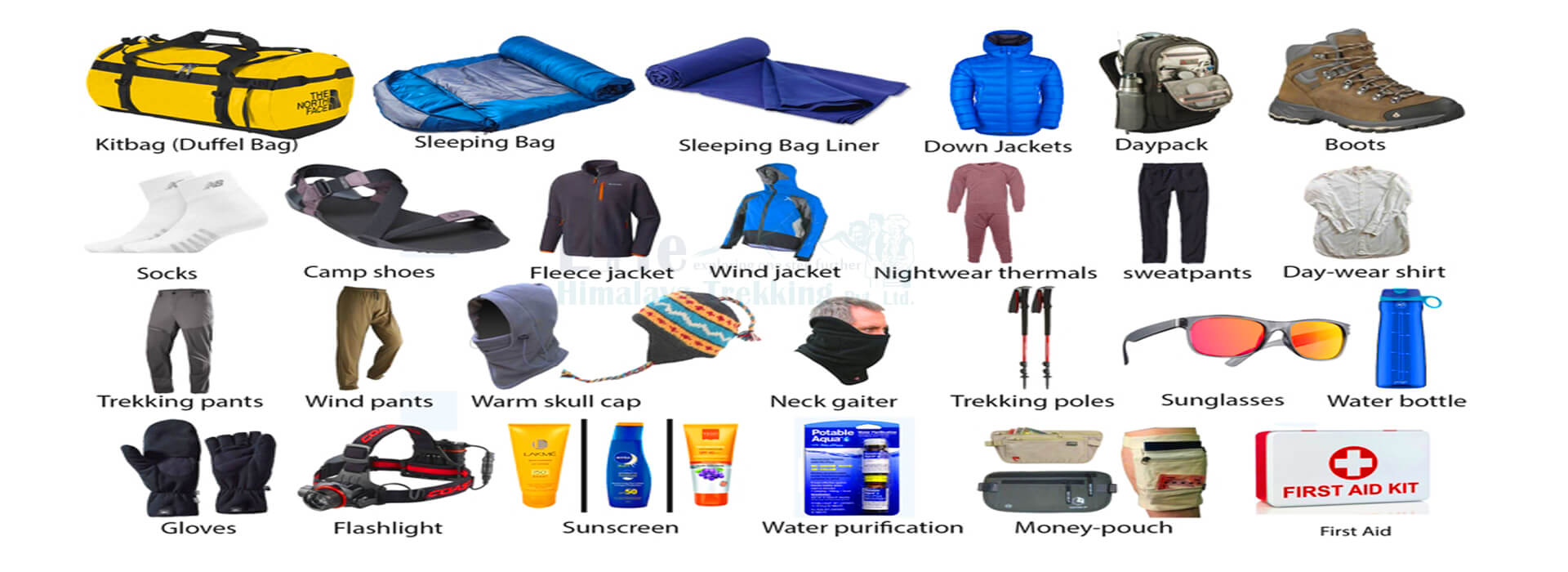

Required Equipments for Trekking in Nepal
- Breathable Underwear
- Sports Bra
- Base Layers
- Trekking Shirts
- Trekking Trousers and Shorts
- Fleece Jacket
- Down jacket (insulated jacket)
- Windcheater (water proof)
- Sun protection Hat
- Headband or Beanie
- Scarf or neckband
- Gloves (inner and outer )
- Hiking Boots
- Trekking Shoes
- Hiking Socks
- Thermal Socks
- Gaiters
- Duffel Bag
- Day pack
- Sleeping Bag
- Trekking poles
- Sunglasses
- Hydration bladder or Water bottle
- Head Lamps
- Batteries
- Personal towel
- Swiss army knife
- Sun lotion
- Medical & first-aid kit
- Woolen socks
- Waterproof jacket
- Lip Guard
- Insulated pants
- Baby wipers
Required Equipments for Climbing in Nepal
- Water bottle
- Batteries and bulbs
- Flashlight
- Personal towel
- Swiss army knife
- Rucksack
- Sun lotion
- Medical & first-aid kit
- Sewing kit
- Polypropylene/wool socks
- Other required equipment
- Sleeping bag
- Down Jacket
- Waterproof jacket
- Trekking shoes/boots
- Camp shoes
- Jumperorpile jacket
- Hiking pants
- Hiking shirts
- Full–sleeves shirt
- T-shirts
- Sun hat
- Gloves
- Woolen hat
- Long underwear
- Goggles or sun glasses
- Gaiters
- Sun block for lips
- Light cotton socks
- Mountain trekking boots
- Woolen socks to wear with boots
- Nylon wind breaker
- Insulated pants
- Nylon wind pants
- Long sleeved cotton/woolen shirts
- Sun hat
- Long cotton hiking shorts
- Fleece/wool for climbing
- Lightweight fleece
- Sleeping pad (karri mat) or thermarest
- Down high altitude sleeping bag
- Down jacket/trousers/vest
- Light cotton athletic socks and wool socks
- Water proof climbing jacket
- Head torch/batteries/bulbs
- Climbing sunglasses
- Lightweight thermal/insulated ski gloves
- Sun screen
- Warm climbing trousers
- Wool long underwear
- Other required equipment
- Climbing boots
- Gaiters
- Ice axe
- Harness
- Crampons
- Karabiners
- Tapes/slings
- Snow bars
- Ice screws
- Rock pegs
- Deadmen
- Crash hat
- Day bag
- Rucksack
- Lip salve
- T-shirts
- Ascenders
- Ascenders
- Kit bag
Whats Included
- Airport pick up and drops international and domestic.
- Complete departure information, About trek, flight ticket, guide, altitude sickness and reconfirmation and extend visa service (if necessary) and extra tour service before the trek starting.
- 3 star hotel in Kathmandu with breakfast.
- 2 night pokhara Hotel with brekfast.
- Drive from Kathmandu to Pokhara & Kathmandu for member and involved staffs.
- Private transportation picks up and drops.
- Best Lodge accommodation & full board meals throughout the trek.
- Breakfast, Lunch and Dinner included chosen from lodge menu.
- Nights twin share accommodation during the trek.
- As per group size experienced, government license holder Climbing guide, helpful and friendly strong, porters (1 porter for 2 people) and their food, accommodation, salary, equipment, and accidental insurance for all staff.( 5 trekkers 1 assistant guide )
- Experienced Climbing Guide (Sherpa).
- Warm Down jacket, four seasonal sleeping bag will be provided during the Tent peak (down jacket and sleeping bag are to be returned after the trip )
- Climbing Equipment’s for the Tent peak.
- Tent peak climbing trail map.
- Climbing permits (Please bring 3 passport size photos for permits)
- First Aid kits for the staffs and the groups.
- Services coordination for emergency and rescue operations
- Government taxes & office service charge
- Farewell dinner at reputed traditional Nepali Restaurant
- Achievement certificate
Whats Excluded
- Meals not quantified in the ‘Meal Inclusions’ in the itinerary’
- Travel insurance
- International airfare
- Nepal entry visa charge.
- All beverage and others personal expenses.
- Snacks and other personal expenses
- Hot shower during the trek.
Tent Peak Climbing - Essential Information
Trek Difficulty
The Tent Peak Climbing is of a moderate to hard level. Plan on steep trails and hiking days (5-7 hours a day). During the last hours, climbing on snow and ice is done using fixed ropes.
The peak (5,663 m) is a challenge of endurance and includes simple movement on the glaciers. No high skills in mountaineering are needed, but you can train your leg strength and endurance.
We will have experienced guides who will guide and help with the technical parts. Altogether, the trek is a mix of high-altitude trekking with an attainable climb. Most healthy trekkers can handle the challenge safely with ease and preparation.
Weather and Best Season
The best time for Tent Peak Climbing is autumn (Sept–Nov) and spring (Mar–May). These seasons offer stable weather, clear skies, and moderate temperatures. In autumn, expect warm daytime hiking; nights are cool. In spring, you’ll see rhododendrons in bloom and similarly clear conditions.
The monsoon season (June–August) brings heavy rain, slippery trails, and frequent clouds, so it is not recommended. Winter (Dec–Feb) is very cold and snowy; many high trails are impassable. No matter when you go, be prepared for sudden weather changes by packing warm layers and rain gear.
Food & Drink
Meals are provided in mountain lodges and teahouses. You’ll enjoy Nepali staples like Dal Bhat (rice, lentils, vegetables), as well as soups, noodles, and pasta. Breakfast often includes eggs, porridge, or pancakes. At most lodges, you can refill rice and dal as needed. Higher camps may have more limited menus, so it’s wise to carry energy bars or snacks.
Always drink boiled or treated water (or purchase bottled water at lodges) during Tent Peak Climbing. Hot drinks (tea, coffee, hot lemon) are widely available (for a small charge). We can accommodate dietary needs (vegetarian, etc.) if informed in advance.
Altitude Sickness
Anyone who has an altitude higher than 3,000m is susceptible to altitude sickness in case they climb very fast. We have planned our trip in such a way that we become accustomed to it bit by bit and have rest days and one night stay at Machhapuchhre Base Camp before the actual summit push. Consume lots of water, eat enough, and sleep well.
If you feel symptoms like headache, nausea, or dizziness, notify your guide immediately and take a rest. Guides carry oxygen and first aid supplies.
In Tent Peak Climbing, some trekkers take a prescription altitude medication (Diamox) after consulting a doctor. With the planned schedule, most trekkers adjust well. Listen to your body, eat light, and walk slowly to minimize risks.
Preparation and Fitness
You should prepare several months before the trek. Focus on cardiovascular fitness (hiking, jogging, cycling) and strength training (especially legs and core).
Practice day hikes with a loaded backpack. If possible, do at least one multi-day hike to simulate trekking. Stretch regularly and build up stamina for long days (5–7 hours hiking).
Familiarize yourself with your gear (boots, backpack) ahead of time. Being well-prepared increases your enjoyment and success.
Good mental attitude helps too: be ready for early starts, changing conditions, and teamwork. In short, come in strong physical shape so the Tent Peak Climbing will feel much easier.
Visa and Permits
All foreign visitors to Nepal need a tourist visa, available on arrival at Kathmandu’s airport or in advance at a Nepali consulate. Visa fees (USD) depend on duration (15/30/90 days). For trekking, you must obtain the Annapurna Conservation Area Permit (ACAP) and a TIMS card (Trekkers’ Information Management System).
As of 2025, Tharpu Chuli/Tent Peak is royalty-free (no NMA climbing royalty fee; we still register your climb through the authorities as required).
Regulations can change; we’ll reconfirm at booking. We will assist in obtaining these permits. Keep your passport and permits with you during Tent Peak Climbing; officials check them at permit checkpoints.
Health & Safety
We prioritize your safety. Our guides carry first-aid kits and communication devices. Supplemental oxygen may be provided depending on the trip setup.
Drink boiled or treated water and eat well-cooked meals. Practice good hygiene (hand washing, sanitizer) to avoid stomach illness. Report any health issues promptly. Lodges are built safely, but be cautious around stove areas.
Always trek in groups; do not wander off alone. Keep a safe distance from wildlife (do not feed animals or roaming dogs). Evacuation coverage on travel insurance is compulsory.
Helicopter evacuation can be organized by guides in case of an emergency (injury, severe altitude sickness). Follow all the safety instructions given by guides.
Transportation
We will start and end in Kathmandu. Transport is via private vehicles or tourist buses. You will travel between Kathmandu and Pokhara by bus or flight.
From Pokhara, we take a local bus or jeep to Nayapul (trek start). All road transfers (airport pickup, Kathmandu–Pokhara, Nayapul–Pokhara–Kathmandu) are included.
Vehicles for Tent Peak Climbing are modern tourist buses or vans, often air-conditioned, driven by experienced drivers. Enjoy scenic valley and mountain views en route.
Once in the mountains, the trek is on foot only. Transportation back to Kathmandu on Day 17 is by tourist bus or private van.
Travel Insurance
Comprehensive travel insurance is required. Comprehensive insurance covering trekking/climbing to 5,700 m and helicopter evacuation is mandatory by our company and strongly recommended for all clients during the Tent Peak Climbing. It should also cover medical expenses, accidents, and repatriation. This is mandatory by our company policy for your safety.
Carry a copy of your insurance details. In case of illness or accident, guides will arrange evacuation, but insurance covers the cost. Without proper insurance, you cannot participate.
Getting insurance early ensures help is available if needed. Emergency coverage gives you peace of mind, as mountain rescues can be very expensive without it.
Alternative Routes
The standard route to Tent Peak Climbing is via the Annapurna Sanctuary (the itinerary above). As an alternative, some trekkers include Ghorepani Poon Hill at the start for sunrise views, then join the main trail at Ghandruk. More adventurous climbers extend to the Annapurna Circuit (via Muktinath and Jomsom) after the climb.
In spring or fall, all routes are open. Adaptations (such as flying out from Jomsom or adding days) can be arranged if you want a different experience. We can customize itineraries on request. Always allow flexibility for weather or trail conditions, which can force route changes.
Your Extra Expenses
The package covers meals and lodging as listed. You should budget for some personal expenses throughout the Tent Peak Climbing journey.
Extra costs include drinks (tea, coffee, alcohol), snacks, and hot showers at lodges (usually a small fee). Wi-Fi (available in some places) often costs a few dollars per day. Laundry and phone/data charges are extra.
Tips for guides/porters are customary (we suggest about USD 5–10 per person per day for the group to share). Souvenirs and any gear purchases on the trek are extra.
Carry small bills (USD or NPR) for these expenses. Nepal’s currency is the rupee (NPR); ATMs in Pokhara and Kathmandu work but may charge fees.
Language & Communication
The official language is Nepali. Our guides speak fluent English, so communication is easy. In villages during Tent Peak Climbing, you may also hear local Gurung or Magar languages, but everyone in the lodges understands basic English. It’s helpful to learn a few Nepali greetings (like “Namaste” for hello). Overall, English works fine along the trail.
If you speak no Nepali, it’s not a problem. Mobile phone reception exists in some villages (NTC or Ncell networks), but not in high camps. Lodges sometimes offer paid Wi-Fi (slow), mostly in larger villages. Your guide can also help with any translation needs.
Mobile Network, Internet & Charging Facilities
Mobile signal (NTC/Ncell) is strongest up to Chhomrong and then becomes patchy around Bamboo/Deurali; assume no network at Machhapuchhre Base Camp, Cave Camp, High Camp, or the summit. It is very weak or unavailable at Machhapuchhre Base Camp, and there is no coverage at Cave Camp, High Camp, or the summit.
You can buy a Nepali SIM card in Kathmandu or Pokhara for use in villages. Most teahouses have basic electricity (solar or generator). You can charge phones and cameras (charged per device or hour in many lodges; bring a power bank).
Bring a power bank as backup. Wi-Fi is available in a few lodges (very slow, usually costs a few dollars per day). Plan for minimal internet at high camps. Carry enough battery packs to last the day’s hike.
Don’ts on this Trip
In the Tent Peak Climbing journey, you must respect local culture and nature. Do not litter and bring your garbage with you. Follow the existing trail, as the area might be dangerous.
Avoid alcohol at high altitude as it slows acclimatization. Use a low voice and do not play loud music in villages. Please do not take photos of individuals or religious places without seeking permission. Wear plain clothes, particularly to temples.
Do not disrespect wildlife; keep a safe distance. Avoid feeding stray animals. Do not attempt the climb without your guide. In short, be mindful of sacred customs and wilderness rules. Leave nothing but footprints and take memories with you.
Trip Extension
After Tent Peak Climbing, you can extend your Nepal adventure. Popular options include relaxing more days in Pokhara (boat on Phewa Lake) or traveling to Chitwan National Park for a jungle safari. Trekkers often add the Annapurna Circuit (via Muktinath) or visit the Everest region next.
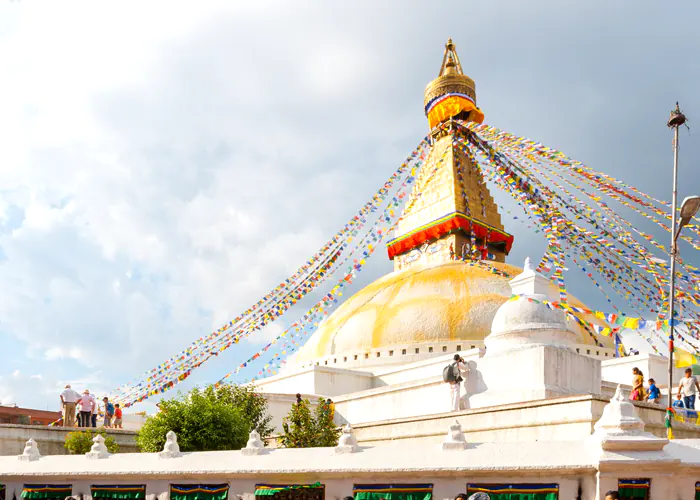
Cultural tours in Kathmandu (Boudhanath Stupa and Bhaktapur) can be arranged. We also offer tours to Tibet’s Everest Base Camp or Bhutan if time allows.
If you wish to customize or add extra days, just let us know. We can help arrange flights, guides, and permits for any extension.
Photography & Drone Rules
Nepal is very photogenic! Smartphones and cameras are welcome. In the case of drones, the Civil Aviation Authority in Nepal needs special permission to fly in restricted regions such as Annapurna. Drones are strictly prohibited in conservation areas without prior approval.
You are not supposed to fly a drone without having such permits and guide approval. Always respect privacy. It is always a good idea to ask before taking photos of people and in temples. The majority of lodges are equipped with power outlets to charge cameras, and carry additional batteries and memory cards.
Electricity is a precious commodity, and so it should be made available in villages whenever feasible. Your guide will be able to indicate the most favorable spots to take photos and any cultural restrictions regarding photography.
Cultural Festivals on the Trail
If you begin Tent Peak Climbing during festival season, you may encounter celebrations. Late September/October has Dashain and Tihar, when villages host rites, though many stay at home. In late December (Tamu Lhosar), Gurung villages like Ghandruk celebrate their New Year with music and dance.
In spring, people celebrate Lhosar and Holi, two major festivals that fall in March. In summer monsoon or winter, you will see fewer large festivals, but smaller village events (prayers at gompas, local feast days) can still add cultural color. Even if no festival coincides, daily life here, from prayer flags to mani walls, is vibrant and worth experiencing.
Tips for First-Time Nepal Visitors
Nepal offers warm hospitality but has its own pace. Learn a few Nepali phrases (“Namaste” – hello). Dress modestly, especially in villages and temples (knees/shoulders covered).
Carry cash (Nepalese Rupees) – ATMs exist in cities, but small towns accept only cash. Use treated or bottled water. Wear a hat and sunscreen; the sun is very fierce, particularly above 3,000m.
You should expect good-natured yet occasionally keen traders; pleasant bargaining is to be expected in Kathmandu markets.
Always observe traditions (take off your shoes when you are in houses, temples, and do not point your feet at the altars). Tipping is expected: $5–10/day for guides and porters.
Finally, relax and go with the flow – you’re in one of the world’s happiest countries!
Tent peak climbing trek starts with a scenic flight from Kathmandu to Pokhara (900m). Pokhara is one of the most beautiful valley of Nepal flourished with natural beauty and cultural touch. The trek then ascend passing some of the beautiful natural sightseeing and cultural villages such as Jhinu Danda(1,646m), Ghandruk , Deurali (3,200m) and many more panoramic Himalayas viewpoints. Commencing this fascinating trek will leave you with mesmerizing trekking experience into the high Himalayas region of Nepal.
FAQs For Tent Peak Climbing – 18 days
What is Tent Peak Climbing and where is it located?
Tent Peak (Tharpu Chuli) is a 5,663m trekking peak in Nepal’s Annapurna Sanctuary, north of Pokhara. It offers panoramic Himalayan views, including Annapurna I and Dhaulagiri. It sits at the head of the Annapurna Base Camp trail.
What is the altitude of Tent Peak?
Tent Peak’s summit is 5,663 meters (about 18,579 feet) above sea level, making it one of the higher trekking peaks in Nepal.
How many days is the trek?
The full Tent Peak itinerary is 18 days, including arrival and departure. This includes about two weeks of trekking in the mountains, with days for acclimatization and the summit attempt.
What is the best time for Tent Peak Climbing?
Best during autumn (September-November) and spring (March-May). The weather and clear skies in these seasons are stable. Monsoon (June- August) is highly humid, and winter ( December-February) is extremely cold, and hence the seasons are not advisable.
What level of difficulty does this trek have?
The walk is moderate to strenuous. You have long, steep days, and the summit day is a technical snow and ice climb. It is a little more demanding than a normal trek, but we offer directions and fixed ropes for the difficult parts.
Is there any prior climbing experience required?
There is no requirement for prior mountaineering experience. You must be at ease making 5-6-hour hikes daily. Training on the required climbing skills (such as the use of crampons and the ice axe) will be done by our guides prior to the summit push.
What permits are required for Tent Peak Climbing?
You need a Nepal tourist visa and the Annapurna Conservation Area Permit (ACAP) plus a TIMS trekking card (if required). There is no fee for the NMA climbing permit for Tent Peak; ACAP and TIMS are still required. Our team will help process all permits.
Does Tent Peak Climbing have guides and porters?
Yes. This is done with a certified mountain guide and porters taking your heavy luggage (allowance of approximately 20-25 kg each). The guide will handle route-finding, safety, and logistical care so you can focus on climbing.
What type of accommodation is provided?
You spend the night in nice hotels in Kathmandu and Pokhara. In the trek and climbing, you are accommodated at local teahouses or mountain lodges. These are basic guesthouses with twin or dorm rooms, western toilets, and dining areas. (Hot showers are available at most lodges for a small fee.)
What meals are included?
We include three meals per day on trek (breakfast, lunch, dinner). The menu consists of filling local and Nepali food: Dal Bhat (rice and lentils) with vegetables or meat, soups, noodles, pasta, and eggs. Vegetarian options are available if requested.
Is altitude sickness a concern in the Tent Peak Climbing?
It can be. We build acclimatization days into the itinerary to prevent it. Drink lots of water, avoid alcohol, and eat well. If you feel symptoms (headache, nausea), tell your guide and rest. With our gradual ascent, most climbers adapt fine, but always heed your body.
What kind of gear should I bring?
Carry standard trekking equipment: good footwear, thick clothes (thermal shirt, fleece, jacket, rain gear), gloves, and a hat. To climb, you will require crampons, an ice axe, a climbing harness, and a helmet. Also bring sunscreen, sunglasses, and a warm sleeping bag (rated to –10°C).
Can I bring my camera or drone?
Yes, it is possible to carry personal cameras and phones. In Nepal, drones need permits, and the Annapurna Sanctuary limits flying.
What happens if I cannot summit ?
If weather or health stops you, we turn around safely. You’ll still complete the trek down with the group. Guides will adjust the plan.
How fit should I be for Tent Peak Climbing?
You should be in good overall fitness. Regular cardio (hiking, running, cycling) and leg strength training will help. If you can hike 5–6 hours uphill comfortably, you’ll do fine. Practice hiking with a backpack beforehand.
Is travel insurance mandatory?
Yes. We require insurance that covers trekking above 5,000m and emergency helicopter evacuation. It must include medical and accident coverage. Travel insurance is mandatory by our company policy and strongly recommended for all trekkers; required for helicopter evacuation coverage.
Can I use my cellphone/internet on the trail?
Mobile phones work reliably in lower villages up to Chhomrong, and sometimes around Bamboo/Deurali. Above that, including Machhapuchhre Base Camp and all climbing camps, there is no network. Some lodges have slow, paid Wi-Fi in the evenings, and bring a power bank.
Are there age restrictions for the Tent Peak Climbing Adventure?
There’s no strict age limit, but this trek is strenuous. We generally recommend climbers be at least 16 years old and in good health. Young children or teens often find the altitude and long days very tough.
Are there hot springs on the trail?
Yes. After Bamboo, you reach Jhinu Danda (Day 15), which has natural hot spring pools. Many trekkers enjoy soaking their legs in the warm springs – it’s a relaxing treat after two weeks of hiking.
How are emergencies handled on Tent Peak Climbing?
In an emergency (injury, altitude sickness), guides carry first-aid kits and oxygen. They can radio for a helicopter if evacuation is needed (your insurance must cover rescue). Minor issues are handled on the spot (rest, medication).
Video Reviews





Tripadvisor Reviews
Similar Trips
Join us on similar trips in the same region
View Details
Paldor Peak climbing – 14 days
View Details
Everest Three Peak Climbing: Mera, Island, Lobuche Peak
View Details