
 English
 Dutch
Dutch Japanese
 Hindi
Hindi Italian
 Spanish
 French
 German
 Chinese
 Korean
 Arabic
 Hebrew
 Russian
 Portuguese
 Danish
 Czech
Czech Polish
 Swedish
Max. Altitude
5,896 m
Best Season
Mar-May & Sep-Nov
Start / End Point
Kathmandu/Kathmandu
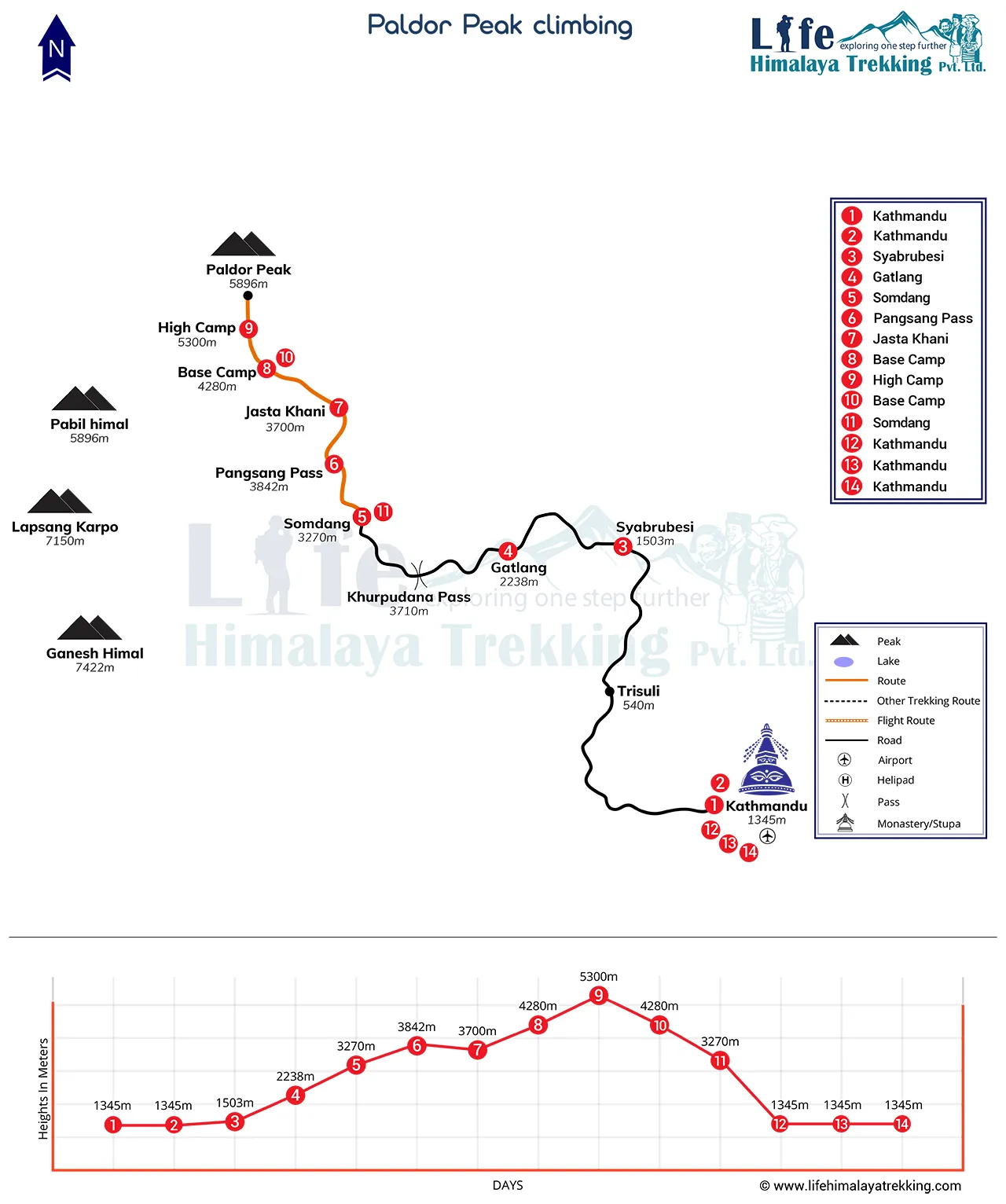
Overview of Paldor Peak climbing – 14 days
Paldor Peak climbing is a 14-day Himalayan adventure trip, which is an ideal combination of remote trekking, mountain culture, and a gratifying summit adventure.
Raising in altitude of 5,896 meters in the beautiful Ganesh Himal range northwest of Kathmandu, Paldor Peak is also one of the lesser-known trekking peaks in Nepal.
Paldor Peak climbing is the ideal choice of trekker who is in need of some space and uniqueness. This is a trip into the more peaceful side of the Himalayas with untouched scenery and an unaltered village lifestyle dominating the path, and Life Himalaya Trekking brings it to you in the best form possible.
The Paldor Peak climbing adventure starts in Kathmandu, where you receive a detailed trip briefing and equipment preparation. After this, you get to the Langtang region in a jeep, slowly forgetting the city life.
The journey goes through Langtang National Park, where one will be walking in the midst of thick rhododendron and pine trees, along scenic ridges, and rugged mountain trails.
On the route, there are cosy Tamang villages like Gatlang and Somdang, which offer a friendly welcome and a wonderful experience of the local lifestyle.
The fluttering prayer flags blow in the wind over houses of stone, monasteries are full of chanting, and terraced fields speak centuries-old farming customs, and the cultural experience is as fulfilling as the trek.
As Paldor Peak climbing progresses, the itinerary enables it to be properly acclimatised and then proceed to advanced and more isolated terrain. The trip then changes to complete camping above Somdang and makes the story a pure exploration of the Himalayas.
With professional Sherpa guides, you slowly ascend to base camp, high camp, and the spectacular alpine landscape encircles you all around.
The summit walk is strenuous but not technical, as it entails snow and ice trekking on fixed ropes where support is required. First-time climbers can also comfortably complete the Paldor Peak climbing with expert guidance and training along the way.
The final Paldor Peak climbing experience is to reach the summit. At the summit, you are treated to spectacular 360-degree panoramas of the Himalayas.
The panorama also comprises the mighty Ganesh Himal, Langtang Lirung, Manaslu, Shishapangma, and, on clear skies, even the distant Annapurna peaks. The experience of watching the sunrise above these giants in high camp is a lifetime memory.
On the whole, Paldor Peak climbing can be offered to fit and daring trekkers who would like to enter the world of mountaineering, experience the culture, and have the opportunity to walk the trail without crowds.
Properly designed acclimatisation, a mix of teahouse trekking and camping, and services of a professional crew guarantee a safe and satisfying expedition.
One of the most memorable trips ever, take part in the rugged beauty, adventure, and victory of Paldor Peak climbing in the magnificent Himalayas of Nepal.
Highlights of Paldor Peak climbing – 14 days
- Trekking to Paldor Peak (5,896m) to have amazing 360-degree Himalayan views.
- Authentic culture in Tamang villages (Gatlang, Somdang) out of the tourist trail.
- Scenic drive in the foothills of the Himalaya and walking in the Langtang National Park.A combination of a teahouse hotel and a tent camping trip.
- Experienced Sherpa guides, high safety standards, and full assistance.
- A less popular Paldor peak climbing route that is not so crowded and is full of wilderness.
Paldor Peak climbing – 14 days Itinerary
01
Arrival in Kathmandu (1,350m)
Nepal is the beginning of your Paldor Peak Climbing trip. Once at Tribhuvan International Airport, we will receive you and drive you to your 3-star comfortable accommodation in Thamel. Once you are checked in, unwind and rest after a trip.
You will have a traditional Nepali welcome dinner in the evening and a comprehensive introduction to the expedition, where you will meet with your guide and also make final preparations for the Paldor Peak Climbing.
Maximum Altitude
1350 m
Accomodations
Hotel
02
Kathmandu Free Day - Preparation of the trip (1,350m)
The day will be spent resting and preparing for Paldor Peak Climbing. You can visit the UNESCO sites of Kathmandu after breakfast, or you can go shopping in Thamel to get any last-minute equipment in case of Paldor lder Peak Climbing.
As you explore the city, our team has all the trekking and permits for Paldor Peak Climbing. We will have a briefing and a thorough gear check to make sure that you are fully prepared to go on the Paldor Peak Climbing.
Maximum Altitude
1350 m
Meals
Breakfast
Accomodations
Hotel
03
Drive from Kathmandu to Syabrubesi (1,503m) by Private 4x4 Jeep
Paldor Peak Climbing trip starts with a beautiful ride from Kathmandu to Syabrubesi in a 4×4 vehicle. The Pasang Lhamu Highway will give you the opportunity to see terraced fields, villages, and the Himalayan mountains in the far distance.
We will have a lunch halt on the way and then proceed through the twisting mountain trails to Syabrubesi, the entrance of the Langtang region, where your Paldor Peak Climbing expedition will actually begin.
Maximum Altitude
1503 m
Meals
B L D
Accomodations
Teahouse
Transportation
6-7hrs flight
04
Trek from Syabrubesi to Gatlang Village (2,238m)
Paldor Peak Climbing starts with the initial trekking day of the trip, which involves a gradual climb in the area starting at Syabrubesi, moving to the Langtang Khola, and ascending the terraced hills and forests.
On the route, there will be panoramic vistas of the Ganesh Himal and Langtang ranges. The walk goes on a scenic ridge towards Gatlang, an ancient Tamang village that has stone houses and farmlands.
Gatlang village during the Paldor Peak Climbing is a great experience in terms of cultural immersion, local hospitality, and an overnight stay in a local lodge.
Maximum Altitude
2238 m
Meals
B L D
Trek Duration
6-7hrs trek
Accomodations
Teahouse
05
Trek from Gatlang to Somdang (3,270m) via Yuri Kharka.
It is the most tedious and long day of Paldor Peak Climbing. Early departure from Gatlang, the path passes through pine and rhododendron forests to Yuri Kharka, a quiet high pasture where we have lunch.
The Paldor Peak Climbing route then passes next to Khurpudanda Pass (3,750m), which provides a amzing view of Paldor Peak, Langtang, and Ganesh Himal.
A steep way takes one to Somdang Valley, where you spend the night in a local lodge after a satisfying day.
Maximum Altitude
3750 m
Meals
B L D
Trek Duration
6-8hrs
Accomodations
Teahouse
06
Acclimatisation Day at Somdang - Hike to Pangsang Pass (3,842m).
This acclimatisation day will play an important role in the successful and safe Paldor Peak Climbing adventure. A brief uphill climb to Pangsang Pass assists your body to acclimatize to the high altitude, combined with expansive scenes of the Himalayas.
Clear days have the spectacular views of Ganesh Himal and prayer flags at the pass. Back to Somdang, the afternoon is given to rest and preparation.
This acclimatisation will restore, reinforce, and enhance your preparedness and belief in the upcoming Paldor Peak Climbing expedition.
Maximum Altitude
3842 m
Meals
B L D
Accomodations
Teahouse
07
Trek from Somdang to Jasta Khani (3,700m) - Start Camping.
It is a new stage of Paldor Peak climbing as we leave Somdang and move into high-altitude, secluded land. The path ascends gradually up through juniper woods and alpine meadows to Jasta Khani.
On arriving at this old mining field, we pitched our initial campsite, there being no lodging after this point.
This is the stage of Paldor Peak Climbing that is camping under the open sky, which is in the wilderness, the silence of the mountains, and the extraordinary night that is filled with the Himalayan landscapes.
Maximum Altitude
3700
Meals
B L D
Trek Duration
5-6hrs trek
Accomodations
Teahouse
08
Trek from Jasta Khani to Paldor Peak Base Camp (4,280m)
Today is a significant milestone in Paldor Peak Climbing because we head to Base Camp. The route is through rocky moraines and high alpine country, with a gradual increase in altitude. Slowly, you will get close-ups of Paldor Peak as it rises in front of you.
On arrival at the Base Camp, tents are pitched, and the afternoon is free to rest and acclimatise. Gear inspection and last-minute arrangements are made, and Paldor Peak Climbing can move on towards the summit safely and without any doubts.
Maximum Altitude
4280 m
Meals
B L D
Trek Duration
5hrs trek
Accomodations
Teahouse
09
Trek from Base Camp to High Camp (5,300m)
Our current location is Base Camp. This is a critical phase of Paldor Peak Climbing as we go to High Camp. The distance is not long, but the altitude and glacial environment make the climb strenuous.
With the assistance of crampons and ice axes, where necessary. We walk slowly on the snow and slopes of scree.
As we arrive at the High Camp, a last equipment check and a briefing are done. It is the last camp before the Paldor Peak Climbing summit attempt, where it is prepared at high altitude.
Maximum Altitude
5300 m
Meals
B L D
Trek Duration
5-7hrs trek
Accomodations
Teahouse
10
High Camp to Summit Paldor Peak (5,896m) and Back to Base Camp.
Paldor Peak Climbing is dominated by summit day. We begin the day before the sun comes out with climbing roped up over the glacier and steep snow slopes with fixed ropes.
Walking for hours through a constant uphill climb, we break the top of the Paldor Peak on the verge of dawn, which is splendidly crowned with panoramic views of the Himalaya.
Once we had finished this significant triumph of the Paldor Peak Climbing, we gradually descended to High Camp, retrieved gear, and made our way back to Base Camp, finishing a very long but memorable day.
Maximum Altitude
5896 m
Meals
B L D
Accomodations
Teahouse
11
Trek back from Base Camp to Somdang (3,270m)
Having managed to pass all activities of Paldor Peak Climbing, we start descending from the Base Camp back to Somdang. The trail goes down through Jasta Khani and woody trails, with the oxygen gradually increasing and familiar faces.
The descent is not so difficult to breathe, but it should be done with a solid footing. In the afternoon, we arrive at Somdang, where we go back to lodge accommodation.
This Paldor Peak Climbing day will be a time to rest, spend time in the hospitality of the locals, and reflect on the success of climbing Polder Peak.
Maximum Altitude
3270 m
Meals
B L D
Accomodations
Teahouse
12
Drive from Somdang to Kathmandu (1,350m)
We start the long overland trip back to Kathmandu after breakfast, which is the formal ending of the Paldor Peak Climbing adventure.
With a private 4x 4 jeep, the road goes through the picturesque Pangsang Pass, then to the remote villages of the Ruby Valley. Bask in the last mountain scenery as rocky roads steadily yield to highways.
Towards the end of the afternoon or evening, we reach Kathmandu and check into the hotel. Having accomplished Paldor Peak Climbing, it is time to relax, rest, and celebrate in the city.
Maximum Altitude
1350 m
Meals
B L D
Accomodations
Hotel
13
Free Day in Kathmandu (1,350m)
This is a free day in Kathmandu after the Paldor Peak Climbing expedition. You can spend it walking through Kathmandu’s heritage sites, shopping around, or even just sitting in cafes around Kathmandu.
It is an ideal opportunity to look back on the success that Paldor Peak Climbing has had. A special farewell dinner with traditional Nepali food and cultural shows in the evening is a celebration of the successful completion of your memorable mountain experience.
Maximum Altitude
1350 m
Meals
Breakfast
Accomodations
Hotel
14
International departure
The Paldor Peak Climbing trip you will never forget ends today. Have a hearty breakfast, do some last-minute packing, or take walks in Kathmandu, depending on the time of flight.
Our representative will take you to Tribhuvan International Airport to proceed with your journey.
Take the Himalayas home, and the memories of your lifetime, and the pride that Paldor Peak Climbing is completed, and take the Himalayan spirit with you. Namaste and safe travels!
Meals
Breakfast
Equipment Checklist 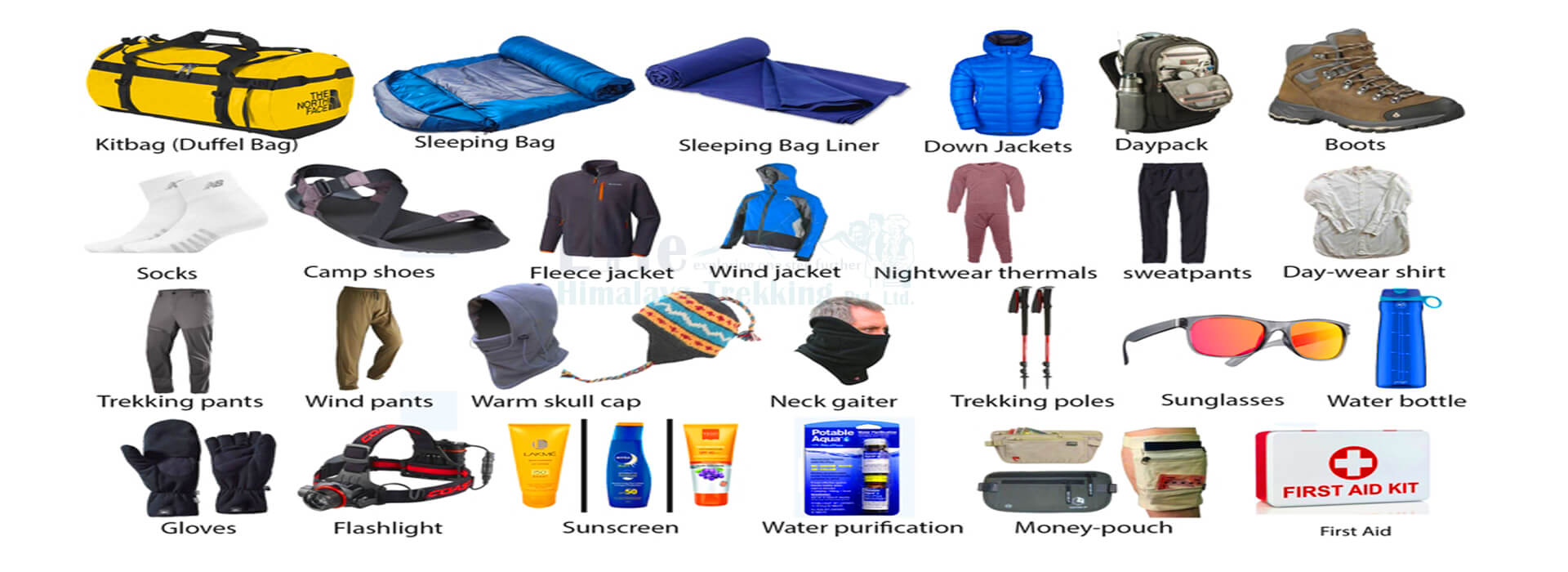
Required Equipments for Trekking in Nepal
- Breathable Underwear
- Sports Bra
- Base Layers
- Trekking Shirts
- Trekking Trousers and Shorts
- Fleece Jacket
- Down jacket (insulated jacket)
- Windcheater (water proof)
- Sun protection Hat
- Headband or Beanie
- Scarf or neckband
- Gloves (inner and outer )
- Hiking Boots
- Trekking Shoes
- Hiking Socks
- Thermal Socks
- Gaiters
- Duffel Bag
- Day pack
- Sleeping Bag
- Trekking poles
- Sunglasses
- Hydration bladder or Water bottle
- Head Lamps
- Batteries
- Personal towel
- Swiss army knife
- Sun lotion
- Medical & first-aid kit
- Woolen socks
- Waterproof jacket
- Lip Guard
- Insulated pants
- Baby wipers
Required Equipments for Climbing in Nepal
- Water bottle
- Batteries and bulbs
- Flashlight
- Personal towel
- Swiss army knife
- Rucksack
- Sun lotion
- Medical & first-aid kit
- Sewing kit
- Polypropylene/wool socks
- Other required equipment
- Sleeping bag
- Down Jacket
- Waterproof jacket
- Trekking shoes/boots
- Camp shoes
- Jumperorpile jacket
- Hiking pants
- Hiking shirts
- Full–sleeves shirt
- T-shirts
- Sun hat
- Gloves
- Woolen hat
- Long underwear
- Goggles or sun glasses
- Gaiters
- Sun block for lips
- Light cotton socks
- Mountain trekking boots
- Woolen socks to wear with boots
- Nylon wind breaker
- Insulated pants
- Nylon wind pants
- Long sleeved cotton/woolen shirts
- Sun hat
- Long cotton hiking shorts
- Fleece/wool for climbing
- Lightweight fleece
- Sleeping pad (karri mat) or thermarest
- Down high altitude sleeping bag
- Down jacket/trousers/vest
- Light cotton athletic socks and wool socks
- Water proof climbing jacket
- Head torch/batteries/bulbs
- Climbing sunglasses
- Lightweight thermal/insulated ski gloves
- Sun screen
- Warm climbing trousers
- Wool long underwear
- Other required equipment
- Climbing boots
- Gaiters
- Ice axe
- Harness
- Crampons
- Karabiners
- Tapes/slings
- Snow bars
- Ice screws
- Rock pegs
- Deadmen
- Crash hat
- Day bag
- Rucksack
- Lip salve
- T-shirts
- Ascenders
- Ascenders
- Kit bag
Cost Includes
- Three-day stay in a 3-star hotel in Kathmandu with breakfast.
- Teahouse during the trek and tented camping at Jasta Khani, Base Camp, and High Camp.
- All foods during the trek and climb (lunch, breakfast, and dinner).
- Breakfasts in Hotels in Kathmandu, as well as welcome and farewell cultural dinners. Kathmandu airport transfers (private).
- Kathmandu to Syabrubesi and Somdang to Kathmandu transfers in a private 4×4 jeep
- Well-trained trekking guide and qualified Sherpa climbing guides and porters.
- Langtang National Park permit, TIMS card, and Polder peak climbing permit are also included.
- All government taxation and park charges paid.
- Basic camping equipment, expedition tents, dining and kitchen tents, toilet tent, etc.First aid kit, essential group climbing equipment, and emergency oxygen.
- Professional cook and support staff during camping days.
- Complimentary duffel bag, certificate of achievement, and trekking map.
Cost Excludes
- Airfare and Nepal visa costs overseas.
- High altitude trekking/climbing and emergency evacuation mandatory travel and rescue insurance.Lunch and dinner in Kathmandu, other than hotel breakfast and the welcome and farewell dinner.
- Drinks and snacks such as soft drinks, bottled water, alcohol, desserts, and additional tea or coffee during the trekking days.
- Personal costs like laundry, phone calls, internet, charging of devices, and hot showers were charged.
- Tips for Guides and Porters
- Individual trekking and climbing equipment, clothing, hiking boots, and personal equipment.
- Additional expenses as a result of unpredictable circumstances like weather, landslides, roadblocks, or natural calamities.
- Additional Kathmandu nights are not included in the trip.
- All the other costs not mentioned in the section are included.
Paldor Peak climbing – 14 days Trip Information
Trek Difficulty
Paldor Peak Climbing has been characterised as a moderately difficult trekking peak adventure, which is a combination of long trekking days and high climbing altitude.
Paldor Peak Climbing requires that the participants be accustomed to walking 5-7 hours per day, with one day incurring a 9-10 hour walk on steep and strenuous mountain paths.
The elevation increase is high, as the starting point is approximately 1,500m above sea level, to the peak of 5,896m, so the process of acclimatisation becomes a major aspect of Paldor Peak Climbing.
Even though the summit push is not technical in nature and does not command a good level of mountaineering expertise, Paldor Peak Climbing involves a part of travelling along glaciers and a slender snow slope using fixed ropes.
This combination of nature, topography, and stamina renders Paldor Peak Climbing a physically and mentally challenging experience.
Paldor Peak Climbing is highly attainable with good fitness, preparation, and with the encouragement of experienced leaders, even for well-prepared first-time climbers.
Best Time
Ideal seasons for Paldor Peak Climbing are spring (March-May) and autumn (September-November) when the weather in the Himalayas is the most stable.
The clear skies, dependable conditions, and excellent mountain scenery are enjoyed during these periods during the Paldor Peak Climbing.
Spring is also characterised by flowers blooming, rhododendrons, and it is also the time of more daylight, and autumn is characterised by cool air and clear view after the monsoon.
The daytime temperature in Paldor Peak Climbing is between 10 and 20 °C at the lower altitudes, but it is cold at the higher camps at night.
The temperatures in Base Camp are frequently lower than -15 °C, and in the morning at the summit when ascending Paldor Peak, they may be as low as -10 °C to -15 °C.
Even the weather may rapidly alter, and so appropriate equipment is crucial. Paldor Peak Climbing is usually not done in the monsoon and winter seasons because of heavy rain, snow, and extreme cold.
Food & Drink
Every meal is included in the Paldor Peak Climbing package so that you are always well nourished and strong during the trip. Kathmandu includes breakfast at the hotel every day and welcome and farewell dinners.
On the trekking and camping part during the Paldor Peak Climbing, food will be served in the local teahouses or our cook will cook at the camp.
Food in the typical dishes consists of hearty Nepali dal bhat, rice, lentils, vegetable curries, noodles, soups, porridge, and foods high in energy with simplicity that are the perfect match to the altitude.
Paldor Peak Climbing can easily adapt to vegetarianism and other dietary needs when informed in advance.
Boiled or filtered water is used to serve safe drinking water, and hot beverages are served in meal stops.
During the Paldor Peak Climbing, we do not use untreated water, and you can carry some of your own snacks as an additional energy source.
Altitude Sickness
Paldor Peak Climbing is a high-altitude expedition, and therefore altitude sickness is a significant factor to consider, provided it is at altitudes of nearly 5,900m. The itinerary is properly planned with the slow progression and acclimatisation days to enable your body to adapt.
The mild symptoms could involve headache, nausea, fatigue, or poor sleep. When climbing Paldor Peak, you will be advised to move slowly, drink lots of water, and not to hurry to get to the higher levels.
We also have highly trained and experienced guides who are very attentive to everyone and are strategically trained to act swiftly. Immediate rest or descent is the main treatment if the symptoms appear.
In case of an emergency at Paldor Peak Climbing, we take a first-aid kit and supplemental oxygen, and can have an evacuation depending on the need. The Paldor Peak Climbing is safe and manageable with the right awareness and preparation.
Preparation and Fitness
A successful Paldor Peak Climbing adventure requires proper preparation. The climbers and trekkers must develop healthy physical fitness by engaging in regular cardio routines before beginning the actual climbing of the Paldor Peak.
Some of the exercises that the climbers or trekkers need to do to develop good physical fitness include jogging, cycling, swimming, or climbing stairs.
The fact that Paldor Peak Climbing is a series of days of walking on steep and rugged terrain is a strong indication that strong leg muscles, stamina, and healthy lungs are essential. Walking around with a heavy backpack will also condition your body to take on long walks.
To complete Paldor Peak Climbing, it is not necessary to have any advanced technical training, but it is reasonable to be more confident with walking on the snow or ice.
Mental preparation is also needed. Be ready to work early in the morning and to face the uncertain weather demands. Paldor Peak Climbing is a demanding and yet very rewarding Himalayan adventure with adequate physical training and mental attitude.
Visa and Permits
The majority of travellers get the Nepal Tourist Visa on Arrival easily at the Tribhuvan International Airport in Kathmandu. It is not complicated: fill out the application form, pay the visa fee (USD 50, 30 days), and have your visa stamped.
You are required to have a passport which is valid for at least six months, and it is advisable to carry passport-sized photographs and cash money.
Our team takes care of all the trekking and climbing permits that a Paldor Peak Climbing would need. This comprises the Langtang National Park Entry Permit, TIMS Card, and the prescribed Paldor Peak Climbing permit by the Nepal Mountaineering Association. The package includes permit fees.
All you need to do is enter passport information and photographs, and our guide will do all inspections on the trail, and you can proceed with Paldor Peak Climbing without any worry.
Health & Safety
The state of your safety is of primary importance during Paldor Peak Climbing. Our seasoned guides are first aid and altitude sickness trained and will come armed with a fully stocked medical kit in case of such common complications like headaches, blisters, or small injuries.
We also practice good hygiene habits, such as regular hand sanitiser use, consumption of boiled or filtered water only, and consumption of freshly cooked food during Paldor Peak Climbing. There are proper acclimatisation schedules and well-marked trails used to minimise the risks associated with altitude.
The area is quite secure, and animal attacks are insignificant, but it is necessary to remain in the group and obey the instructions of the guide, particularly on insufficient or exposed paths.
Helicopter rescue can also be used in the event of emergency evacuation in case of a serious illness or injury.
Paldor Peak Climbing is a safe and well-organised Himalayan adventure with professional assistance and reasonable precautions.
Transportation
Everything is well organised in terms of transport used in Paldor Peak Climbing to make the journey a smooth and secure one.
You will require the transfers in Kathmandu by private vehicles to and from the airport, including the arrival and departure.
In the case of the mountain approach, it is done by a privately hired 4×4 jeep that takes you from Kathmandu to Syabrubesi and then back to Kathmandu, which is comfortable and quite flexible on the rugged Himalayan routes.
Paldor Peak Climbing does not need any domestic flights, and there is no need to spend time waiting due to weather conditions, as in mountain air travel. The Polder Peak Climbing will proceed on foot, with heavy equipment being transported by porters.
When the trek is over, our heavy jeep and qualified driver will provide a safe passage back so that there will be no hassle in terms of transportation during Paldor Peak Climbing.
Travel Insurance
Paldor Peak Climbing has mandatory comprehensive travel insurance. The insurance should cover trekking and climbing up to 6,000 meters, emergency medical services, and helicopter evacuation.
High altitude evacuation can be very costly during Paldor Peak Climbing, and that is why it is necessary to be covered. Ensure that you verify with your insurance company about covering trekking, peak climbing, or mountaineering activities.
In addition, the insurance of trip cancellation, interruption, and lost baggage is also advised to provide extra security. Your insurance information will be sought before the trek.
Keep a copy of your policy on Paldor Peak Climbing and leave one back home and hotel. With appropriate insurance, one is sure of peace during the whole adventure.
Alternative Routes
Even though the Paldor Peak Climbing is a well-designed standard route, there are other alternatives that one can take in case they have more time or other objectives.
An alternative would be to have Paldor Peak Climbing continue to the isolated Ruby Valley, which will have additional days of cultural village trekking before going back to Kathmandu.
Paldor Peak Climbing can also be used in conjunction with other nearby climbing peaks, such as Yala Peak in the Langtang region, and others. As an upgrade to Paldor Peak Climbing, for future challenges, the Everest region has very popular peaks like Island Peak or Lobuche East.
Trekkers who are not interested in the peak climb can opt to take other trails, such as the Tamang Heritage Trail or the Langtang Valley Trek. Although the primary path is set to be optimised towards Paldor Peak Climbing, we could easily adjust the routes to suit your interests and time.
Your Extra Expenses
Although the Paldor Peak Climbing package includes most of the necessities, certain individual costs are supposed to be set aside.
There are no international flights to Nepal, a Nepal tourist visa fee, or mandatory travel insurance in Paldor Peak Climbing is included in the package.
Meals that are not mentioned in the itinerary will be at your own cost in Kathmandu. You can buy additional snacks, soft drinks, or individual snacks in teahouses during Paldor Peak Climbing. The guide, Sherpa, and porters are tipped.
Any gear rental or purchase at Kathmandu, souvenirs, optional tours of the city, or personal services like a hot shower and charging devices are other added costs.
Having a little bit of cash is a guarantee that the Paldor Peak Climbing experience will be a smooth and worry-free one.
Language & Communication
The national language of Nepal is Nepali, and in the Paldor Peak Climbing route, the majority of the locals, particularly of the Tamang community, speak Nepali as well as their local dialects.
Paldor Peak Climbing also has an easy and comfortable time in communication since our professional guides are proficient in English, and when help with translation is needed.
You can learn Nepali phrases like Namaste (hello) and Dhanyabad (thank you), which are used to establish warm relations. The Nepalese are hospitable and friendly people by nature, and thus, it is a smile and some gestures that may speak louder than words.
Although when leaving Kathmandu for the Paldor Peak Climbing, phone and internet access are limited, language obstacles are not significant, and you can be able to explore the culture to its full extent during the trip.
Internet, Mobile Network, and Charging Facilities.
In Paldor Peak Climbing, there is minimal access to mobile networks and the internet. In Kathmandu, you will have complete connectivity, but when the trip goes into the mountains, signals are either feeble or unavailable.
Syabrubesi can provide some coverage of mobile or Wi-Fi, but after this, Paldor Peak Climbing is considered remote, where communication is not reliable.
Several villages like Gatlang and Somdang are not connected to the signal, and in the camping sites, Base Camp and High Camp, there is no signal whatsoever. A guide has a phone, and in rare cases a satellite phone, and that is only in case of an emergency.
During Paldor Peak Climbing, charging services can only be done in the lower altitude lodges at a minimal fee. Power is not provided at the camping sites, hence carrying power banks or extra batteries is strongly advised.
Don’ts on This Trip
When climbing Paldor Peak, one should take the local culture and traditions into account. In the villages, dress simply, mostly covering shoulders and knees, take off your shoes before entering a house or monastery, and never take photographs without permission, or of houses and places of worship.
Conserve the natural environment in Paldor Peak Climbing by not littering the place and by disposing of all the waste material, not using single-use plastics where possible.
To avoid accidents, do not go out alone, keep up with your group, or stay somewhere your guide is, because the roadways are often desolate and disorienting.
Never disregard health problems. When you do not feel well, always let your guide know and not to continue when you are not in good health.
Nobody should takealcohol or excessive smoking during Paldor Peak Climbing because it can exacerbate the problems related to the altitude.
Lastly, preserve the wildlife and locals through maintaining low noise levels and doing sightseeing of the animals without coming close to them.
Trip Extension
If you are not done exploring Nepal and its wilderness as soon as you are through Paldor Peak Climbing, it is possible to continue the trip to Nepal in several rewarding ways.
A wildlife safari in the Chitwan National Park is a favourite choice, where you can do jungle activities like using jeeps, going canoeing, and participating in cultural programs whilst watching the rhinos and crocodiles amongst others.
Pokhara is also a good option to relax, as the city is located on the banks of lakes, has the opportunity to do paragliding, and take short scenic hikes, such as the Ghorepani Poon Hill trek or the World Peace Pagoda.
Cultural tourists will have some additional time to tour Kathmandu Valley, and the UNESCO World Heritage sites in Bhaktapur and Patan, or get a glimpse of the sunrise on Nagarkot or Dhulikhel.
With prior planning, it is also possible to extend to Bhutan or Tibet after Nepal. These extensions are the ultimate relaxation, cultural, and adventure activity after Paldor Peak Climbing.
Photography & Drone Rules
Paldor Peak Climbing allows photography, as the scenery and cultural experiences are too spectacular. Taking photos along the trail is welcome, but should be done respectfully, such that you must request permission to take photos of local people, and should always obey signs that say no photography in monasteries or cultural sites.
Mornings and evenings are the most favourable times to take photos of the mountain, and therefore have your camera ready, additional batteries, and memory cards because the cold weather may use up much energy.
The use of drones in Paldor Peak Climbing is highly discouraged. Drone flights in Nepal need permission and fill the wildlife, local community, and the serene mountain setting with noise.
In case you are planning to carry a drone, then you should inform us beforehand and abide by the stringent guidelines. Ground photography is the most optimum and respectable form of photography for most travellers.
Tips for First-Time Visitors
A few preparations will make a lot of difference to you in case Paldor Peak Climbing is your first experience of climbing a high altitude, as well as your initial visit to Nepal.
Travel light, although prudently, placing demands on high-quality footwear, casual clothes, and necessities, and keep additional clothing in Kathmandu. What you need to do is to keep an open mind and accept the relaxed nature of Nepal because you are not in a rush.
In Paldor Peak Climbing, it is advisable to have plenty of water, eat on schedule, and be prepared against the strong sun and fluctuating weather by wearing proper clothes.
Bring ample Nepali cash, leave valuables locked up in the hotel, and count on your trekking group to be of help.
Explore the local culture, get to know some basic greetings, and have some traditional cuisine. Above all, things to remember: go slow, remain positive, and trust the seasoned team that will lead you on your Paldor Peak Climbing adventure.
FAQs For Paldor Peak climbing – 14 days
What is the speciality of Paldor Peak Climbing?
Paldor Peak Climbing is an off-road adventure in the Ganesh Himal region. It has fewer crowds, a rich and rewarding climbing experience not like the busy Everest and Annapurna routes.
Do I require some climbing experience beforehand?
No. Paldor Peak Climbing can be enjoyed by fit trekkers, even by first-time climbers. Prior trekking can be helpful.
How long do we trek each day?
The average daily trekking is 5-7 hours. The summit day is more, about 8-10 hours, and at a slow and careful pace.
What equipment is provided?
We offer camping and climbing gear for groups. You carry your personal things, such as boots, clothing, a sleeping bag, and personal climbing gear, which can also be rented in Kathmandu.
Are porters included?
Yes. Porters will take 15kg of your stuff. You just carry a light day pack.
What are the accommodation facilities?
You will be staying at a good hotel in Kathmandu, teahouse lodges in the trek, and tents in the higher camps above Somdang.
Do you accept special diets?
Yes. Special dietary requirements, as well as vegetarian and vegan options, are subject to notice.
But what should I do in case I am not able to reach the summit?
That’s completely okay. Safety comes first. An escort will help you back safely and leave others to proceed as long as the conditions permit.
What will happen when the weather is unfavourable?
We keep a close watch on the forecasts, and we employ contingency days when necessary. In case of the unsafe, the climb is put on hold or cancelled due to safety.
How cold does it get?
Up to -10degC -15degC on summit day. It is necessary to have appropriate winter clothes.
Can I rent gear in Kathmandu?
Yes. Kathmandu boasts of great rental stores of climbing and trekking equipment at affordable costs.
Is it a trip that should be taken by individual travellers?
Absolutely. Individual trekkers are welcome and tend to participate in small groups of other like-minded adventurers.
How much should I tip the crew?
Tipping is not compulsory but welcome. Most trekkers put in about 10 per cent of the total trip price which is shared among the groups of guides, porters and sherpas.
Does it have a weight restriction on luggage?
Yes. The weight that porters carry is as much as 15 kg per person. Kathmandu provides an opportunity to store extra luggage.
Is it possible to do laundry during the trek?
There are no laundry services. Pack enough and budget to lay up.
What is the group size?
Group sizes are small and normally consist of 2-6 individuals, and it is a personalised setting.
Do I require any special vaccines?
There are no compulsory vaccines, but regular travel vaccines are advised. Bring personal medications.
How early should I book?
It is advisable to book 2-3 months before, particularly during the spring and fall seasons.
Is there an age limit?
Recommended minimum age is 16. No age limit, it is fitness that counts, not age.
Are we going to receive climbing training?
Yes. Even inexperienced climbers will get practical training at base camp leading up to the summit.
Video Reviews





Tripadvisor Reviews
Similar Trips
Join us on similar trips in the same region
View Details
Everest Three Peak Climbing: Mera, Island, Lobuche Peak
View Details
Luxury Mera Peak Climbing with Helicopter Return – 13 days
View Details