
 English
 Dutch
Dutch Japanese
 Hindi
Hindi Italian
 Spanish
 French
 German
 Chinese
 Korean
 Arabic
 Hebrew
 Russian
 Portuguese
 Danish
 Czech
Czech Polish
 Swedish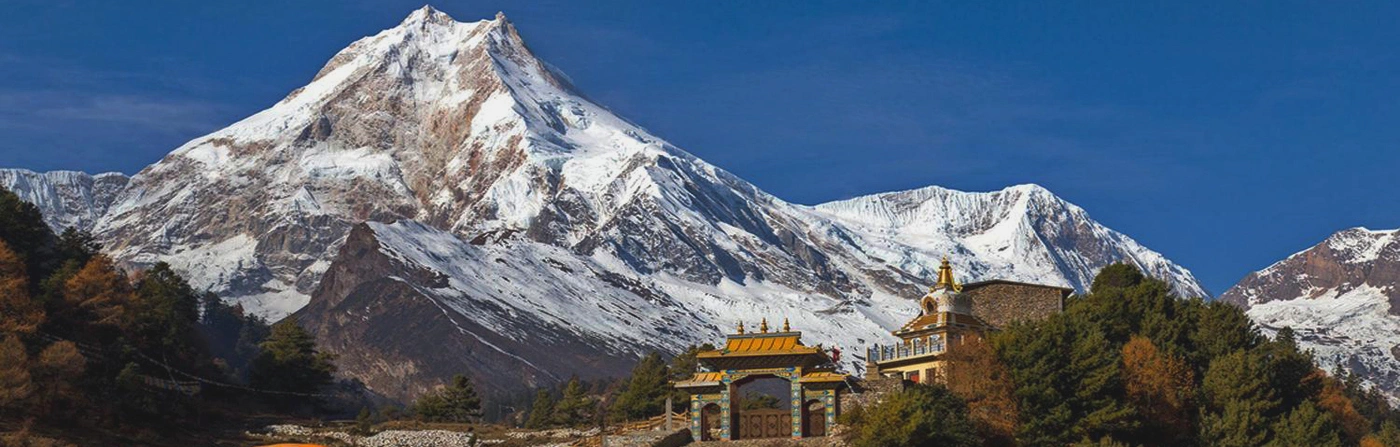
Max. Altitude
8163m
Best Season
Oct-Dec & Mar-May
Activity
Expedition
Start / End Point
Kathmandu/Kathmandu
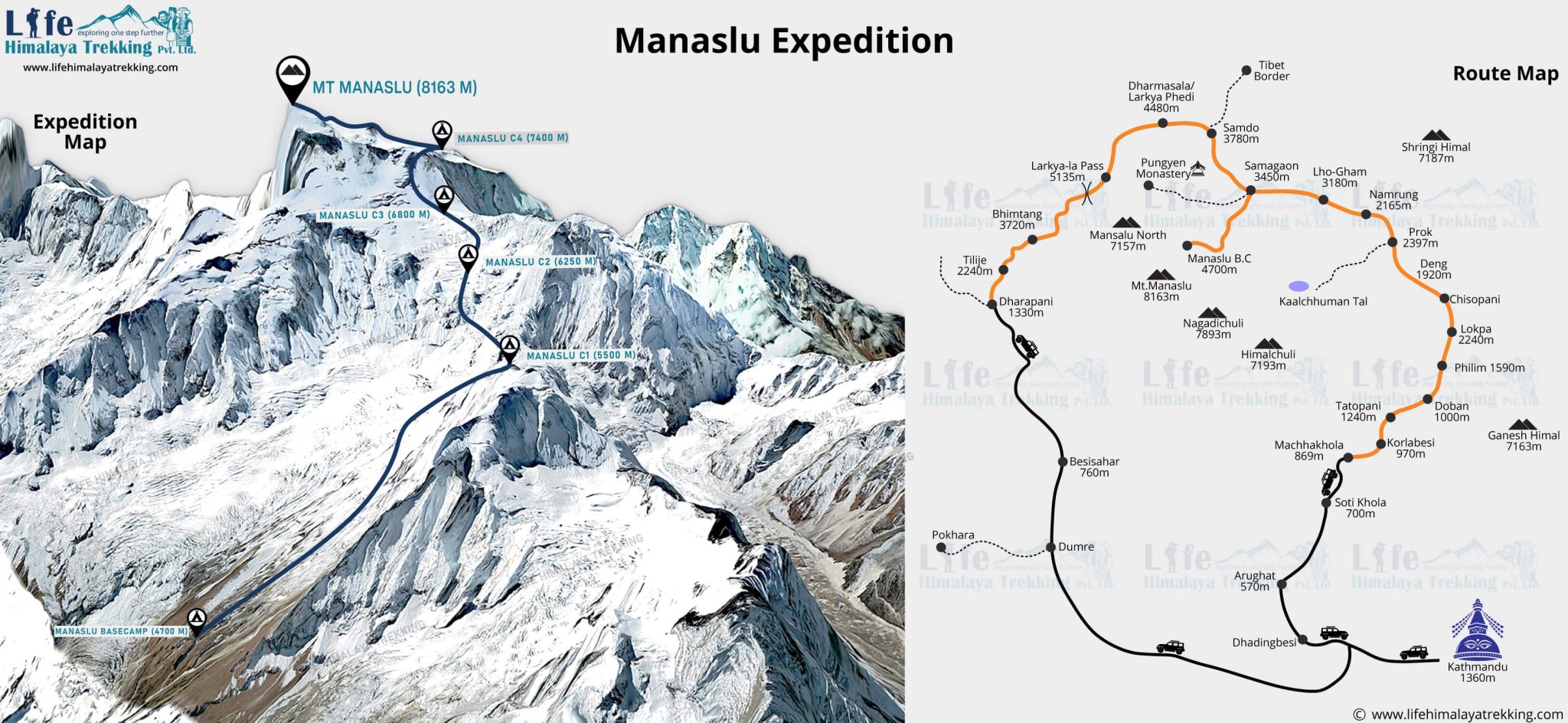
Overview of Manaslu Expedition – 38 days
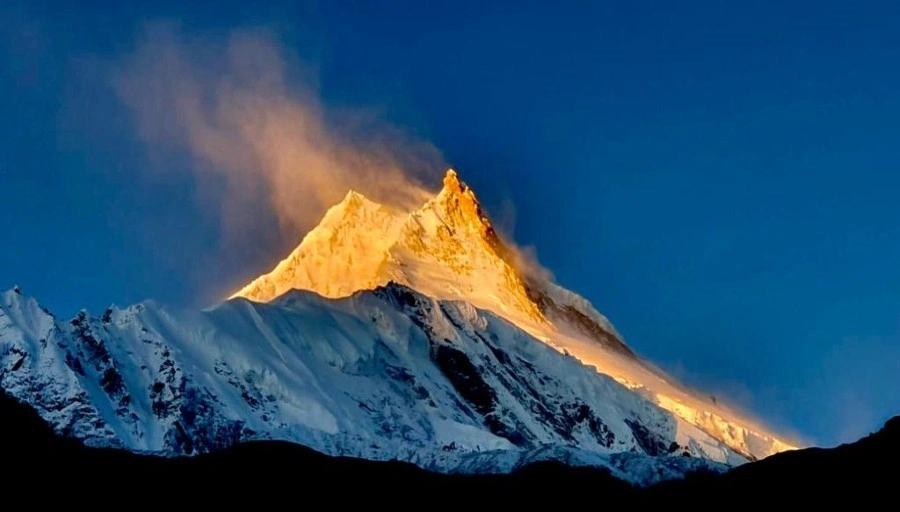
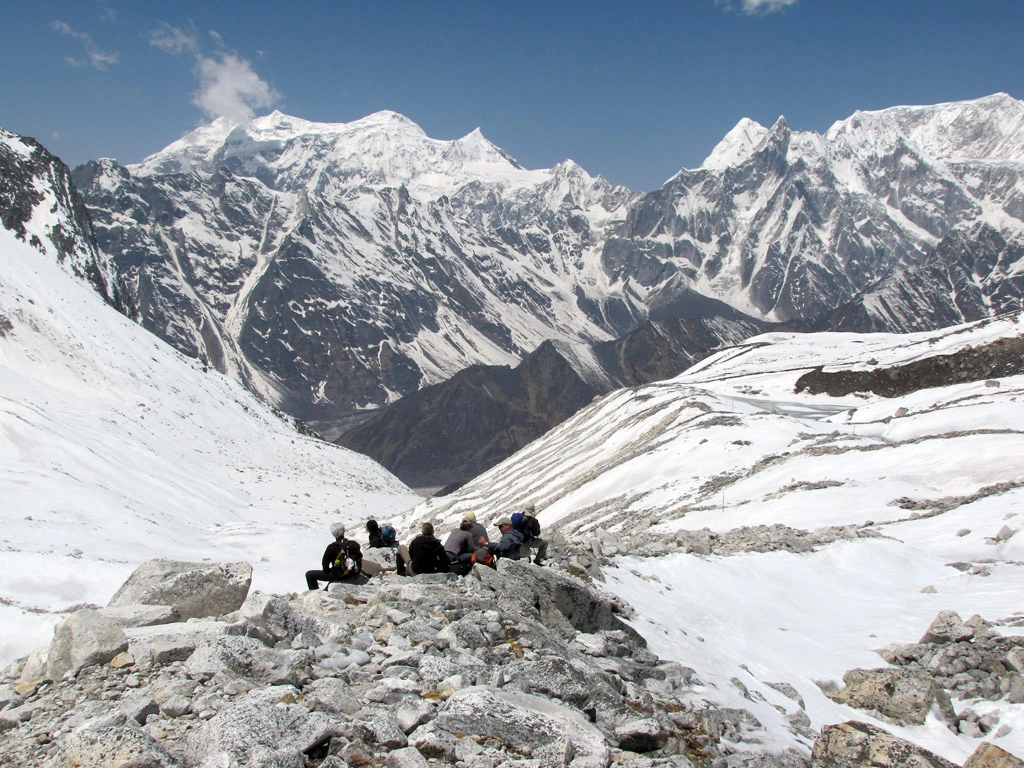
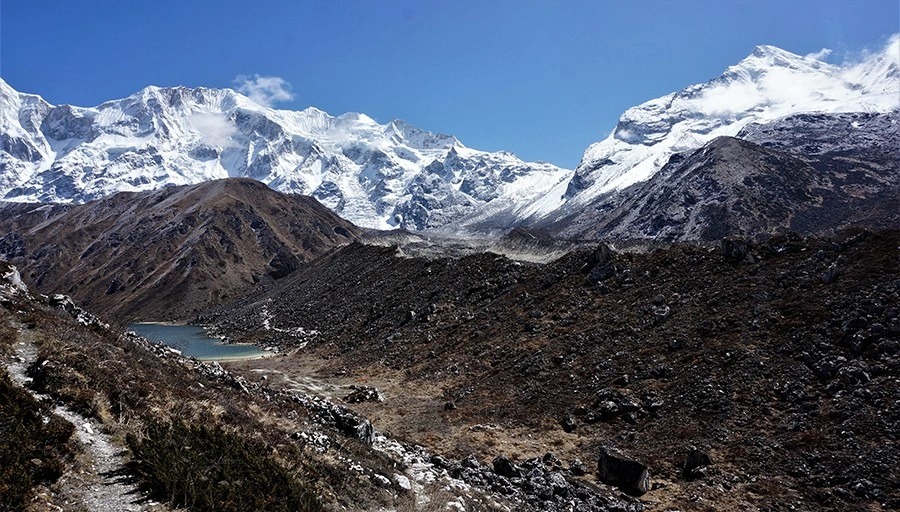
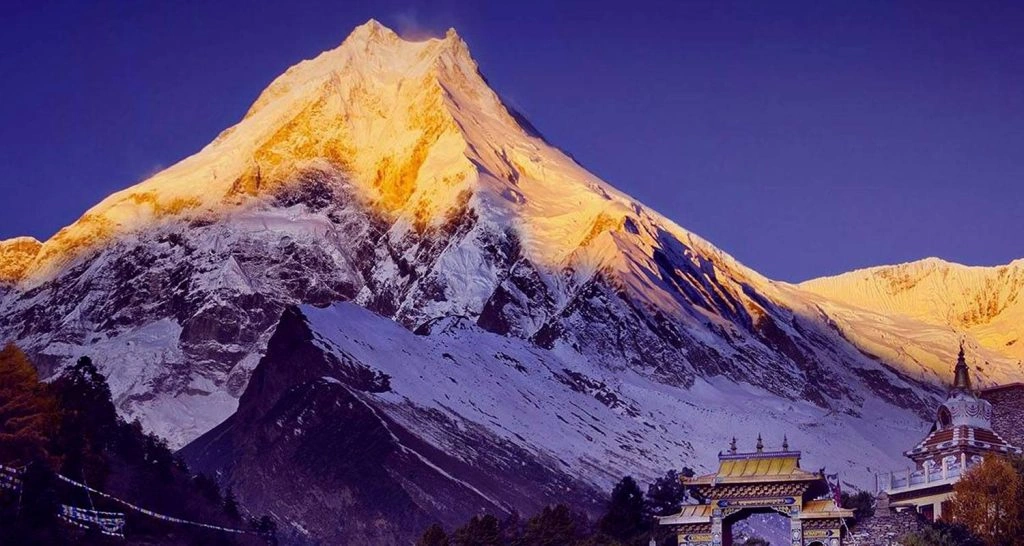
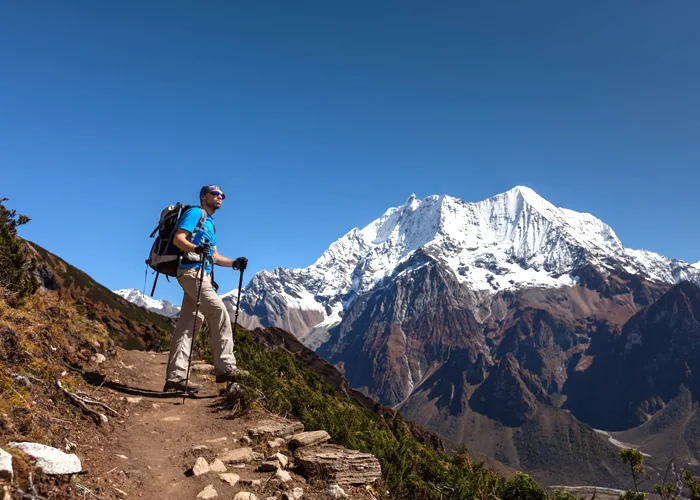
The Manaslu Expedition is a 38 days strenuous adventure trip to the top of Manaslu (8,163m), which is the eighth-highest mountain in the world. In remote Gorkha in Nepal, Mt. Manaslu is a less-travelled alternative to Everest, where climbers have the pure Himalayan experience.
This adventure brings you through foothill sub-tropical land and up into alpine highlands and finally on the frozen slopes of an 8,000-meter mountain.
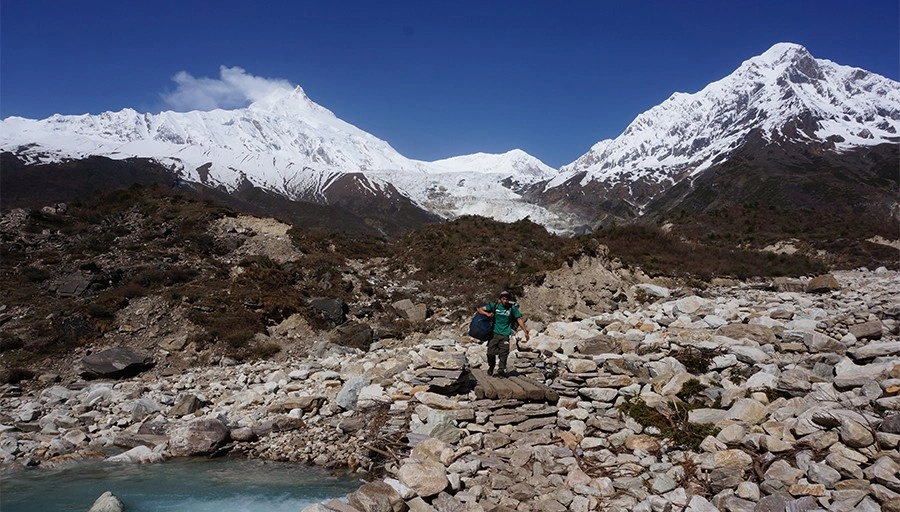
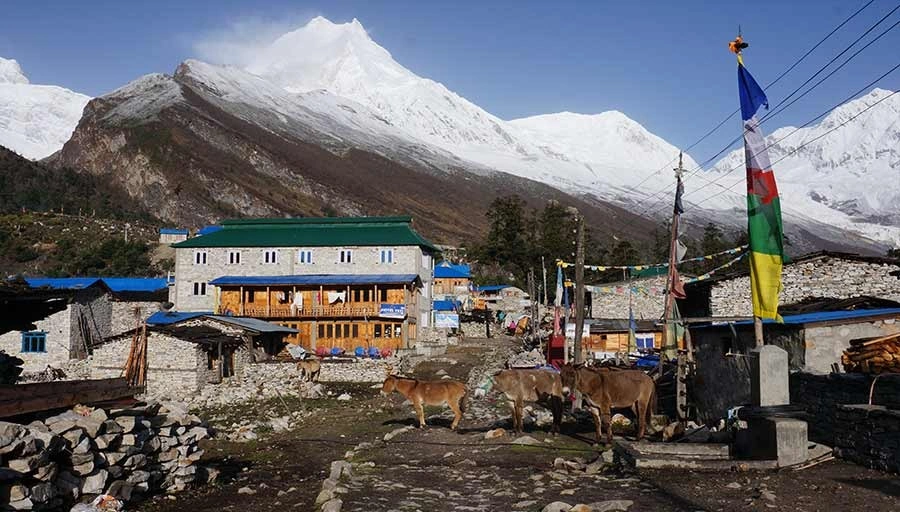
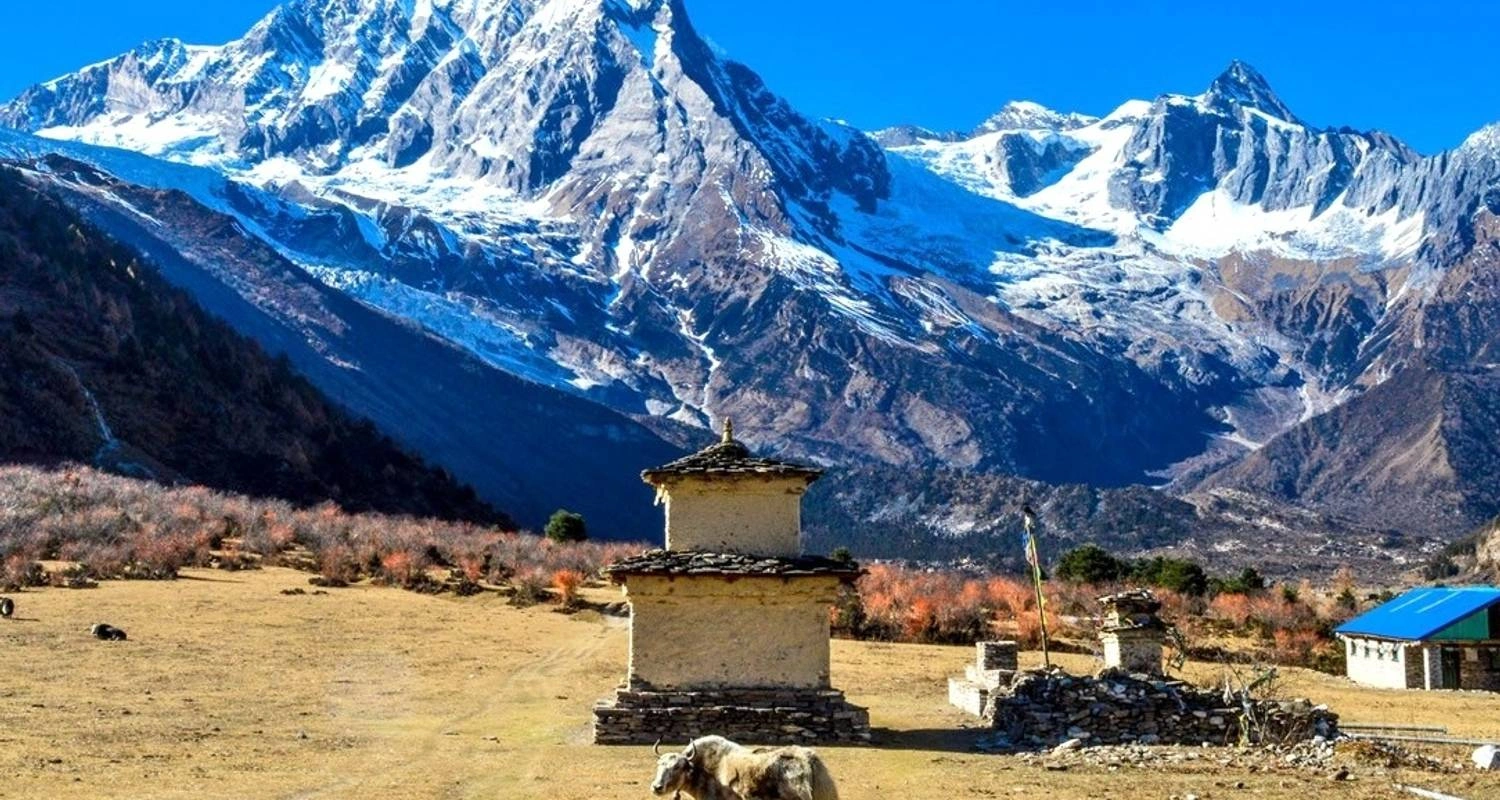
You will also walk across the various landscapes, the dramatic Larkya La Pass (5,160m), and will also experience the rich Tibetan-influenced culture of the mountain villages, such as Samagaon and Samdo, along the way.
Over the years, Manaslu has attracted experienced mountaineers looking for a challenging climb in a quieter Himalayan setting. The trail is also untouched and much less congested than the Everest or Annapurna trail, and you are closer to nature and the local community.
Manaslu was first climbed on 9 May 1956 by a Japanese team. The Manaslu region later opened for organized trekking in the early 1990s, which is why the Manaslu trails still feel quieter than Nepal’s busiest routes.
Manaslu has fewer climbers than Everest, but it is still a serious 8,000-meter expedition that requires strong experience and careful planning. In this one trip, you will have gone through the scorching jungles of the lowlands and terraced lands to the cold glacier of high altitude, all the climates Nepal has to offer.
Manaslu is a highly challenging expedition, even though it is technically a relatively less difficult 8000m high mountain. It needs great fitness, high-altitude experience, and strong willpower.
We have a well-designed Manaslu Expedition itinerary that has been meticulously planned with adequate acclimatization and support, and hence high chances of completing the peak.
You will have some seasoned Sherpa climbers with you and have a supporting staff whose responsibility is to provide logistics, prepare camps, and keep you safe during the climb.
This Manaslu trip is not only a journey to the summit of Mt. Manaslu, but it is also the journey of the amazing voyage in the wilderness of the Himalayas. The landscape is never the same with changes of lush green hills and rhododendron forests, glacial moraines and ice seracs that rise almost as tall as mountains.
You will be in friendly villages, old monasteries, and you will see panoramic scenes of such mountains as Himalchuli, Ganesh Himal, and even the Annapurna range at a distance.
At the end of your journey, you will have tested yourself in a journey to remember and made lifelong memories in the fall of one of the highest mountains in the world.
The Manaslu climbing with Life Himalaya Trekking is an unmatched combination of difficulty, stunning scenery, and cultural enrichment- all under the leadership of highly qualified staff to make your summit ambition come true.
Highlights of Manaslu Expedition
- Climb the 8th-highest mountain in the world, Mt. Manaslu (8,163m).
- Trek through remote Manaslu villages and reach Manaslu Base Camp (4,800m) with wide Himalayan views.
- Experience the Tibetan Buddhist culture of high-mountain villages.
- Get to know less-travelled and remote trails all over the Manaslu Expedition.
- Savour a panorama of mountain ranges such as Himalchuli, Ganesh Himal, and Annapurna.
- Professional Sherpa guides, support at high altitudes, and complete expedition logistics.
- Explore various terrains, including green valleys and glaciers, on the same trail.
- Kathmandu cultural tours: Explore UNESCO World Heritage Sites.
Manaslu Expedition Itinerary
01
Arrival in Kathmandu (1,350m)
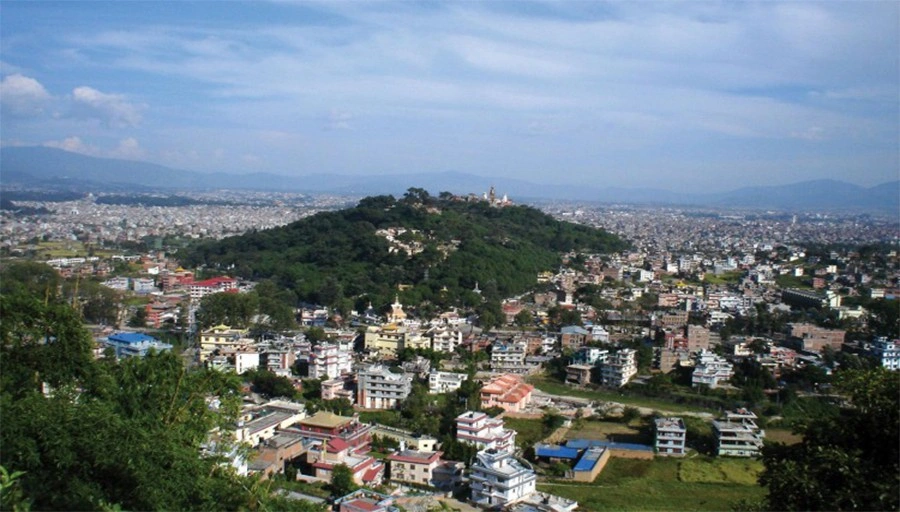
Welcome to Nepal. We will pick you up at Tribhuvan International Airport in Kathmandu and drive you to the hotel. We will assist you with an easy start, and you will do the visa on arrival, and the visa fee will be your own cost.
On clear days, Kathmandu creates a vibrant impression with crowded streets, ancient temples, and the view of the mountains in the distance.
We will make today light so you can take a rest after your flight and have a good rest. In case you arrive earlier and feel in a good mood, we will propose a light walk through Thamel to explore local culture and do some last-minute shopping.
Evening, we will take part in a welcome dinner and make a brief orientation. Then we will get a good night’s sleep, as a busy day lies ahead.
Maximum Altitude
1350 m
Meals
Breakfast
Accomodations
Hotel
Transportation
Airport to hotel transfer
02
Kathmandu Sightseeing, Permit Processing, and Trek Preparation
Following breakfast, we will be working on the required paperwork regarding the Manaslu Expedition itinerary. We will gather your passport information and documents necessary to organize the restricted area permit, conservation permits, and Manaslu climbing permit, where necessary.
The expedition guide and key team members will be presented, and then we will have a clear briefing regarding the trek and climbing plan, rules on safety, and routines each day.
We will also inspect your gear, and we will assist you in hiring or purchasing any missing things in Kathmandu.
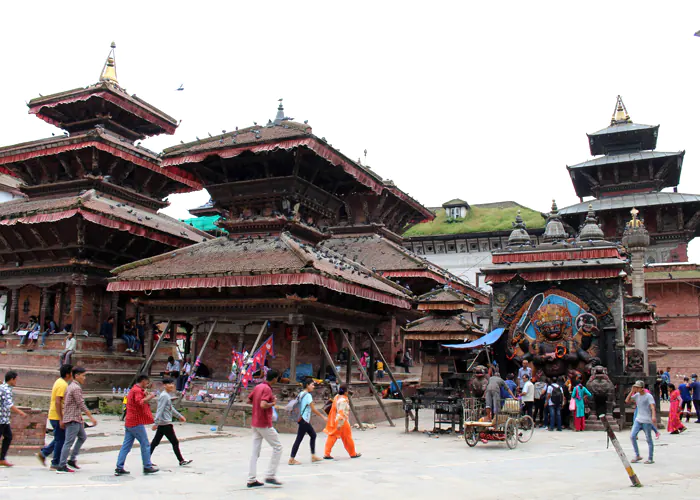
After the major procedures are complete, we will explore some of the major cultural sites in the valley, which may include: Boudhanath, Pashupatinath, or Kathmandu Durbar Square, time permitting. We will go back to the hotel later to rest and do our final packing.
Meals
Breakfast
Accomodations
Hotel
03
Drive from Kathmandu to Dharapani (1,963m) – Begin Trek
We will start with an early breakfast and proceed with the long scenic drive to Dharapani, where we will start our trek.
Our initial vehicle will be a private jeep, and we will take the highway that leaves Kathmandu city, and then we will see rivers, terraces, village life, etc. We will have tea and lunch at appropriate places, and we will make the day comfortable with brief pauses.
As we head to the hills, the road narrows and turns rough, and we will make slow and safe progress. Towards the end of the afternoon, we will arrive at Dharapani, at 1963m, where the air is cooler and fresher than in the city.
We will stay in a local lodge where we will have a hot dinner. This evening assists us in finding our pace in the mountains.
Maximum Altitude
1963 m
Meals
Breakfast, Lunch and Dinner
Accomodations
Hotel
Transportation
8-9 hours drive
04
Trek from Dharapani to Tilje (2,300m)
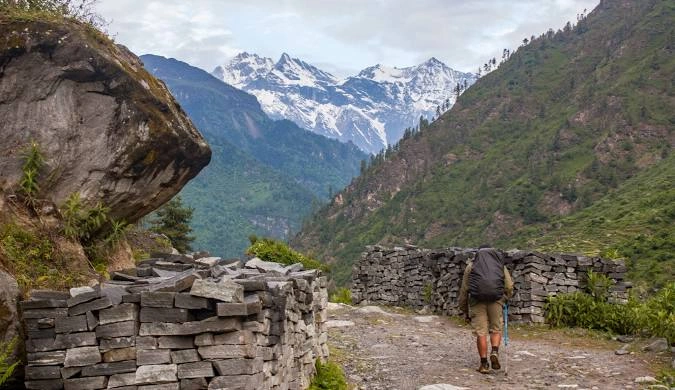
We will start this day by walking on the Manaslu Expedition itinerary route. Breakfast will be, and we will leave Dharapani and proceed by a wood-path, with pine and rhododendron.
We will go over bridges and through little villages, prayer rocks, and quiet spots that evidence Tibetan Buddhism. Our pace will be moderate, and time will be taken to have short breaks and photo shoots.
The trail is slowly ascending, and thus, we will concentrate on healthy breathing and proper hydration. Through the trees, we will have occasional sight of high ridges and snowy mountains in the distant view.
We will reach Tilje at some time of 2300m after approximately five hours. Then we will have cozy rest in a lodge, take a bath, and eat in a warm dining hall. During the evening, we will have a simple, nourishing meal and also prepare for the following day.
Maximum Altitude
2300 m
Meals
Breakfast, Lunch and Dinner
Trek Duration
5 hours Trek
Accomodations
Lodge
05
Trek from Tilje to Bimthang (3,590m)
We shall begin a more serious and extended walk toward Bimthang after taking an early breakfast. We will trace the path along the river and ascend by gradual steps through varied scenery.
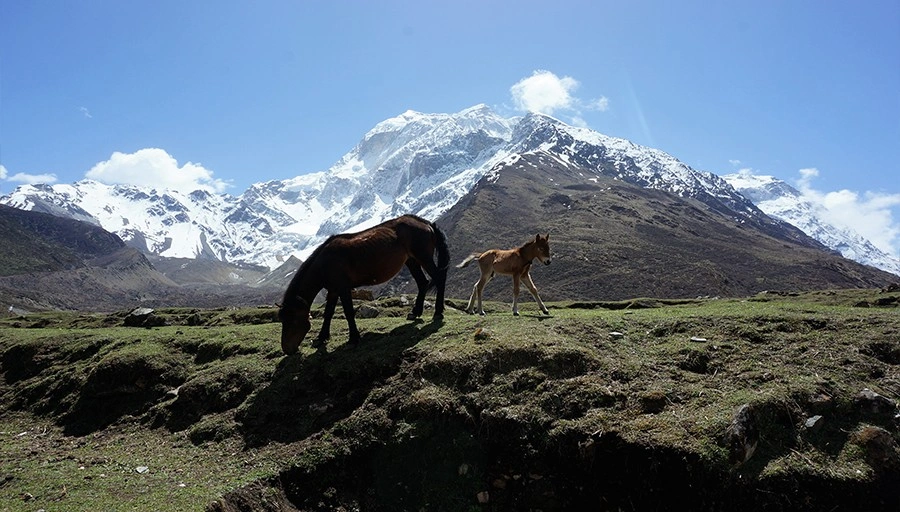
These are green and wooded in the lower levels, and as we ascend, the landscape grows open and alpine. We will cross yak grazing grounds and small seasonal shelters, and we will rest to make the day comfortable.
The last part involves a more gradual ascent to the broad valley of Bimthang at 3590m. It is a location of an open meadow, views of the glacier, and a peaceful mountain environment. During the bright days, we will observe some amazing peaks and hanging ice over the valley.
Upon arrival, we will do a check-in at a teahouse, have hot drinks, and sleep well. An early night and a warm dinner will help us acclimate tomorrow.
Maximum Altitude
3590 m
Meals
Breakfast, Lunch and Dinner
Trek Duration
6-7 hours Trek
Accomodations
Lodge
06
Acclimatization Day at Bimthang (3,590m)
Today, we will remain in Bimthang to familiarize your body with the altitude. We will begin with an easy breakfast and take pleasure in the beautiful valley. We will do an easy acclimatization walk a few hours later, since mild exertion is better in regard to adaptation.
We will walk up to a ridge or a viewing point above Bimthang, where we will observe glacier scenery and a greater landscape of the surrounding mountains.
We will remind you of walking slowly, breathing continuously, and drinking enough water. We will then have lunch and rest at the lodge after the brief ride.
Afternoon will be free to read, stretch, or just enjoy the mountain silence, grazing yaks, and glacier streams. We will inform you on the high pass day, timing, and safety tips in the evening.
Maximum Altitude
3590 m
Meals
Breakfast, Lunch and Dinner
Trek Duration
2-3hrs hike
Accomodations
Lodge
07
Trek from Bimthang to Samdo (3,860m) via Larkya La Pass (5,160m)
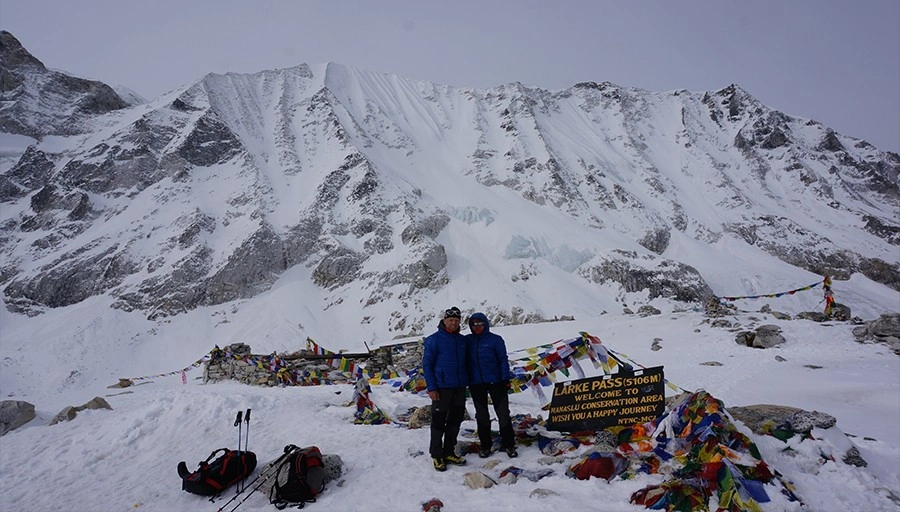
We will begin very early on the largest trekking day of the Manaslu Expedition itinerary. We will walk in chilly winter air over rocky and glacial ground, and we will move slowly but steadily. Higher up, the views are more open and the landscape more rugged and dramatic.
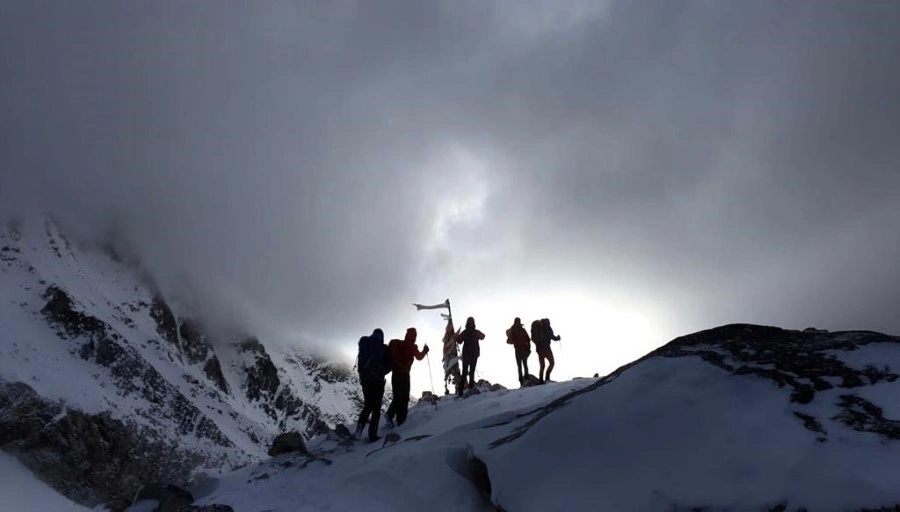
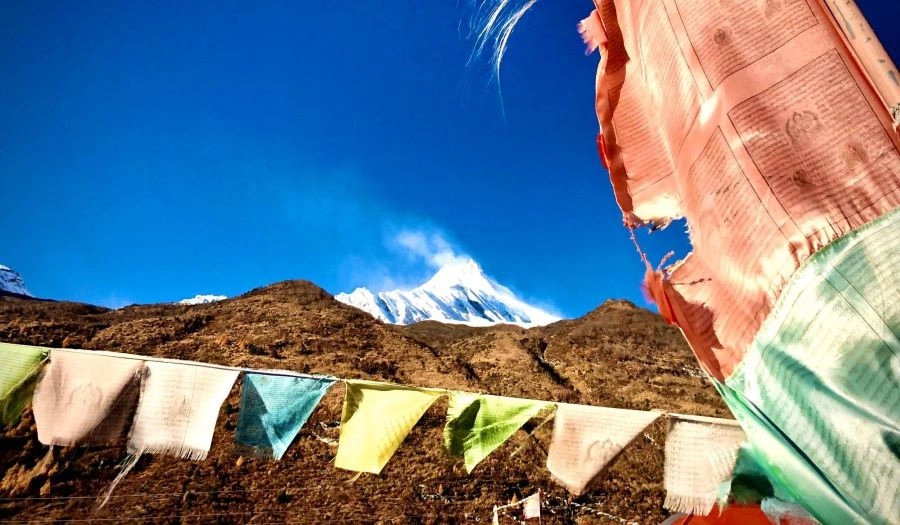
Several hours later, we will come to Larkya La Pass at 5160m, characterized by prayer flags and expansive Himalayan vistas.
We are going to take pictures, have fun, and start a gradual descent. Depending on the downhill trail, it can be very steep and slippery, and therefore we will move slowly and have brief rest.
We will proceed down the valley on the other side and arrive at Samdo late in the afternoon, at an altitude of approximately 3860m. Samdo is a remote village with Tibetan origins and simple teahouses. After this hard work, we will check in, eat a hot meal, and go to sleep early.
Maximum Altitude
5160 m
Meals
Breakfast, Lunch and Dinner
Trek Duration
9-10 hours Trek
Accomodations
Lodge

08
Trek from Samdo to Sama Gaon (3,530m)
We shall start with a shorter and easier walk after breakfast, which will be comfortable after the first day. We will take the valley path and make our way down slowly, accompanied by the sighting of hillsides, dry alpine plants, and mountain ridges. We will pass several little bridges and take a quieter time today.
When we get lower, the breathing is much easier, and the body gets back on its feet. We shall reach Sama Gaon at 3530m in the main village of the Manaslu region in around four hours.
Fields, stone houses, prayer wheels, and a powerful Tibetan cultural sense shall be there. We will have lunch and relax in the afternoon after settling in at the lodge.
In case you are in a good mood, we will do a little walk throughout the village and pay a visit to monasteries or sights in the area. There is also an opportunity to inspect personal equipment before the base camp.
Maximum Altitude
12,401 ft
Meals
Breakfast, Lunch and Dinner
Trek Duration
4 hours Trek
Accomodations
Lodge
09
Trek from Sama Gaon to Manaslu Base Camp (4,800m)
Today, we will proceed to Manaslu Base Camp, which is a significant milestone of the Manaslu Expedition. We will take the early start, and we will take a packed meal, as there are no teahouses on the road.
This path leads steadily through the yak pastures above Sama Gaon and continues on to the moraine and glacier rocks. We will go at a slow pace, have short stops, and hydration will be maintained since the air is thin.
We will also go through Birendra Lake, a lovely turquoise glacial lake in the vicinity of the mountain. We will then ascend the steeper part of the glacier side to base camp, which is approximately 4800m. Our team will establish a comfortable tented camp with sleeping tents, an eating tent, and a kitchen tent.
Upon arrival, we will have a rest, a warm-up drink, and a hot dinner cooked by the cook. The scenery of Manaslu and the icefalls around it is memorable.
Maximum Altitude
4800 m
Meals
Breakfast, Lunch and Dinner
Trek Duration
5 hours Trek
Accomodations
Camp

10-30
Climbing Period – Manaslu Summit (8,163m)
The entire time of Days 10-30 will be devoted to the Manaslu Expedition, but on the basis of a carefully drafted and adaptive climbing schedule that prioritizes safety, adequate acclimatization, and maximum opportunity to reach the summit.
There is no haste in these days because to reach an 8,000-meter peak it is necessary to be patient, to time everything properly, and to observe respecting the mountain conditions.
The first thing will be several quiet and rest days in Manaslu Base Camp, where we will take time off after the trek, equipment, and refresher training.
Our guides will discuss the application of fixed ropes, harnesses, ascenders, ice axes, and crampons, and safety procedures and communication techniques applied in the mountains.
Our first preparation will be followed by acclimatization rotations. Following the climb high and sleep low strategy, we will ascend slowly to the higher camps and go back to base camp and rest. Camp 1 is usually established at an altitude of about 5,700 meters on snow and glacier ground.
Camp 2 is typically between 6,400 meters and nearer to steeper ice sections, and Camp 3 is at about 6,800 meters on a broad snow slope.
The last camp, camp 4, is established approximately 7,400 meters below the summit ridge, depending on the condition of the route and weather.
Each rotation will entail one night on a higher camp, and after this, you will be in a base camp to rest, and the next day, your body will adapt naturally to the high altitude.
Our several days of rest will be in base camp between climbing rotations. These are the necessary rest times and involve health checks and monitoring by our guides, proper meals, and movement that is light in nature. We will start the summit push when there is a good weather forecast.
We will pass steadily through the camps, rest at each level before proceeding higher. The final phases of the climb will involve supplemental oxygen to enhance security and minimize physical strain.
On summit day, we will depart the highest camp very early in the morning and ascend gradually to the summit.
The peak of Manaslu at an altitude of 8,163 meters is an overwhelming and satisfying experience, which commands panoramic Himalayan vistas in every direction.
We will just take a little time at the top, taking pictures and checking our safety, after which we will start to descend on the same day.
Once we get back safely to the lower camps, we will then proceed back to the base camp, where we shall rejoice as a team on the successful completion of the Manaslu Expedition.
Maximum Altitude
8163 m
Meals
Breakfast, Lunch and Dinner
Trek Duration
6 hours Trek
Accomodations
Camp

31
Extra Day at Base Camp – Clean Up and Rest
We will retain this day as a reserve day that will accommodate the Manaslu Expedition itinerary in the event of weather delays or additional rest.
In case we have already completed the summit, and we are on schedule, we will take a day to rest and have a recovery after the tough climbing days.
We will also pack gear, sort personal equipment, and make the loads to load the trek back down. We should take good care of the mountain, and this is why we will clean the camping site and pick up all the garbage.
We will ensure that our staff pack everything, leaving nothing behind in the mountains. You will get time to relax, have warm meals, and share stories with the team.
We will make the day easy and pleasant, should anyone require additional recuperation. We will also spend this day waiting until safe conditions come in order to leave, should the schedule allow.
Maximum Altitude
4800
Meals
Breakfast, Lunch and Dinner
Accomodations
Camp

32
Manaslu Base Camp to Sama Gaon (3,530m)
We will then pick up the rest of our gear after breakfast and make our way back to Sama Gaon. Downward movement is simpler to breathe; however, we will walk cautiously since loose rocks and gravel can be slippery.
The same road we will take across the moraine and through the glacier region, and so on down the yak pastures to the village. Returning is rewarding as the air is thicker and the body gets stronger with each step.
It will take us approximately three or four hours to arrive at Sama Gaon, where we will have our names registered at the teahouse.
We will have a hot shower when possible and a pleasant meal. This afternoon will be at liberty to rest, light stretching, and recovery. We will keep reminding you to drink water since even a descent can be exhausting.
During the evening, we will have a peaceful night and rest in readiness to resume the journey down the valley.
Maximum Altitude
1300 m
Meals
Breakfast, Lunch and Dinner
Trek Duration
3-4 hours Trek
Accomodations
Lodge
33
Sama Gaon to Namrung – Descent to lower villages
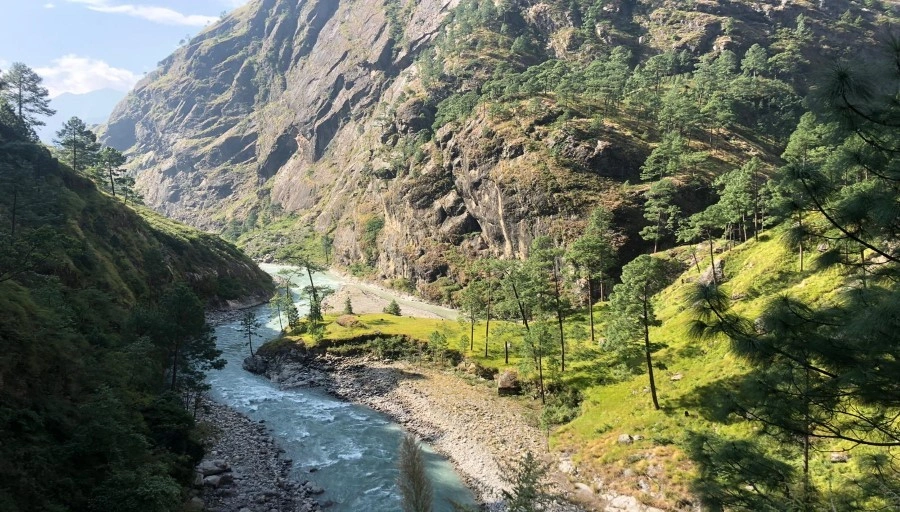
We will now resume the back journey of our Manaslu Expedition by proceeding down Sama Gaon on the Budhi Gandaki River.
We will also traverse quiet villages like Lho Shyala as part of the Manaslu Expedition itinerary, a reflection of local mountain life in stone houses, prayer walls, and terraced fields.
When we descend in altitude, we also have it easy in walking, and the temperatures are warmer, and the oxygen is richer.
We will have regular rests, and we will savor the landscapes varying along the path. In the evening, we will arrive at Namrung, 2660m.
After a pleasant day of downward, we will settle into a comfortable lodge, enjoy a warm meal, and sleep well after a satisfying day of downward.
Maximum Altitude
8,366 ft
Meals
Breakfast, Lunch and Dinner
Trek Duration
6 hours Trek
Accomodations
Lodge
34
Namrung to Philim – Continuing Down the Valley
After breakfast, we will proceed through the green woods and ancient villages on the Manaslu Expedition itinerary to the lower villages.
Some of the destinations along the trail include Deng, where you can see waterfalls, farmlands, and the daily village life. The atmosphere is less chilly, and the stroll is more comfortable.
At noon, we will take lunch and take time to rest in the pleasant ease of the trail. In the afternoon, we will reach the village of Philim at a lower altitude with terraces, terraces, and hospitable inhabitants of the Gurung language at an altitude of approximately 1600 meters.
We will make our way to a teahouse, rest, and pass a pleasant evening with our team.
Maximum Altitude
7,545 ft
Meals
Breakfast, Lunch and Dinner
Trek Duration
6 hours Trek
Accomodations
Lodge
35
Philim to Machha Khola (930m) – Final Trekking Day
Today will be the last trekking day of the Manaslu Expedition. Following breakfast, we will trace the Budhi Gandaki River down the riverbed through the green hills and well-known villages like Jagat and Tatopani.
The path is relatively simple, and it gives us a chance to look back at the distance we had to travel through the mountains.
This day is our last day of on foot adventure as part of the Manaslu Expedition itinerary. In the afternoon, we will reach Machha Khola, which is approximately 930 meters.
We will spend our evening celebrating with our crew and having a final dinner with our trail.
Maximum Altitude
4,363 ft
Meals
Breakfast, Lunch and Dinner
Trek Duration
6 hours Trek
Accomodations
Lodge
36
Drive from Machha Khola to Kathmandu
Following breakfast, we will start the return journey to Kathmandu via personal transportation, technically ending the trekking part of the Manaslu Expedition itinerary.
This route runs over hiking mountain paths and is then merged with the main highway, with a picturesque view of rivers and hills on the way.
We will take lunch and brief stops to remain comfortable. The drive normally consumes between eight and nine hours.
Towards evening, we will reach Kathmandu and settle in our hotel, and you can take a hot shower, clean clothes, and enjoy the comforts of the city after several days in the mountains.
Maximum Altitude
4,593 ft
Meals
Breakfast, Lunch
Accomodations
Hotel
Transportation
9 hours Drive
37
Free Day in Kathmandu and Farewell Dinner
The day is saved as a buffer on the Manaslu Expedition schedule in case of delays in weather or travel. We will have a free day in Kathmandu in case we get back on time. You can spend your time at the hotel, in the local markets, or with cultural attractions during your time.
The day also gives time to prepare equipment and get ready to depart. In the evening, we will hold a farewell dinner to end the successful Manaslu Expedition and to pay tribute to our guides and support team members and their efforts.
Meals
Farewell Dinner
Accomodations
Hotel
38
Departure from Kathmandu
We will then take you to Tribhuvan International Airport after breakfast, where you will continue with your flight. This brings an end to the Manaslu Expedition. We will also facilitate departure schedules and make sure that the transfer to the airport is made smooth.
It will be our pleasure to thank you as we part ways, that you have joined this Manaslu Expedition and that you have shared this incredible Himalayan experience with us. We hope to see you back at home and expect to see you again in Nepal on another adventure.
Meals
Breakfast
Transportation
30 min drive
Equipment Checklist 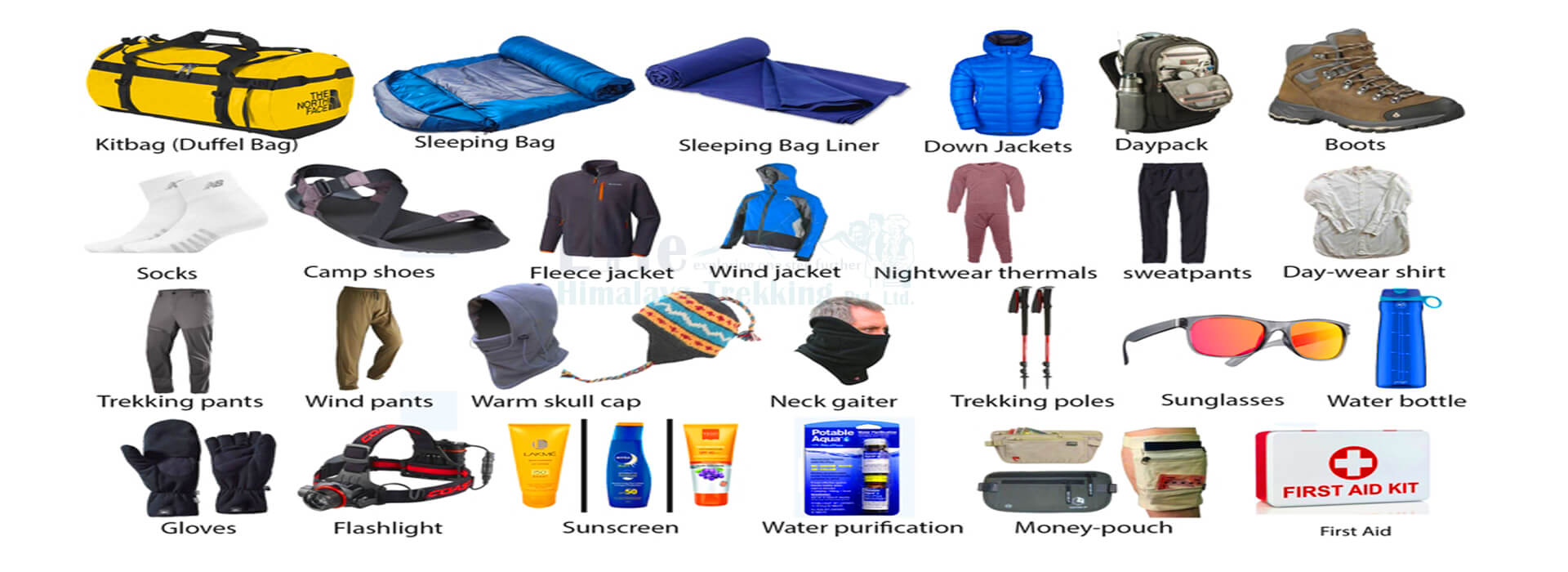
Required Equipments for Trekking in Nepal
- Breathable Underwear
- Sports Bra
- Base Layers
- Trekking Shirts
- Trekking Trousers and Shorts
- Fleece Jacket
- Down jacket (insulated jacket)
- Windcheater (water proof)
- Sun protection Hat
- Headband or Beanie
- Scarf or neckband
- Gloves (inner and outer )
- Hiking Boots
- Trekking Shoes
- Hiking Socks
- Thermal Socks
- Gaiters
- Duffel Bag
- Day pack
- Sleeping Bag
- Trekking poles
- Sunglasses
- Hydration bladder or Water bottle
- Head Lamps
- Batteries
- Personal towel
- Swiss army knife
- Sun lotion
- Medical & first-aid kit
- Woolen socks
- Waterproof jacket
- Lip Guard
- Insulated pants
- Baby wipers
Required Equipments for Climbing in Nepal
- Water bottle
- Batteries and bulbs
- Flashlight
- Personal towel
- Swiss army knife
- Rucksack
- Sun lotion
- Medical & first-aid kit
- Sewing kit
- Polypropylene/wool socks
- Other required equipment
- Sleeping bag
- Down Jacket
- Waterproof jacket
- Trekking shoes/boots
- Camp shoes
- Jumperorpile jacket
- Hiking pants
- Hiking shirts
- Full–sleeves shirt
- T-shirts
- Sun hat
- Gloves
- Woolen hat
- Long underwear
- Goggles or sun glasses
- Gaiters
- Sun block for lips
- Light cotton socks
- Mountain trekking boots
- Woolen socks to wear with boots
- Nylon wind breaker
- Insulated pants
- Nylon wind pants
- Long sleeved cotton/woolen shirts
- Sun hat
- Long cotton hiking shorts
- Fleece/wool for climbing
- Lightweight fleece
- Sleeping pad (karri mat) or thermarest
- Down high altitude sleeping bag
- Down jacket/trousers/vest
- Light cotton athletic socks and wool socks
- Water proof climbing jacket
- Head torch/batteries/bulbs
- Climbing sunglasses
- Lightweight thermal/insulated ski gloves
- Sun screen
- Warm climbing trousers
- Wool long underwear
- Other required equipment
- Climbing boots
- Gaiters
- Ice axe
- Harness
- Crampons
- Karabiners
- Tapes/slings
- Snow bars
- Ice screws
- Rock pegs
- Deadmen
- Crash hat
- Day bag
- Rucksack
- Lip salve
- T-shirts
- Ascenders
- Ascenders
- Kit bag
Whats Included
- Kathmandu Airport pickup and drop
- Hotel in kathmandu 4 nights 4 stars twin shear with breakfast twin shear
- Road transportation to Dharapani trip startting point and ending point to Kathmandu
- Manaslu restricted permit.
- Manaslu expedition permits, royalty and conservation permits
- Best available accommodation and full board meals throughout the trek till Samagaun
- Government lesion officer 01,his salary , food, equipments and insurance
- 1 member 1 sherpa for summit day
- Service of the base camp manager and climbing sirdars
- Satellite communication system at base camp but nominal charge for use
- Radio set for communication between camps
- Meals at base camp and higher camps during the expedition
- Meals and accommodation during the trekking period
- Personal tents at BC, high tents, kitchen tents, dining tents, shower tents, toilet tents, store tents, cooking utensils and more for your comfort.
- 4 bottled oxygen with the use of the latest mask and regulator
- Nepalese government royalty fees for Manaslu.
- All expedition organizational requirements
- Highly experienced, helpful, and friendly climbing guides, porters and their food, accommodation, salary, equipment, and accidental insurance for all staffs
- All national park and conservation areas permit fees.
- Government taxes & office service charge
Whats Excluded
- Travel Insurance
- International airfare
- Nepal entry visa charge.
- personal expenses.
- Snacks and other personal expenses
- personal equipments
- summit boss and tips for guide and porters
- Helicopter flights and heli cargo
- service not mention above.
Manaslu Expedition - Essential Information
Trek Difficulty
Manaslu Expedition is a highly demanding expedition that will mix the days of long walks with the altitude climbing of the highest order.
The itinerary of the Manaslu Expedition will involve a difficult passage through the terrain, which includes the high Larkya La Pass at 5160m, which may seem hard to pass through owing to the thin air and long walking hours. Once we arrive at Manaslu Base Camp, the ascent is extremely difficult due to elevation, cold, and exposure.
The standard path can be referred to as less technical than other 8000m summits, yet it remains challenging and hazardous.
We will have fixed ropes in a good number of areas, but you will have to be sure in the use of crampons, harness, and ascenders, and you should be very much at ease on snow and glaciers. This is not a beginner trip, and we suggest good previous high altitude experience and good stamina.
Weather and Best Season
The most suitable seasons of Manaslu Expedition are spring and autumn. During the spring, between March and May, the days are warmer since winter is over, and we are more likely to have clear weather for climbing.
During the fall (September to November), the climate is generally dry and steady following the monsoon, and the air is crisp, and the mountain views are good.
These seasons provide the best forecast of the balance of temperatures, visibility, and safer wind conditions to attempt the summit. The journey is not suggested in other seasons.
During the monsoon season (June to August), heavy rainfall can cause landslides and trail disruption, and the climbing conditions are not suitable.
The cold season between December and February is very cold and has frequent storms and deep snow that may obstruct the highway. To be on the safe side and to have higher success chances, we are going to organize the expedition during spring or autumn.
Food and Drink
Your energy will be maintained with regular meals during the Manaslu Expedition. During the expedition to base camp, we will be staying at teahouses where breakfast, lunch, and dinner will be provided. Eating is basic and substantial, and commonly consists of dal bhat, noodles, soups, rice, past, and local dumplings.
Dietary needs will be facilitated as far as it is possible; however, in remote villages, one can choose just a few options, which is why we will think ahead.
Our cook and kitchen staff will serve you hot meals and warm drinks at base camp and on the climbing days in the Manaslu Expedition itinerary to aid in recovery and hydration.
We will offer safe drinking water through boiling or filtration, and we will also encourage you to use reusable bottles to minimize the use of plastics.
Camp will have hot tea and coffee, and alcohol should be avoided at high altitude to be safe and better acclimatized.
Accommodation
The accommodation of the Manaslu Expedition varies between urban comforts and minimal mountain activities and camping. We will then stay in a nice hotel in Kathmandu with the basic modern amenities like hot showers and Wi Fi.
On our trekking section of the Manaslu Expedition itinerary, we will be staying in the teahouse lodges that will be operated by the local families.
Simple rooms are often twin share, and often there is a shared bathroom, particularly at higher villages. Hot showers are available at some lodges at a premium, but the facilities themselves can be poor.
After arriving at Manaslu Base Camp, we will be camping in a full-fledged tent camp. We will offer sleeping tents, a dining tent, a kitchen tent, and a storage area, as well as a rudimentary toilet arrangement.
We will camp in high-altitude tents at the higher camps above base camp, which are cold and primitive. We will also make sure that we have good sleeping mats and support in order to enable you to sleep as best you can.
Altitude Sickness
The possibility of altitude sickness is a very real threat during the Manaslu climb, and we will address it seriously, right at the beginning.
The walk goes up to altitudes above 5000m, and the base camp is approximately 4800m; mild symptoms may occur despite good preparation.
In the climbing part of the Manaslu Expedition itinerary, the risk is greater due to the reduced oxygen level in high camps, particularly the summit.
The method of rotations that will help us minimize the risk will include a gradual ascending plan, rest and acclimatization days, and the climb high sleep low technique.
Most prominent among them are headache, nausea, dizziness, insomnia, and loss of appetite, and we will require you to report them at the early stages.
Our guides will be equipped with first aid kits and emergency oxygen, and they are trained to be quick responders. In case of any serious symptoms, the most effective way of treatment is immediate descent, and we will organize helicopter evacuation in case of necessity. The key elements of your safety are your honest communication and gradual, steady pace.
Preparation and Fitness
To have a safe and successful expedition to Manaslu, proper preparation is necessary. Before arrival, we suggest at least 4 to 6 months of training.
Endurance training through cardio activities like hiking, running, cycling, and using stairs, and core training through strength exercises will ensure that your legs and core can cope with long climbing and trekking days.
You must also be able to walk 6 to 8 hours up-and-down hill with a pack, as trekking days are long and exhausting in the Manaslu Expedition itinerary.
It is highly advisable to have high altitude experience before, i.e., to have climbed a peak of 6000m or a trek of above 5000m. Another important benefit will be the practice of the main mountaineering skills, such as crampons, harness use, and ascenders.
We will offer refresher training at base camp, but it is preferable to come in with basic confidence. Mental strength is equally significant since the journey is lengthy and the weather might be chilly and challenging. Being calm, patient, and working as a team will make your experience better.
Visa and Permits
In the Manaslu Expedition, the majority of the travelers will receive a Nepal tourist visa at Kathmandu airport. You will complete the form, pay the fee, and get the visa stamp; the visa price is your own burden. The minimum passport required is six months, and it is also recommended to bring passport photos.
The necessary permits will be secured in official offices for the trekking and climbing portions of the route.
This typically involves the restricted area permit of the Manaslu area, the Manaslu climbing permit, and conservation area permits of areas which we traverse.
The permit regulations and fees may vary according to the season and changes in the government, but we will take care of the same in Kathmandu, and you do not have to queue up to do so.
We will require your copy of your passport, photographs, and insurance details as requested so that we can do some paperwork without problems. After permits are prepared, we will give you a clear brief on the route rules and things to carry for permit checks on the trail.
Health and Safety
Our first priority during the Manaslu Expedition is safety. We will adhere to a thorough acclimatization program, daily health check, and a realistic climbing program, keeping to the weather conditions and the condition of the team.
Our guides are professional and certified in first aid and altitude management, and we will have medical kits, emergency oxygen, and efficient communication devices.
We will also need to have fixed ropes at steep places during the climbing portion of the Manaslu Expedition itinerary, and we will also need the right safety gear, like helmets and a harness, when necessary.
We will also check the weather prediction and make changes that will minimize the risk of storms and wind. In case of any severe illness or injury, we will respond promptly and provide evacuation support as necessary.
We have a safety-first and summit-second approach. We will never force anybody to continue unless it is safe or if the body is adapting well.
Through thorough planning, teamwork, and frank communication, we will ensure the safest possible environment in this challenging mountain trip.
Transportation
We will also take care of the transportation of the Manaslu Expedition within Nepal in terms of arrival and departure. We will also include airport collection and delivery in Kathmandu and all the road transfers mentioned in the itinerary.
To reach the trail head and the back drive back to Kathmandu, we will travel by using personal vehicles, usually a Four Wheel Drive jeep, to comfort and give us a chance to move easily through mountain roads.
The drives may be long, though we will take meals, have rests, and short stops on the way. Flight delays are also avoided by taking this trip as domestic flights are not necessary, so it makes the organization more predictable.
Weather or construction can alter road conditions in Nepal; we will make the schedule flexible and add buffer time when necessary.
The normal plan excludes helicopter flights, but in case of an emergency, helicopter evacuation can be organized. We can also book you a private helicopter pickup or drop at an additional fee, depending on permission and weather depending.
Travel Insurance
Anyone taking part in the Manaslu Expedition requires travel insurance. You should have a well-explained insurance that includes high altitude mountaineering up to 8000 meters and emergency evacuation by helicopter.
High altitude climbing is not covered by standard travel policies, hence you might have to take a special adventure policy. In the case of the journey, we highly suggest that we cover the medical treatment cost, rescue cost, and repatriation cost back to your home country in case of need.
In remote mountainous regions, helicopter evacuation may be quite costly; proper insurance is a sure way of enjoying peace of mind.
Before the expedition commences, we will ask you to provide your insurer’s name and policy number along with your emergency contact’s details so that, in case of an emergency, we can act on your behalf.
Also, for insurance purchase, be sincere, and ensure the maximum height and climbing activity is covered; otherwise, claims may be denied.
We have staff insurance, which includes our team members but does not include clients, and therefore, you should consider organizing your own policy before you travel to Nepal.
The availability of good insurance coverage will enable you to have full attention on training, acclimatizing, and staying safe in the mountains.
Your Extra Expenses
Although the Manaslu Expedition package includes most of the major logistics, you will still have to use a bit of your own spending money.
Flights to and out of Nepal are excluded, and the Nepal visa fee is paid at the airport. Travel insurance is mandatory, and you are also in charge of the same.
Lunches and dinners are not often included in Kathmandu unless it is a planned group dinner, and thus, you need to plan to budget for city meals and personal shopping.
You can incur the additional costs of snacks, soft beverages, hot showers, charging, and Wi FI on the Manaslu Expedition itinerary.
You might also have to hire or purchase personal climbing equipment, and we will assist you in sourcing good rental equipment in Kathmandu.
It is customary to tip guides, Sherpas, and porters, and a summit bonus after a successful climb is also customary with your own Sherpa.
You must also maintain a little buffer in case of some undue delays (e.g., an additional night in the hotel or a modification in your travelling schedule). Keep cash in a secure pouch since there are no ATMs on the trail.
Language and Communication
In the Manaslu Expedition, language will not be a significant problem since we will have English-speaking guides. In Kathmandu, Nepali is common, whereas in the Manaslu region, there are several locals who speak a Tibetan dialect in addition to Nepali.
Our guide will facilitate communication through the excursion itinerary of Manaslu in the lodges, villages, and checkpoints of the permit.
The team briefings and safety instructions will be translated into clear English, and we will invite you to ask questions at any time.
Most of the young locals in the trekking villages understand a bit of English, although your guide will assist you when necessary. Even basic greetings like Namaste are welcome, and they do develop cordial relationships.
In critical communication, our group will rely on radios and satellite communication systems, particularly when climbing and when in base camp. It is mostly to regulate safety and logistics, rather than day-to-day social practice.
In short, we will maintain clear, straightforward, and supportive communication, thus making you feel free and knowledgeable along the way.
Mobile Network, Internet, and Charging Facilities
During the Manaslu Expedition, communication is minimal, particularly higher up the mountain. In Kathmandu, you will receive good mobile coverage, whilst on the Manaslu Expedition itinerary, the signal is weak or non-existent for days.
You might occasionally receive in a few of the under villages, and occasionally around Sama Gaon, but nothing but that.
Wi Fi is a paid option in some lodges; however, it is often slow and should only be used for messages and not for heavy usage.
We will also be able to communicate via satellite communications at the base camp, primarily to support the expedition and in the event of an emergency, and there will be short personal messages that will be charged an additional fee.
Teahouses commonly charge a nominal amount per unit when charging, and power may be either solar-powered or small hydro-powered.
We suggest that you have a powerful power bank. In base camp, we will have solar systems and a charging station in the dining space, where conditions permit.
In higher camps, the charge does not occur, so we will recommend that you charge the battery and cover devices with cold by keeping them in proximity to your body.
Don’ts on This Trip
In order to make the Manaslu Expedition safe and respectful, we will request you to observe a few important donts. We will not offend local culture, and therefore we will walk in a clockwise roundabout of mani walls and chortens, wear modest clothes in villages, and request permission to take photos of people or monasteries.
We will not litter and will reduce trash and reduce single use plastic as much as possible, which is helpful in responsible traveling along the Manaslu Expedition itinerary.
We shall not be wandering off the trail, and you must always tell the guide when you feel you want to stop or look around. Health symptoms will not be disregarded and we want you to tell us about headaches, nausea, or unusual fatigue early.
We will neither drink alcohol nor smoke at high altitude, as it may increase dehydration and delay acclimatization. We shall also not run unsafe hazards to get photographs or velocity, since uniform safe progress is the most beneficial.
We will always advise you to seek clarification with the guide first in case you are not sure about something.
Photography and Drone Rules
The Manaslu Expedition welcomes photography, and we will have numerous beautiful opportunities to photograph the landscape, village life, and mountain views.
We will request you to be respectful in your photographs, particularly when visiting monasteries or when being around the local community. We advise seeking permission before capturing close-ups.
We will also advise you to keep safe when taking pictures, as the trail can be steep, and distracting scenery might cause falls. In the case of drones, regulations are very strict in Nepal, and the Manaslu region is a restricted area.
A drone flight tends to involve permits with aviation authorities and local offices, and approval might be costly and time-consuming. The use of drones may result in fines or seizure without permission.
In order to ensure the Manaslu Expedition itinerary runs smoothly and legally, we do not suggest carrying a drone unless you have properly negotiated all the permits well beforehand.
Strong memories will be captured with a good camera or phone. We will also invite you to experience the moment, not just in front of a screen.
Manaslu Expedition - FAQs
What is the itinerary of the Manaslu Expedition?
It is a 38-day expedition that will involve hiking to base camp, a multi-week climbing phase, and a safe trek back. This plan aims at cumulative acclimatization, establishing Camps 1-4 and waiting until there is a good weather window in order to reach the summit. You rotate higher and back to base camp to rest. After this summit push is complete, the team safely comes down and returns to Kathmandu.
Is Manaslu Expedition beginner friendly?
No, Manaslu is not an easy climb, as it is a very difficult 8000-meter peak. The climbers must already have higher than 4,000m experience and preferably have reached at least one 6,000m peak. It requires good endurance, good fitness, and knowledge of mountaineering equipment. It is most appropriate for climbers who have already trained on smaller mountains.
What are the required permits and visas?
You should have a Nepal tourist visa and some Manaslu permits. These are the Manaslu Restricted Area Permit, the Manaslu Conservation Area Permit, the Annapurna Conservation Area Permit, and manaslu climbing permit. These are compulsory for the area and the ascendancy. Permits are normally handled by the company prior to the start of the trip.
What is the best way to train to go to Manaslu?
It is suggested to train for 4-6 months with an emphasis on endurance and strength. Hiking long uphill carrying a backpack, cardio, and lower limb and core exercises are extremely supportive. It is important to practice crampons and other mountaineering instruments. Preparation also occurs by doing high-altitude expeditions over several days before the actual expedition.
What are the number of guides and porters in the group?
A typical team is made up of an expedition leader, climbing Sherpa guides, and porters to carry loads throughout the trek. During the summit push, there is typically a single climbing Sherpa for every climber. There are a cook and helpers who remain at base camp to assist the team. This support system guarantees safety and individual care to all the members.
Can I climb Manaslu solo?
No, solo climbing is not permitted and is not safe either. The area needs a limited zone approval, and this must have two hikers and a registered firm. The expedition requires the presence of a licensed guide. It is imperative that one should climb the mountain with an experienced team when climbing an 8000m mountain.
What equipment is included and what should I carry?
Group equipment such as tents, cooking gear, perennial ropes, and oxygen systems is offered by the company. Climbers need to carry their own clothes, boots, a warm sleeping bag, and climbing gear: a harness, crampons, and a helmet. A quality down jacket is essential during extreme cold. Large items can be rented in Kathmandu when necessary.
What are accommodations like?
You spend the night in a cozy hotel in Kathmandu and basic teahouse lodges when you are on the trek. In the base camp, you will have tents to stay in, a dining tent to eat in, and a kitchen tent to cook in. The higher camps carry lightweight expedition tents with two climbers in each tent. Conditions are simple yet laid out in such a way as to provide as much comfort as possible.
How are emergencies or altitude sickness addressed?
Guides check your health on a daily basis, and they are trained on how to take care of the altitude. When the symptoms are present, it is necessary to focus on getting down as quickly as possible. We have oxygen, a medical kit, and a satellite phone in case of an emergency. In case of a difficult situation, a helicopter evacuation can be organized.
Does it use supplemental oxygen?
Oxygen is normally used at altitudes above Camp 3 and on the summit push. Every climber has Oxygen bottles and a mask with the assistance of a Sherpa. Oxygen supplementation enhances the safety and limits fatigue during extreme altitude. Before dependence on oxygen, proper acclimatization is done.
Do I have to pay tips or summit bonus?
On Nepal expeditions, it is customary to tip. Tips to porters, cooks, and helpers are usually given by the group, whereas the guides and summit Sherpas are given individual tips. After successful climbing Sherpa summit bonus would be expected.
What is the difference between Manaslu and Everest?
Manaslu is a bit lower and not as technical as Everest, but it is a very hard climb nonetheless. It has a smaller number of climbers and is more remote, so the experience is quiet. Manaslu is often used by many climbers as a preliminary to Everest since it is an 8000m summit that has fewer objective risks. However, Everest is more costly and has more infrastructure.
What are the chances of making the summit?
Success is a factor of weather, health, preparation, and timing. Good seasons can be characterized by guided teams reaching 6080 percent success. The first thing is to be well-trained and acclimatized, and this will greatly enhance your chances. The top will never come first before safety.
What is the climbing route of Manaslu?
The path goes along the Northeast Face, and there are four high camps over the base camp. The ascent will consist of extensive snow slopes, portions of ice that are steeper, and fixed ropes. Camp 4 is located below the summit ridge, and the summit day is a day-long snow ascent. After the summit, you pass down the same line.
What is the temperature of Manaslu?
It is extremely cold, especially above 6,000m. In the base camp, the night temperatures go up to approximately -10C, and on the higher camps, it may go as low as -20C. The summit day may be as low as -30 o C. Adequate down clothes are important to remain safe in those severe conditions.
Does it have rest or acclimatization days?
Yes, a number of rest days are incorporated in the schedule. We rest at the important villages such as Sama Gaon and Bimthang so that your body can get adjusted. We use a rotation system at base camp between higher climbs, with our rest days during the climb. The breaks are significant in terms of safety and good performance.
What in case of delays due to weather?
Itinerary has buffer days in order to deal with small delays. In case of continued bad weather, the leader will consider safe alternatives, such as waiting or changing the plan. Before attempting a summit, safety first is always the best option. We recommend that you have flexible time in your back flights.
What about the use of water to drink?
The team supplies safe drinking water during the trek and climb. At teahouses, water is boiled or filtered, and at base camp, it is treated. Your bottles can be refilled a number of times a day. It is important to stay hydrated, and therefore, the guides remind you to drink frequently.
Should I carry extra cash?
Yes, take some Nepali rupees to get snacks, drinks, hot showers, or to charge devices during the trek. In remote places, the prices are raised. There are ATMs in Kathmandu, but there aren’t ATMs on the trekking route. Always keep your cash in a waterproof pouch.
Does the expedition have an age limit?
No specific age restriction exists, yet the minimum age of a climber is 18 years old. The level of fitness and health is much more important than age. Climbers in their 50s and 60s have succeeded in making good summits. To be safe, the clearance of a doctor is needed.
Video Reviews





Tripadvisor Reviews
Similar Trips
Join us on similar trips in the same region
View Details
Lhotse Expedition
View Details
Manaslu Expedition with Helicopter
View Details