
 English
 Dutch
Dutch Japanese
 Hindi
Hindi Italian
 Spanish
 French
 German
 Chinese
 Korean
 Arabic
 Hebrew
 Russian
 Portuguese
 Danish
 Czech
Czech Polish
 Swedish

Max. Altitude
3800 m
Best Season
Mar-May & Sep-Nov
Activity
Trekking
Start / End Point
Pokhara/Pokhara
Overview of Jomsom Muktinath Trek – 9 Days
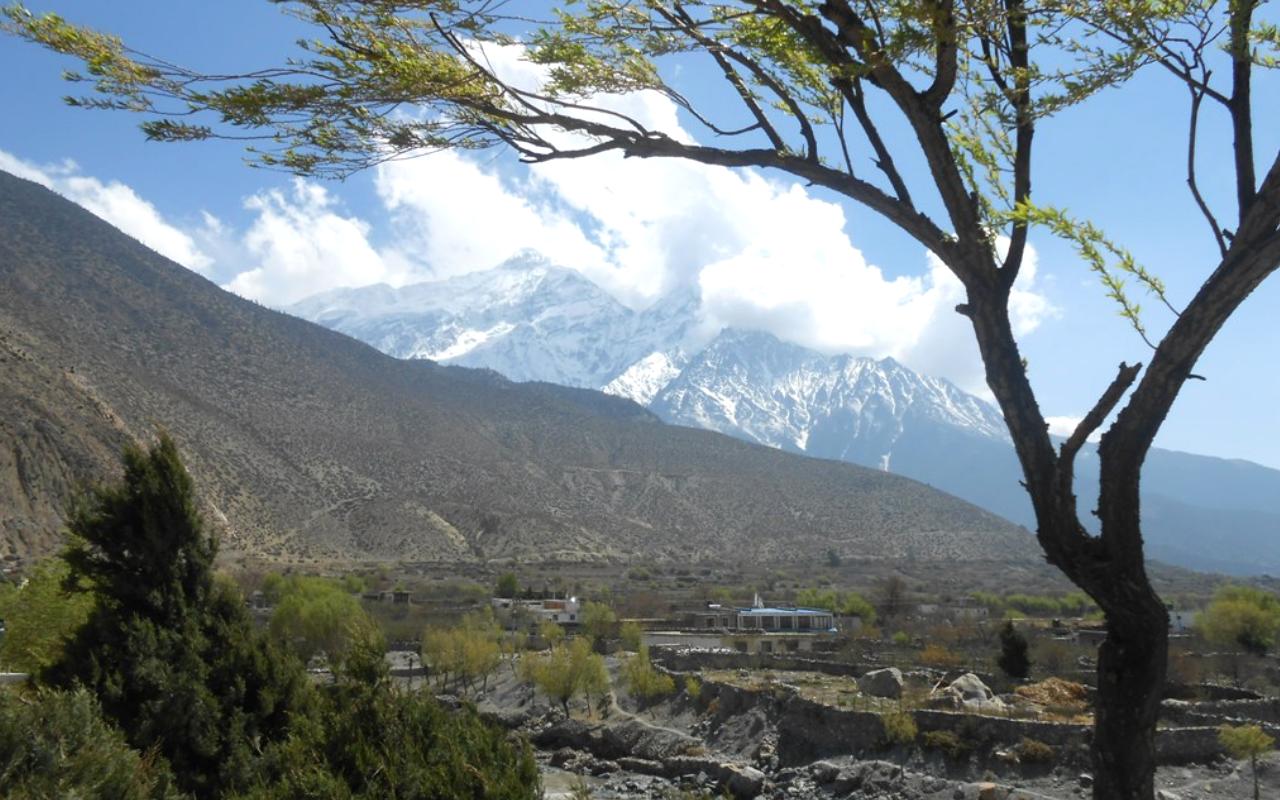
The nine-day Jomsom Muktinath Trek begins in the beautiful Annapurna region of Nepal. The journey starts from Pokhara and follows a calm route through lush forests, peaceful Himalayan villages, and the deep Kali Gandaki gorge.
You will trek steadily to elevations up to 3,760 m at Muktinath Temple and enjoy sweeping panoramas of the Annapurna and Dhaulagiri peaks. Along the way, experience rich Tibetan-Buddhist and Hindu culture in Thakali and Gurung villages.
Highlights of this adventure include the sacred Muktinath temple with its 108 holy taps, dawn views from Poon Hill (3,210 m), and a relaxing soak in Tatopani hot springs. Each day brings new scenery: rhododendron forests, apple orchards in Mustang, and broad river valleys. Our trek is designed for comfort.
You will stay in a lakeside hotel in Pokhara and in well-appointed lodges on the trail (mostly with attached bathrooms, hot showers, and WiFi where available). Three hearty meals per day are included, featuring Nepalese dal-bhat and other local dishes. In the evenings, relax in the common lounge of each lodge with hot tea.
Travel is done in private jeeps, and there are no early flights or crowded buses. Each drive gives you beautiful views of the Kali Gandaki, which is known as one of the deepest gorges in the world.
We will offer a certified guide and a porter so that you can be able to concentrate on trekking. We deal with all permits (ACAP, TIMS), make bookings, and handle logistics. The average daily walks are 4-6 hours on good paths. Even first-time trekkers will find the trail manageable with our support. Our guides share local legends, making each day educational as well as scenic.
For example, your Jomsom Muktinath Trek journey starts with a scenic day in Pokhara, then transitions to hikes from Ulleri to Ghorepani through thick forests. Highlights like the Poon Hill sunrise and Tatopani hot springs punctuate the trek. Because the itinerary includes jeep transfers on some stretches (e.g., to Ulleri and Tatopani), trekkers enjoy both adventure and relaxation.
In essence, our package delivers all the big Himalayan experiences – lakeside Pokhara, majestic peaks, mountain culture, and the sacred Muktinath temple – with careful pacing and full support. It’s the ideal choice for travelers who want to embrace high-altitude trekking without any stress of complex planning.
Highlights of Jomsom Muktinath Trek
- Dawn at Poon Hill (3,210 m) for a panoramic Himalayan sunrise
- Explore the sacred Muktinath Temple (3,760 m) with its 108 holy taps
- Relax in natural Tatopani hot springs (1,190 m)
- Panoramic views of the Annapurna and Dhaulagiri ranges
- Cultural insights in Gurung and Thakali villages (Marpha, Kagbeni)
- Thrilling Jeep ride through the Kali Gandaki gorge
- Comfortable lodging (attached baths) and meals included
Jomsom Muktinath Trek Itinerary
We are updating itineraries.
01
Pokhara Arrival
Upon arrival in Pokhara (827 m), our guide meets you at the airport or bus station and transfers you to a 3-star hotel by Phewa Lake for rest. Afternoon is free to visit the vibrant Lakeside of Pokhara or to go on a boat journey on the Phewa Lake.
You may as well go on a last-minute shopping trekking equipment in the local shops. The altitude of Pokhara is easy to acclimate to. We will have a night briefing on gear, itinerary, and safety suggestions. The dinner will be at the hotel or a restaurant that is close. You will rest early to prepare for tomorrow’s trek.
Maximum Altitude
827 m
Meals
Dinner
Accomodations
Hotel
02
Drive to Ulleri and Trek to Banthanti
We will begin early with a scenic jeep drive from Pokhara to Ulleri (2,070 m). The 30–60 km journey through the Kali Gandaki valley takes roughly 2–4 hours, winding past hillside farms and rivers. This drive bypasses the famous 3,000 stone steps at Tikhedhunga.
You will enjoy roadside views of the mountains (Annapurna South, Machapuchare) as you gain altitude. After arriving at Ulleri, we will switch to trekking mode.
From Ulleri to Banthanti (2,210 m) is a 3 km trek(3 hours). The trail climbs steadily through lush oak and rhododendron forest. You may see Nepalese langur monkeys or colorful Himalayan birds along the way.
You will take short breaks en route. By late afternoon, you will reach Banthanti, a small mountain settlement. After settling in and enjoying the views of the valley below, before your lodge dinner. You will sleep overnight at the Banthanti lodge.
Maximum Altitude
2,210 m
Meals
B L D
Trek Duration
3hrs trek & 3hrs drive
Accomodations
Teahouse
03
Banthanti to Ghorepani
After breakfast, a narrow trail leads upward. Today you will trek about 5–6 km (gaining 650 m) to reach Ghorepani (2,860 m) by early afternoon. The 3–4 hour trek weaves through dense rhododendron and oak forests.
You’ll pass a tea stop at Nangethanti for a short break. Nearing Ghorepani, the vegetation thins, and you will emerge onto a broad ridge with expansive views.
Ghorepani is a large teahouse village with panoramic vistas of Annapurna and Dhaulagiri. (“Ghorepani” means “horse water” – it was historically a stop for pack animals). You will have a warm dinner and an overnight at Ghorepani lodge.
Maximum Altitude
2860 m
Meals
B L D
Trek Duration
3-4hrs
Accomodations
Teahouse
04
Ghorepani to Dunhill (Poon Hill) – Free Afternoon
Today, you will wake up before dawn for a short trek to Poon Hill (3,210 m). This 45–60 min ascent (2 km) gives you a memorable 360° sunrise over Annapurna, Fishtail, and Dhaulagiri, and return to Ghorepani for breakfast.
Then you will descend about 2 km to a small village just below Ghorepani (around 2,700 m), where our lodge awaits.
The afternoon is at leisure; you may stroll through pine forests to a waterfall or simply rest at the lodge, enjoying serene mountain views. You will stay overnight at our lodge near Ghorepani.
Maximum Altitude
3210 m
Meals
B L D
Trek Duration
1-2 hrs
Accomodations
Teahouse
05
Drive to Tatopani (Hot Spring)
After breakfast, you will board the jeep for a short drive to Tatopani (1,190 m). The journey takes about 1 hour through terraced farms and villages. Tatopani literally means “hot water” in Nepali.
Upon arrival, you will check in at a mountain lodge. In the afternoon, you will head to the natural hot springs that give the village its name. A soak in the mineral-rich waters is a memorable way to relax your muscles.
You will return to the lodge for evening tea. Dinner will be a warm Nepali meal at the lodge. You will stay overnight at Tatopani.
Maximum Altitude
1190 m
Meals
B L D
Trek Duration
1 hr drive
Accomodations
Teahouse
06
Tatopani to Kagbeni by Jeep
Today’s journey follows the Kali Gandaki River northward. Following breakfast, you will take about 4 to 5 hours to Kagbeni (2,810 m) based on the condition of the road and the stops.
The highway goes through Marpha, a beautiful village that is known as an apple wine and cake village.
In Marpha, you may stop for a quick photo of the stone houses. Continuing, the landscape becomes drier as you enter Mustang.
Kagbeni is a historic walled village at the junction of two mountain rivers. You will check in at the lodge, then wander the old stone streets and visit a gompa (monastery). Your dinner and overnight will be in Kagbeni.
Maximum Altitude
2810 m
Meals
B L D
Trek Duration
4-5hrs drive
Accomodations
Teahouse
07
Trek Kagbeni to Muktinath
After breakfast, you will put on your boots for the final trek. Today you trek from Kagbeni (2,810 m) to the Muktinath area (3,760 m). The trail climbs gradually through rocky alpine terrain and small Mustang villages.
You will pass Jharkot (a small hamlet with a monastery) and ascend to Ranipauwa (3,660 m) by afternoon. The highest point is Muktinath temple (3,760 m), a major pilgrimage site for Hindus and Buddhists.
Our lodge in Ranipauwa provides dinner and rest. The trek takes about 4–5 hours today.
Maximum Altitude
3760 m
Meals
B L D
Trek Duration
4-5hrs
Accomodations
Teahouse
08
Explore Muktinath and 108 Taps
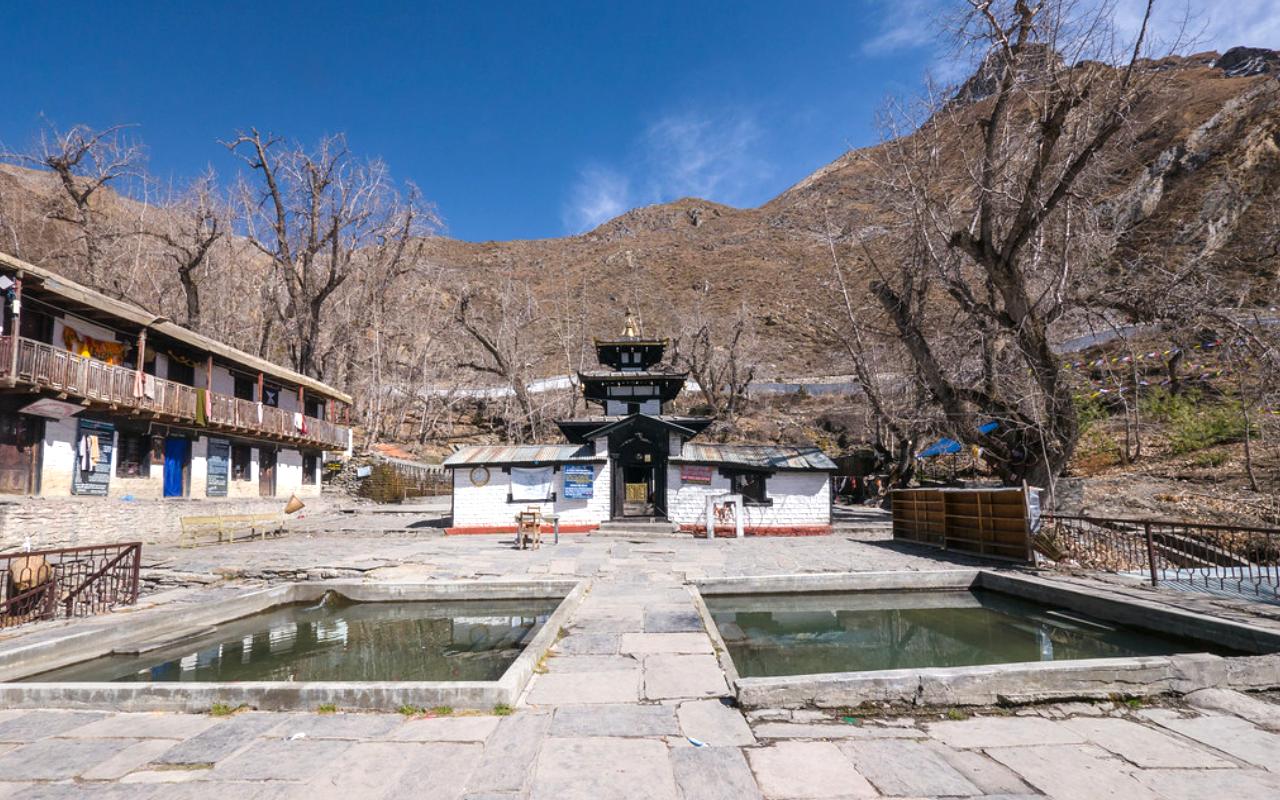
This day will be dedicated to the sacred site of Muktinath. After breakfast, you will visit the Muktinath Temple complex (3,760 m). Pilgrims from around the region perform rituals here. You will see the 108 cold-water spouts where pilgrims take ablutions.
There is both a Buddhist stupa and a Hindu Vishnu shrine at this site. You will wander the courtyard, light a lamp (optional), and enjoy the breathtaking Mustang panorama. You will have a free afternoon to explore the village or rest at the lodge.
Maximum Altitude
3760 m
Meals
B L D
Accomodations
Teahouse
09
Drive Back to Pokhara
After breakfast, you will board the jeep for the return drive to Pokhara. The 160 km journey usually takes about 7–9 hours, depending on road and traffic conditions.
We will follow the Kali Gandaki valley southward, retracing our route through Mustang and Annapurna scenery.
A lunch stop along the way breaks the trip. You can expect to arrive back in Pokhara by early evening, and we will transfer to your hotel.
This will conclude the trek; celebrate with a nice dinner or a lakeside stroll. You will stay overnight in Pokhara.
Maximum Altitude
827 m
Meals
B L
Trek Duration
7-9hrs drive
Accomodations
Hotel
Equipment Checklist 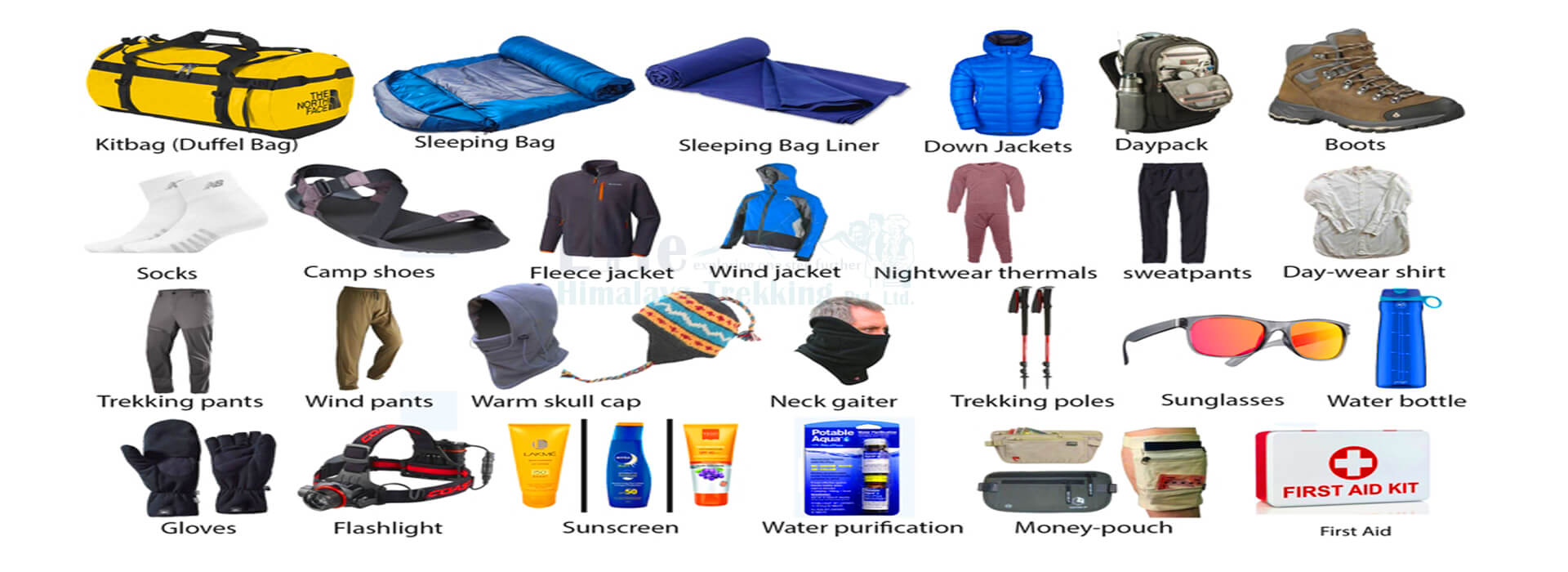
Required Equipments for Trekking in Nepal
- Breathable Underwear
- Sports Bra
- Base Layers
- Trekking Shirts
- Trekking Trousers and Shorts
- Fleece Jacket
- Down jacket (insulated jacket)
- Windcheater (water proof)
- Sun protection Hat
- Headband or Beanie
- Scarf or neckband
- Gloves (inner and outer )
- Hiking Boots
- Trekking Shoes
- Hiking Socks
- Thermal Socks
- Gaiters
- Duffel Bag
- Day pack
- Sleeping Bag
- Trekking poles
- Sunglasses
- Hydration bladder or Water bottle
- Head Lamps
- Batteries
- Personal towel
- Swiss army knife
- Sun lotion
- Medical & first-aid kit
- Woolen socks
- Waterproof jacket
- Lip Guard
- Insulated pants
- Baby wipers
Required Equipments for Climbing in Nepal
- Water bottle
- Batteries and bulbs
- Flashlight
- Personal towel
- Swiss army knife
- Rucksack
- Sun lotion
- Medical & first-aid kit
- Sewing kit
- Polypropylene/wool socks
- Other required equipment
- Sleeping bag
- Down Jacket
- Waterproof jacket
- Trekking shoes/boots
- Camp shoes
- Jumperorpile jacket
- Hiking pants
- Hiking shirts
- Full–sleeves shirt
- T-shirts
- Sun hat
- Gloves
- Woolen hat
- Long underwear
- Goggles or sun glasses
- Gaiters
- Sun block for lips
- Light cotton socks
- Mountain trekking boots
- Woolen socks to wear with boots
- Nylon wind breaker
- Insulated pants
- Nylon wind pants
- Long sleeved cotton/woolen shirts
- Sun hat
- Long cotton hiking shorts
- Fleece/wool for climbing
- Lightweight fleece
- Sleeping pad (karri mat) or thermarest
- Down high altitude sleeping bag
- Down jacket/trousers/vest
- Light cotton athletic socks and wool socks
- Water proof climbing jacket
- Head torch/batteries/bulbs
- Climbing sunglasses
- Lightweight thermal/insulated ski gloves
- Sun screen
- Warm climbing trousers
- Wool long underwear
- Other required equipment
- Climbing boots
- Gaiters
- Ice axe
- Harness
- Crampons
- Karabiners
- Tapes/slings
- Snow bars
- Ice screws
- Rock pegs
- Deadmen
- Crash hat
- Day bag
- Rucksack
- Lip salve
- T-shirts
- Ascenders
- Ascenders
- Kit bag
Whats Included
- Airport pick up and drops international and domestic
- Complete departure information, About trek, flight ticket, guide, altitude sickness and reconfirmation and extend visa service(if necessary) and extra tour service before the trek starting
- Flight from Pokhara -Jomsom for member and involved staffs & only 15 Kg luggage allowed.(10 kg Big bag & 5 kg hand bag)
- Private transportation pick up and drops
- Best Lodge accommodation & full board meals throughout the trek
- 8 breakfast,9 lunch and 8 dinner included chosen from lodge menu
- 08 Nights twin share accommodation during the trek
- As per group size; experience, government licence holder trek guide, helpful & friendly porters (1 porter for 2 people) and their food, accommodation, salary, equipment, transportation, accidental insurance for all staff.(1 assistant guide for 5 trekkers)
- Warm Down jacket and seasonal sleeping bag will be provided during trekking (Down jacket and sleeping bag are to be returned after the trip)
- TIMS Fee- Trekkers’ Information Management System (Please bring 03 passport size photos for permits)
- Annapurna Conservation Area trek permit fee
- Life Himalaya trekking bag/duffel bag, T-shirt and Everest base camp trail map.
- First Aid kits, for the staffs and the groups including oxi-meter
- Services coordination for emergency and rescue operations
- Government taxes & office service charge
- Achievement Certificate
Whats Excluded
- Travel insurance which covers 6000,m emergency Rescue and Evacuation.
- International airfare.
- Nepal entry visa charge.
- All beverages and others personal expenses.
- Snacks and other personal expenses.
- Battery charge, hot showers, internet & international phone calls.
- Tips for Guide, Porter and Drivers.
- Service not mentioned above.
Jomsom Muktinath Trek - Essential Information
Trek Difficulty
The Jomsom Muktinath Trek is considered moderate (sometimes called “easy-medium”). You walk on well-defined trails; there are no technical sections or snowfields. The highest altitude is 3,760 m, but the ascent is gradual.
You can plan on trekking 4–6 hours per day. Even beginners with basic fitness can do this trek – we provide porters so you only carry a daypack. One guide describes this route as “one of the easiest and most rewarding treks in Nepal”.
Weather and Best Season
The Jomsom Muktinath Trek section lies in a high-altitude rain-shadow, so it is relatively dry compared to Pokhara and the Ghorepani side of the trek.
The best time is spring (Mar–May) or autumn (Sept–Nov). In spring, rhododendron forests bloom; in autumn, the skies clear after the monsoon. Days warm up to 15–20°C, but nights can be cold (often below freezing above 3,000 m).
Note: afternoons can be very windy in upper Mustang, while mornings are calm. Winter (Dec–Feb) nights often freeze; summer brings occasional rain. Always carry sun protection and layers to handle variable conditions.
Food & Drink
All meals on the Jomsom Muktinath Trek are included. Mountain lodges serve hot Nepali dishes three times a day. Typical meals are dal bhat (lentils and rice), vegetable curry, soups, and eggs, and breakfast often includes porridge or eggs.
Most lodges also offer Western dishes (pasta, pizza, pancakes) for variety. Drinking water must be boiled or treated; lodges provide boiled water each morning.
You can buy bottled water as well (NPR 100 per bottle), but it’s best to use the free boiled water and bring purification tablets.
Snacks (energy bars, cookies) can be bought at teahouses (at premium prices), so we recommend carrying some of your favorites. Soft drinks and local beers are available for purchase (e.g., beer ~NPR 300).
Altitude Sickness
The Jomsom Muktinath Trek’s highest point (Muktinath, 3,760 m) is moderate for a Himalayan trek. Most people feel only mild symptoms (like a headache) if at all.
Our route includes natural acclimatization breaks (such as the Poon Hill sunrise trekfollowed by sleeping lower) to help prevent illness.
To stay safe, it is important to walk slowly, drink enough water, and eat well during the trek. It is also a good idea to talk with your doctor in advance about whether Diamox (acetazolamide) is suitable for you.
Our guide will carry a first aid kit and an oximeter to check your oxygen level. You will follow the “climb high, sleep low” method, which means you will walk to higher viewpoints like Poon Hill but return to lower places for the night to help your body adjust safely.
If anyone feels unwell, you will stop or descend. Severe cases are rare on this trek, but the guide will evacuate to a lower altitude if needed.
Preparation and Fitness
Jomsom Muktinath Trek is easier to make comfortable when properly prepared. Before the trip, it is useful to undergo four to six weeks of light cardiovascular exercises like jogging, cycling, or swimming.
Incorporating hill-climbing exercise, such as climbing stairs or walking on small hills with a small pack on your back, will enhance your stamina. Squats, lunges, and core exercises are also strength exercises that will support your legs and balance out on the trail.
Try practicing downhill walking to strengthen your knees, and make sure your hiking boots are already well-worn and feel comfortable. When you can, have some long walks on back-to-back days, because the trip is a few days of constant hiking.
Moderate daily physical condition: Walking: Walking (average speed of five kilometers an hour) is sufficient, in combination with our slow step and the assistance of the porter.
Visa and Permits
The majority of foreigners require a Nepal tourist visa, except those from India. The visa is normally issued to the travelers at the Kathmandu airport or at the main land borders. A fifteen-day visa is approximately USD 30, hence it is good to carry some cash and two passport-size photographs.
The Jomsom Muktinath Trek may require the Annapurna Conservation Area Permit (ACAP) and the TIMS card. ACAP charges approximately NPR 3000 and TIMS approximately NPR 2000, which are incorporated in our package.
All the permits are organized in Pokhara, and you only have to bring your passport and permit cards to trek.
Health & Safety
Travelers are generally safe in Nepal. Normal precautions measure: use good transport, lock up valuables, and avoid nighttime travel to distant areas.
Altitude and weather are the primary issues on the trek. Avoid sunburns using high-SPF sunscreens, sunglasses, and lip balms. Stay hydrated: drink only boiled or treated water.
Hygiene at lodges is usually good (boiled food/water). Altitude is the key health risk – take it slowly and eat well. In case of illness or injury, your guide has a medical kit and a satellite phone.
Roads can be dusty; motion-sickness pills or face masks can help sensitive travelers. Eating raw or unwashed foods is not recommended.
Transportation
The entire distance covered in the Jomsom Muktinath Trek is covered by personal 4-wheel drive jeeps. The number of passengers in these jeeps ranges between six and eight and is appropriate for the mountain roads.
Rides on Jeeps are organized on day two, day five, day six, and day nine, and the drivers are all qualified professionals in the area. Some of the roads are winding and rough; thus, it is significant to wear a seat belt.
We will make frequent visits on the way to have a meal and take a break. Even though there are also public buses running between Pokhara and Jomsom, we prefer using jeeps, which are faster and more comfortable.
Duffel bags with a maximum weight of fifteen kilograms per person are the best way to pack the baggage. The bags will be loaded by our porter on the vehicle.
In case of weather or a landslide on the road, we have alternatives, and in certain instances, we can reroute or even walk. Airports Transport to and out of the Pokhara airport before and after the trek is also provided.
Travel Insurance
Travel insurance is mandatory for this Jomsom Muktinath Trek. Your policy should cover trekking up to at least 4,000 m, emergency medical treatment, and helicopter evacuation from Muktinath or lower. Many airlines and Nepali tour operators require proof of insurance before issuing tickets or permitting participation.
We recommend adding trip cancellation and COVID-19 coverage as well. Keep a copy of your policy and emergency contact info with you. In case of a serious emergency, our guide can coordinate a rescue, but without insurance, this would be extremely costly.
Alternative Routes
While our itinerary is fixed, there are alternatives if you wish to modify. You could fly from Pokhara to Jomsom at the start (20-minute scenic flight), and then trek back from Jomsom to Pokhara (skipping Day 2).
A one-way flight home from Jomsom is also possible (weather permitting). Helicopter charters to/from Muktinath are another option (at a high extra cost).
For adventurous trekkers: after the Jomsom Muktinath Trek, you could continue into Upper Mustang (special permit required) or join the full Annapurna Circuit (crossing Thorong La).
On the other hand, if you prefer even less trekking, a local pony can sometimes be hired for riding, while porters or mules carry your bags. Let us know your interests, and we can arrange extensions or custom routes.
Your Extra Expenses
Your additional costs on the Jomsom Muktinath Trek are usually minimal, but you should think it over. The price of drinks and snacks like tea, coffee, bottled water, or power bars is a bit higher in the mountains.
Most lodges use minimal charges for hot showers, Wi-Fi, and charging of electrical devices. You also pay for any personal items such as alcohol, souvenirs, or meals not included in the group program.
Laundry is only offered in Kathmandu or in Pokhara, and it costs around NPR 200 per kilogram. The guide and porter accept tips, which are not mandatory, but most trekkers will give an average of USD 10-15 as a token of gratitude at the end of the day. You can also require some money to buy soap and water, phone refills, or simple treatment.
Carry as many Nepalese rupees as you can in small bills, since ATMs are ineffective in the more remote regions, and a credit card is hardly ever accepted on the trail. In Pokhara, USD or EUR can be changed, though it is always advisable to carry along as many rupees as is required and then begin the trek.
Language & Communication
Language and communication in the Jomsom Muktinath Trek journey are not normally difficult for the visitor. The national language is Nepali, with some older locals in Mustang speaking Tibetan or Thakali, although the majority of people in the tourism sector can speak Nepali and some English.
Our guides understand good English, and the staff of the lodges normally understand good English to place food orders and to help tourists.
The locals actually like the Nepali expressions, such as Namaste when saying hello and Dhanyabad when saying thank you. There are also numerous signs and menus written in English. Any minor language barriers can be easily overcome with a friendly smile and a polite approach.
Mobile Network, Internet & Charging Facilities
Mobile phone coverage exists in all major villages on this route. The main networks are NTC and Ncell. In general, NTC tends to work better at higher altitudes, while Ncell is stronger in lower towns.
By the time you reach Jomsom and Muktinath, you should have signal and even 3G/4G data. Along the way, you may lose signal in forested stretches (e.g., Nangethanti, Ghorepani) but regain it in villages.
All our lodges have electricity each evening (usually solar or generator), so you can charge devices. Charging is often free, or about NPR 50 for outlets.
We recommend carrying a power bank for peace of mind. Some lodges offer Wi-Fi (paid) mostly in towns; don’t count on it in the high camp sites.
Don’ts on This Trip
Be respectful to the natural environment and the local culture. Never leave litter, tissues, or other waste that you are carrying. Do not pick flowers or plants or disturb animals.
On visiting temples, you should take off your shoes and not wear loose clothes. Before taking any photos of people, it is also good to ask their permission, particularly from monks or women. There should be no loud or inappropriate behavior.
Do not take non-prescription drugs or be careless on the trail. In areas that are safeguarded, open fires are prohibited, and therefore, no campfires should be prepared. To maintain your safety, please do as your guide instructs you to do. On the whole, be polite and responsible in terms of travel.
Trip Extension
There are lots of nice add-ons that you can easily fit into your trip to Nepal, in case you have additional days in Nepal. Jungle safaris in Chitwan or Bardiya, cultural tours about Kathmandu Valley, or a tranquil trip to Lumbini, the birthplace of Buddha, are all the most popular.
In Pokhara, you can take a boat ride in Phewa Lake, fly a paraglider, ultra-light flights, zip-lining, or even go rafting in the Trishuli River.
Other visitors also prefer to keep trekking to the Annapurna Circuit area or visit Upper Mustang with the necessary clearance.
We will gladly organize any of these activities for you, like additional nights in Pokhara or transport to Kathmandu. Just tell us what you like, and we will assist you in planning the ideal extension to your trip to Nepal.
Photography & Drone Rules
You can take pictures of the amazing view and the old villages during the Jomsom Muktinath Trek. Always ask permission when taking pictures of people, particularly monks, or when taking pictures of people praying.
Cameras might not be allowed to enter the interior of temples or observe marked signs. Drones: Nepal has very strict regulations about drones.
Foreign travelers require a permit from Nepal’s aviation authority, which we do not obtain. We recommend not flying a drone on this trek.
If you do have one, fly only in open areas (not near temples or wildlife) and keep it very low-key. Enjoy landscape and wildlife photos, but always respect privacy and local rules.
Tips for First-Time Visitors
Bring your clothes in layers, including a short-sleeve shirt, a warm fleece, a waterproof jacket, a hat, and gloves. The Jomsom Muktinath Trek of above two thousand meters can be cold at night. Carry heavy hiking shoes and woolen socks, and have a pair of sandals along, which can be used in the lodges.
Bring enough money to the trip, and even small bills such as NPR 100 or 500 can be of great use. Consume purified or boiled water, keep hydrated, and take light snacks between meals.
Sunglasses and sunscreen are necessary since higher altitudes can have a strong sun. Take a slow and comfortable walk, and stop when necessary. Keep in mind that the hike is not to be hurried, but rather pleasant.
Honor local traditions; it is always welcome when one greets another with a soft Namaste. Be optimistic and adaptable; due to mountain weather and road conditions, plans may fluctuate. Most importantly, take in the warm Nepali hospitality and appreciate every moment of the trip.
FAQs For Jomsom Muktinath Trek – 9 Days
Do you require trekking experience?
There is no prior trekking experience needed at all. It is a moderate trail that can be enjoyed by beginners. You will be all right as long as you are able to walk at a steady pace and with some basic fitness. You will have a friendly guide and a porter who will help you during the trip.
What is included in the price?
Bills included in your package are a mountain lodge for all the hotels, all the meals in the course of the trek, a jeep with your own driver, permits, and a professional guide and a porter. Transfers to and out of the airport and hotels are also provided. Extra costs are only personal expenses, such as drinks, souvenirs, and tips. We do our best to make all things easy and carefree for you.
Best time for the Jomsom Muktinath Trek?
The best weather, beautiful scenery, and nice temperatures are during spring and autumn. Summer is also possible as Mustang is also a rain shadow, but roads can be dusty. Some of the travelers are not comfortable with winter, which is colder than the rest of the seasons. We suggest the season to be selected according to your comfort level.
What permits do I need?
An ACAP permit and a TIMS permit, and a Nepal visa will be required for trekking. We do the permit arrangements on your behalf. All you have to do is submit copies of your passports and a small photo. It is our business to take care of the rest.
Is there a problem of altitude sickness?
Some travelers might experience mild symptoms depending on the altitude, but the slower itinerary allows you to adjust without any difficulties. The best precautions are to walk slowly, drink much water, and be warm. Your condition will be carefully checked by our guide every day. In case you experience any discomfort, you should notify the guide as soon as possible.
What is the accommodation offered?
You have a nice stay in a hotel in Pokhara. Lodges on the trek are very welcoming, clean, and comfortable and have simple rooms and warm dining spots. Most of the places offer hot showers and charging. We will attempt to reserve the best lodges that are available for your comfort.
How fit should I be for ?
This trek requires general fitness. You will feel confident by walking regularly, jogging, or making short hikes before your trip. You will be fine as long as you can walk 10-12 km with slight pauses. It is slow, and your guide modulates it according to your convenience.
What should I pack?
Please come with clothes that you can layer and warm up as well as comfortable trekking shoes, sunglasses, sunscreen, and some toiletries. A water bottle that can be refilled and a headlamp, and personal medicines are also handy. Make an effort to pack light and light-dry items. We will give you a description of a checklist to prepare.
Is Wi-Fi available?
In Pokhara and in some of the villages along the trail, Wi-Fi can be found, often at a minimal charge. The internet might not be effective in the higher places. We recommend the pre-downloading of maps and music. There is no need to feel like you are always connected to the world without being bothered by the mountain setting.
Will I have phone signal?
Yes, most of the huge villages, like Jomsom and Kagbeni, will receive the phone signal. Communication in Pokhara would be easier by purchasing a local SIM card. Some of the forested areas might go dead, but the signal tends to resume. We also have safety equipment, with our guide having emergency communication equipment.
Is evacuation possible?
Yes, there is the option of evacuation by helicopter or jeep. And finally, one thing to ensure is that your travel insurance insures your high-altitude rescue. In case of an emergency, our guide will take everything with a cool and professional manner. Your security is never a secondary matter.
How much cash should I bring?
An amount of NPR 5-10,000 is a sufficient sum to carry around to use in snacks, beverages, and personal expenses. The only way of payment in mountainous regions is cash. The trail is not yet sure of ATM, and therefore, it is preferable to use money in Pokhara. However, have little notes on hand.
Cultural considerations?
In temples and villages, dress and act decently. Even a smile and a Namaste are most welcome. Never take pictures of individuals without permission. The Nepali people are quite kind and polite, and soft treatment is accepted.
Shall I tip the guide and the porter?
Tipping is optional, though a nice gesture of appreciating the efforts of the workers. An average of USD 10–15 a day (as a bundle) is a typical guideline. Tips should be given privately at the end of the trip. Your porter and guide will thank you because of your generosity.
What if I get sick or injured?
Rest and first aid will be able to address minor problems such as headaches or stomach pain. Our guide is trained to be able to identify symptoms and help you in a gentle way. In severe issues, we organize a rapid evacuation. Always tell us how you feel so that we can take care of you well.
Can children join the trek?
Yes, kids over 12 who like walking can participate in this trek without any difficulties. We would suggest a slow pace and additional assistance. This can be a very rewarding undertaking for families. We will assist you in planning all so as to keep your child safe and happy.
What does “tour” include?
It covers the entire trekking process and all transport, lodgings, meals, permits, as well as the services of the guide. All is taken care of so that you can comfortably spend the time. You just relax and enjoy the ride without any concern about logistics.
Is it the kind of trek that a first-time visitor should take?
Yes, it is quite appropriate among beginners. The rhythm is slow, and the heavy bags are carried by porters. A lot of first-time trekkers finish it with a big smile. We will assist you on the tour.
How are the lodges?
The lodges are plain yet neat and highly hospitable. There are simple beds in the rooms, and food is made on the spot. There is normally a hot shower and a charge. You are bound to have a real Nepali hospitality along.
What is the duration of the driving parts?
The length of driving varies between 1-7 hours depending on the route. The routes might be rugged, and our jeep and the driver provide an enjoyable and secure ride. You can have frequent breaks, and we drive slowly so as to please you. The landscape on the road is very beautiful.
Video Reviews
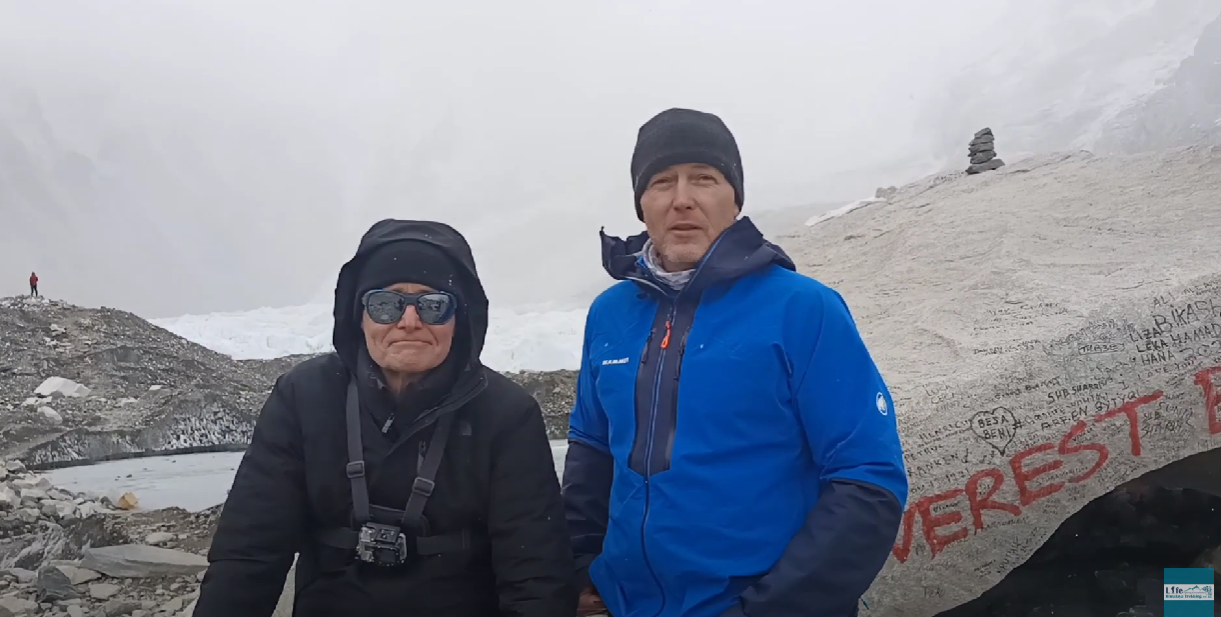

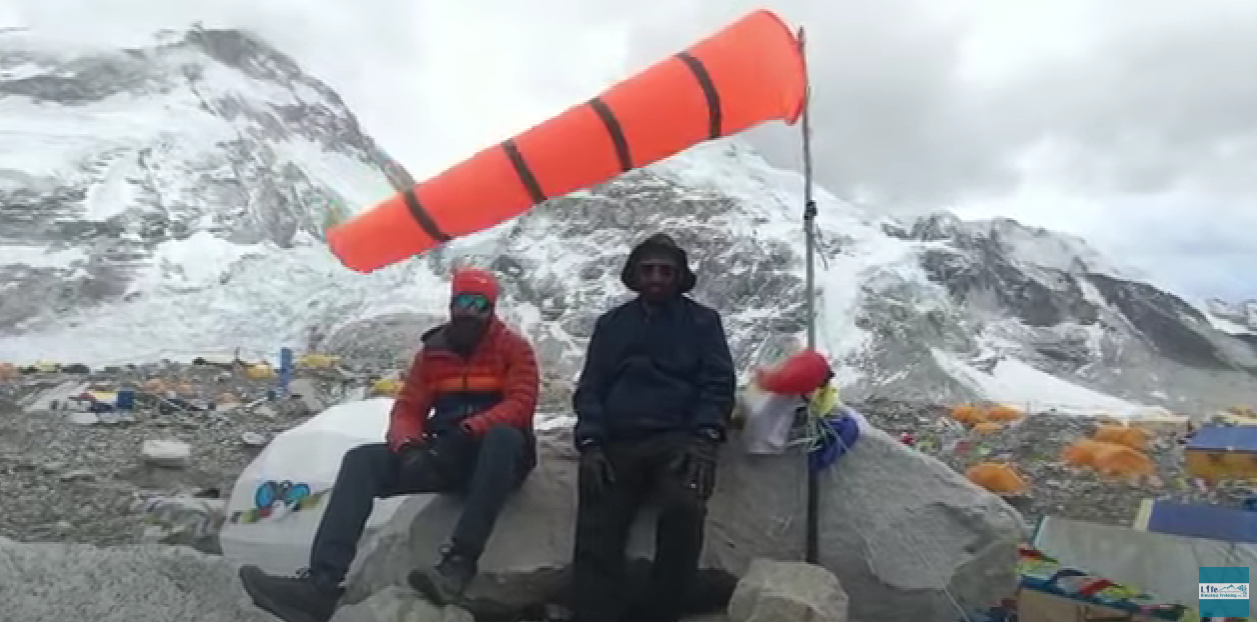




Tripadvisor Reviews
Similar Trips
Join us on similar trips in the same region
View Details
Annapurna Base CampTrek Heli Return
View Details
Manaslu and Annapurna Circuit Trek – 19 Days
View Details