
 English
 Dutch
Dutch Japanese
 Hindi
Hindi Italian
 Spanish
 French
 German
 Chinese
 Korean
 Arabic
 Hebrew
 Russian
 Portuguese
 Danish
 Czech
Czech Polish
 Swedish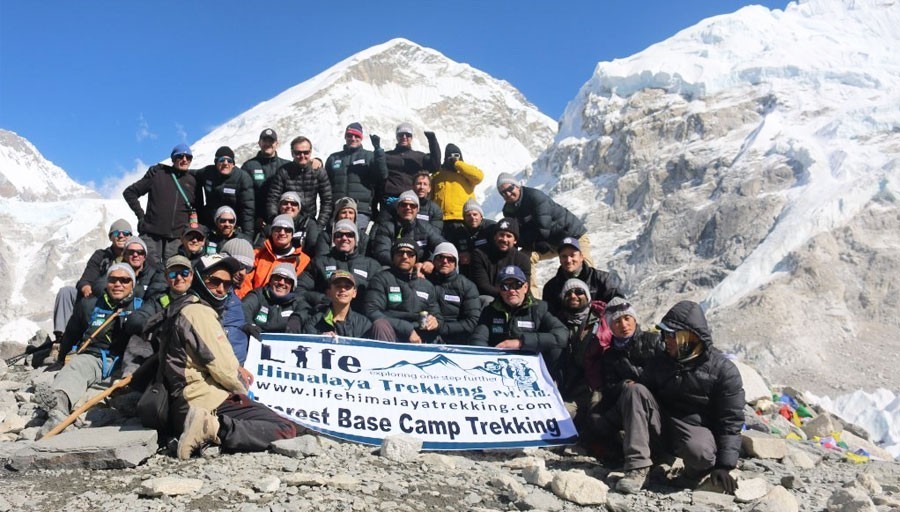
Max. Altitude
5,545 m
Best Season
Oct -Dec & March-May
Activity
Heli Trek
Start / End Point
Kathmandu / Kathmandu
Overview of Everest Panorama Luxury Trek
The Everest Panorama Luxury Trek is ideal in the Everest region, with full comfort to ensure that the travellers enjoy the beauty of the region in luxury. A mix of mild hiking, the beautiful views of the Himalayas, and thoughtfully chosen luxury lodges make this trek comfortable and unforgettable.
Everest Panorama Luxury Trek gives you the opportunity to view the world’s highest mountain and its landscapes, and does not subject you to the hassle of traditional trekking and thus is worth the money for those who appreciate the adventure and the luxury.
You start your trip in Kathmandu, visiting old temples, bustling streets and traditional markets. The time in the capital also assists you in preparing for the trek in a relaxed manner. Rather than an extra and tiresome procession, a beautiful helicopter ride will place you at Lukla straight from Kathmandu. The Everest Panorama Luxury Trek begins at Lukla and is on foot through the beautiful trails with forests, rivers and snow-capped peaks.
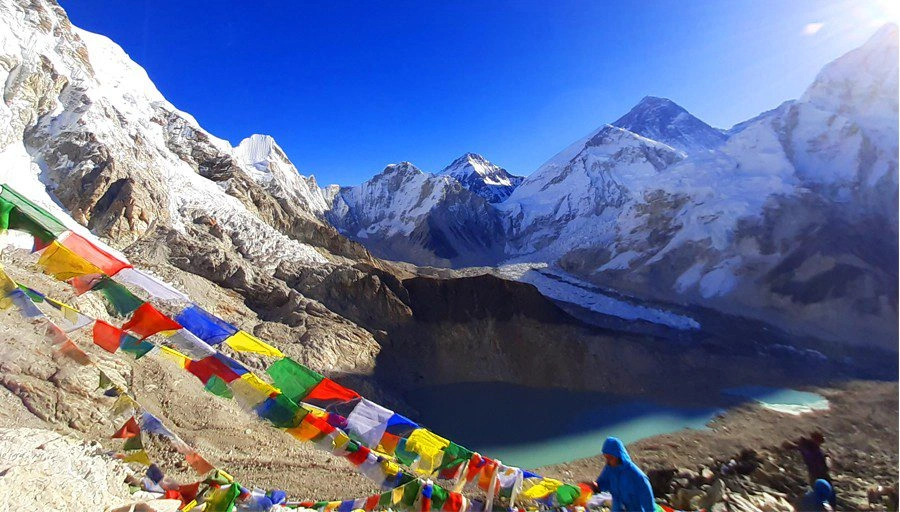
When you stroll in the Everest area, you will be walking through nice Sherpa villages and through suspension bridges, all adorned with colourful prayer flags. One of the biggest attractions is Namche Bazar, the cultural and trading hub of the area. You will be able to see mountain scenes, the local culture, and stay in comfortable rooms. Everest Panorama Luxury Trek is gradual, with adequate acclimatisation to enable your body to adapt, as the environment is fully appreciated.
The key characteristics of this trek are accommodation. You will be staying in some of the finest mountain lodges, including the popular luxury lodges that have warm rooms, quality meals, and modern facilities where feasible. These are the comforts that ensure that the Everest Panorama Luxury Trek is not a bad thing, even after the day’s trek.
The adventure is full of magnificent scenery and is within proximity of mountain Everest, Amadablam, Lhotse, and other popular Himalaya peaks. The early morning walks will make you have memorable sunrises above the mountains. Once you finish the trekking part, you take a helicopter flight back to Kathmandu, where you have the last panoramic view of the Himalayas in the air.
The professional team of Life Himalaya Trekking and experienced guides will help you be safe and comfortable during the trek, and travel smoothly. Everything is properly organised, starting with permits to everyday assistance. The Everest Panorama Luxury Trek will be an unforgettable experience, combining natural beauty, the local culture, and luxury that will make the experience of the trip to the Himalayas worthwhile.
Highlights of Everest Panorama Luxury Trek
- Trek to the Everest Base Camp and witness the highest mountain in the world
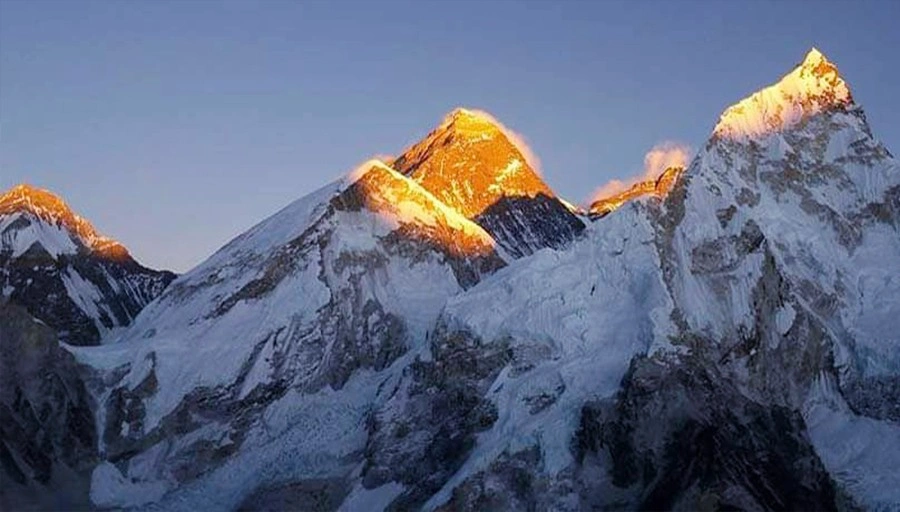
- Experience the sight of a spectacular sunrise with Mount Everest and the Himalaya in the distance, at Kala Patthar.
- Stay in the luxurious mountain hotels with warm meal hot showers in between the trek.
- Make scenic helicopter flights to Lukla and back without spending hours on the road.
- Visit ancient Sherpa villages, monasteries and have a first-hand experience of the local ways of life.
- Behold panoramic sceneries of such iconic peaks as Ama Dablam, Lhotse, Nuptse and Makalu.
- Indulge in gradual altitude ascents with an acclimatisation hike to Nagarjun Hill to enjoy breathtaking views.
Everest Panorama Luxury Trek Itinerary
01
Arrival in Kathmandu & Transfer to Hotel
The Everest Panorama Luxury Trek starts with you arriving in Kathmandu, the capital of Nepal. On arrival at Tribhuvan International Airport, a smiling representative of Life Himalaya Trekking greets you and helps you with your transfer. A few minutes of driving will bring you to Kathmandu with its bustling streets up to your four-star hotel. Once you have been checked in, you can move on to rest after the journey.
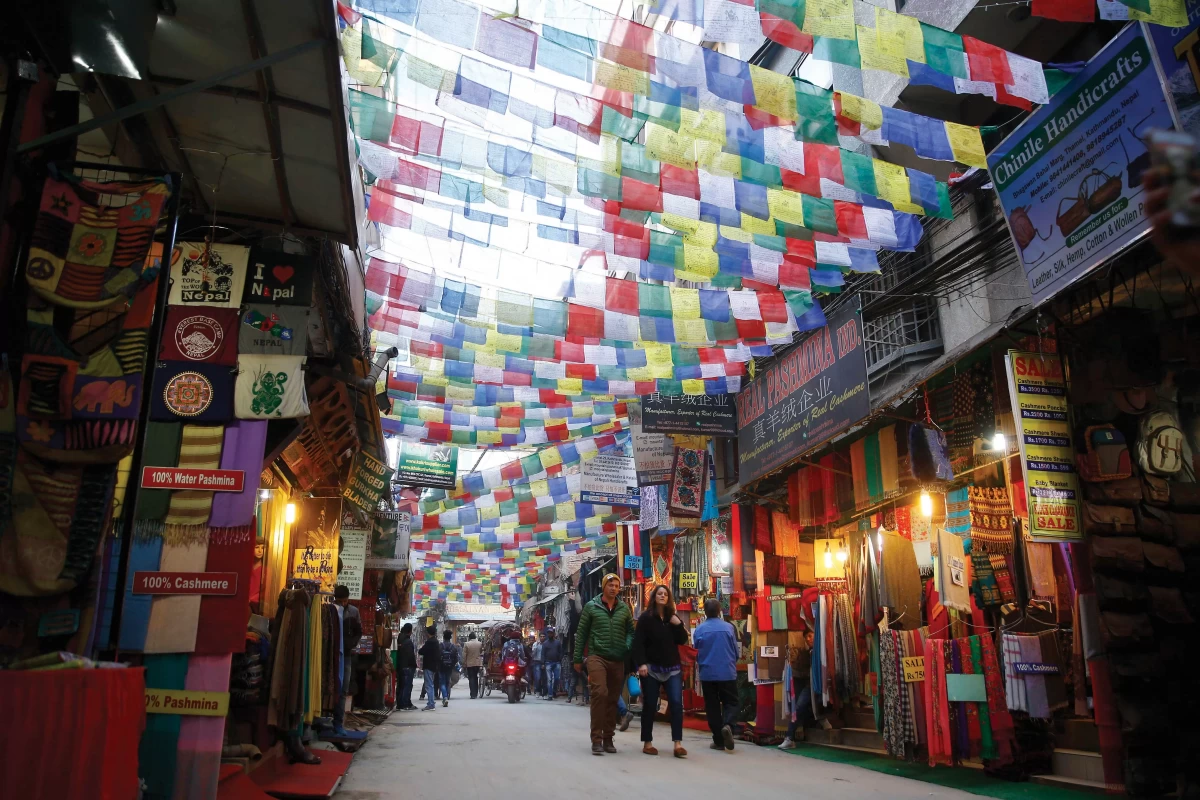
In case there is time, you can visit the local Thamel neighbourhood, which is full of colourful shops and cafes, or just walk around the hotel. Towards the evening, a short introduction to the Everest Panorama Luxury Trek will be given. The journey will be outlined and the last preparations made. This is a leisurely first day, so that you get used to the terrain and you move on to the Himalayas.
Maximum Altitude
1,320 m/4,330 ft.
Meals
None
Accomodations
4* Hotel
Transportation
Car 15min
02
Kathmandu Valley Sightseeing & Trek Preparation
The day is devoted to culture exploration and the preparation of the Everest Panorama Luxury Trek. You get to go on a guided sightseeing tour of Kathmandu Valley after breakfast. You travel in ancient streets, a local market and a significant UNESCO world heritage.
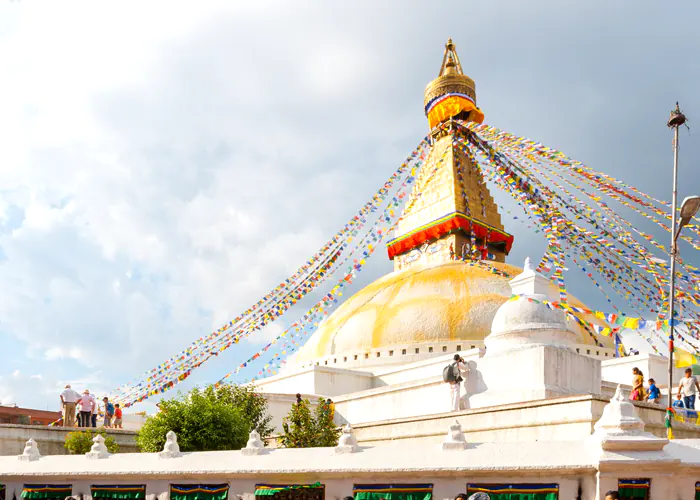
Attractions like Asan Bazaar and sites like Swayambhunath Stupa or Kathmandu Durbar Square are popular attractions where you get to know the history and tradition of Nepal.
The afternoon will be spent after a city tour, preparing for the trek. Your guide examine your trekking gear and clothing very keenly to make sure that they can withstand the Everest Panorama Luxury Trek.
In Thamel, trekking gear can be purchased and hired where necessary. This night is dedicated to rest and some psychological readings of your Himalayan adventure that begins tomorrow.
Maximum Altitude
1,320 m/4,330 ft
Meals
Breakfast
Trek Duration
4 hours sightseeing
Accomodations
4* Hotel
03
Helicopter Flight to Lukla & Trek to Phakding
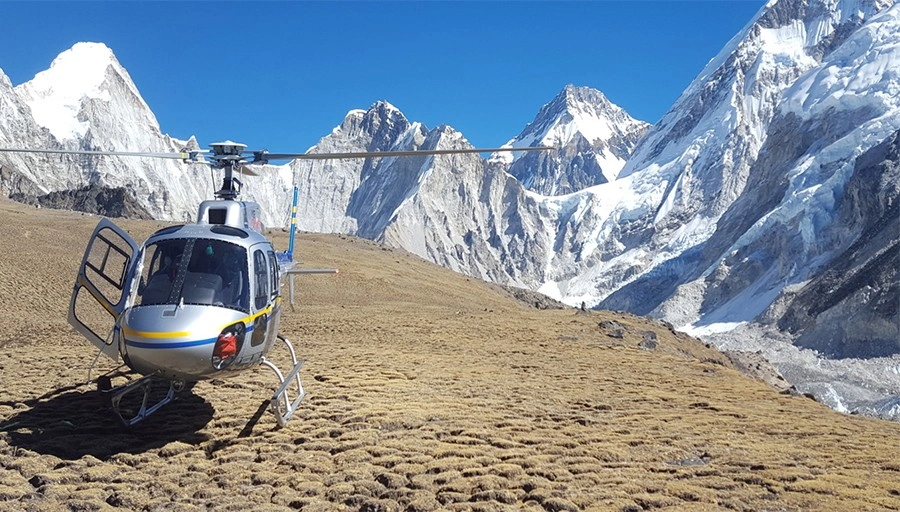
This is the actual adventure day of the Everest Panorama Luxury Trek. In the morning, you are driven to the airport, where you have an adventurous helicopter ride to Lukla. Have a beautiful aerial view of the hills, rivers and Himalayan mountains during the flight. The Everest region begins at Lukla landing.
Once you have met your trekking crew, you start on your first walk to Phakding. The path is easy and goes through Sherpa villages, green forests and the Dudh Koski River. You traverse suspension bridges, which are adorned with prayer flags and walls, which are made of mani stones that are representative of the local Buddhist culture.
The trail is not challenging and is pleasant to get accustomed to the conditions of trekking. It takes you until the afternoon to reach Phakding and be at a welcoming lodge on your first night at the Everest Panorama Luxury Trek.
Maximum Altitude
2,804 m / 9,199 ft.
Meals
Breakfast, Lunch & Dinner
Trek Duration
4 hour trek
Accomodations
Lodge
Transportation
45 min
04
Trek from Phakding to Namche Bazaar
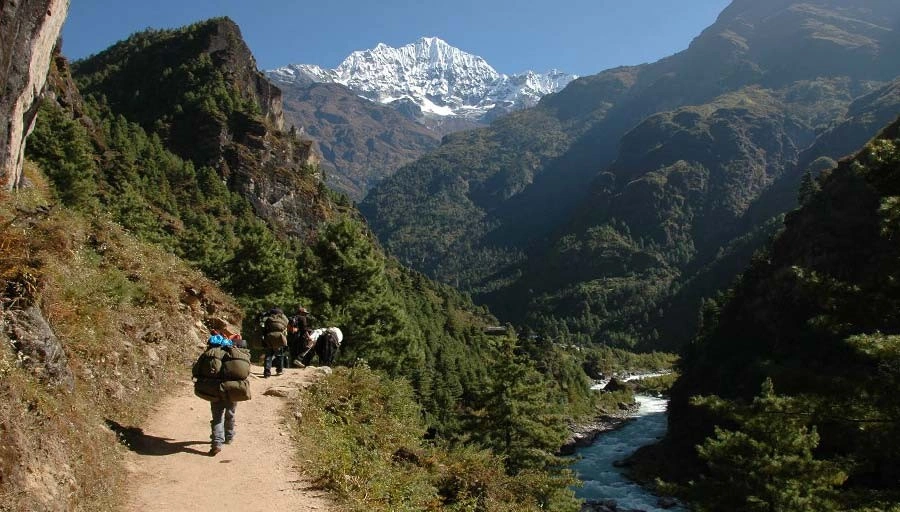
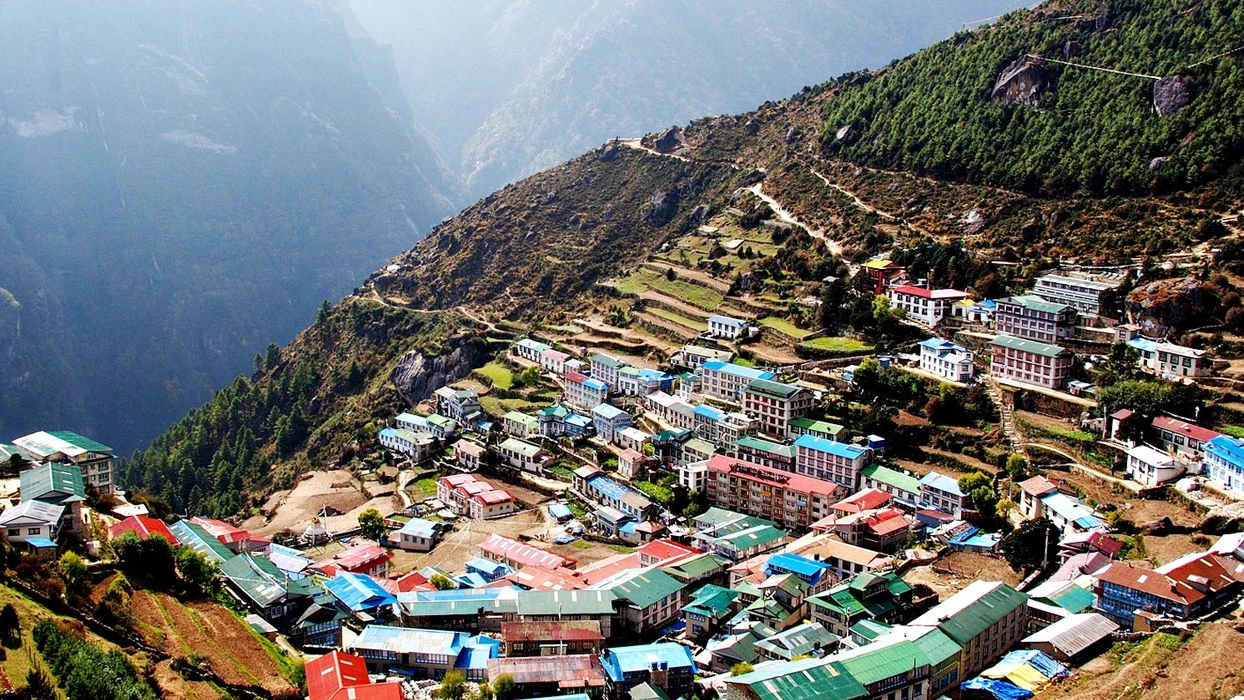
This day is also one of the most significant days in the Everest Panorama Luxury Trek, as you are entering Sagarmatha National Park and Namche Bazaar. Then, after breakfast, you trace the Dudh Koshi River, passing some suspension bridges with prayer flags. The path goes through pine forests and small Sherpa villages, which provide a view of everyday mountain life.
At Monjo, your permits are verified, and then you are officially in the national park. It then follows a route to Jorsalle, where you have a brief rest and then cross the renowned Hillary Suspension Bridge.
Beyond the bridge, a sharp uphill ascent starts. By strolling gradually in the pine trees, you attain elevation. On a bright day, you can have a glimpse of Mount Everest from here. There is a dramatic view of Namche Bazaar appearing on top of the hill after a few switchbacks. You stay in a five-star lodge and have a much-needed rest.
Maximum Altitude
3,440 m/11,286 ft.
Meals
Breakfast, Lunch & Dinner
Trek Duration
5-6 hrs
Accomodations
Lodge
05
Acclimatisation Day in Namche Bazaar – Hike to Everest View Hotel
The necessary acclimatisation in the Everest Panorama Luxury Trek is a process, and today is to assist your body to adjust safely. It starts with breakfast, followed by an easy uphill trek to the famous Everest View Hotel.
The path is sharp and brief. You will reach the viewpoint and be rewarded with the breathtaking panoramic views of Mount Everest, Lhotse and Ama Dablam with its immediate surroundings peaks.
At the hotel terrace, you may have a hot beverage and enjoy the scenery in the Himalayas. With time spent taking photos, you get back down to Namche Bazaar and have lunch there.
The afternoon is at leisure to wander with Namche on your own. You can go to the Sherpa Culture Museum, shop around or just go to a cafe. You should get enough rest, drink water and do some light exercise to prepare you with increased altitudes in the future.
Maximum Altitude
3,880 m/12,726 ft.
Meals
Breakfast, Lunch & Dinner
Trek Duration
2-3 hrs
Accomodations
Lodge
06
Trek from Namche Bazaar to Tengboche & Debuche
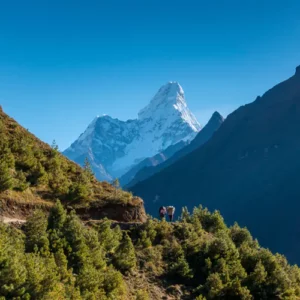
It is one of the most picturesque walks in the Everest Panorama Luxury Trek on this day. The trail leads out of Namche on a calm contour around the mountainside where one can view Everest, Lhotse and Ama Dablam constantly. The villages, such as Kyangjuma and Sanasa, that you go through are in open landscapes with prayer flags scattered across.
It then continues down wandering to Phungi Thanga beside the Dudh Koski River, where you have your lunch. Then a gradual uphill path starts by rhododendron and pine trees. The ascent is difficult and fulfilling that takes you to Tengboche.
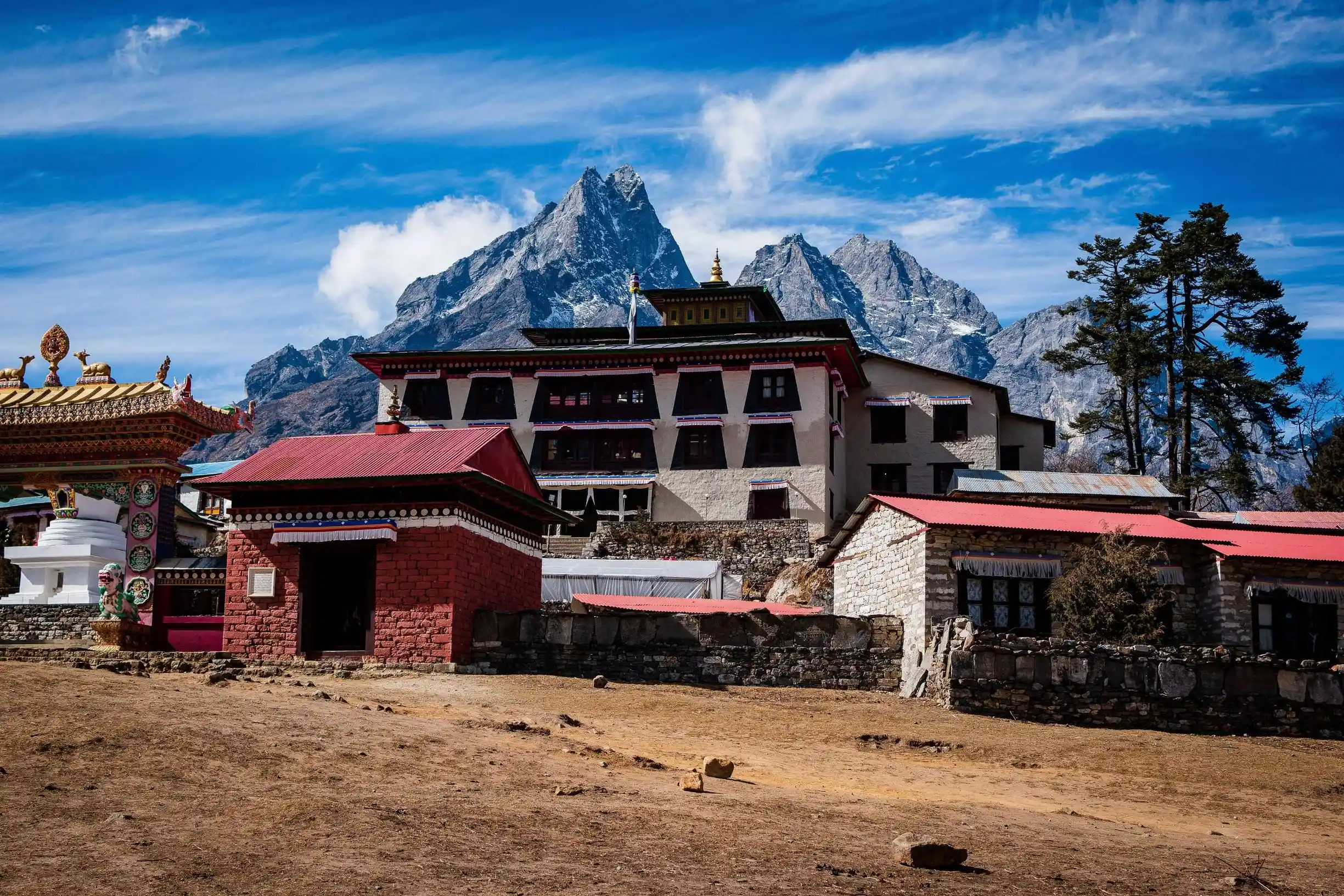
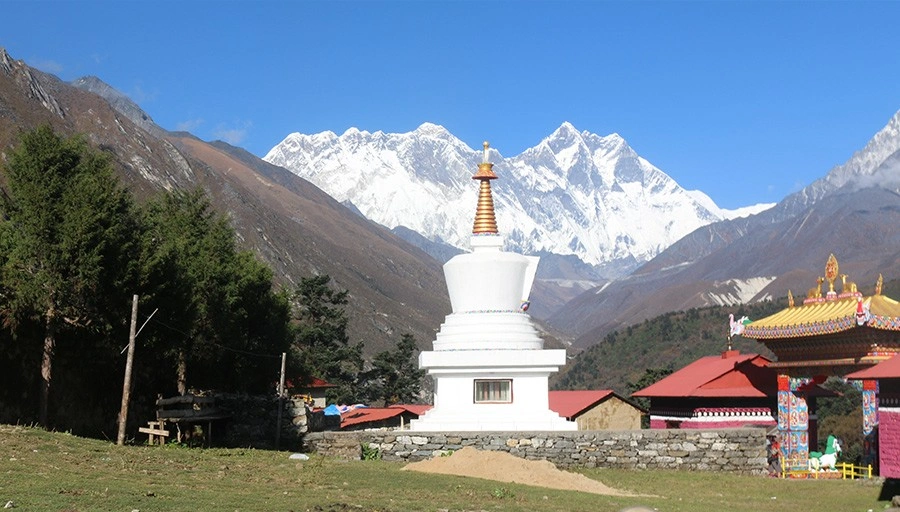
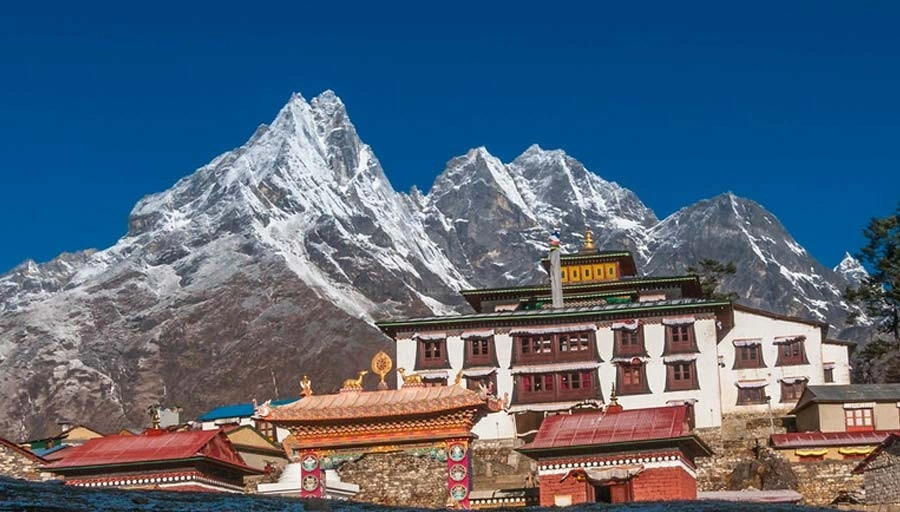
You will pay a visit to the popular Tengboche Monastery, which is the spiritual centre of the Khumbu region. If you have time, you can attend a prayer ceremony. Then, following the visit, you come down a little to Debuche, an idyllic rural camp, where you spend the night.
Maximum Altitude
3,820 m/1253 ft.
Meals
Breakfast, Lunch & Dinner
Trek Duration
5-6 hrs
Accomodations
Lodge
07
Trek from Debuche to Dingboche
The Everest Panorama Luxury Trek takes you further into the alpine zone today, and the scenery and the mountain views are more expansive. You go across a suspension bridge over the Imja Khola River after breakfast and leave Debuche. The path then ascends slowly to one of the oldest Sherpa villages in the area, Pangboche, home to the ancient Pangboche Monastery. The forest is slowly disappearing, and the landscape turns open and rough as you proceed.
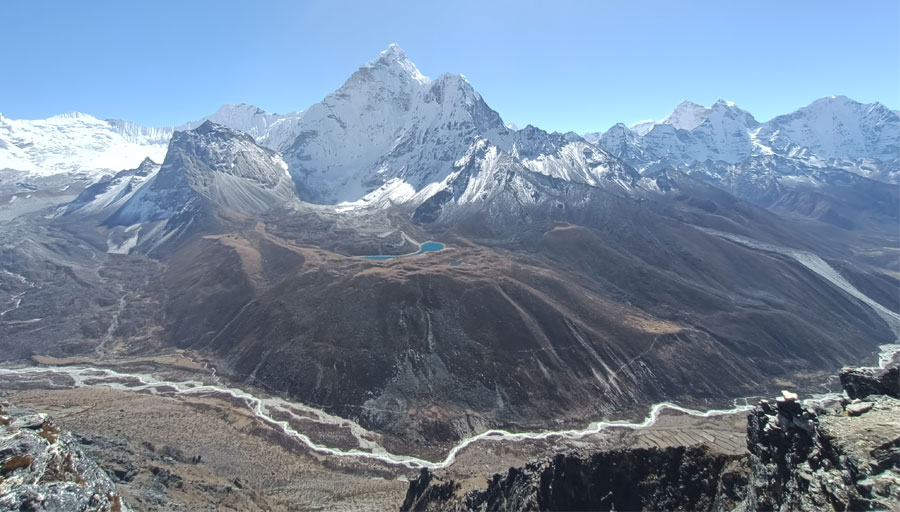
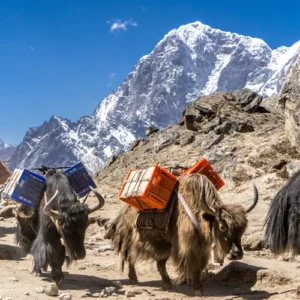
As you pass the tree line, the scenery is dramatic with the Himalayan scenery. It is common to find yaks grazing upon high-altitude pasture. There is a very beautiful view of Ama Dablam as you take lunch at a small settlement on the way. You arrive in the afternoon at Dingboche, a charming valley village which is defended by stone walls. Once in your lodge, you have a rest and enjoy the serene mountain environment.
Maximum Altitude
4,360m/14,304 ft.
Meals
B L D
Trek Duration
5-6 hrs
Accomodations
Lodge

08
Acclimatisation Day in Dingboche – Hike to Nagarjun Hill
It is important to properly acclimatise in case of the Everest Panorama Luxury Trek. Acclimatisation will enable your body to adapt to the higher altitude. Following breakfast, you go on an uphill walk to Nagarjun Hill. It is a difficult path, though your guide takes it slowly and easily. With each step up, the scenery gets more and more spectacular.
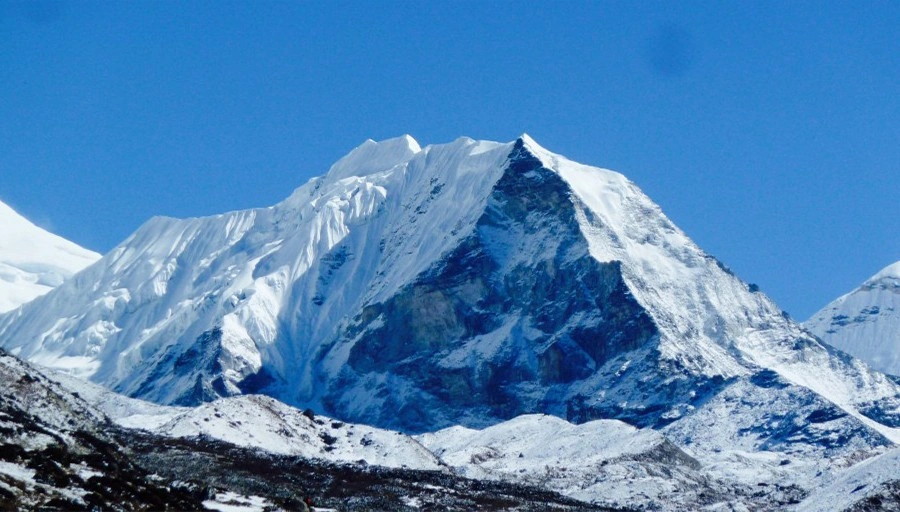
The Nagarjun Hill offers a 360 views panorama after climbing to the top of the hill. During clear days, you would witness that you see Makalu, Ama Dablam, Lhotse, Nuptse and Imja Valley below them.
Once you are done with the photos and you are tired out, you make your way back to Dingboche, where you have lunch. The afternoon is free time to relax. You can stroll about the village, read, or just sleep in the lodge. This acclimatisation day is a good preparation for the higher levels that will follow the Everest Panorama Luxury Trek.
Maximum Altitude
5100m/16732ft.
Meals
Breakfast, Lunch & Dinner
Trek Duration
3–4 hours
Accomodations
Lodge
09
Trek from Dingboche to Lobuche
The current walk on the Everest Panorama Luxury Trek will bring you nearer to glaciers and high Himalayan landscapes. Leaving Dingboche, the trail ascends slowly over the Pheriche Valley. You can take last glimpses of the Ama Dablam on your way. It turns rocky and barren towards the Khumbu Glacier territory.
After a few hours, you arrive at Thukla, where you have lunch. At this point, a sharp ascent will bring one to Thukla Pass, which is characterised by memorials dedicated to climbers and Sherpas who died on Everest.
It is an inspiring and emotional location where one can reflect. The trail on the other side of the pass goes over the rocky moraine of the Khumbu Glacier. It is colder and thinner, and mountains such as Pumori take up the skyline. Towards the end of the afternoon, you come to Lobuche, where you relax in your lodge and sleep through the night.
Maximum Altitude
4,930 m/16,170 ft.
Meals
Breakfast, Lunch & Dinner
Trek Duration
5-6 hrs
Accomodations
Lodge
10
Trek to Gorak Shep & Visit Everest Base Camp
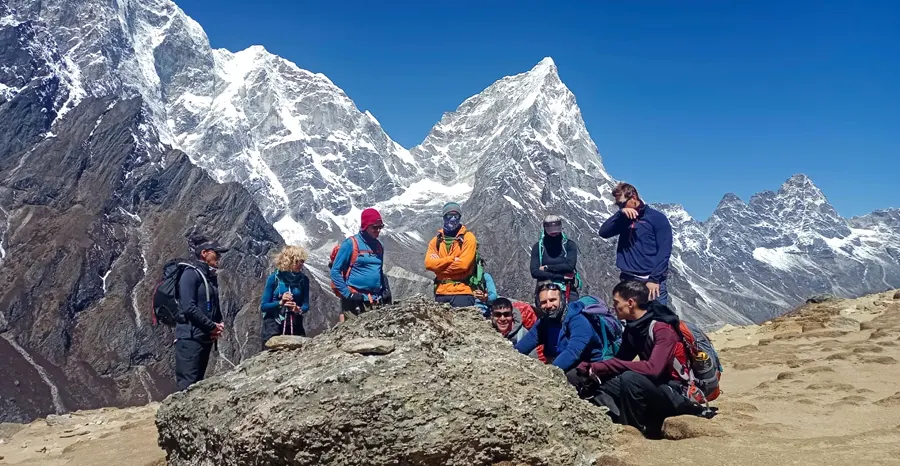
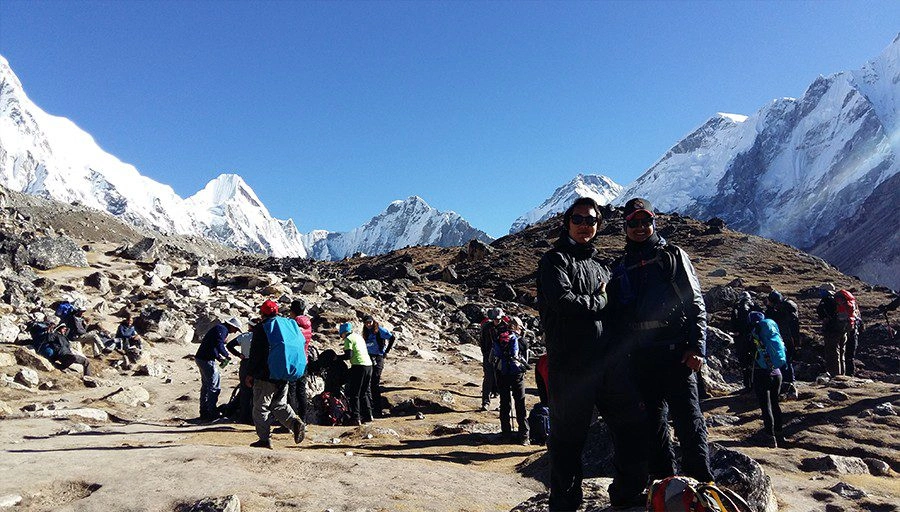
This is the best day of the Everest Panorama Luxury Trek because you have finally reached the Everest Base Camp. You pass the rocky moraine of the Khumbu Glacier after having breakfast in Lobuche.
The trail is steep and slow, and the icy slopes make the experience memorable. At this altitude, breathing is more difficult, and therefore, your guide will be encouraging you to move at a slow, steady rate.
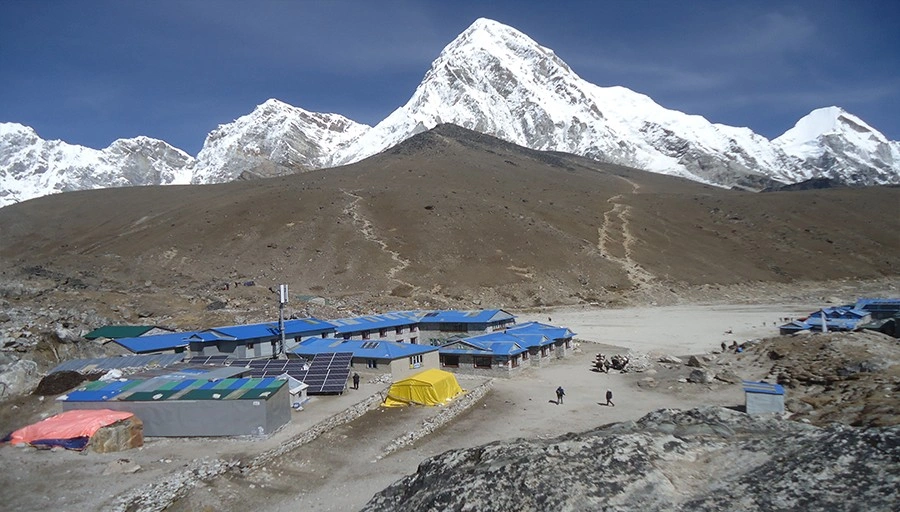
A few hours later, you are at Gorak Shep, where you have lunch and rest. You drop your heavy bags and move on to Everest Base Camp. The last leg is tough but full of gratification.
It is also an emotional experience standing in the Everest Base Camp, which is surrounded by the towering Himalayan peaks and the Khumbu Icefall. Following the pictures and partying, you go back to Gorak Shep and have a warm meal and a sleep.
Maximum Altitude
5,364 m/17,598 ft
Meals
Breakfast, Lunch & Dinner
Trek Duration
6-8 hrs
Accomodations
Lodge
11
Kala Patthar Sunrise Hike & Helicopter Flight to Kathmandu
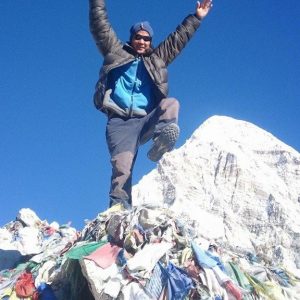
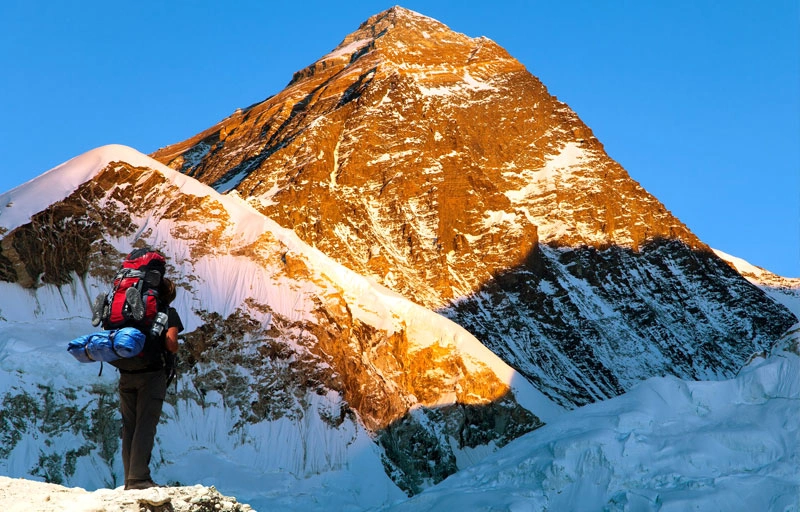
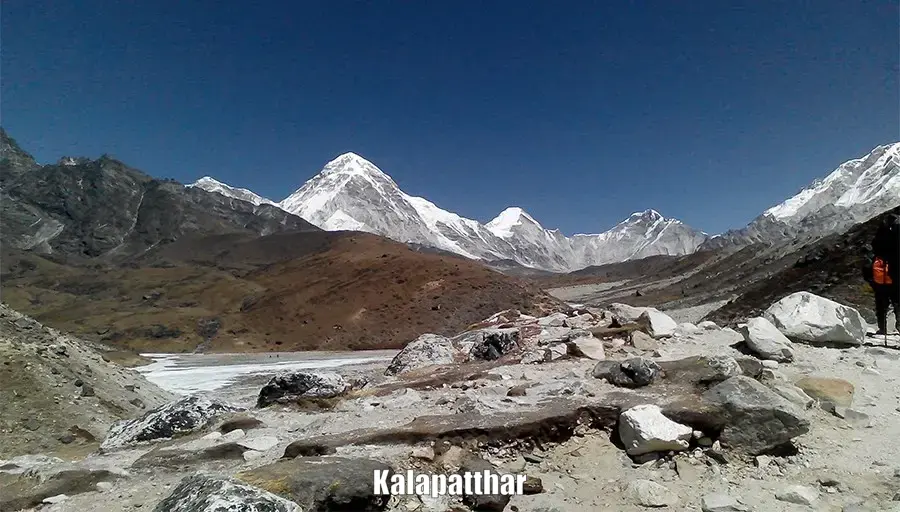
This is a memorable day of the Everest Panorama Luxury Trek, and the day before sunrise. You begin a climb to Kala Patthar, and ascend steadily in chilly and thin air. It is a magical feeling to arrive on top when the sun is rising. Here, the wonderful mountain comes to view include Mount Everest in golden light, along with Nuptse, Lhotse, Pumori and other mountains.
Once you have photographed the scene and had a good time, you make your way down to Gorak Shep and have breakfast. A helicopter comes soon after to transport you out of Everest.
The scenic flight provides a spectacular view of the glaciers, valleys, and villages from the air. You make another short stop in Lukla, then proceed to Kathmandu. You are then taken to your hotel, where you are able to rest after spending days in the mountains.
Maximum Altitude
5,545 m / 18,192 ft.
Meals
Breakfast, Lunch
Trek Duration
2–3 hours hike
Accomodations
4* Hotel
Transportation
1-hour flight
12
Free Day in Kathmandu
Today is a much-deserved rest in Kathmandu after finishing the Everest Panorama Luxury Trek. You will be able to spend a leisurely morning in your hotel, having a hearty breakfast. This is a free day after the trek, and you have time to relax in the city to appreciate its comforts of the city.
In the event that you want to sightsee, you could visit popular cultural locations like Pashupatinath Temple, the Boudhanath Stupa or Bhaktapur Durbar Square. Shopping for souvenirs in Thamel or a cafe is also an excellent activity to spend a day.
Alternatively, you may opt to have a total relaxation of a massage or a spa. This day is also a buffer where it may be delayed due to any of the travel delays. You can have a farewell dinner in the evening to celebrate the successful completion of your Everest Panorama Luxury Trek.
Maximum Altitude
1,320 m / 4,331 ft.
Meals
Breakfast
Trek Duration
Flexible
Accomodations
4* Hotel
13
Departure from Nepal
This is your memorable Everest Panorama Luxury Trek, and it is over today. You have breakfast at the hotel, and then you are ready to leave. Based on your boarding time, you can have time to do last-minute shopping or rest. A representative takes you to Tribhuvan International Airport, where you board an international flight.
When you leave Nepal, you have lifetime recollections of trekking to the Everest Base Camp, observing Himalayan sunrises and having luxuries in the highest mountains in the world. It is an adventure, a comfortable and cultural journey that is one of a kind. Life Himalaya Trekking appreciates your visit with them and wishes to see you once more in future in another adventure to the Himalayas.
Meals
Breakfast
Transportation
Car 15min
Equipment Checklist 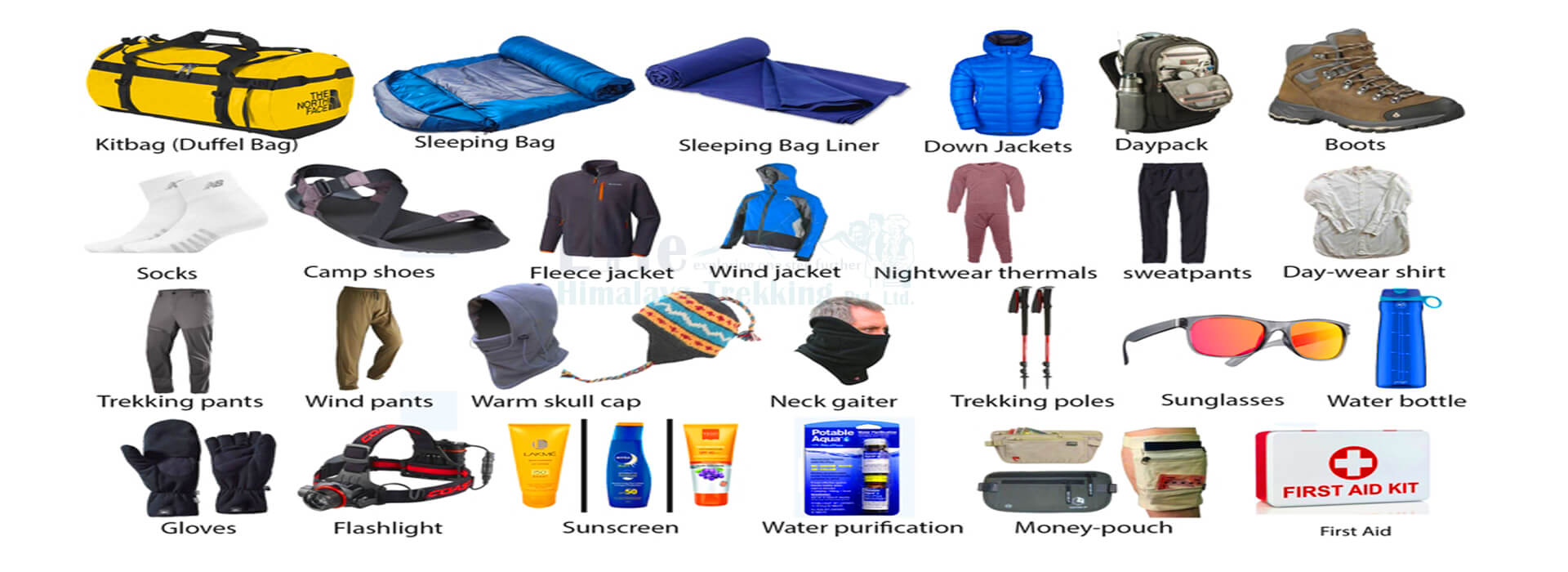

Required Equipments for Trekking in Nepal
- Breathable Underwear
- Sports Bra
- Base Layers
- Trekking Shirts
- Trekking Trousers and Shorts
- Fleece Jacket
- Down jacket (insulated jacket)
- Windcheater (water proof)
- Sun protection Hat
- Headband or Beanie
- Scarf or neckband
- Gloves (inner and outer )
- Hiking Boots
- Trekking Shoes
- Hiking Socks
- Thermal Socks
- Gaiters
- Duffel Bag
- Day pack
- Sleeping Bag
- Trekking poles
- Sunglasses
- Hydration bladder or Water bottle
- Head Lamps
- Batteries
- Personal towel
- Swiss army knife
- Sun lotion
- Medical & first-aid kit
- Woolen socks
- Waterproof jacket
- Lip Guard
- Insulated pants
- Baby wipers
Required Equipments for Climbing in Nepal
- Water bottle
- Batteries and bulbs
- Flashlight
- Personal towel
- Swiss army knife
- Rucksack
- Sun lotion
- Medical & first-aid kit
- Sewing kit
- Polypropylene/wool socks
- Other required equipment
- Sleeping bag
- Down Jacket
- Waterproof jacket
- Trekking shoes/boots
- Camp shoes
- Jumperorpile jacket
- Hiking pants
- Hiking shirts
- Full–sleeves shirt
- T-shirts
- Sun hat
- Gloves
- Woolen hat
- Long underwear
- Goggles or sun glasses
- Gaiters
- Sun block for lips
- Light cotton socks
- Mountain trekking boots
- Woolen socks to wear with boots
- Nylon wind breaker
- Insulated pants
- Nylon wind pants
- Long sleeved cotton/woolen shirts
- Sun hat
- Long cotton hiking shorts
- Fleece/wool for climbing
- Lightweight fleece
- Sleeping pad (karri mat) or thermarest
- Down high altitude sleeping bag
- Down jacket/trousers/vest
- Light cotton athletic socks and wool socks
- Water proof climbing jacket
- Head torch/batteries/bulbs
- Climbing sunglasses
- Lightweight thermal/insulated ski gloves
- Sun screen
- Warm climbing trousers
- Wool long underwear
- Other required equipment
- Climbing boots
- Gaiters
- Ice axe
- Harness
- Crampons
- Karabiners
- Tapes/slings
- Snow bars
- Ice screws
- Rock pegs
- Deadmen
- Crash hat
- Day bag
- Rucksack
- Lip salve
- T-shirts
- Ascenders
- Ascenders
- Kit bag
What's Included
- Airport picks up and drops international and domestic.
- Private transportation in pickup and drops.
- Flight from Kathmandu to Lukla for members and involved staffs & Luggage allowed only 10 kg Big bag & 5 kg hand carry.
- Complete departure information, about the trek, flight ticket, guide, altitude sickness, and reconfirmation and extend visa service (if necessary) and extra tour service before the trek starts.
- 4 nights in 4-star hotel Marriott of Kathmandu with BB plan.
- As per group size experience, government license holder trek guide, helpful and friendly strong, porters (1 porter for 2 people) and their food, accommodation, salary, equipment, transportation, accidental insurance for all staff.
- Stay in the best available tea houses with Breakfast, Lunch, and Dinner.
- Helicopter Kathmandu-Lukla-Kathmandu with all the airport taxes.
- Helicopter flight from Gorakshep to Lukla.
- Everest National Park Fee & TIMS Permit Fee.
- 1 well English speaking guide.
- 1 strong porter for every 2 members.
- Daily wages & Insurance of all staff.
- First aid box including oxi-meters.
- Life Himalaya Printed Duffel Bag, T-shirts, Sleeping bags, Down Jackets.
- Everest base camp trekking trail map.
- Farewell Dinner.
- Achievements Certificates.
What's Excluded
- Personal Equipment & Insurance.
- Nepal entry visa charge.
- All beverages and other personal expenses.
- Snacks and other personal expenses.
- Emergency Evacuation if required.
- Battery charge, hot showers & international phone calls.
- Service not mentioned above.
Note
In this Everest luxury trek, each day trekkers have to trek a maximum of (05-07 hours) which is about (10 km-14 km) per day after breakfast. Sometimes the trek hours will be more or less as per your walk. There are normal aircraft both-way flights from Kathmandu-Lukla-Kathmandu and another is a Helicopter flight from Gorak Shep to Lukla on your trip. However, the flights are about 35 minutes short and scenic above the Himalayas.
Please Kindly bring Travel insurance | Passport | passport size photo at Orientation Meeting before the trek departure
All the garbage produced from our trekking, We manage to bring those back to Kathmandu for recycling.
Everest Panorama Luxury Trek – 13 Days - Essential Information
Trek Difficulty
The Everest Panorama Luxury Trek can be said to be a moderate to a tough trek, not because it is a very difficult one, but because it is an altitude issue. The trail is not a technical climb that needs skills, ropes, or previous experience in mountaineering, but rather physical stamina and the will to succeed.
The majority of trekking days consist of 5-7 hours of walking along the properly marked mountain trails, gradual uphill walks, and steep ascents with frequent utilisation of the mountain rocks. The steepest parts are the uphill climb to Namche Bazaar, the forested walk to Tengboche, and the high altitude walk around the Everest base camp.
The Everest Panorama Luxury Trek has the greatest challenge in altitude. You get to higher heights of over 5,000 meters, the peak being Kala Patthar at 5,545 m / 18,192 fteters, which has a very low oxygen concentration. To cope with this safely, the itinerary will have the acclimatisation days in Namche Bazaar and Dingboche, which will give your body time to adjust slowly.
The luxurious nature of this trek, comfortable accommodation, healthy food, professional guides, and flying back by helicopter are a major decrease in the physical stress. Those with basic fitness, with a slow walking pace, can complete the Everest Panorama Luxury Trek successfully even when they are first-time high-altitude trekkers.
Weather and Best Season
The weather is significant in determining the experience of the Everest Panorama Luxury Trek. The spring (March to May) and autumn (late September to November) are the most favourable seasons to do this trek since most conditions are stable and mountain views are optimal at these times.
The spring has pleasant temperatures during the day, rhododendron woods are in bloom, and the days are longer. Autumn and October in particular have been associated with crystal clear skies and sharp mountain visibility following monsoon rains that have removed dust in the air.
In these hot seasons, daytime temperatures at the mid-altitudes are between 5 °C and 15 °C, whereas nights get colder as you ascend. Temperatures may also fall to below freezing point, especially at night, at Everest Base Camp and Kala Patthar.
During winter (December to February), it is very cold, and there is a lot of snowfall, hence there is increased difficulty trekking, whereas during the monsoon (June to early September), there is rain, clouds, and delayed flights.
The spring and autumn are always good seasons to have the Everest Panorama Luxury Trek due to a good balance of comfort, safety and scenery.
Food & Drink
On the Everest Panorama Luxury Trek, Food is sustaining, diverse, and will help you with your energy requirements at high altitude. The package includes all meals on the trek and is served in well-chosen lodges that have a good reputation with regard to cleanliness and quality.
You will be provided with a good breakfast in the morning, a lunch in tea houses in the a, and a good dinner in the evening. Foods are cooked on the spot and emphasise high-energy foods to aid in getting accustomed to the altitude.
You will have a combination of local Nepali foods and foreign food. Dal bhat- rice, lentils, vegetables and curry are much advised as it is also very nutritious, as well as being readily digestible. It also prepares other meals such as noodle soups, pasta, fried rice, potatoes, momos, porridge, eggs, pancakes and soups.
Vegetarian choices are very common and usually promoted in elevated areas. The Everest Panorama Luxury Trek requires the availability of safe drinking water, and lodges serve boiled or purified water. Hot beverages like tea, coffee and ginger lemon are useful in hydration and warming the body, whereas alcohol should be avoided until after the trek.
Altitude Sickness
One factor that should not be ignored during the Everest Panorama Luxury Trek is altitude sickness, also referred to as Acute Mountain Sickness (AMS), because the trek exceeds 3,000 meters and may even reach an altitude of 5,545 m / 18,192 fteters at Kala Patthar.
The reason behind AMS is that the oxygen levels drop with the rise in altitude, and the body cannot work normally. The typical symptoms are headache, nausea, dizziness, fatigue, and sleep disruption. These symptoms are normally slow to develop and should not be overlooked.
The Everest Panorama Luxury Trek itinerary will be developed to minimise the probability of experiencing the effects of altitude sickness by slowly climbing to the peak and the scheduled acclimatisation days of Namche Bazaar and Dingboche. Trekkers are also recommended to take their time, consume a lot of fluids, eat healthy and also avoid alcohol and smoking.
Professional guides pay close attention to the state of all individuals, and they are trained to notice the initial signs. Mild cases have been treated in most cases through rest and hydration, whereas in cases of the aggravation of the symptoms, an urgent descent is required. In case of necessity, helicopter evacuation can be organised, which will be safe during the trek.
Preparation and Fitness
Nevertheless, it is important to prepare mentally and physically to make the most of the Everest Panorama Luxury Trek. Although this is a luxury trek that has cosy lodges, professional guides and porter assistance, it still takes several days of hiking up to high altitude.
It is advisable that trekkers count at least 6 to 8 weeks before the journey, as well as to develop cardiovascular fitness and leg strength. Hiking, brisk walking, jogging, cycling, swimming and climbing stairs are great activities that help in enhancing endurance.
An average trekking day is 5-7 hours on the trail, which may be rough or smooth and may have uphill and downhill climbs; hence, stamina is a factor. Another benefit of training your hiking boots before the expedition is to avoid blisters, and the alternative benefit is confidence when you train on longer day hike trips.
Psychological training is also essential. Be prepared to walk up early, in cold mornings and variable weather. The comfort that is offered in the Everest Panorama Luxury Trek, such as the quality meals and warm lodges help in the recovery every day. With proper planning and a positive attitude, the walk may not only be bearable but also extremely rewarding.
Visa and Permits
Normally, in order to travel on the Everest Panorama Luxury Trek, one will need a valid Nepal tourist visa together with trekking permits, which are not difficult to secure. The majority of tourists are granted a tourist visa at Tribhuvan International Airport, Kathmandu. It is done through completion of a form, paying the visa fee and stamping of the visa. This trek can be done within a 30-day visa, and it is advisable to carry some cash with you in major currencies to pay.
Besides the visa, one needs trekking permits to visit the Everest region. These are: the Sagarmatha National Park Entry Permit and the Khumbu Pasang Lhamu Rural Municipality Permit. With the Everest Panorama Luxury Trek, all the permit arrangements are managed by Life Himalaya Trekking, which saves you time and hassle.
Your guide also brings along the permits and hands them at checkpoints on the trail. All you have to carry with you is your passport and your visa. Everything else is done on your behalf, giving you a hassle-free and stress-free trekking experience.
Health & Safety
Health and safety are given priority during the Everest Panorama Luxury Trek. The expedition is under the guidance of professional guides who have been trained on first aid, high altitude diseases and emergency management. They also have a well-stocked first aid kit and keep close contact with the operations department, as well as efficiency in taking timely measures in case of the need to assist.
Helicopter emergency evacuation can be organized on any point in case of a serious medical situation.
A safety-first policy is practised on the trail. It is also slow and steady in the manner in which walking is done, with frequent pauses to avoid exhaustion. The Everest Panorama Luxury Trek itinerary incorporates acclimatisation days to enable your body to adjust to the altitude without the risks of coronary diseases.
The guides will pay close attention to the trekkers in order to detect exhaustion, dehydration or altitude sickness. Hygiene too is stressed upon. Meals are cooked in reputable lodges, and only boiled or purified drinking water is taken. The trek is secure and under control with the right directions and measures.
Transportation
The entire transport in the Everest Panorama Luxury Trek is well organised in such a way that comfort, efficiency, and safety are achieved. At Kathmandu, there will be the use of private vehicle transfers that will serve you at airport transfers, hotel transfers and sightseeing in Kathmandu. These are comfortable, air-conditioned cars with professional drivers who are conversant with the local traffic conditions.
Helicopter flights are one of the most remarkable items in the Everest Panorama Luxury Trek. You will fly in a helicopter between Kathmandu and Lukla without the hassle of having to spend a long road trip, and reduce the waiting time in the air, which is prevalent with small aircraft.
This flight provides us with the aerial view of hills, valleys, and Himalayan peaks. Upon the completion of the trek and arriving at Kala Patthar and Everest Base Camp, the trekker is flown back to Kathmandu by a helicopter.
This luxurious ride saves time and physical effort. On trekking days, you travel completely on foot, and your main luggage is carried by porters so that you can hike without any heavy bag on your shoulders.
Travel Insurance
All trekkers taking part in the Everest Panorama Luxury Trek are obliged to take travel insurance. Trekking in a high altitude area is risky, and in some uncommon instances, emergency medical services or helicopter rescue may be required. These services are quite expensive, and the right insurance cover is the only way to be safe and have a clear mind.
When buying insurance, ensure that it is specifically for high altitude trekking to a minimum of 6,000 meters. Normal travel insurance policies do not cover trekking up to the levels of the Everest Base Camp, and a special policy is advised.
Medical expenses and emergency helicopter evacuation should also be covered in the insurance. It is advisable to buy your insurance in your home country and carry a copy of the policy with you to Nepal, together with emergency contact information.
Our team will help in the coordination between you and your insurance provider in the event of an emergency. With adequate coverage, you can sit back and relax in the Everest Panorama Luxury Trek knowing that you are well covered.
Alternative Routes
The Everest region has a variety of trekking routes, which can suit various time periods, interests, and fitness levels. Although the Everest Panorama Luxury Trek is meant to be an adventure that provides comfort, there are other paths that can be taken based on your wishes.
The classic Everest Base Camp Trek is a 12-14 round trip trek to Everest Base Camp and takes 12-14 days (in and out) and then walks back to Lukla, rather than flying, because it is a classic trekking experience at a cheaper rate.
The shorter variation of the Everest View (Everest Panorama) Trek requires 7-10 days, where the trekker only goes as far as Tengboche or vantage points, and only gets to see phenomenal views of Everest without necessarily going to the extreme altitude level, which is the best choice when time is limited.
Gokyo Lakes Trek is another adventurous alternative, which takes one to high altitude turquoise lakes and the summit of Gokyo Ri (5,360 m / 17,585 ft), and then becomes connected to EBC via Cho La Pass, which is the path of a difficult choice.
Our team can tailor these itineraries or add to these excursions, such as Chitwan or Pokhara, to make your Nepal experience more special.
Your Extra Expenses
Although the Everest Panorama Luxury Trek package includes most of the basic expenses, a trekker will have to make a personal budget. These are the Nepal tourist visa (around USD 50 for 30 days) and meals outside Kathmandu after breakfast.
Out on the trek, you are responsible for bringing sodas, snacks or alcoholic drinks, but tea or coffee is commonly served with meals. Individual climbing equipment, such as boots, jackets, sleeping bags, or poles, might have to be hired or bought in Kathmandu.
Guides, porters and drivers should be tipped; we recommend about 10 per cent of the trek fee. The Wi-Fi, hot showers, laundry, souvenirs, and miscellaneous personal items are the other optional costs.
Another added cost is the travel insurance that is not optional with regard to the trek. Bring with you enough Nepali rupees since there are few ATM in the high altitude regions. Being careful means that you are not caught up in the costs but are focused on your goal.
Language & Communication
The Everest Panorama Luxury Trek is an easy route in terms of communication. Guides and the majority of lodge employees are fluent in English, and it is not a problem to keep up with the daily programmes, ask questions and get to know the local culture.
Shopkeepers and porters usually use simple English or Nepali that is adequate to carry out the common interaction. The Sherpa locals can also speak their own language; however, visitors are never left out as they are always met with a simple farewell or hello greeting, namaste. Certain words can be learned, such as dhanyabad (thank you), but these are not compulsory.
Your guide is a cultural translator who assists you in dealing with locals, knowing their traditions, and negotiating local manners. Towards the end of the trek, it becomes easy to communicate, and a good number of trekkers love to share nice greetings with locals found on their path.
There is hardly any language barrier to be considered, and you can concentrate on the adventure and the picturesque scenery of the Everest region.
Mobile Network, Internet & Charging Facilities
Internet connectivity is possible, but not very high in the Everest Panorama Luxury Trek. The Nepal Telecom (NTC) and Ncell mobile coverage are reliable in the area up to the Namche Bazaar and beyond to higher villages such as Dingboche or Lobuche.
To make simple calls and send a message, it is advisable to buy a local SIM in Kathmandu. In most lodges, there is availability of internet, which is usually at a minimal charge. In lower altitude luxury lodges, free Wi-Fi is occasionally provided, whereas higher altitude lodges use satellite networks, which are not as fast and are only appropriate for sending a message or an e-mail.
Electrical outlets can be charged at lodges, typically at a nominal fee at higher altitudes, and at lower lodges, a free service is the norm. A power bank is important to carry in case of a power shortage. The voltage in Nepal is 230 V (Type C/D outlets) and therefore carry an appropriate adapter.
The benefit of planning is that your camera, phone and other electronics will remain charged as you enjoy the fantastic views of this luxury trek.
Don’ts on this Trek
The main factor in the Everest Panorama Luxury Trek is responsible trekking. Don’t disrespect local culture by taking pictures without their permission or without authorisation in monasteries. Take off your shoes and hats in holy sites, and you should lower your voice when praying. Always pick up your trash till you get a place to dispose of it, and leave no footprints.
Listen to your body and report to your guide in case of altitude sickness or illness. Do not interfere with wildlife, destroy property; do not feed animals or carve names on rocks, trees, or buildings.
Similarly, do not promote the act of begging among the children, but assist the communities in the correct method, such as through schools or hospitals. These few rules save the environment, conserve the culture and make the trek safer for all.
The people who follow them will assist in preserving the natural beauty and spiritual integrity of the Everest area and enable you to experience the luxury of trekking with true responsibility and fulfilment.
Trip Extension
Many things can follow after finishing the Everest Panorama Luxury Trek to continue with your adventure in Nepal. The Chitwan National Park has jungle safaris where the tourists can view rhinos, deer, birds and other wildlife, a contrasting scene to the high Himalayas.
Pokhara is a peaceful lakeside city with great views of the mountains. One can have a short rest by the lake Phewa, or can do some paragliding or make some short treks to the surrounding villages, such as Dhampus.
Instead, experience the cultural heritage of Kathmandu Valley through guided tours of cultural heritage sites that are UNESCO World Heritage sites, including Bhaktapur, Patan, Pashupatinath and Boudhanath.
These extensions can be done to your trek to achieve a Nepal experience that is varied in terms of adventure, relaxation, and culture.
Any additions could be planned and assisted by our team in terms of logistics, and the journey will be smooth, and the trip will be more interesting. These additional escapades are a supplement to the Everest luxury trek, which will enable you to explore Nepal outside the mountain.
Photography & Drone Rules
Everest Panorama Luxury Trek offers unlimited photographic opportunities. Personal photography is allowed, although one must seek permission before making close-up shots of the locals or within monasteries. Obey the posted rules of religious places; some permit no flash, and some outlaw it completely.
The use of drones in the Sagarmatha National Park is limited and requires special permission from the civil aviation authorities, that are hard to get. Confiscation can be caused by unauthorised drone usage.
Pay attention to the scenic terrain, sunrise and sunset, and culture. It is worth remembering that some of the best experiences are those that you enjoy better enjoying without a camera.
With these guidelines, you will be able to enshrine your Everest adventure in a safe, respectful, and responsible manner and still maintain the serenity and sanctity of the Everest region for all.
Tips for First-Time Visitors
The Everest Panorama Luxury Trek is not too difficult, and with a couple of simple habits, first-timers can do it. Move slowly–there is nothing to hurry about. Bring the essentials to the higher altitudes, like a refillable water bottle, tissue paper, wet wipes, etc.
Always keep small Nepali rupees to buy snacks, tips, or charging fees, as there are not many ATMs beyond Kathmandu. Praise local rituals: greet with Namaste, circumambulate clockwise around stupas, and do not cross offerings.
Follow your guide, who keeps you safe, well acclimated and daily plans are unproblematic.
Lastly, enjoy all the moments of the trip- take breaks to breathe in, enjoy the mountains, mingle with the locals and embrace the culture. The Everest Panorama Luxury Trek is not merely taking a trip to Everest Base Camp but going through the whole Himalayan adventure. By adhering to these tips, you will make your trek safe, enjoyable and memorable.
Everest Panorama Luxury Trek – 13 Days - FAQs
What is the luxury of this trek?
The adventure provides luxury accommodation, quality services, and picturesque helicopter flights for ease and comfort.
What kind of place of stay will I have on the trek?
In Kathmandu, you will be staying in a 4-star hotel. On the trek, there are luxurious mountain lodges that offer comfortable rooms (with or without en-suite bathrooms), hot showers in the lower elevations and warm dining rooms.
Do I need to have previous trekking experience when I join this trek?
It does not need any previous experience of high-altitude treks. Fitness and training are all that is needed, even in the case of first-time trekkers.
Will this be a trek to Everest Base Camp?
Yes. The trek takes you to the Everest Base Camp (5,364 m / 17,598 ft) and a climb to Kala Patthar (5,545 m / 18,192 ft) to see the mountain panorama.
Is the helicopter flight safe?
Yes. Safety is assured by skilled pilots and reputed operators. Flights are weather-dependent, and we have a buffer day in case of delay.
Will I tip, and how much should I tip?
Tipping is welcome but not obligatory. The share among guides and porters is about 10 per cent of the travel expense.
What are the sizes of the trekking group, and is it possible to have a private trek?
The number of people in a group is usually 2-8. To do private treks, it is possible to organise them and make them your own.
Does this Everest luxury trek have any age restrictions?
There is no strict age limit. Teenagers through the late 70s, trekkers are welcome on condition of being fit and healthy.
Is it possible to hire or purchase trekking equipment in Kathmandu?
Yes. There are rental or buying gear shops in Kathmandu, and a gear check is done before the trek.
Can you use an ATM or credit cards when you are on the trek?
In Kathmandu, ATM is effective. One needs cash on the trail, and credit cards are accepted in select lodges only.
Where do we get safe drinking water on the trek?
Lodges have safe water in the form of boiled water or bottled water with purification pills.
What if we get into some accidents or diseases during the trek?
Guides are trained in first aid. Evacuation down to the lower altitude or Kathmandu is organised in case of serious problems. Travel insurance is compulsory.
What happens in case the flight is either delayed or cancelled because of weather?
The itinerary buffer day is used to deal with delays. Our team deals with re-bookings and logistics.
Can I also charge my gadgets during the trek?
Yes, with limitations. Lower lodges are usually free or cheaply charged, whereas higher lodges charge a small fee for charging your gadgets.
Is there a place where I can leave my excess luggage in Kathmandu during trekking?
Yes. At the hotel or with us, you can leave your extra luggage safely until you come back.
Will I have a porter and guide with me?
Yes. The trek is guided by a licensed guide, and porters help to carry heavy luggage, hence you are only required to carry a light daypack.
Do you accept vegetarian or other special diets?
Yes. Special diets can be ordered in advance, such as vegetarian, vegan, gluten-free, and others.
How much additional funding do I need to carry along as personal expenses?
Typically, USD $200-300 is enough to cover drinks, snacks, Wi-Fi, and tips, as well as minor purchases.
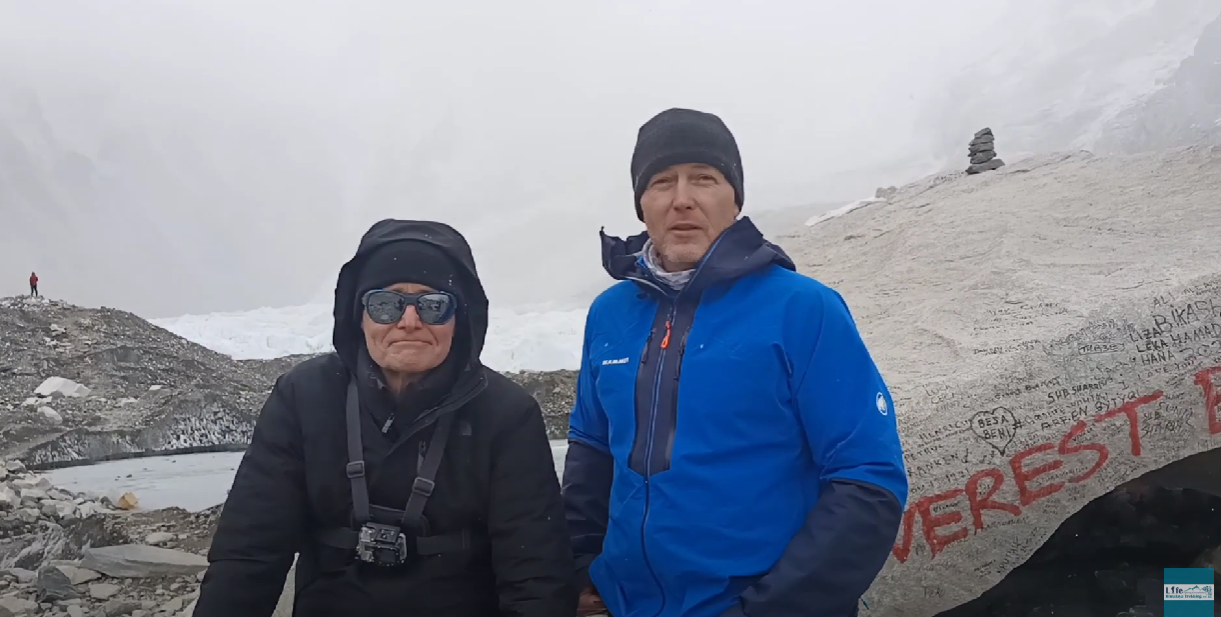
Video Reviews

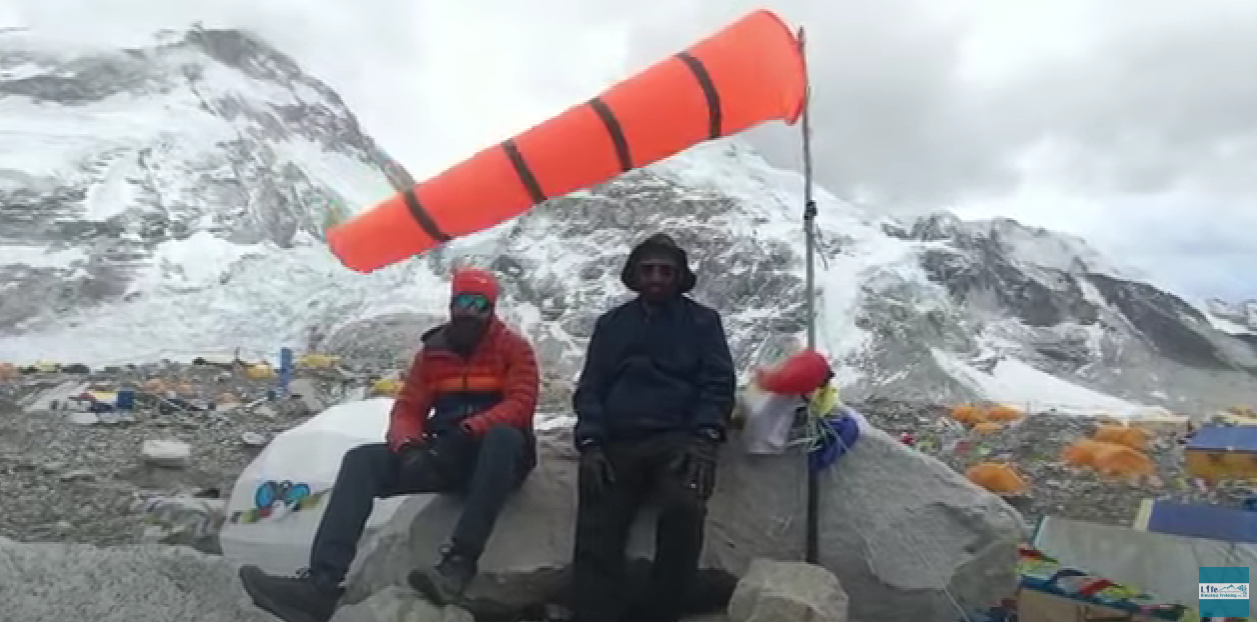


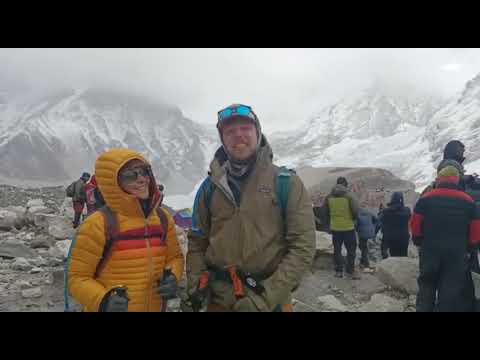


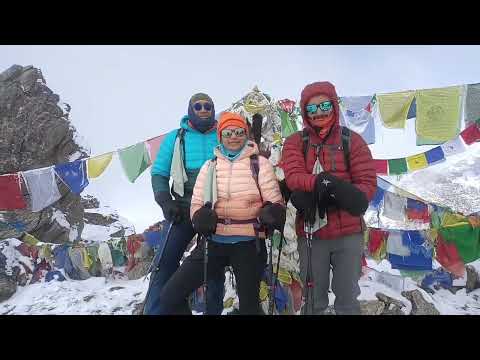
Tripadvisor Reviews
Similar Trips
Join us on similar trips in the same region
View Details
Luxury Everest Base Camp Trek
View Details
Premium Everest Base Camp Trek – 9 Days
View Details