
 English
 Dutch
Dutch Japanese
 Hindi
Hindi Italian
 Spanish
 French
 German
 Chinese
 Korean
 Arabic
 Hebrew
 Russian
 Portuguese
 Danish
 Czech
Czech Polish
 Swedish
Max. Altitude
6,043 m
Best Season
Mar-May & Sep-Nov
Start / End Point
Kathmandu/Kathmandu
Overview of Cholo Peak Climbing – 20 Days
Cholo Peak, one of the famous peak climbing destinations perched at an elevation of 6000m in Nepal, is a mixture of adventure, thrill, and the alpine surroundings that will make you feel like you’ve conquered the top of the world. During Cholo peak climbing, we will start our trip in busy Kathmandu, where you receive guidance, obtain permits, and equip yourself.
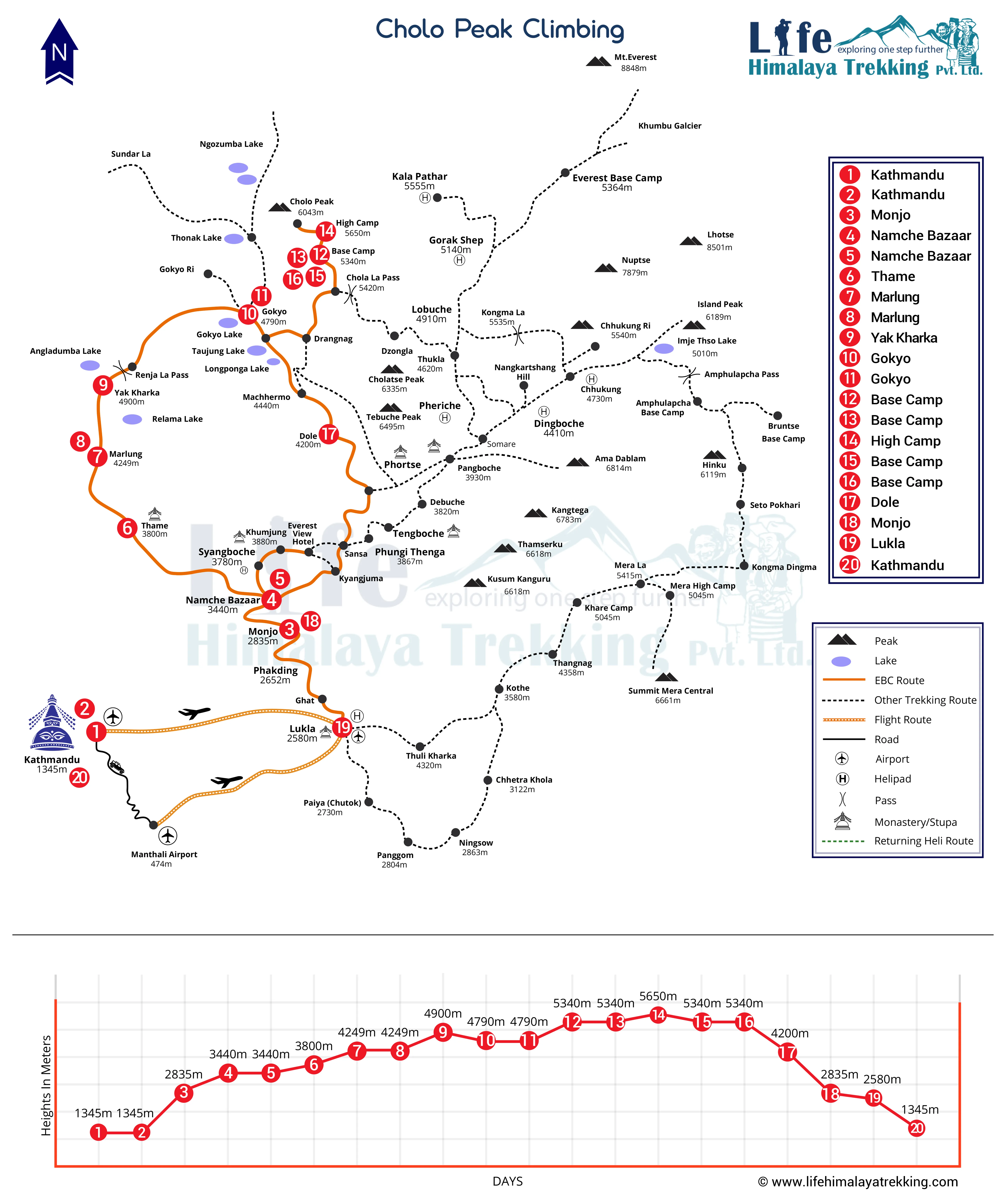
Then comes a mountain flight with a picturesque view of Khumbu, Lukla. We leave Lukla and walk across to the Sagarmatha National Park and ascend lightly to our first night in the idyllic Sherpa village of Monjo (2850m). Life Himalaya Trekking hosts an adventurous yet comfortable and fully facilitated 20-day climbing expedition to the Everest region on the Cholo peak
The road is winding up through rhododendron bushes and solitary villages. We arrive at the Sherpa capital, somewhere in Namche Bazaar (3440m), and get a day's rest. Then we escape onto the back roads across Thame Valley.
We hike out of Thame (3800m) up to the high pasture of Lungden and to Marlung (approximately 4,249 m). There is yet another rest day at Marlung, which lets our bodies adapt to the thin air. The trip goes on to Yak Kharka (4900m), heralding the difficult Renjo La pass.
The best part of this Cholo peak climb is the crossing of Renjo La (5340m). We then climb down the high pass to the renowned glacial lakes of the holy Gokyo Valley (4750m).
Then we start off to Cholo Base Camp at 5340m. Climbing team: These are ropes and equipment prepared at base camp. Then we walk to Cholo High Camp at 5650m to do the final acclimatization.
On the summit day, the group drives up to the top of the Cholo Peak (~6,043 m). The top of this summit is a hidden summit where a 360-degree view of the Everest, Lhotse, Makalu, Cho Oyu, and other surrounding peaks comes.
Having feasted at the peak, we safely arrive at base camp to sleep. The flow back is a dissimilar route crossing Machhermo and Dughla to Namche Bazaar. It is then down to Monjo and then back to Lukla, where we part with our Sherpa team with celebration. We finally ended up participating in a scenic flight to Kathmandu.
In Kathmandu, one can take time to stay in a hotel or even visit the temples and markets of the city. This 20-day well-organized Cholo peak climbing expedition is going to be properly acclimatized, well supported by experts, and will be a memorable Himalaya adventure.
Highlights of Cholo Peak Climbing – 20 Days
- 20 days Cholo Peak climb in the Everest region.
- Peak of Chalo (~6,043 m) and 360 panoramas of the Himalayas.
- Cross Renjo La Pass (5340m) to visit some spectacular mountain scenery.
- Trek to the crystal-clear lakes of Gokyo and its environment.
- Learn the Sherpa culture in Namche Bazaar and Thame Valley.
- Full expedition support by experienced Sherpa guides.
Cholo Peak Climbing – 20 Days Itinerary
01
Arrival in Kathmandu (1,350m)
You land at Tribhuvan International Airport, Kathmandu, and are received by the staff of Life Himalaya, after which you are transferred to your Thamel hotel. Be sure to rest and accustom yourself to the journey.
The bohemian district is bustling and has many cafes, several shops, and restaurants to enjoy a good stroll. During the afternoon/ evening, we have a group introduction and a pre-trek briefing session.
Your guide outlines the climbing plan of the Cholo Peak, inspects you and discusses safety. Afterwards, a welcome dinner is held in one of the local restaurants where you can also partake of traditional Nepali cuisine, and you can meet other climbers before going to sleep.
Maximum Altitude
1350 m
Accomodations
Hotel
02
Free Day in Kathmandu
Today was a day off to see Kathmandu and get ready for the expedition. Post-restaurant lunch visit, there are UNESCO World Heritage Sites to visit in this city, including the Swayambhunath, where you see the views of the city, the Boudhanath Stupa, where you take a stroll, or go to the Pashupatinath Temple, where you observe the local practices. The markets of Thamel are the ones that suit impulse purchases or souvenirs.
Our guides help in installing and verifying climbing gear, such as boots and harnesses, in the afternoon. The last thing is a briefing on safety and logistics. Dinner is on a communal basis, and thereafter, an early night to be fresh to take a flight to Lukla the next day.
Maximum Altitude
1350 m
Meals
Breakfast
Accomodations
Hotel
03
Flight to Lukla and a walk to Monjo (2850m).
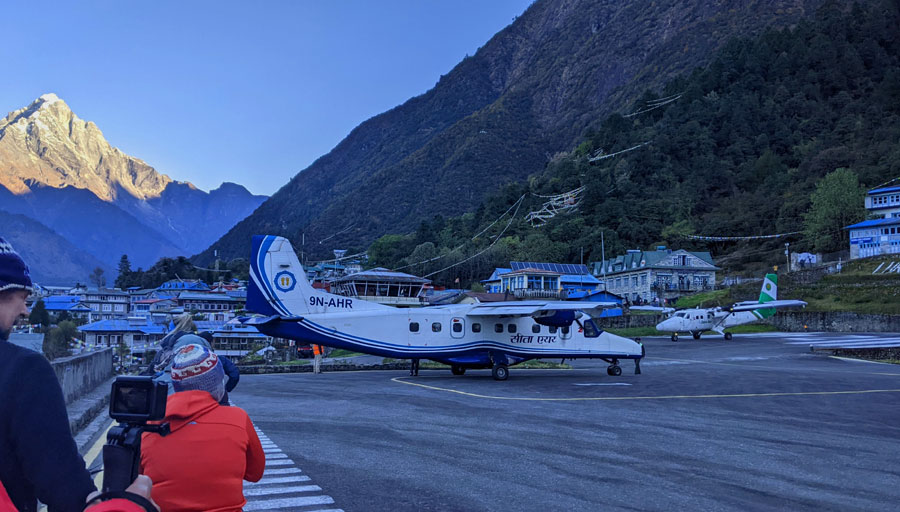
In the morning, we have a picturesque 35-minute flight to Lukla in Kathmandu with excellent views of the Himalayas. Once we have landed on the legendary Lukla airstrip, we pack our gear and start a trek. The route is the river Dudh Kosi, going through pine forests and tiny villages. We go over suspension bridges, holding terraced fields and monasteries.
Once taking entry into Sagarmatha National Park and department permit checks, the path goes on a relaxing walk until Monjo. We come towards the late afternoon and have a lodge. We have dinner, and the guide briefs us about what lies ahead the next day with regard to the trek.
Maximum Altitude
2850 m
Meals
B L D
Trek Duration
4-5hrs trek
Accomodations
Teahouse
Transportation
35 min
04
Trek to Namche Bazaar (3,440m)
Following breakfast, we walk further into the Sagarmatha National Park to Namche Bazaar. The bicycle path is on the Dudh Kosi River and passes over numerous high suspension bridges within pine and rhododendron wood.
We move on to Jorsale village and then start the ascent to Namche, which is steep. On the way up, subject to the weather, you will have your first glimpse of Mount Everest and Lhotse.
The path cuts across hilly slopes and then even out towards Namche. We reach early in the afternoon and get into our lodge. The remainder of the day is to explore, to acclimatize, and to spend the time in the colorful atmosphere of the Sherpa town.
Maximum Altitude
3,440m
Meals
B L D
Trek Duration
4-5hrs trek
Accomodations
Teahouse
05
Take a rest and find the fame in the Namche Bazaar (3,440m).
Today will be spent on acclimatization to make your body accustomed to the altitude. Following breakfast, you can either take a walk of short walk to Everest View Hotel, where you can get spectacular views of the mountain, or you can visit the Sagarmatha National Park Visitor Center and acquire knowledge about Sherpa culture and wildlife. Even fair exercise aids in adequate acclimatization.
In the afternoon, feel relaxed in Namche, spend quality time in the local cafes, and get used to the local yak steak or the traditional Sherpa tea.
The guide gives an awareness briefing on altitude sickness, safety, and equipment. At dinner, there is a leisurely time at the lodge, and then honest sleep before proceeding up.
Maximum Altitude
3,440m
Meals
B L D
Accomodations
Teahouse
06
Trek to Thame (3,800m)
We take off after breakfast and descend to Namche and go off on a less-traveled road leading to the scenic valley, Thame Valley. It ascends slowly up a ridge and glimpses at a distance Mount Everest and the other mountain peaks.
Passing pine, rhododendron forests, we are surrounded by the landscape of Kusum Kanguru and Kwangde. The route passes through the Bhote Koshi River, then up to Thame at a steady, gradual level.
This isolated village of Sherpas boasts a monastery and an extensive history of mountaineering. At mid-afternoon, we get here and land in a lodge. In the evenings, the beautiful mountain views and your stay in tranquility occur after dinner, and you look forward to greater heights the next day.
Maximum Altitude
3,800m
Meals
B L D
Trek Duration
4-5hrs
Accomodations
Teahouse
07
Trek to Marlung (4,249 m)
The day is marked by trekking up the Bhote Koski valley. The path takes one down a short way to the river, round which it is easily winding between alpine meadows and yak grazing grounds.
As we ascend, the weather turns more open, and shocking scenes of Cho Oyu are observed on the horizon. It is a scenic walk that is more or less steady, leading to Marlung at approximately 4,249 m.
This little, out-of-the-way place is sparsely equipped and is an actual high-country experience. Surrounded by the great Himalayan mountains, we relax in a plain lodge, have a good meal, and then have a restful stay with clear mountain skies.
Maximum Altitude
4,249 m
Meals
B L D
Trek Duration
5-7hrs
Accomodations
Teahouse
08
Acclimatize at Marlung (4,249 m)
One cannot climb above 5,000 meters without another day of acclimatization. Then, following breakfast, we have a mild walk about Marlung, perhaps to a rise or the moraine, that we may have a higher position and become more accustomed. Moving without any effort is an aim. The most important things in the modern world are hydration and rest.
A briefing on the conditions of crossing the Renjo La pass and route, and safety is provided by your guide. The afternoon is at liberty to relax, drink hot tea, and save energy. Dinner is warm and simple. Sleep equips us with tomorrow when we face some tough and rewarding high pass crossings.
Maximum Altitude
4,249 m
Meals
B L D
Accomodations
Teahouse
09
Trek to Yak Kharka (4,900m)
We leave Marlung and proceed with our trekking up the Bhote Koshi valley, which is very rugged. The path gets steep and mountainous, but the views of the dramatic scenery at the high altitude keep spirits high.
The south face of Cho Oyu is slowly subduing the horizon, and it is one of the most impressive scenes of the trek. On our way to Yak Kharka, we see fields of yak pastures spread all over the high plains.
We come in the afternoon and experience the impact of the air that is thin air. The camp comprises a tented lodge and a simple teahouse. Once we settle down, we have warm beverages and a hot meal, and watch the sun set behind snow-capped mountains.
Maximum Altitude
4,900m
Meals
B L D
Accomodations
Teahouse
10
Cross Renjo La (5,340m) and Walk to Gokyo (4,750m)
It is a hard and wonderful day of the trek today. We begin at sunrise and ascend slowly up to Renjo La, over rocks and through a deep snow crystal field. Micropauses are used to control the altitude. Passing the 5,340 m passage will give us marvelous panoramas of the Everest, Lhotse, Makalu, and Cho Oyu.
We have rested and taken photographs, and we get down slowly towards the valley of Gokyo. The route goes across beautiful turquoise glacial lakes because of the Ngozumpa Glacier. Late in the afternoon, we reach Gokyo village on the third lake. During the nights after a hard day, we rest and recuperate at the lodge.
Maximum Altitude
5,340m
Meals
B L D
Accomodations
Teahouse
11
Explore Gokyo (4,750m)
The climbers have today a rest and acclimatization day in the beautiful Gokyo Valley. Following breakfast, you can hike up to Gokyo Ri, which is a challenging yet rewarding climb, and probably the best panoramic viewpoint in the Himalaya, overlooking Everest, Cho Oyu, Lhotse, and the Ngozumpa Glacier, which is quite immense.
The increase is approximately two to three hours. Should you like to take a rest, the glacier and turquoise lake scenes in the village are no better. Rest or visit the little village after lunch. Guides make arrangements concerning the next climb. In the modern world, hydration and rest are two of the main necessities.
Maximum Altitude
4750 m
Meals
B L D
Accomodations
Teahouse
12
Trek to Cholo Base Camp (5,340m)
It is early that we leave Gokyo, and we walk eastward along the Ngozumpa Glacier and then head in a southwestern direction toward Cholo Peak. The path goes over moraines of rocks and even glaciers, and as cold air and thin oxygen begin to be felt. There is the melting ice and ice formations all around us as we steadily climb.
At midday, we arrive at Cholo Base Camp, which is located in a high glacial plateau by the towering face of the peak. Tents are set up, and the Sherpa crew cooks warm food. The guide orients us on the climbing route and arrangements. We sleep early after taking a rest and hydrating, in readiness for higher camps in the future.
Maximum Altitude
5,340m
Meals
B L D
Trek Duration
4-5hrs
Accomodations
Tent
13
Rest at Cholo Base Camp (5,340m)
This is a day in which base camp preparation and acclimatization are done. The next thing that we do after breakfast is to closely scrutinize all climbing gear, boots, harnesses, crampons, and ropes. The guide undertakes intensive training in rope skills, fixed lines, and glacier travel.
In the neighborhood, one can take a stroll that lasts short stroll to keep the body in motion. Organization of technical equipment takes place in the Sherpa team at the summit push. Of priority are hydration and good meals.
Afternoons are spent in rest, rearranging the dress, and making psychological preparations. An early dinner is followed by a last-minute briefing, which lays out the plan of the summit. We get to sleep early and save some strength to climb.
Maximum Altitude
5,340m
Meals
B L D
Accomodations
Tent
14
Trek to Cholo High Camp (5,650m)
In the morning, we come out of base camp and set up Cholo High Camp. We go through snow and ice, and pull ropes to safety. The Sherpa guides can put in place the ropes on steeper or crevassed parts.
It is physically challenging, and the goal is not far because of the height. At noon, we arrive in High Camp, where we pitch tents on an exposed rocky piece just below the summit ridge.
We take a lunch, and thereafter we relax and further acclimatize. The crew loads equipment in advance for the night climb as we make final checks on individual equipment. The night is also very early, and thereafter rest before a midnight wake-up.
Maximum Altitude
5,650m
Meals
B L D
Accomodations
Tent
15
Cholo Peak Summit (~6,043 m) and Descend
At the hour of midnight, wake and make preparations for the summit push. Full climbing clothing has us joining on under headlamps, slowly resting on fixed ropes up icy slopes. The ascendancy is gradual and burdensome, and demands patience and attention. When dawn comes, we are on the summit ridge.
As the sunlight rises, we are on the summit of the Cholo Peak with the spectacular scenes of Everest, Makalu, Cho Oyu, and the Tibetan plateau.
When we are done with our celebrations and photography, we make a gradual descent back to High Camp and further down to Base Camp. We are tired but incredibly proud of the successful booking on top, so we dine with the team.
Maximum Altitude
6,043 m
Meals
B L D
Accomodations
Tent
16
Contingency Day at Cholo Base Camp (5,340m)
This day is also maintained as a buffer day in case of weather delay or health factors. As the summit was successful, it will be a rest and recovery day at the base camp.
We spend a lazy morning, wiping clothing and relaxing aching muscles. After the climb, the mountain setting is very silent and provides one with time to reflect. When walking around camp, there is no compulsion. The preparation and packing of equipment are taken before the descent.
We pack on in the afternoon in preparation for the trek down. Dinner is another informal celebration with the Sherpa team talking about their adventure and success stories. A pleasant sleep sets us in readiness to resume journeying down to the lower elevations tomorrow.
Maximum Altitude
5,340m
Meals
B L D
Accomodations
Tent
17
Trek to Dole (4,110m)
We start the trip down Cholo Base Camp, where we follow the Gokyo Valley path in some places. The path goes down, and at every stride, it becomes easier to breathe.
Our road cuts through known scenery at Machhermo and Dughla, and is lined with the mountain meadows. Plant life gradually restores with the lowering of the altitude. By mid-afternoon, we arrive in the village of Dole, which has open pastures and prayer flags.
Having arrived in a lodge, we feel the delight of a warmer climate and the density of the air. Evening is spent upon relaxation, drying the garments, and partaking of a warm supper, after the tedious descent.
Maximum Altitude
4,110m
Meals
B L D
Accomodations
Teahouse
18
Trek to Monjo (2,850m)
Today, we go on down through the woods and old-fashioned villages. We continue along the trail until we reach Namche Bazaar, where we have our lunch and then have some time to partake in the bustling environment.
Above Namche, the trail leads down at an extremely steep rate in intervals of stone steps through pine wood. We are warned of returning to lower levels by the indication of the suspension bridges and the audible sound of the river, Dudh Kosi.
Towards the end of the afternoon, we reach the entrance of Sagarmatha National Park, namely Monjo. Upon arrival at the lodge, we take time to look back at the trip. It is comfortable to walk through this altitude, and the evening is marked by stories and partying together.
Maximum Altitude
2,850m
Meals
B L D
Accomodations
Teahouse
19
Trek to Lukla (2,860m)
Our last day of trekking takes place along the Dudh Kosi River from Monjo to Lukla. The path is easy and known, as it goes through Phakding and the Sherpa villages.
The mountainous terrain is replaced by green plants and river vistas. By noon, we reach Lukla and get down into the lodge. Afternoon is free time to rest, prepare equipment, or walk around the small town.
We take a final supper in the evening with our support team and Sherpa. The occasion is usually celebrated by means of traditional music or festivities. The final phase of our trekking activity is acting and celebrating the success of the expedition through team spirit and hard work.
Maximum Altitude
2,860m
Meals
B L D
Accomodations
Teahouse
20
Fly to Kathmandu (1,350m)
At dawn, we take a scenic flight back to Kathmandu from Lukla. Under favourable weather conditions, there is one final aerial sight of the Himalayan mountain ranges. When we get there, we get into the hotel and have a well-deserved rest. The remaining time of the day is at liberty to shop, sightsee, or relax in the city.
In the evening, we attend a farewell dinner as we celebrate the successful Cholo Peak climbing adventure. It is a period to exchange memories, photos, and accomplishments.
And when the expedition is over, the journey ends, too. And thank you for completing this magnificent adventure in the Himalayas in 20 days.
Maximum Altitude
1350 m
Meals
Breakfast
Accomodations
Hotel
Transportation
35 min
Equipment Checklist 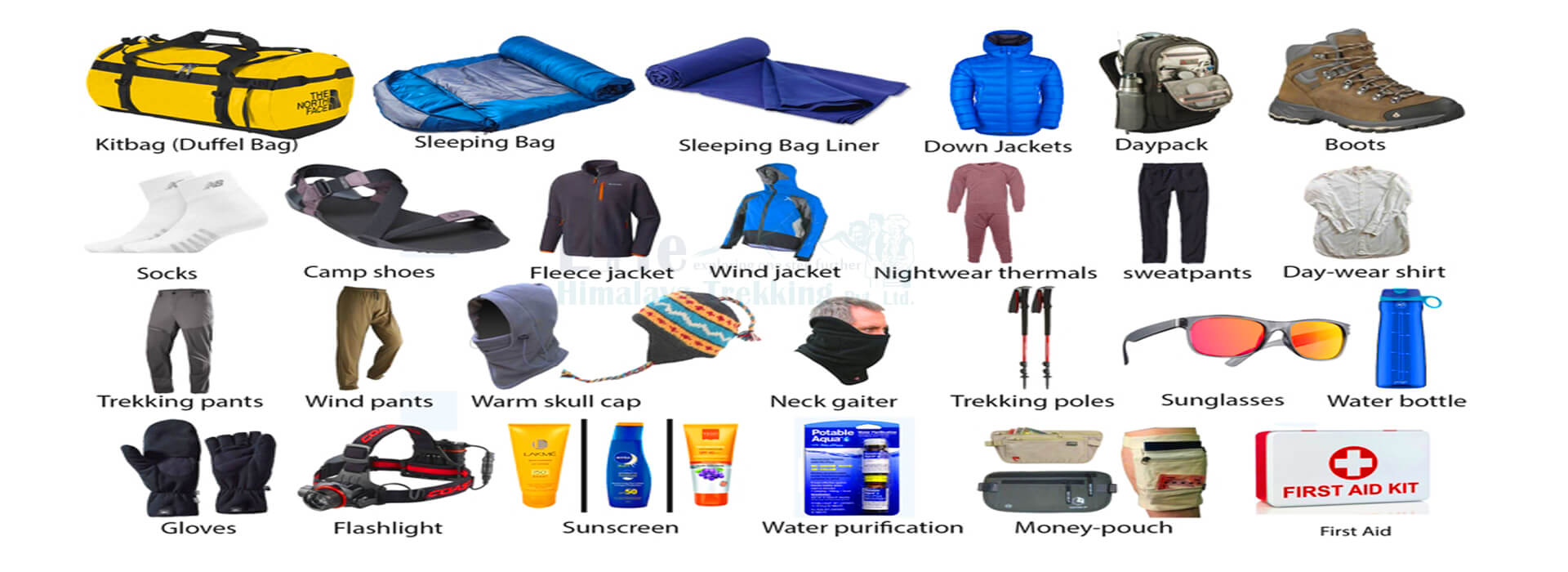
Required Equipments for Trekking in Nepal
- Breathable Underwear
- Sports Bra
- Base Layers
- Trekking Shirts
- Trekking Trousers and Shorts
- Fleece Jacket
- Down jacket (insulated jacket)
- Windcheater (water proof)
- Sun protection Hat
- Headband or Beanie
- Scarf or neckband
- Gloves (inner and outer )
- Hiking Boots
- Trekking Shoes
- Hiking Socks
- Thermal Socks
- Gaiters
- Duffel Bag
- Day pack
- Sleeping Bag
- Trekking poles
- Sunglasses
- Hydration bladder or Water bottle
- Head Lamps
- Batteries
- Personal towel
- Swiss army knife
- Sun lotion
- Medical & first-aid kit
- Woolen socks
- Waterproof jacket
- Lip Guard
- Insulated pants
- Baby wipers
Required Equipments for Climbing in Nepal
- Water bottle
- Batteries and bulbs
- Flashlight
- Personal towel
- Swiss army knife
- Rucksack
- Sun lotion
- Medical & first-aid kit
- Sewing kit
- Polypropylene/wool socks
- Other required equipment
- Sleeping bag
- Down Jacket
- Waterproof jacket
- Trekking shoes/boots
- Camp shoes
- Jumperorpile jacket
- Hiking pants
- Hiking shirts
- Full–sleeves shirt
- T-shirts
- Sun hat
- Gloves
- Woolen hat
- Long underwear
- Goggles or sun glasses
- Gaiters
- Sun block for lips
- Light cotton socks
- Mountain trekking boots
- Woolen socks to wear with boots
- Nylon wind breaker
- Insulated pants
- Nylon wind pants
- Long sleeved cotton/woolen shirts
- Sun hat
- Long cotton hiking shorts
- Fleece/wool for climbing
- Lightweight fleece
- Sleeping pad (karri mat) or thermarest
- Down high altitude sleeping bag
- Down jacket/trousers/vest
- Light cotton athletic socks and wool socks
- Water proof climbing jacket
- Head torch/batteries/bulbs
- Climbing sunglasses
- Lightweight thermal/insulated ski gloves
- Sun screen
- Warm climbing trousers
- Wool long underwear
- Other required equipment
- Climbing boots
- Gaiters
- Ice axe
- Harness
- Crampons
- Karabiners
- Tapes/slings
- Snow bars
- Ice screws
- Rock pegs
- Deadmen
- Crash hat
- Day bag
- Rucksack
- Lip salve
- T-shirts
- Ascenders
- Ascenders
- Kit bag
Cholo Peak Climbing – 20 Days Trip Information
Trek Difficulty
The Cholo Peak climbing expedition is very difficult. You walk on long days and very high altitudes (~6,043 m) and have to cross steep and mostly icy slopes. A good stamina with prior experience in trekking is a prerequisite. This expedition is an advanced mountain climbing, not a hiking one.
The final ascent is to be made with technical components and equipment (ice axe, crampons, harness). The trek has steep passes, as well as a trip through glaciers, even before the summit rush.
The snow conditions and elevation may cause the trails to be challenging. Nonetheless, the path is very well organized so that sufficient acclimatization can be achieved.
We had safety in that our guides erected fixed lines at critical points. Get ready to work hard with heavy packs for 6-8 hours a day.
Training should be done ahead of time by climbers and with a high-altitude schedule to get used to the situation. This Chalo peak climbing trip requires maximum dedication, but the payoff is enormous.
Weather and Best Season
The Cholo Peak climbing is usually conducted during the spring (March-May) and autumn (Sept-Nov) seasons. The weather and the skies in such windows are generally calm.
During the day, the temperatures in the Khumbu are already 5-15 °C in the lower valley, and at night go well below freezing (particularly above the heights of 4,249 m).
The temperature may also plunge as low as -20 °C at the summit. During the period of monsoon (June-August), high passes get huge amounts of snow or rain, and climbing becomes dangerous; therefore, it is not chosen.
The climate in winter is very freezing and lacks daylight, which results in frequent cancellation of flights. In the most active seasons, the amount of rainfall is not much, and the mountain is well visible.
Always take warm clothing and look at the weather predictions every day. The weather in high altitudes is highly dynamic, and thus flexibility is very necessary.
The contingency day, which has been incorporated, assists in ensuring that there is a safe ascent of the Cholo Peak in case of any unexpected change of conditions.
Food & Drink
On the trek, there will be three meals (breakfast, lunch, dinner) and snacks. The common menus have Nepali cuisine, such as dal bhat (lentils and rice), stews, soups, pasta, and fresh produce when it becomes available.
Breakfast can be porridge, eggs, or warm up local breads using tea or coffee. The diet of the high altitude is high in carbohydrates as an energy source. There is a high frequency of tea and coffee. My safety measure is the consumption of safe water: we either purify or boil it at every stop.
To prevent the local pathogens, we suggest always having a refillable water bottle or hydration bladder with you and refilling the water bladders with boiled or treated water, and keeping them regularly filled.
Bring purification tablets for water. There are only a handful of tea houses in lower villages (costly), which have alcoholic drinks, which are not a good idea on the mountain (dehydrating).
Kindly note people with dietary prohibitions (vegetarian, allergies, etc.) so that we can fit you. It is important that you keep hydrated (3-4 liters a day) and fed up to keep your strength on the trail. You can enjoy the local food and our guided meals to complete your Cholo peak climbing adventure.
Altitude Sickness
This hike easily rises over 3000m, and this is why one should be prepared to experience altitude sickness (acute mountain sickness). The symptoms involve headache, nausea, dizziness, and fatigue.
To avoid risk, we have excellent acclimatization programs, with additional rest days (Namche, Marlung, Gokyo). Climbers ought to take their time, consume a lot of water, and eat a lot. Every day, the state of everyone is controlled by guides.
Climbers may use acetazolamide (Diamox) when necessary to hasten acclimatization. In case a person exhibits serious symptoms (observation of shortness of breath during rest or a fit of fury), the ascent is postponed and stopped. This will be the quickest means of healing.
Oxygen bottles are kept in our capacity in case of any emergency. The most excellent methods of being safe during the climb are proper acclimatization and a slow pace.
In doing this, communicate with your guide and inform yourself about any discomfort at all times. The route will have a limit on the daily increase of altitude and assist in avoiding altitude sickness. Ways of reducing the risks on this high-altitude expedition include drinking and listening to your body.
Preparation and Fitness
This would be a physically and mentally challenging expedition. The long trekking days, climbing to the altitudes, require good cardiovascular fitness.
Our suggestions include several months of training: use a weighted pack, stair climbing, or climbing hills, and run or accompany a bicycle to get fit. Training: Entering unstable terrain with your trekking shoes. Training legs and core if training to carry heavy packs and steep uphill.
When training for hikes, try to add weight to your backpack so as to mimic conditions. At the beginning of the trek, you are expected to be able to comfortably hike with a 15-20 kg pack for 6-8 hours a day. Experience in high-altitude is an advantage.
Besides, it is important to prepare mentally–be ready for bad weather, sporting activity, and a simple life. Take breaks and rest in between training.
It is prudent to consult a doctor first before you begin training in case you have health issues. To conclude, the confidence level of fitness ensures the Cholo mountain climbing mission is safer and more pleasant.
Visa and Permits
The Nepal entry visa is necessary for all foreigners and can be either collected on arrival at Kathmandu airport or applied for online in advance. It costs approximately 30 dollars in 15 days or 50 dollars in 30 days (2025 rates) of visa fees.
The permits required special permits: a Sagarmatha National Park entry permit and a Khumbu Pasang Lhamu Rural Municipality permit, which are required to do trekking and climbing.
These will be organised by Life Himalaya Trekking; they will also assist with the permit to climb the Cholo Peak (which is issued by the Department of Tourism of Nepal).
We file your applications for permits and bill the fees at your package price. When doing the trek, carry with you two passport-size photos and your passport; the officials might require them to check if you have permits.
Additional passport photos will be required for permits. Bring copies of your passport and other identity documents as well.
Do not forget to carry Nepali rupees to pay the visa fee upon arrival in Nepal, and show your passport at every check station on the trail. It is also important to have your documents with you so that there is a smooth ride.
Health & Safety
Life Himalaya is concerned about your safety. We offer professional, experienced, English-speaking leaders and Sherpas who are well-versed with the path.
Hiking such high altitudes is not without prior dangers, and therefore our crew is also equipped with an elaborate first-aid kit and canned oxygen. There is also a portable Altitude Chamber (portable hyperbaric bag) available to us to take care of emergencies.
We recommend a medical examination before the trip. Always listen to your guide, particularly on a steep or slanting slope of icy nature.
Consume lots of fluids, cover yourself up in the sun and cold, and rest if you are not feeling fine. We suggest carrying any personal medication that you take, including.
Diamox, in case you have been prescribed to take it for altitude. There is satellite phone support in case of emergencies. Avoiding these risks and trying to be a good listener, you will be able to concentrate on this amazing adventure in the Khumbu area of Nepal.
Transportation
The package takes into consideration all ground and air transfers that are in the itinerary. We are also offering Kathmandu airport arrival pickup and hotel transfer.
During the trekking days, you practice on scheduled flights to Lukla (inclusive of the ticket). All trekking is on foot. We get to deal with buses or vans in Kathmandu, which are used to access flight departure terminals.
Porters or yaks are also hired to transport most of the group’s gear, and you only have the daypack. In case Lukla flights get delayed or canceled by the weather, we will rebook the flights together with the airline.
Helicopter evacuation may be planned in the uncommon cases of emergency (with an additional charge). This is a strong transportation strategy that facilitates the far-off expedition.
Travel Insurance
The insurance necessary for this expedition is inclusive of travel and rescue insurance. Included in your policy should be high altitude trekking and mountaineering to a maximum altitude of 6000m, and a clear mention in your policy of helicopter evacuation.
We highly recommend the insurance that will include an option of cancellation of the trip, medical emergency, and lost or delayed baggage.
It is mandatory to have proof of insurance with mountaineering coverage before being taken out. This will save you in case of sickness, accident, or emergency in need of evacuation.
Most of the policies exclude unpaid medical bills, and this is why you should make sure that you are covered in accordance with the recommendations of the embassy.
Make sure to always carry insurance information and emergency contacts about yourself. We are concerned with your safety, and in case you require assistance in times of emergencies along the trail, insurance cannot be ignored.
Alternative Routes
The scenic and most efficient path to Cholo Peak is through our itinerary via Renjo La and Gokyo. The next option would be to go around it by the Everest Base Camp and Cho La Pass, which would increase the distance and the problem of acclimatization. Some climbers go with Cholo mixed with other peaks (like Island Peak) by modifying the schedule.
Accomplished mountaineers occasionally walk from the Everest Base Camp and on to Chol, plying the Gokyo valley. To be flexible, Life Himalaya can tailor your trip: you can be able to hike to Everest Base Camp first or even go on a tour of Lobuche and Cho la rather than Renjo La.
We arrange the required permits for every route variation. Talk to us about what you would like to see, and we shall make changes to the itinerary.
What we would like to assure you is that your Cholo peak climbing will suit your objectives as well as your schedule.
Your Extra Expenses
The package includes the common aspects (food, accommodation, permits, guides, internal flights), but the expenses are additional.
Pre-plan: personal hiking equipment; alcoholic beverages or snacks at lodges; hot shower or charging cost; tips of the guides and porters (traditional); mobile data or Wi-Fi bills; and any other Kathmandu or Pokhara tours. Once you get there, you pay the Nepal visa fee.
In case of emergency evacuation (e.g., helicopter), it is an additional charge unless insured. These small expenses might be carried with some cash during the trek (Nepalese rupees).
The ATMs and credit cards are not available but only in Kathmandu and in some large towns. Kathmandu and Namche Bazaar have some recharge devices, and supplies can be purchased. In general, the additional expenses over and above our full-service expedition are small, yet carry insurance against tranquillity.
Language & Communication
The official language is Nepali. English is commonly used in the use of tourism in Kathmandu and other cities. Hotspots In the Everest area, the major languages are Sherpa (a language in Tibet) and Nepali.
The majority of the young Sherpas study some English to convey the bare minimum information. Your Life Himalaya guides will also speak English and will translate accordingly, where necessary, in all group conversations. Smiles and gestures are effective in simple communication with the villagers.
Nepali is not a very specific language; however, knowing several small words, such as Namaste (goodbye) and dhanyabad (thank you), can make you relate.
Emergency phone menus and electronic ones tend to support English. Simply put, you need not be concerned about the language barrier: our team will provide the solution that will connect you with the requirements of your Cholo peak climb in English.
Mobile Network, Internet, and Charging Facilities
Most of the big villages, such as Lukla, Namche, Thame, and Gokyo, are covered by mobile (NTC, Ncell networks). The coverage is patchy or intermittent further out of these villages.
The majority of lodges in village centers have Wi-Fi (charged at around 5 USD per 1 day) but with slow speeds. Cholo Base Camp or High Camp is not connected to the internet or cell service.
Electrical power is billed at lodges and camps, at an insignificant fee (less than 2-3 USD per charge). We recommend carrying a power bank since power is scarce.
It is worth noting that in most hotels and cafes in Kathmandu, cell phone covers and free Wi-Fi are available. Nepal commonly uses type C, D, and M plugs (230V / 50Hz).
Don’ts on this Trip
- Not to risk your own life, and to respect local culture, it is better not to do the following:
- Not taking time to get used to it or attempting to climb at an elevated level.
- Eating unprocessed water (never drink, boil, or purify it).
- Disorderly or littering; pick up all the stuff and stay off the plastics.
- Making a break or hiking on through the woods.
- Exerting yourself even when you are not well, never forget to inform the guide about headaches or feeling dizzy.
- Insulting cultural locations: take off their shoes at monasteries and do not take photos of people or prayer sessions.
- Unauthorized flying of drones (limited in Sagarmatha National Park).
- Partaking in unsafe behaviors such as smoking in the street and possessing illegal substances.
Trip Extension
When you are at the Cholo Peak, think about continuing your trip in Nepal. Most climbers include Everest Base Camp (5-7 days additional, 13 days) to visit the South Base Camp and Kala Patthar of Everest.
Alternatively, opposite Cho La Pass, go to Lukla or walk around the further Gokyo Lakes. Other popular Everest treks: Langtang Valley or Annapurna Circuit. Non-trekking activities: Kathmandu cultural tours, a visit to Lumbini, or just have a break in Pokhara by Phewa Lake.
Chitwan jungle safari tour and Bardia National Park. It is also possible to have a jungle safari. Life Himalaya can also organise any extension as per your interest, usually at a higher price. We can tailor additional days and transport logistics in order to ensure that you spend the maximum time in Nepal.
Photography & Drone Rules
The picture taking is welcome: the scenery is breathtaking, and a photographer will be in his or her heaven. Be a respectable person: never take a photo of people without permission. No problem with tripods and regular cameras.
The use of drones is strictly controlled in Nepal. You require CAAN registration and special permission from the Nepali authorities, particularly in the national parks, before flying.
Adhere to Leave No Trace philosophy: do not disrupt animals or religious places. Everything that you are able to handle in beauty will be photographed by your camera; you can enjoy yourself and form no more thoughts about the rules.
Tips for First-Time Visitors
Pre-train: Walking up the hill or on the stairs, and carrying a loaded daypack to get your body in shape to carry out a trek.
Packing clothes in layers, such as thermal base-layers, fleece, a waterproof jacket and pants, an insulated down jacket, external gloves, a warm hat, and other high-quality hiking socks.
The weather is unpredictable, and that is why a pair of waterproof, sturdy boots is necessary. Don sunglasses, sunblocks, and lip balms since the sun is very intense at high altitudes.
Keep on being adequately hydrated with three or four liters of treated or boiled water per day, and do not consume alcohol. Eat snacks that contain high energy to improve strength.
Know local culture, greet people with namaste, and take off your shoes at temples or residences. Get used to it gradually and report to your guide in case of any unwellness. Always have a power bank, plenty of cash, and travel insurance that includes helicopter rescue.
FAQs For Cholo Peak Climbing – 20 Days
What is the Cholo Peak, and what is its height?
The Cholo Peak, also called Kangchung Nup, is a ~6,043-meter mountain and is situated in the Everest region of Nepal, near Gokyo Valley.
Where is Cholo Peak located?
It is located in the Sagarmatha National Park, above the Gokyo Lakes, and is reached on the Gokyo and Thame valleys.
Who can participate in the Cholo Peak tour?
The expedition can be joined by fit and healthy trekkers having good endurance and experience on treks of considerable altitudes.
Should I have some prior climbing experience?
It is highly advisable to have a high-altitude trekking experience. The minimum experience in mountaineering is recommended but not compulsory.
What permits are needed to do the Cholo Peak?
A Nepal visa, permit to Sagarmatha National Park, Cholo Peak climbing permit, and all of this can be organized by Life Himalaya.
What is the most suitable time to climb Cholo Peak?
The spring (April-May) and the autumn (September-October) seem to be the most stable months when the weather conditions are good and the best seasons.
What is the temperature during the climb?
During the high camps, temperatures may drop below -15 °C, and at times when one is at the summit, the temperature may drop even lower.
Which technical equipment will be needed to climb?
You must have crampons, an ice axe, a harness, a helmet, mountaineering boots, and good cold-weather clothes.
Does the package involve the Lukla flight?
Yes, round-trip flights in Kathmandu and Lukla are part of the package.
What is your solution to altitude sickness?
We stick to a gradual acclimatization process, providing rest days and appropriate hydration as well as tightly monitored health by the guides.
What provision is made in the trek?
Hotels, tea houses in villages, and tents at base camp and high camp are all accommodated.
Is it mandatory to have travel insurance?
Yes, the high-altitude trekking and emergency helicopter rescue travel insurance is required.
Video Reviews





Tripadvisor Reviews
Similar Trips
Join us on similar trips in the same region
View Details
Premium Nepal Tour – 9 Days
View Details
Annapurna Base CampTrek Heli Return
View Details