
 English
 Dutch
Dutch Japanese
 Hindi
Hindi Italian
 Spanish
 French
 German
 Chinese
 Korean
 Arabic
 Hebrew
 Russian
 Portuguese
 Danish
 Czech
Czech Polish
 Swedish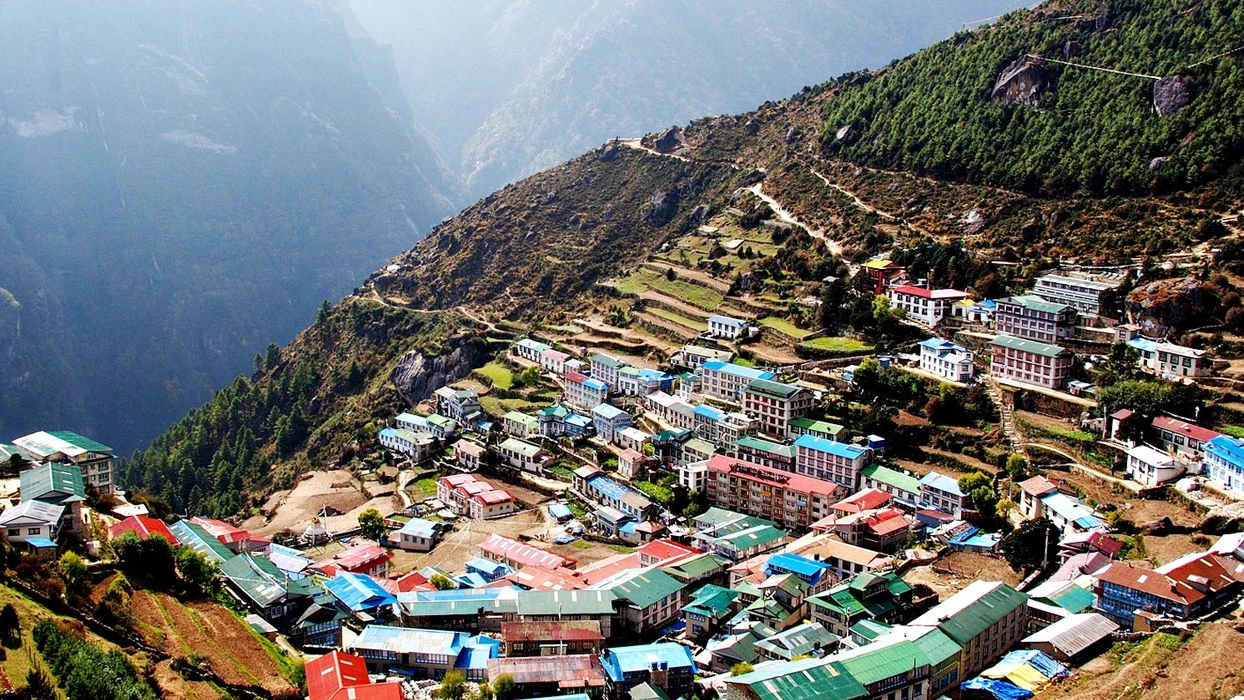
Namche Bazaar – The Living Heart of the Himalayas (Why One Night Is Never Enough)
Have you ever noticed how some places change you quietly? They don’t shout or rush you; they simply stay with you long after you’ve left. Namche Bazaar is one of those places. Most trekkers arrive here tired, excited, and slightly breathless not only because of the altitude, but because they are finally inside the Everest region. Many see Namche as just a checkpoint: eat, sleep, acclimatize, and move on. But those who choose to slow down begin to realize something deeper. Namche Bazaar is not merely a stop along the trail; it is the soul of the Himalayas. If Everest is the crown, then Namche is the heart that keeps it alive.
Where Is Namche Bazaar and Why Does It Matter?
Namche Bazaar sits at 3,440 meters, carved naturally into a horseshoe-shaped hillside where colorful houses cling to the slopes, prayer flags dance in the mountain wind, and snow-covered peaks rise quietly in the distance. Here, ancient Sherpa traditions blend seamlessly with modern mountain life, you’ll see yak caravans sharing trails with trekkers, monks chanting softly in monasteries, cafés serving espresso at 11,000 feet, and locals trading goods just as their ancestors did centuries ago. This unique harmony makes Namche feel truly alive—not frozen in time, but deeply rooted in its rich Himalayan heritage.
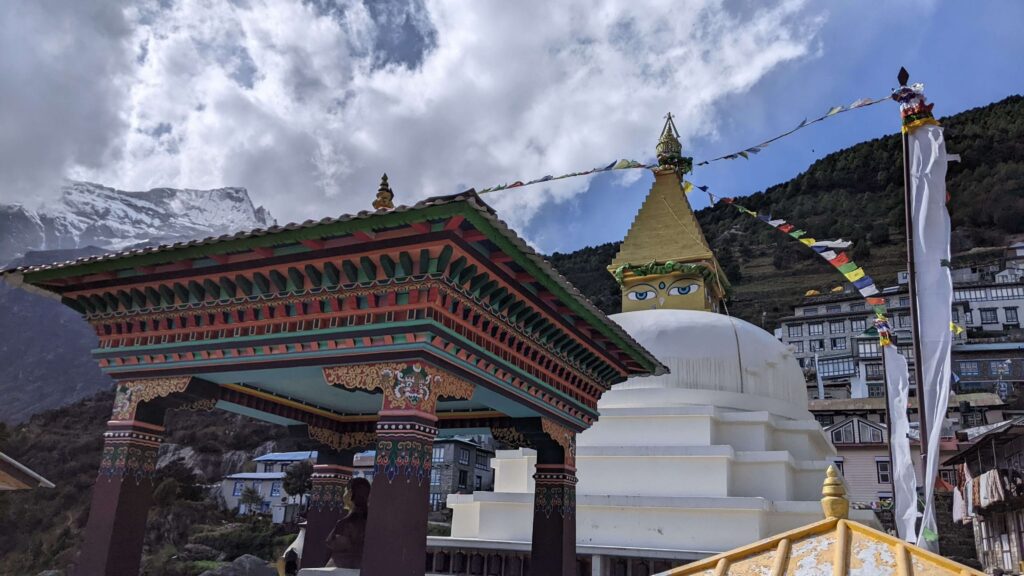
Why One Night Is Never Enough in Namche Bazaar
Many trekking itineraries technically allow just one night in Namche Bazaar, but limiting your stay to a single night does the place a great injustice. Namche is not meant to be rushed. It offers one of the best acclimatization environments in the Everest region, rich and immersive Sherpa cultural experiences, iconic viewpoints where Everest reveals itself for the first time, and access to hidden villages just a few hours away.
More importantly, it gives you the rare gift of time—time for your body to adapt to the altitude and for your mind to slow down and absorb the rhythm of the mountains. To truly understand Namche Bazaar, you need at least two full days here, and ideally even more.
Acclimatization – The Silent Protector of Your Trek
Before sightseeing, shopping, or café hopping, there’s something far more important you must understand.
What Is Acclimatization?
As altitude increases, oxygen levels decrease, and by the time you reach Namche Bazaar, the air already contains significantly less oxygen than at sea level. This is why your body needs time to adapt slowly and naturally in order to avoid altitude-related problems. Without proper acclimatization, trekkers may experience headaches, nausea, loss of appetite, insomnia, or even Acute Mountain Sickness (AMS).
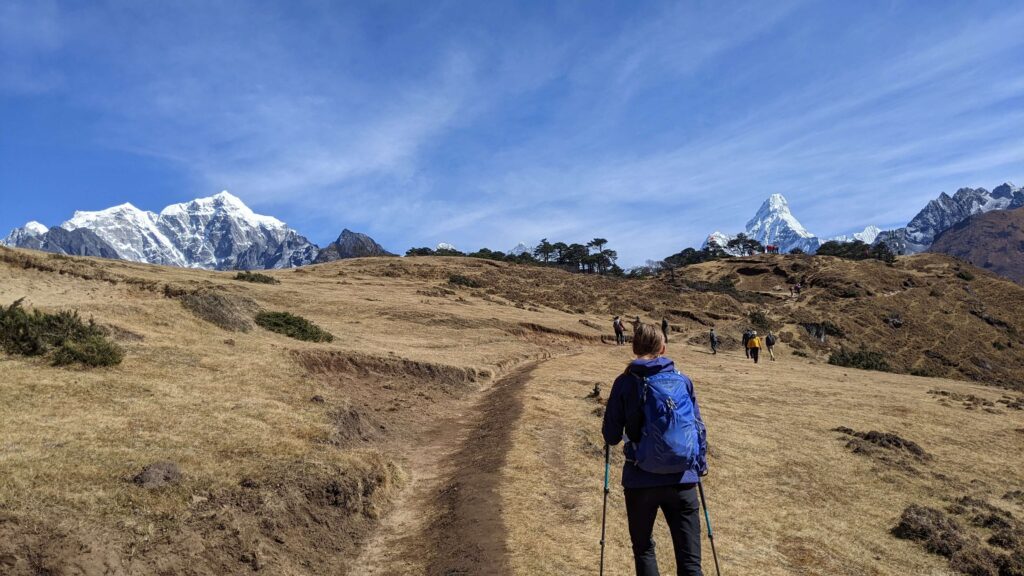
Namche Bazaar is considered the perfect place to acclimatize because you reach it gradually from Lukla, allowing your body to adjust without shock. The surrounding area offers excellent day hikes that follow the principle of “climb high, sleep low,” while medical facilities and warm, comfortable lodges provide safety and rest if needed. As Sherpa guides wisely say, “The mountain doesn’t move. Why should you?”
Namche is the cultural capital of the Sherpa people. These are not just mountain guides; they are guardians of the Himalayas.
Sherpa Culture Museum
The Sherpa Culture Museum in Namche Bazaar offers a deeper understanding of the people who have lived in the Everest region for generations, sharing stories that go far beyond what most guidebooks can capture. Inside the museum, visitors learn about the Sherpas’ historic migration from Tibet, their deep spiritual beliefs that view mountains as sacred beings rather than obstacles to be conquered, and their traditional farming practices that sustain life at high altitude.
The exhibits also highlight the Sherpas’ vital role in Everest expeditions, showcasing their strength, skill, and resilience in supporting climbers from around the world. As you walk through the museum, one powerful realization becomes clear—Mount Everest has always belonged to the Sherpas, long before it became a global symbol of adventure.
Hillary Museum – A Legacy of Giving Back
The Hillary Museum in Namche Bazaar honors Sir Edmund Hillary not only as one of the first people to summit Mount Everest, but as a man who deeply respected the Sherpa community and the land they call home. The museum displays early expedition photographs and mountaineering history that document the pioneering days of Himalayan exploration, offering insight into the challenges faced by climbers and Sherpas alike.
Beyond climbing achievements, the exhibits highlight Hillary’s lasting contributions to the region, including the schools, hospitals, and bridges he helped establish to improve local life. Visiting the museum leaves a lasting impression—it teaches a powerful lesson in humility, reminding us that true success is not defined by reaching the top, but by how much we give back to the people who helped us get there.
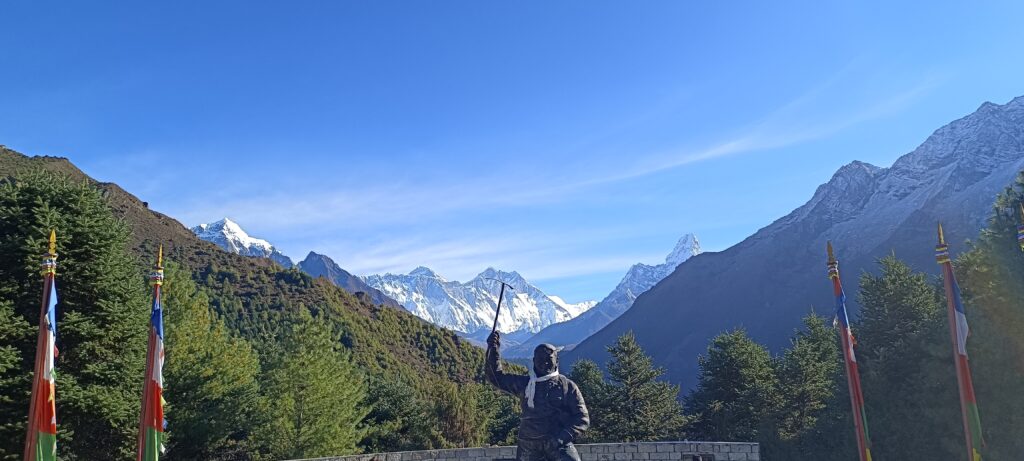
Acclimatization Hikes That Become Lifetime Memories
Hike to Everest View Hotel
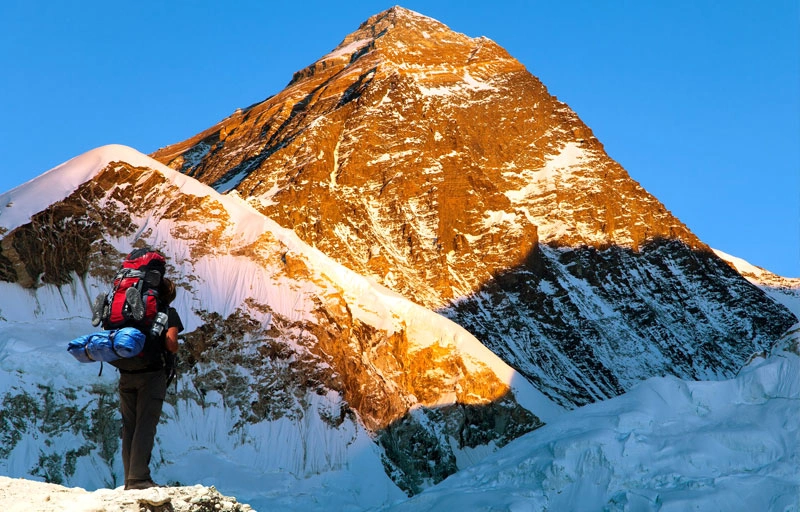
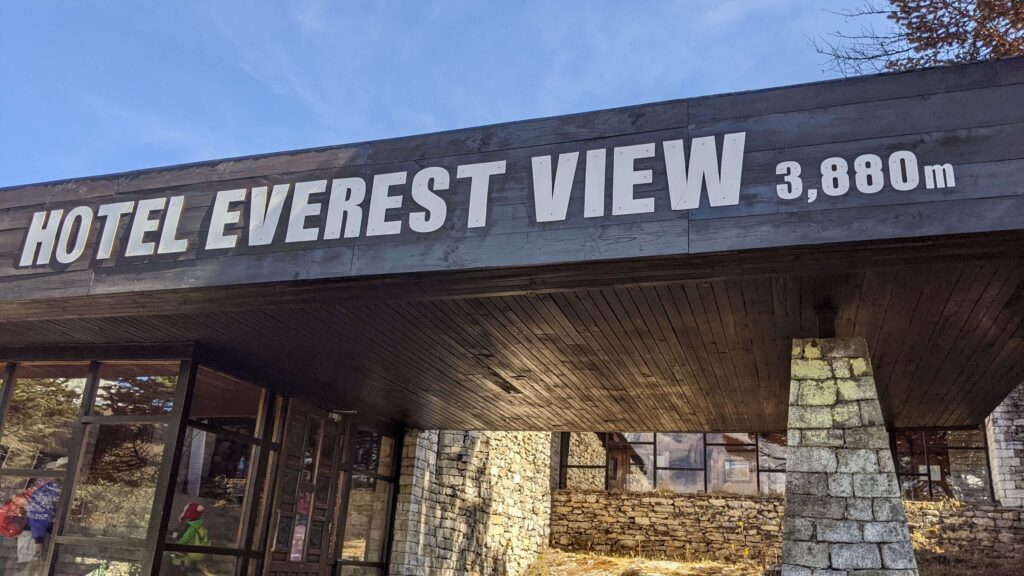
The hike to Everest View Hotel is more than just a walk—it is a moment that stays with you. From the hotel’s terrace at 3,880 meters, sweeping views open up to reveal Mount Everest alongside Ama Dablam, Lhotse, and Nuptse standing silently against the sky. For many trekkers, this is the first time they see Everest—not from a summit or a helicopter, but quietly, while holding a warm cup of tea and taking in the vastness of the Himalayas. It is a simple, peaceful experience, yet deeply emotional, marking a powerful connection between the traveler and the mountains.
For those wanting to reach Everest View Hotel and do not want to reach Everest Base Camp, we have a special package of Everest Panaroma Trek.
Khumjung Village & Hillary School
Beyond Everest View Hotel lies Khumjung Village, a peaceful and deeply traditional Sherpa settlement where time seems to move more slowly. Walking through the village, you pass stone houses with beautifully carved wooden windows, wide yak pastures, children in school uniforms heading to class, and colorful prayer flags fluttering softly in the mountain wind. At the heart of the village stands the Hillary School, a lasting symbol of Sir Edmund Hillary’s commitment to education and community development in the region. Life in Khumjung feels honest, calm, and meaningful, offering a quiet glimpse into everyday Himalayan life shaped by tradition and resilience.
Khumjung Monastery & the Yeti Legend
The Khumjung Monastery holds one of the Himalayas’ most intriguing mysteries—a relic believed by locals to be the Yeti scalp. Whether it is real or rooted in legend is left open to interpretation, but the monks do not debate its authenticity. Instead, they quietly protect it, treating it with respect and reverence. In the Himalayas, not everything needs scientific explanation to hold meaning; some stories are preserved not for proof, but for the cultural and spiritual value they carry.
Hike to Thame Village – The Hidden Sherpa Heartland
If time allows, a hike to Thame Village offers a deeper journey into the hidden heartland of Sherpa culture. Known as the birthplace of legendary climbers like Apa Sherpa, Thame feels quieter and more untouched than Namche Bazaar. The village carries a raw, spiritual atmosphere where daily life is shaped by discipline, resilience, and a profound connection with nature. Walking through Thame, you begin to truly understand what life in the mountains means not just surviving the altitude, but living in harmony with it.
Food, Tea & Healing at High Altitude
Sherpa & Tibetan Tea Experience
One thing you quickly realize in Namche Bazaar is that food here isn’t just about eating, but it’s about staying warm, staying strong, and sharing moments with people. After a long walk in the cold mountain air, sitting down with locals and being offered a cup of butter tea feels special. It’s warm, a little salty, and surprisingly comforting, made to help your body handle the cold and altitude. And once you start eating local food, you understand why it’s been the same for generations.
Dishes like Sherpa stew, yak sukuti, tsampa, fresh yak cheese, and chang aren’t fancy, but they’re filling, honest, and full of character. In Namche, meals feel less like a menu choice and more like a story being shared—simple, nourishing, and deeply rooted in mountain life.
Ayurvedic & Herbal Massage
Ayurvedic and herbal massage in Namche Bazaar is something I would genuinely recommend to anyone trekking in the Everest region. After spending hours walking uphill and downhill with a backpack, your legs, shoulders, and lower back really start to feel the strain, and this is one of the best ways to reset your body.
The massage is gentle but effective, helping loosen tight muscles, improve blood circulation, and ease the heaviness that comes with high altitude. What I found especially helpful is how relaxed it makes you feel afterward—you sleep more deeply, wake up fresher, and feel more comfortable as your body adjusts to the thin air. Up in the mountains, recovery is just as important as walking, and taking an hour for a massage can make the next day’s hike feel noticeably easier.
Best Hotels & Lodges in Namche Bazaar
I have always wondered how the people in Namche Bazaar manage to be so smiling and warm, no matter how cold it is outside. Staying in the lodges here feels less like booking a room and more like being welcomed into someone’s home. After a long day on the trail, you walk in tired and cold, and the warmth you feel isn’t just from the heater, but it’s from the people.
In places like Yeti Mountain Home, Hotel Terace, Himalayan Cultural Home, Alpine Lodge, Sherpa Shangrila, Khumbu Lodge, Panorama Lodge, Everest Namche Lodge, Kala Patthar Lodge, Body Hotel Namche, Hotel Himalayan, and Namche Hotel & Lodge, the staff treat you like family. They ask how your trek went, check if you’re feeling okay with the altitude, and make sure you eat well. In the evenings, sitting around the fire, sharing stories, and being cared for so genuinely makes you forget the cold outside. Up here, that kind of hospitality stays with you—it truly feels like home in the heart of the Himalayas.
Best Restaurants for Western & Local Food
The food in Namche Bazaar tastes like heaven, and I truly believe it’s because it isn’t imported from somewhere far away—it’s grown and prepared right there in the mountains. Everything feels fresh, simple, and real, and after long days of trekking, your body appreciates that kind of nourishment.
You’ll find yourself enjoying meals at places like Everest Bakery, Sherpa Barista, Namche Café, Tibetan Kitchen, and Highland Restaurant, where even the simplest dish feels comforting. Sitting inside with a warm plate of food or a hot cup of coffee, watching the clouds move over the mountains, is something special. Up here, food isn’t just about eating until you’re full—it feels clean, simple, and really satisfying. And honestly, coffee just tastes better when Everest is somewhere in front of you.
How to Reach Namche Bazaar
Namche Bazaar can be reached through several routes, each offering a unique travel experience. Travelers may opt for a scenic helicopter flight for maximum comfort and efficiency, or take a domestic flight from Kathmandu to Lukla, followed by a trek through traditional Sherpa villages. During peak trekking seasons, flights also operate from Ramechhap to Lukla.
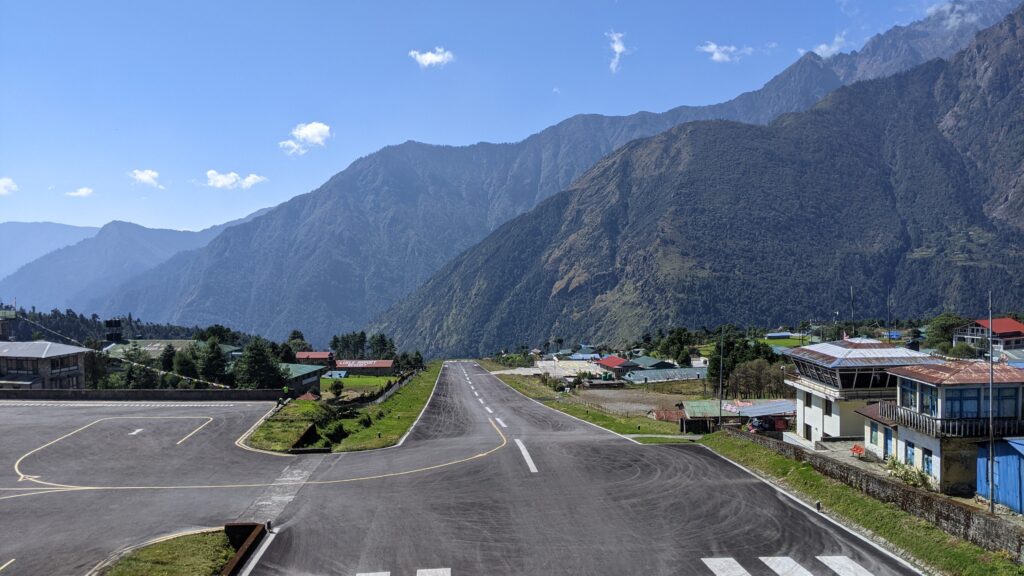
For those seeking a more adventurous approach, it is possible to travel by jeep to Surkhe and continue the journey on foot for two to three days. In some sections, horses are still used for transportation, reflecting the region’s traditional way of life. Regardless of the chosen route, arranging your journey with a reliable local operator such as Life Himalaya Trekking ensures professional planning, safety, and a well-organized travel experience.
What Gear Do You Need for Namche Bazaar?
Visiting Namche Bazaar doesn’t require any technical climbing gear, but having the right essentials makes a big difference in comfort and safety at high altitude. The weather can change quickly, mornings and evenings are cold, and the sun can be surprisingly strong during the day. With a few well-chosen items, you can move comfortably on the trails and enjoy the experience without stress.
Essential gear for Namche Bazaar:
- Down jacket – Keeps you warm, especially in the mornings and at night
- Sturdy trekking boots – Important for uneven and rocky trails
- Sunglasses & sunscreen – Protects against strong mountain sun
- Gloves & beanie – Extra warmth when temperatures drop
- Daypack – Handy for carrying water, snacks, camera, and layers
- Trekking poles – Helps reduce pressure on knees during climbs and descents
With this simple setup, you’re well prepared to enjoy Namche Bazaar without worrying too much about gear. However, if you are visiting Namche Bazaar on a trek to the higher Everest Region with Life Himalaya Trekking, then we recommend you go through our extensive equipment list.
Best Time to Visit Namche Bazaar
Most places in the Himalayas are often described in fixed ways—spring is colorful, autumn offers the best views, winter is cold but peaceful, and monsoon is green and quiet—but in reality, it really depends on what you prefer and what kind of experience you’re looking for. Each season brings a different side of Namche Bazaar.
Spring fills the trails with blooming rhododendrons and lively energy, while autumn brings clear skies and sharp mountain views that many trekkers dream of. Winter shows a calmer, more intimate side of Namche, with fewer people and a quiet village atmosphere, though it comes with colder temperatures.
Monsoon transforms the region into a lush green landscape, offering solitude and beauty, but also requires patience due to rain and possible flight delays. That said, what we usually suggest is visiting during spring (March to May) or autumn (September to November), as these seasons provide the best balance of weather, visibility, and overall comfort.
During these months, you can fully enjoy the scenery, culture, and daily life of Namche Bazaar without too many challenges, making the journey smoother and more enjoyable for most travelers.
Looking for a Local Guide?
Life Himalaya Trekking has been working in this field for decades, and that experience really shows. We’ve spent years guiding people through the Everest region, and we love what we do. We work with more than 20 local Sherpa guides who grew up in these mountains and know every trail, village, and viewpoint like home. If it’s walking through Sherpa villages, heading toward Everest Base Camp, or choosing a helicopter return for comfort, Life Himalayan Trekking takes care of everything so you can just enjoy the journey. For us, it’s not about rushing or ticking boxes—it’s about doing things the right way, keeping you safe, and making sure you leave the Himalayas with memories you’ll always carry.
Best Places in Namche for Reels & Photography
Some of the places around Namche Bazaar are just too good to miss when it comes to taking photos or making Instagram reels. You don’t really need to plan much here—every turn gives you a new angle, a new view, or a quiet moment that feels worth capturing. Here is a list of places you shouldn’t be missing out on
- Namche viewpoint
- Everest View Hotel terrace
- Khumjung trails
- Helicopter viewpoints
Perfect for reels, vlogs, and cinematic storytelling.
Final Thoughts
Namche Bazaar doesn’t try to impress loudly; instead, it teaches quietly. It teaches patience, respect, and humility—values that the mountains have carried for centuries. If Everest is your dream, then Namche is where that dream learns to breathe, to slow down, and to find its rhythm. So when someone asks, “Is one night enough in Namche Bazaar?” just smile and answer with confidence: “Not even close.”