
 English
 Dutch
Dutch Japanese
 Hindi
Hindi Italian
 Spanish
 French
 German
 Chinese
 Korean
 Arabic
 Hebrew
 Russian
 Portuguese
 Danish
 Czech
Czech Polish
 Swedish
Everest Three Passes Trek with Island Peak by Life Himalaya
Essential Info:
Required Permits & Costs for Everest Three Passes Trek with Island Peak
| Permit Name | Cost for SAARC Nationals (NPR) | Cost for SAARC Nationals (USD) | Cost for Foreigners (NPR) | Cost for Foreigners (USD) |
| Sagarmatha National Park Permit | NPR 1,500 | ~ $10.60 | NPR 3,000 | ~ $21.20 |
| Khumbu Pasang Lhamu Rural Municipality Permit | NPR 1,000 | ~ $7.05 | NPR 2,000 | ~ $14.15 |
| TIMS Card (Trekkers’ Information Management System) | NPR 1,000 | ~ $7.05 | NPR 2,000 | ~ $14.15 |
| Island Peak (Imja Tse) Climbing Permit | Spring: Approx. NPR 50,000 Autumn: USD 25,000 Winter and Monsoon: USD 25,000
| Spring: USD 350 Autumn: USD 175 Winter and Monsoon: USD 175
| Spring: USD 350 Autumn: USD 175 Winter and Monsoon: USD 175 | Spring: USD 350 Autumn: USD 175 Winter and Monsoon: USD 175
|
| Garbage Deposit | USD 500 per team | Approx. 70.000 NPR per team. | USD 500 per team | Approx. 70,000 NPR per team |
All these permits will be obtained by the Life Himalaya Trekking team once you arrive in Nepal.
Best Time to Trek
Autumn (Mid-September to November)
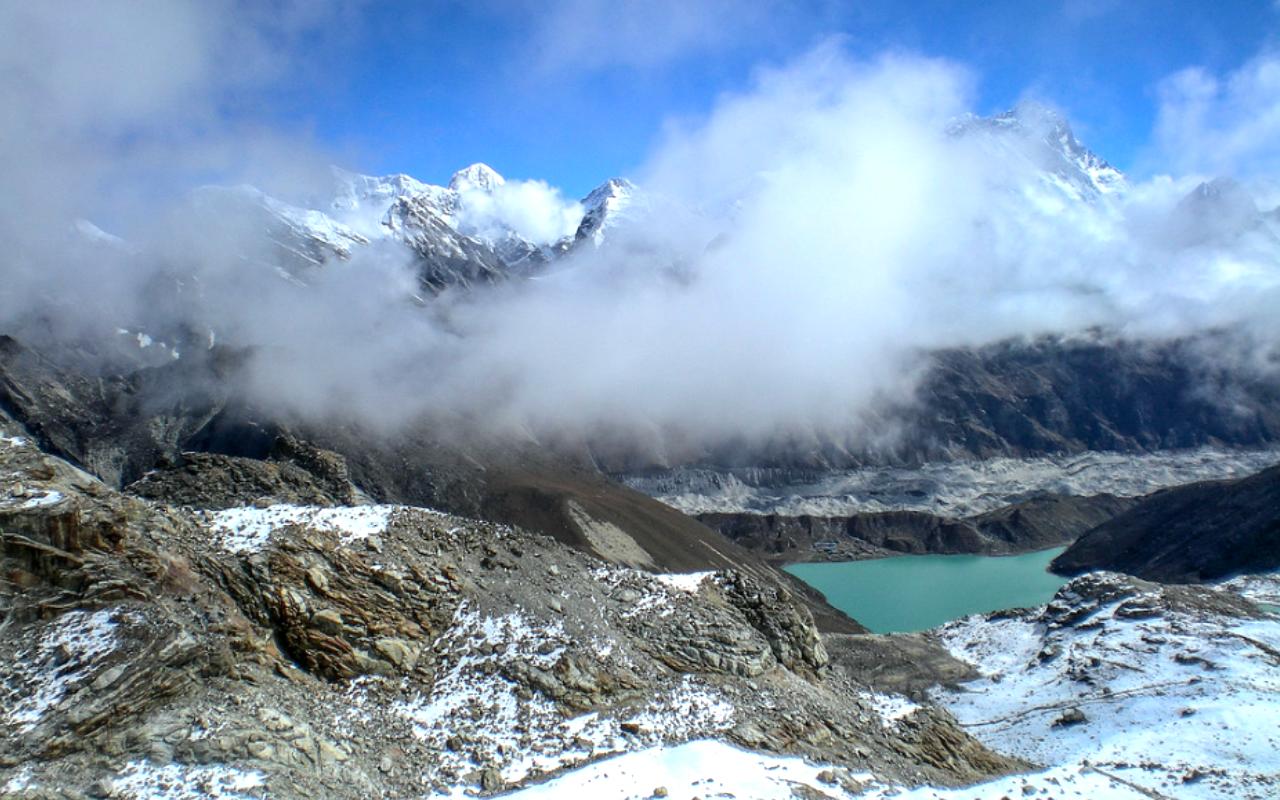
Autumn is widely considered the best season in Nepal. The season offers some unparalleled conditions to trek the Everest Three Passes trek with Island Peak. The air is clean and provides the crystal clear blue skies and the sharpest of mountain views. The weather, too, will be stable and predictable most of the season.
Our Three Passes Trek will be comfortable in the season. The temperature will dip as the season progresses, but it will provide the perfect conditions. For the Island Peak climb, the months will provide a stable summit window. The conditions will be excellent for Island Peak.
However, Autumn is the most popular trekking time in the Khumbu region, so the trails are packed. Booking on advanced notice is a compatible option this season.
Spring (March to May)
Spring is the other trekker-friendly season for the Everest Three Passes Trek with Island Peak. This season is generally considered perfect for mountaineering. As the winter recedes, the temperatures will begin to warm up, and the days will also grow longer. The high passes will become clear of winter snow.
The weather conditions are stable and mostly predictable. This is the major Island Peak Climbing season. That’s why the permit costs are also high compared to the other seasons. The weather will be clear, which is an ideal case for mountaineering and the rewards from the Island Peak.
Also, the base camp is clear of snow to make camping more accessible and easier. Overall, the Spring season is among the best windows for the combined programs like Everest Three Passes with Island Peak.
Not Recommended (Winter & Monsoon)
Winter (December to February): Life Himalaya Trekking does not recommend trekking in the winter season. The Lukla airport is also closed during the season. The season brings extreme cold, and the night temperatures will be unbearably low.
Heavy snowfall is common in the higher regions like Cho La and Kongma La Pass. Also, most of the teahouses will be shut down this season. It will be a very unpleasant experience to trek in the season.
Monsoon (June to August): This season is defined by consistent and heavy rain. Flights to Lukla are frequently paused or cancelled last minute. The trails will be muddy and plagued by the wild leeches. The mountain views will be obscured by the clouds as well. The unstable conditions with the rain and snowfall will make it hard to conquer the trail with rewards.
How is Technical Climbing done: Climbing Techniques
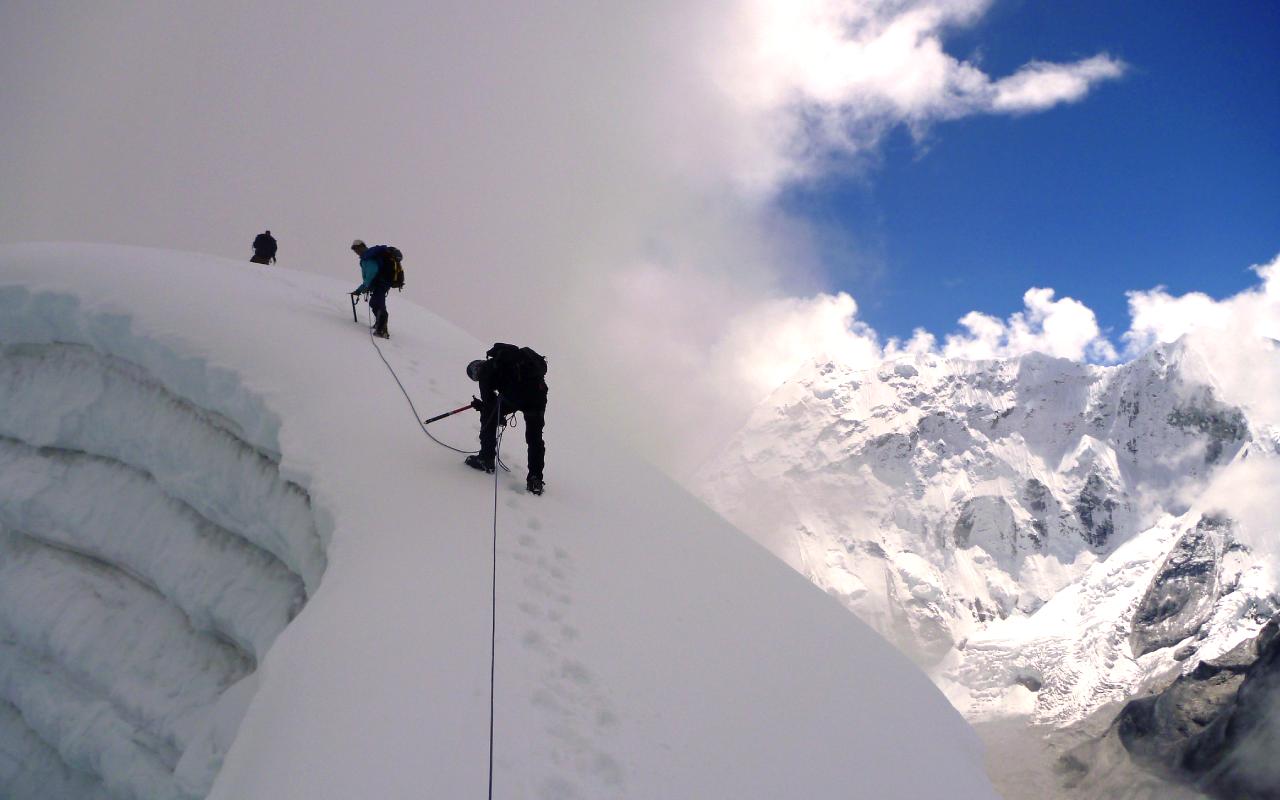
Technical climbing is required for the Island Peak climb. The technical climbing is beyond simple trekking. It relies on specific equipment and techniques for ascending and descending on steep and icy slopes.
The climbers have to wear a harness, metal boot spikes(crampons), and a helmet with the headlight on. To ascend the final steep headwall of the Island Peak, you have to attach yourself to the fixed rope anchored on the mountain.
An ascender, also known as Jumar, slides up the rope and locks when weight is put on. While sliding the ascender, you need to kick the crampon’s front points into the ice to step up and repeat the motion. An ice axe is held in the other hand for balance and to make it comfortable for ascending.
To descend, you switch from the Jumar to a descender (like a Figure-8 or ATC), which allows you to control your speed as you rappel (abseil) back down the rope. Your guides will train you on how to use the equipment the day before your climbing day.
The essential gears and equipment
- Mountaineering Boots
- Climbing Harness
- Crampons
- Ice Axe
- Ascender (Jumar)
- Descender (ATC or Figure-8)
- Climbing Helmet
- Locking Carabiners
- Slings
- Base Layer (Wicking)
- Mid Layer (Insulation)
- Outer Layer (Insulation)
- Shell Layer (Protection)
- Trekking Clothes
- Warm Beanie/Hat
- Balaclava
- Sun Hat
- Glacier Sunglasses
- Ski Goggles
- Trekking Boots
- Camp Shoes
- Trekking Socks
- Summit Socks
- Liner Gloves
- Mid-weight Gloves
- Expedition Mittens
- Gaiters
- Duffel Bag (80-100L)
- Daypack (30-40L)
- Sleeping Bag
- Bag Liner
- Trekking Poles
- Headlamp
- Water Bottles/Bladder
- Water Purification
- Personal First Aid Kit
- Sunscreen
- Lip Balm
- Toiletries
- Trekking Towel
- Power Bank
- Cash (NPR)
- Sleeping Bags( -15-20 degrees)
- Diamox after consulting the doctor
Note: These are the basic equipment and gears for this trek. You can add the gears on your will if necessary. The total weight should not be higher than 30 kg to have a comfortable transport.
The most essential skills to have
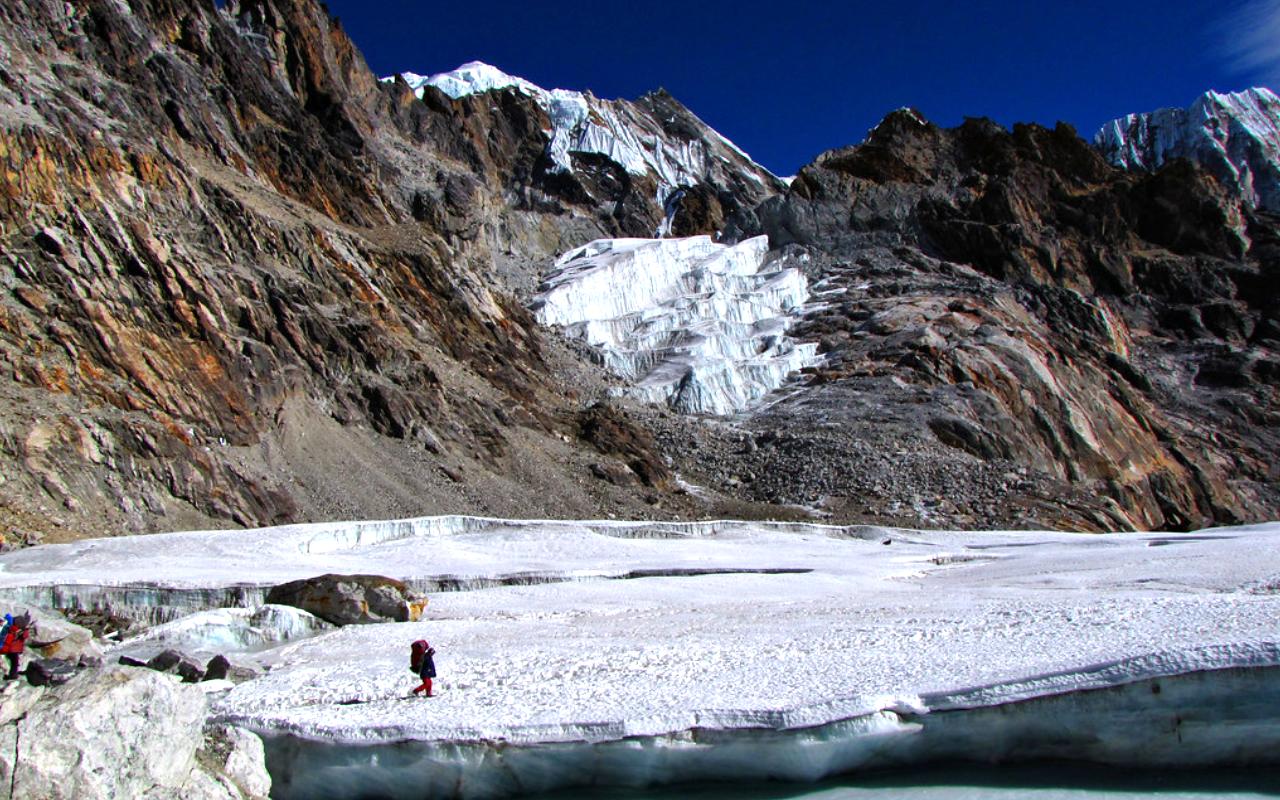
The most essential skill to have while traversing the high passes over 5000m is high-altitude trekking experience. If you are an experienced and fit trekker, you can easily manage the altitude. Proper pacing is vital in such treks. The experienced trekker can easily know the preliminary signs of Altitude sickness and can take effective measures straightaway.
Next will be physical and mental resilience; the trek will involve long days in extreme cold conditions. The comfort in the teahouses will also be basic throughout the trek. You must be able to stay positive and disciplined to complete the trek on a positive note. Do not forget to hydrate yourself consistently.
For the Island Peak, you will need basic technical mountaineering skills. The guides will train you on how to use the technical equipment, like an ascender, crampons, an ice axe, and a rope. The guides will be with you to help throughout the expedition and the trek.
Teahouse and Camping Accommodations
Throughout the Three Passes Trek of this combined Everest Three Passes Trek with Island Peak, your accommodations will be in the local teahouses. The teahouses are simple and cozy that providing a twin-bedded room with a mattress, pillow, and a blanket. The rooms are often unheated, so the nights can feel cold.
Having a sleeping bag becomes a necessity in such cases. The temperatures will be lower and the facilities will get even basic as we ascend. During the Island Peak expedition, we will leave Chhukkung as the last teahouse accommodation and stay in tented camps. The camps will be basic, and portable toilets will be on standby to use from Day 15-17.
The food menu is extensive in the lower areas. The major staple being Dal bhat, we will get the variants like momo, Thukpa, noodles, pizza, pasta, and some other items. The major lunch and dinner staple, Dal Bhat, will be provided with unlimited and free refills. The food variants will shrink as we ascend.
While we move beyond Chhukkung Village, we will have to prepare the food by ourselves. Our crew will be preparing food. The food options will be more basic here. To nourish yourselves, you must bring chocolate bars, peanuts, and dry fruits that can refuel your energy.
Essentials of Travel Insurance for this trek
Having the right travel insurance will be absolutely non-negotiable for the Everest Three Passes Trek with Island Peak. There are some inherent risks of high-altitude sickness and injuries. To bypass the potential financial risks caused by such accidents, travel Insurance for this trek is mandatory.
Life Himalaya Trekking does not want any of the trekkers to have the financial burdens carried for the whole life in case of inherent risks posed mid-way through the trekking and expedition missions.
A comprehensive trek should cover trekking and climbing up to 6500 meters. Also, the travel insurance must cover the medical bills and helicopter evacuation that can rise up to $8-10,000 USD in some cases.
This foresight will guarantee the financial coverage for the high-altitude sections like Renjo La Pass and Island Peak. Your insurance is not just a formality but an essential safety for a high-altitude Himalayan adventure.
Guides and Porters Provided by Life Himalaya Trekking
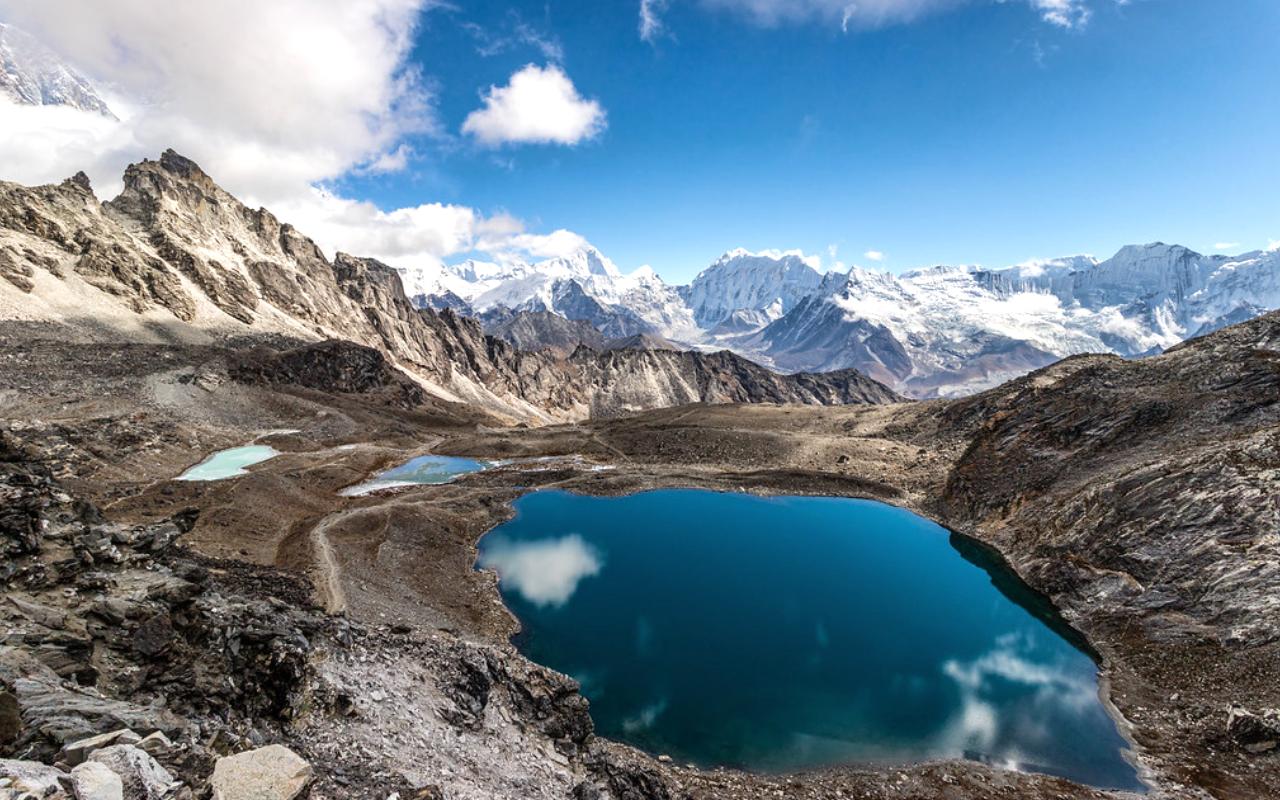
For the Everest Three Passes Trek with Island Peak, Life Himalaya Trekking will provide a Trekking Guide and a separate climbing guide for the Island Peak climb. The Trekking Guide will be a well-experienced and government-licensed professional.
The Guide will manage all the logistics and teahouse accommodations along with the meal orders. They will consistently take care of your daily safety and acclimatization throughout the trek.
For the Island Peak climb, we will provide you with a climbing guide. Our 1:1 guide ratio will provide the climbers with a technical expert for pre-climb training and lead to the final summit push. They will be directly assisting you for your safety and the usage of the gear and equipment.
There will be porters who will carry the major duffel bag. Having a porter will allow the trekker to enjoy the stunning views in a comfortable way. Life Himalaya Trekking has the porters with well-equipped and insured. They will follow the guidelines for the International Porters Protection Group.
Overall, Life Himalaya trekking will provide the guides and porters who are experts as well as seasoned professionals.
FAQs
1. How difficult is this 22-day itinerary?
Everest Three Passes Trek with Island Peak is graded “challenging” or “expedition level”. The itinerary combines crossing high passes all over an altitude of 5300m, and a summit climb which is at 6189m. The Island Peak final summit push also requires a technical climb. This trek is only for the trekkers who are seasoned for high-altitude trekking.
2. How should I train for this trek?
Your training must focus on cardiovascular endurance, strength, and stamina. Getting into workouts mixed with Cardio, leg strength, and stamina is key to preparing. Start doing your preparations at least 15 weeks prior to the trekking day.
3. Which of the three passes is the hardest?
Most trekkers find Kongma La Pass(5535m) the hardest to climb. This is also the highest pass of this trek and involves a remote and strenuous crossing. However, the rewards provided by the pass are unparalleled. You will get the prominent views of Khumbu Glacier to Gokyo Lakes alongside the peaks.
4. How technically difficult is the Island Peak climb (Days 14-16)?
The climb is rated PD+ (Peu Difficile) in the Alpine grading system. The trek to High Camp is straightforward hiking. The summit day involves a midnight start on the steep rocky scramble. There is a long and strenuous steep that requires the use of fixed ropes and ice axes. An experienced climber can complete this summit push easily. The novice may need assistance throughout the climb.
5. Do I need previous climbing experience for Island Peak?
Yes, previous technical climbing experience will be a key, but not strictly required. The Island Peak is often climbed by the Everest summiters as a qualification climb. Your itinerary includes the pre-climb training day so that you can learn about the usage of the gear and equipment.
6. Is the acclimatization in this itinerary sufficient?
Yes, this itinerary has a well-designed acclimatization schedule. We will have an acclimatization day on Day 4 at Namche Bazaar, and the hike to Gokyo Ri will serve as an excellent acclimatization experience. The full acclimatization and training day will be served on the Island Peak High Camp to accommodate the rest and adaptation required for the final summit push.
7. What about guides and porters?
For the Three Passes trek, it is highly recommended. For the Island Peak climb, a certified climbing guide is mandatory. You cannot get a climbing permit without being part of an organized expedition. Life Himalaya Trekking will provide a team that includes a licensed trekking guide, a separate specialized climbing guide (or guides) for the peak, and porters to carry the main gear and climbing equipment.
8. What is the single most important safety item?
Your travel insurance. Your policy must explicitly cover trekking and mountaineering up to 6500m, helicopter evacuation, and medical facilities, along with the recoveries of cancellations of international flights.
9. What are the key permits and costs?
You need four permits, all arranged by your agency: Sagarmatha National Park Permit, Khumbu Pasang Lhamu Rural Municipality Permit, TIMS Card, and Island Peak Climbing Permit. These permits will be obtained by our team after your arrival.
10. What is the accommodation like?
During the trekking days, we will stay in the basic teahouses. Teahouses till Namche Bazaar will have a touch of modern facilities. However, in the higher altitudes, the facilities will be very modest and basic. During the climbing days, we will be staying in the tented camps. The cooking and staying facilities will be at the camps by our team.
11. What are the most important pieces of gear I need?
Besides your standard trekking kit, the critical items are a sleeping bag(-20 degrees), an Expedition down jacket, mountaineering boots, and technical gear. We will provide all the expedition gear as part of your package.
12. Can I rent the climbing gear?
Yes, the climbing gear can be rented. The expedition gear will be included in the package. In case you want to rent other items like boots, down jackets, trekking poles, and duffel bags, Life Himalaya Trekking will assist you by connecting with the rentals.
13. When is the absolute best time for this specific itinerary?
Autumn will be the perfect season for the Three Passes trek, as this will be a festive season, and the vibes will be different. The skies are also crystal-clear along the route, enhancing the stunning views. However, the best season to climb the Island Peak is spring. The weather is warmer, but there is a slight chance of haze and snow.
14. How cold will it get throughout the trek?
There will be a variation in the cold during the trek. We will cover almost 2500m of altitude from Lukla to Island Peak High Camp. The average daytime temperature will remain 12-15 degrees in the lower altitudes and keep descending as we gain altitude. On the summit night of the Island Peak, you can expect wind temperatures of -20 degrees.
15. What if one of the high passes is closed due to snow?
There is a high possibility of high passes being closed due to excessive snow. Cho La Pass and Kongma La Pass are the main passes that cope with the risks. Life Himalaya Trekking and the guide will have contingency plans. We will have a backtrack and re-route if the pass is closed.
16. How much extra cash (NPR) should I carry on the trek?
You should budget approximately NPR 2,000(16 USD) per day. Cash is king, as there are no ATMs after Namche Bazaar. This money is for all expenses not included in your package, such as: wifi, hot showers, device charging, snacks, and tips. A total of 400 USD will be a wise option to carry.
17. What is the tipping etiquette for the trekking and climbing crew?
Tipping is a standard and expected practice to show appreciation for the hard work of your team. This is a per-group tip, not per-person. A common guideline for climbing guides is to provide 200-300 USD from the group, 180-200 USD for the trekking guide, and 100 USD for the porter, divided among the groups.
18. What happens if the Lukla flight (Day 2 & Day 20) is canceled?
This is a very common situation due to bad weather. The entire itinerary will be pushed back by a day. That’s why we prepare for the flight cancellations and delays by scheduling buffer days. In case of cancelled flights, you will be refunded or rescheduled by the local airlines.
19. What are the weight limits for the Lukla flight and for porters?
The Lukla flight is limited to 15kg of luggage, and airport authorities will charge for excess weight. The porters will typically carry a maximum of 20-25 kg or the luggage of two people at once.
20. What are the key symptoms of AMS (Altitude Sickness)?
You must know these. Early symptoms (Stage 1) feel like a bad hangover. You will feel a headache, nausea, Dizziness, and difficulty in sleeping. Immediately inform your trekking guide if you notice such symptoms during the trek. If not responded to in time, the result might be catastrophic.
21. What is the “golden rule” if I get AMS symptoms?
The golden rule to cope with the AMS symptoms is not ascending any higher and descending back as much as possible. The symptoms are mainly due to a lack of oxygen, so descending to a safe altitude and hydrating yourselves with enough water will always help. Your guide will help you get out of trouble in case of an emergency. Your recovery is their responsibility too.
22. How do I get safe drinking water on the trail?
Do not drink tap water. You need to take purifier tablets or a filter bottle to purify the water manually. You can also buy boiled water from the teahouses, a bit more expensive option. We request not buy the bottled water.
23. What is the hygiene and shower situation like?
Facilities become more basic as you get higher. In the first few days (up to Namche), you can get a hot “gas geyser” shower. Above Namche, “hot showers” are often just a bucket of warm water (for a fee). Most trekkers rely on wet wipes and hand sanitizer for daily hygiene during high-altitude trekking and climbing.
24. Can I get Wi-Fi or phone signal on the trek?
Phone signals are available, but cannot be relied on. Most teahouses have Everest Link Wi-Fi cards. The signal is decent in the villages like Namche and Tengboche. But the unreliability of the internet and mobile signals is prominent. The mobile networks of NTC and Ncell will not work during the pass crossing or the places like Gorakshep. Prepare for digital detox.
25. What about charging my electronics (phone, camera, power bank)?
Charging is available in the teahouse dining rooms, but it is not free. You will have to pay by the hour or per device. Because everyone is competing for limited plugs, it’s essential to bring a large-capacity power bank and consider a solar panel clipped to your daypack to get free charging during the day.